
Amid dreadful sexual abuse, sport brings grace in a school memoir that resists easy judgement
- Written by: Lyn McCredden, Personal Chair, Literary Studies, Deakin University
A friend likes to remind me about the one time I attended an Ashes test in Melbourne, Boxing Day, 1974. The crowd was waiting, excited, to watch the English team, and Dennis Amiss particularly, front up to the wicket. On he came, bravely facing just eight balls. Then he was caught out, having scored a paltry four runs. I cried. How humiliating and soul-shrivelling for him, I thought. But my Australian (male) friends couldn’t understand at all. Crying? For an Englishman!
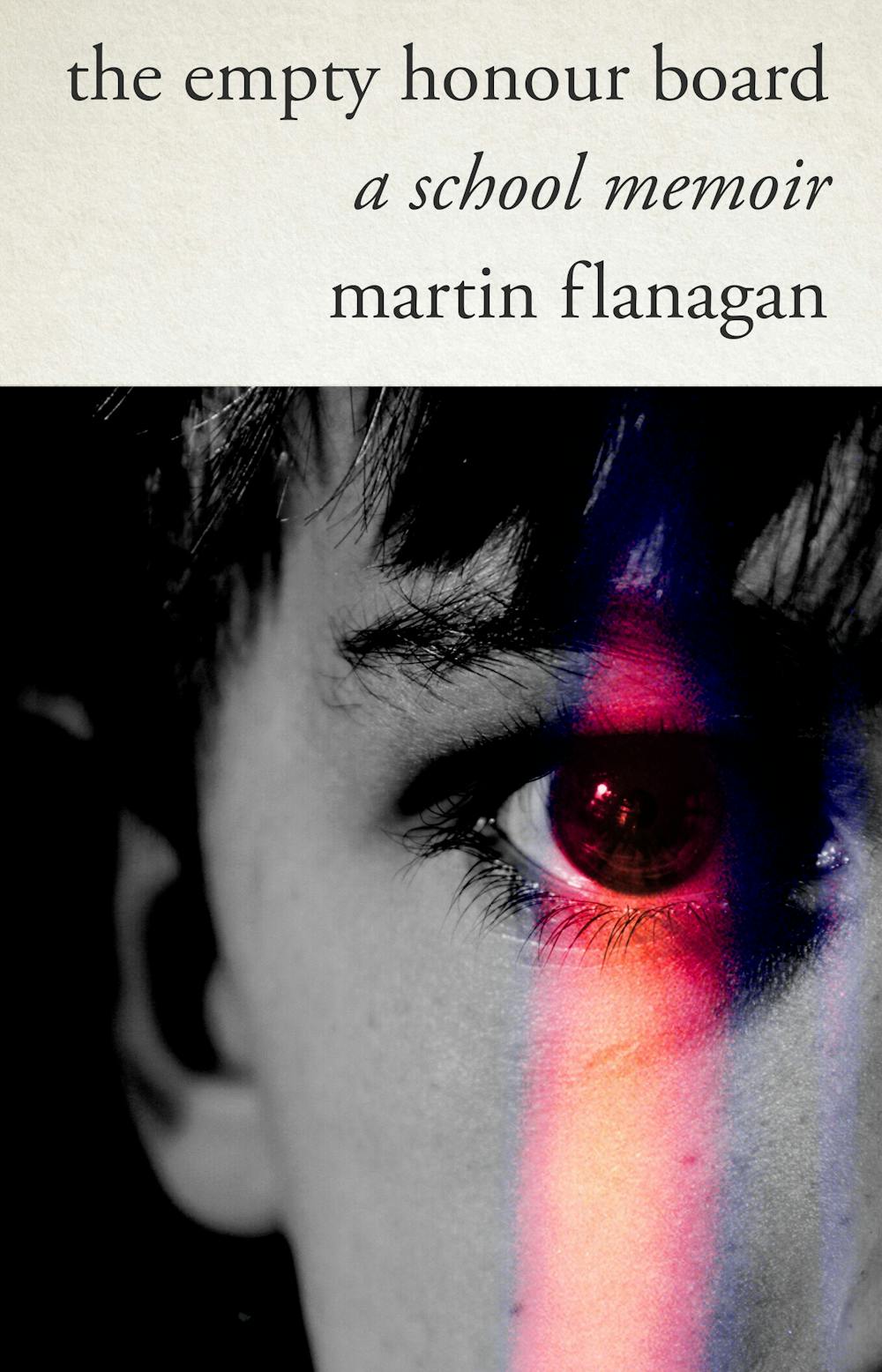
Review: The Empty Honour Board: a school memoir – Martin Flanagan (Viking)
Then there were all those years growing up with a father who insisted on watching Wide World of Sports every Sunday at lunchtime. The kitchen table would be carried in to the TV and we were made to sit in religious silence, eating our roast, watching grown men hand-balling through a hole in the wall, and rehashing the events/scores/heroes of the previous day’s matches.
These anecdotes are not random. They were part of my personal mythology, my long dislike of the Australian religion of sport. Back then I saw it all as being at the expense of, say, literature, or intellectual debate, or spiritual depth.
I am deciding in later life that pitting sport against culture, or intellect, or spirituality is not a very productive idea. That kind of oppositional mentality chisels down your options and your enjoyments. I have writer Martin Flanagan to thank for shaking my narrowness. He hasn’t completely set me free (I’m sure that wasn’t his aim); but life, and sons, and what Flanagan in his memoir The Empty Honour Board describes as “the athletic grace” of sport and sportspeople, have contributed to my education.
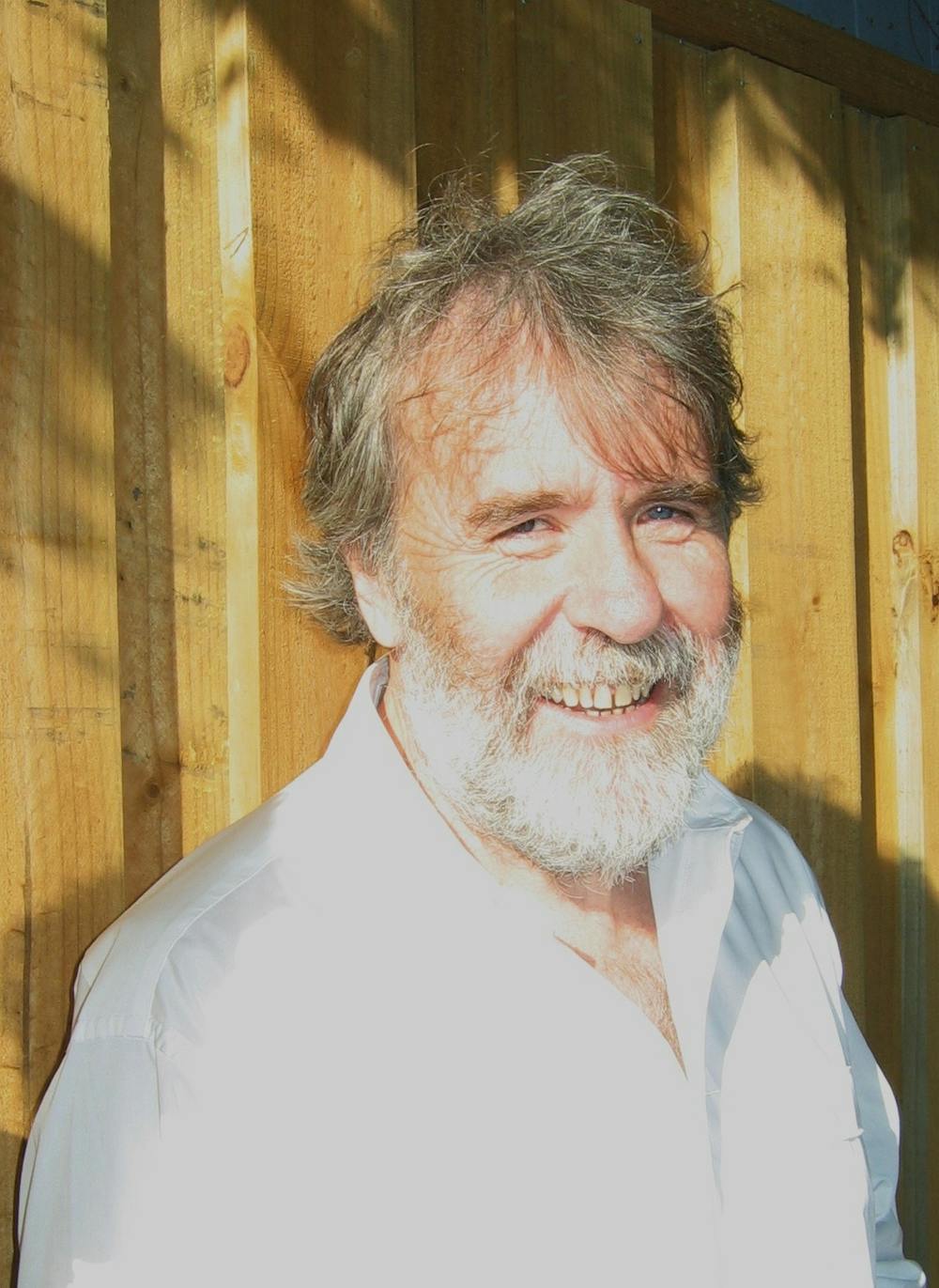
This book, described by Flanagan as “a school memoir” is that, and much more – spanning the 1960s of Flanagan’s childhood to the present.
The famous Flanagan sports-writing flair is given plenty of scope; but at this book’s centre are stories from a boy’s world: the Tasmanian Catholic boarding school he attended as a child in the 1960s and ‘70s, the priests who taught there, and the camaraderie of boys who felt themselves constantly under threat from male violence (regular canings, bashings, enforced piety, touchings, and full-on abuse).
From 1966 to 1971, from the ages of 10 to 16, Flanagan went to this school, not named in the book for privacy reasons. Many boys – Flanagan to a minor extent – were sexually abused to differing degrees. Others were bullied and traumatised at this school, which has since been disbanded.
As the violent, dreadful stories of sexual abuse are slowly told in the book, often in ragged, little images that say it all, we are also given many sports stories, and wider Flanagan life experiences. They made this reader listen, these stories of on-field valour and sporting prowess of the past. Playing football and cricket was the escape and joy of many boys, as sport became a free space:
In this grey world, I discovered sport… Sport, unlike school and religion, had life! I discovered sport like others I have read discover theatre - as a magical space where aspects of humanity otherwise kept hidden away come out to play. For the first time I saw grace … athletic grace that took my breath away, acts of skill and daring that imprinted themselves indelibly on my brain.
The Empty Honour Board is also a book about the way memory and the past and one’s boyhood passions and nightmares can collide, often unexpectedly, later in life, resulting in new readings of the self. We see that for Flanagan “the self” is a hard-won, self-questioning and restless entity. One memory, retrieved in later life by the author, is startling in its openness about the struggle for self:
In the end, one hot day I was standing beside a Blackwood tree in the paddock beside our little home, when a shadow hurried across the grass towards me. With it came a great fear that I was about to be extinguished or swallowed up, and I cried out: ‘I have a right to be!’
This memory is told in a straightforward, non-self-dramatising way, not blaming any one person for “the negative imprint of those early years”, but registering the life-long impact nevertheless. It is the act of writing, we are told, which gave (and gives) Flanagan his “sanity”.
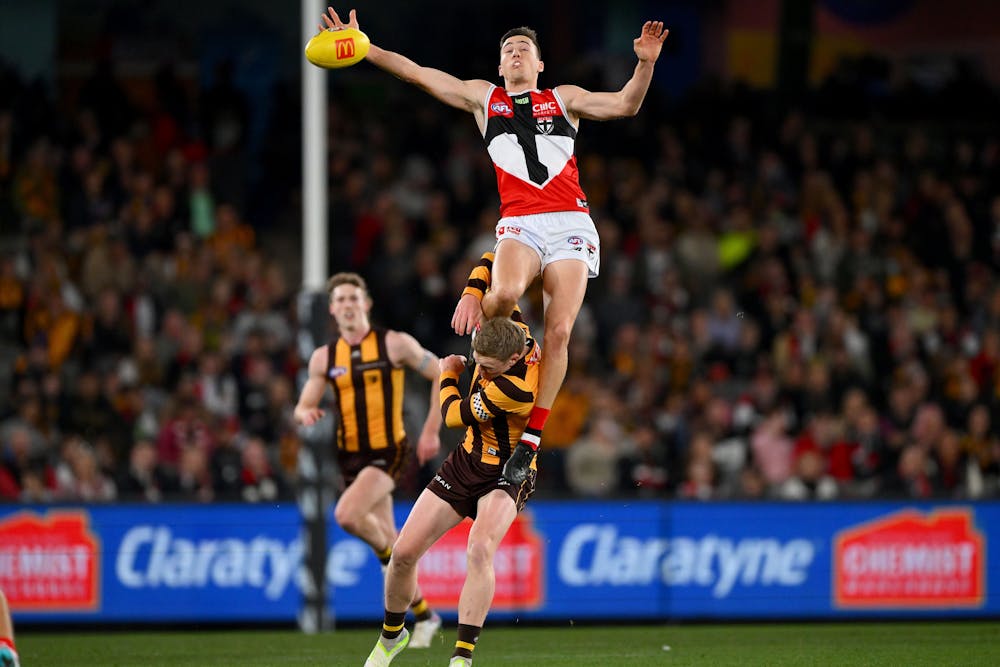 Flanagan writes of the breathtaking athletic grace of sport,
Morgan Hancock/AAP
Flanagan writes of the breathtaking athletic grace of sport,
Morgan Hancock/AAP
Read more: To believe or not to believe: child witnesses and the sex abuse royal commission
Pity for the loneliness of priests
Flanagan the writer emerges with many selves: poet, passionately non-Catholic thinker (despite his mother’s desires), journalist of eclectic scope, traveller, and most interestingly, perhaps, someone who refuses to be judgemental even in the face of awful and dire life situations.
Yet we are given plenty to judge: a full blast of life as a child from a Catholic family landed in a boarding school from the age of 11, where multiple forms of violence are always hovering, and where religious faith is not experienced as real for the boy.
However, this doesn’t turn into a story of victimhood. The boy (and the man) does not resent his parents for sending him away, but remembers feeling ready to face the freedom of being out of home. He doesn’t even despise the priests who inflict such violence on the boys in their “care”. There is more a sense of pity for the loneliness of such priests.
In the words of “celebrity barrister” Geoffrey Robinson, at the time of the 2019 trials of several of the priests, (quoted by Flanagan), most accused priests
[…] are not even paedophiles, but rather sexually maladjusted, immature and lonely individuals unable to resist the temptation to exploit their power over children who are taught to revere them as agents of God.
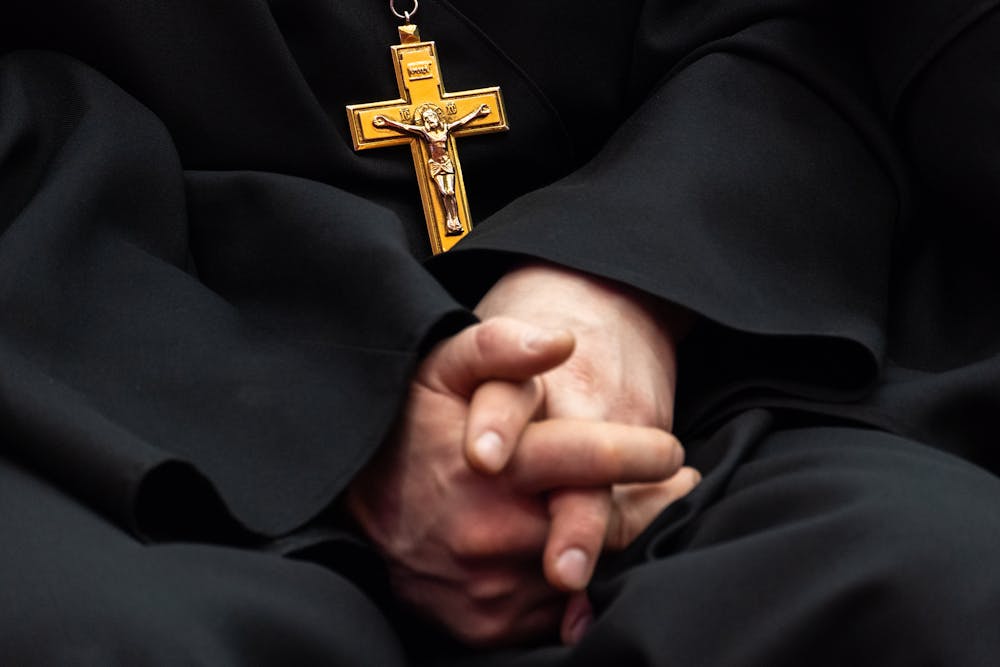 There is more pity than judgement.
Shutterstock
There is more pity than judgement.
Shutterstock
There is more human pity than judgement informing this stance. For Flanagan, judgementalism is usually produced by simplistic thinking, in the “current realm”
[…] now termed binary thinking where issues about deeply sensitive subjects like race and sexuality and gender are reduced almost immediately to black-and-white terms […] So much contemporary media – particularly social media – reduces human dramas to scenarios in which the forces of darkness are pitted against the forces of light.
Flanagan’s expressed wish in this book is to be “uplifting”. He sees himself as an optimist, and asks humbly, from the wells of his human experience: “Whose light didn’t come with a shadow?”
As the book proceeds to unpack the offences and trials of the different priests from his school, placing his narrative in the larger context of sexual abuse allegations surrounding Archbishop George Pell and others, Flanagan maintains both his pity, but also his sense of justice.
He continued to like some of the priests who later turned out to be abusers, but still delivered “my testimony hard and exact”, 30 years later when he agreed to testify in court about abuse in the school.
As Flanagan narrates, in straightforward, factual prose at the beginning of the book:
Three of the 12 priests on the staff when I arrived have since gone to prison for sexual crimes committed while I was there, and allegations have been publicly directed against others. Further sexual abuse cases occurred at the school after I left, so that as it now stands six former staff members have been sent to jail.
Spiritual depth
The last section of the book is poised between pity and optimism, with a straightforward, straight-talking sense of realism peeling back to reveal the brutishness of which humans are capable. Placing his work in the context of literature and the genre of boyhood education – Lord of the Flies, Tom Brown’s School Days, Huckleberry Finn – is helpful for readers thinking about what kind of text this is.
There are many heroes named along the way. Flanagan never exaggerates his own personal story of abuse, but bullying and cowardice and outright violence were the air all the boys breathed at the school. Yet there is also hope, with moving tributes made to heroes. These tributes buoy up Flanagan’s memoir with grace and strength, embodying what is possible beyond the shabbiness of predatory human actions.
 Many figures stand out as cherished influences in Flanagan’s story, some of them beacons of hope: Indigenous leader Patrick Dodson, Martin’s wife Polly, his brothers, especially Tim, his parents, writers such as Howard Goldenberg, George Orwell and William Golding, musician Archie Roach, and a long, long roll call of sportsmen, and fellow students who bravely rode the waves of the dark world that was school life: Paul and Steve O’Halloran, Rinso, Peter Rowe, and others.
Finally, there is one subtext of this memoir which needs highlighting: Flanagan’s broken, often angry, but ongoing relationship with spirituality. When it boils down to the institution of the Catholic church – its priesthood, schools, rituals and disciplines – there is little warmth. And who can blame him?
But in his honouring of people’s warmth, his tributes to the church’s joyful priests, its service to the marginal, its rituals of memory, Flanagan is still alive to the need for spiritual depth.
He finds this depth in Aboriginal spirituality and the example of Pat Dodson. And as he tells us, when meeting the late South African Archbishop Desmond Tutu and hearing his “raucous cackle”, he asked him “Does God laugh?” Flanagan reports Tutu’s response:
He took my forearm solemnly in his hands and said slowly and with emphasis: ‘Yes, my friend. God laughs – and God cries,’ and I saw within him, as deep as a mine-shaft, where despair has taken him … In South Africa I got seriously scared by the evil of torture and in South Africa I saw that hope, like love, can be made.
This nonjudgmental equanimity crowns Flanagan’s memoir. He tells a bleak set of stories, but the volume is indeed uplifting in the face of so much darkness. I’m even tempted to seek out some more of his sports writing.
Authors: Lyn McCredden, Personal Chair, Literary Studies, Deakin University
Many figures stand out as cherished influences in Flanagan’s story, some of them beacons of hope: Indigenous leader Patrick Dodson, Martin’s wife Polly, his brothers, especially Tim, his parents, writers such as Howard Goldenberg, George Orwell and William Golding, musician Archie Roach, and a long, long roll call of sportsmen, and fellow students who bravely rode the waves of the dark world that was school life: Paul and Steve O’Halloran, Rinso, Peter Rowe, and others.
Finally, there is one subtext of this memoir which needs highlighting: Flanagan’s broken, often angry, but ongoing relationship with spirituality. When it boils down to the institution of the Catholic church – its priesthood, schools, rituals and disciplines – there is little warmth. And who can blame him?
But in his honouring of people’s warmth, his tributes to the church’s joyful priests, its service to the marginal, its rituals of memory, Flanagan is still alive to the need for spiritual depth.
He finds this depth in Aboriginal spirituality and the example of Pat Dodson. And as he tells us, when meeting the late South African Archbishop Desmond Tutu and hearing his “raucous cackle”, he asked him “Does God laugh?” Flanagan reports Tutu’s response:
He took my forearm solemnly in his hands and said slowly and with emphasis: ‘Yes, my friend. God laughs – and God cries,’ and I saw within him, as deep as a mine-shaft, where despair has taken him … In South Africa I got seriously scared by the evil of torture and in South Africa I saw that hope, like love, can be made.
This nonjudgmental equanimity crowns Flanagan’s memoir. He tells a bleak set of stories, but the volume is indeed uplifting in the face of so much darkness. I’m even tempted to seek out some more of his sports writing.
Authors: Lyn McCredden, Personal Chair, Literary Studies, Deakin University 

















