

how mange-causing mites decimated a Tasmanian wombat population
- Written by Scott Carver, Associate Professor, Wildlife Ecology, University of Tasmania
More than 80% of Australian mammals are found nowhere else in the world. Many of these unique, iconic creatures are under threat.
The most important and well-known threats are invasive species (such as cats and foxes) and human-driven changes to the environment (such as land clearing and climate change).
Invasive pathogens – parasites, viruses, bacteria, fungi – often attract less attention, but they too can pose a significant threat to native animals.
Take sarcoptic mange, a parasitic disease that affects mammals around the world. In a new study published in the journal Biology Letters, we report on a sarcoptic mange outbreak in a population of bare-nosed wombats in central Tasmania, which caused a population decline of more than 80%.
What is sarcoptic mange, and where did it come from?
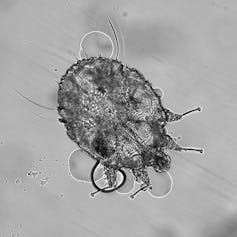
Sarcoptic mange is caused by the parasitic mite Sarcoptes scabiei, which burrows into the skin. These mites are happy to infest many mammals, including humans (in which case the disease is called scabies).
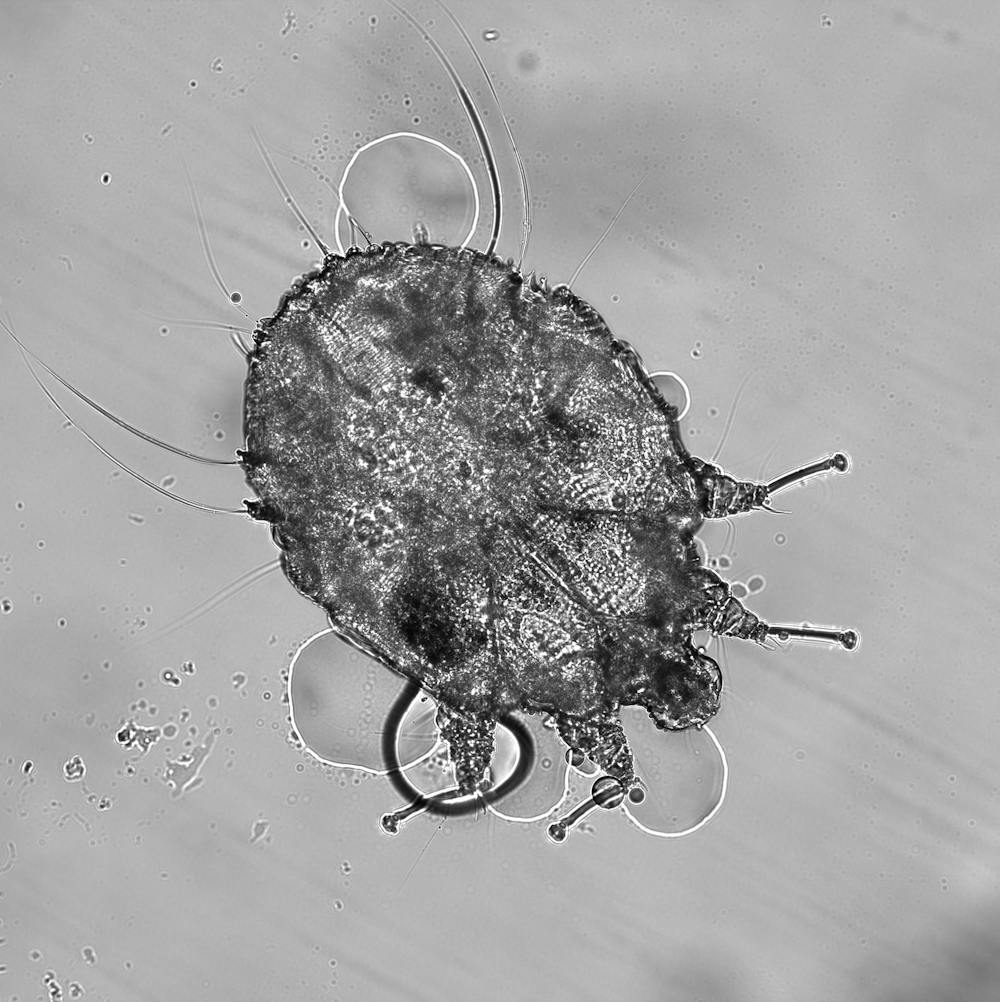
Research suggests the spread of the mites around the world is associated with European colonialism, although where they originally evolved is uncertain. In Australia, the mites were likely introduced multiple times over the past 230 years.
In southern Australia, sarcoptic mange is mostly a concern for wildlife health. It can be deadly to bare-nosed wombats, as well as some other species including koalas and quenda (also known as western brown bandicoots). In tropical northern Australia, scabies is a significant (although rarely life-threatening) human health issue.
How does sarcoptic mange spread among solitary wombats?
In some animals, the mange-causing mites move directly from one animal to another when the animals come into direct contact. However, wombats are relatively solitary. It is rare for them to touch one another outside of mating.
Nevertheless, the mites still spread via “environmental transmission”. Wombats change burrows quite frequently, usually staying in one burrow for somewhere between one and nine days before changing.
When a mite-infested wombat stays in a burrow, it leaves some mites behind. Research shows mites can survive in the cool, humid soil of the burrow for between five and 16 days. If another wombat comes along during this period, the mites have found themselves a new host.
The ratio of wombats to burrows may be the key
When scientists study how pathogens are transmitted among animals, we often assume it will depend on the population density of the animals in question. At higher densities, individual animals come into contact more often so the pathogen is more likely to spread. And if population density is too low, a pathogen may “die out”.
However, it’s a different story for environmentally transmitted pathogens like S. scabiei. In our research, we found individual wombats continued to be infected and diseased even when population density declined.
Our research suggests the number of burrows per wombat likely influences how often they can encounter mites in the environment.
Because infested burrows are the likely source of the infections, the number of available burrows per wombat should be a more important determinant of whether a population decline from sarcoptic mange occurs.
How big a problem is sarcoptic mange?
Our study is the third formally documented decline in a bare-nosed wombat population from a sarcoptic mange outbreak.
Does this mean bare-nosed wombat populations are threatened everywhere by this invasive pathogen – or even worse, at risk of going extinct? This does not appear to be the case.
There is no doubt mange causes immense suffering to wombats and is a serious wildlife health issue. However, a combination of factors such as wombat-to-burrow ratios and environmental conditions mean declines appear to be occasional events.
Read more: Mangy marsupials: wombats are catching a deadly disease, and we urgently need a plan to help them
Understanding the spread and effect of the disease is not simple, but a growing body of research is revealing why some wombat populations are free of sarcoptic mange, some have disease but don’t decline, and why occasionally some do decline.
Another finding of our study was a potential indicator of the risk of population decline from sarcoptic mange. When more than 25% of a population show signs of the disease, based on systematic population surveys from multiple studies, it may mean population decline is possible.
What can be done?
Can anything be done to help wombats and other wildlife affected by sarcoptic mange? The answer is yes for individual wombats and sub-populations, but not yet for larger scales.
Across southeast Australia a significant number of wildlife carers, rehabilitators, and rescue organisations make important contributions to the welfare of bare-nosed wombats. A small number of researchers also work on the issue, and the health of wombats has increasingly been supported by investments from state governments and industry, particularly over the past decade.
Help for wombats is predominantly through the use of treatments delivered to captive and wild individuals.
Read more: What's happening to the southern hairy nosed wombats?
There are significant practical challenges in treating free-living wombats. To improve the chances of success, decisions must be made based on data and with collaboration among all stakeholders. Indeed, the last decade has seen significant advances through collaboration, research and engagement that are benefiting wombats.
There are also challenges that persist, such as confirmation-biases leading some well intended wildlife groups to treat sarcoptic mange in wombats with drug doses many times higher than the needed or recommended amount. This can have unintended results, such as toxicity to the wombat, pharmaceuticals entering the environment, and mites developing a resistance to the drugs.
The Australian Pesticide and Veterinary Management Authority makes important decisions about granting permits for management of mange in wombats. The authority must be astute in interpreting the strengths and limitations of evidence when making these decisions, and seek input where additional expertise is needed.
Authors: Scott Carver, Associate Professor, Wildlife Ecology, University of Tasmania


















