

homosexuality was still illegal when Frank Moorhouse started writing – but it was there from his earliest fiction
- Written by Catharine Lumby, Professor of Media, Department of Media, University of Sydney
Frank Moorhouse had been having sex with men since the age of 17 but did not openly identify as gay or bisexual.
David Marr, who edited Moorhouse’s work at The National Times in the early 1980s, told me in an interview about Moorhouse:
He was seen as a straight writer, no doubt about that […] it was really only with the publication of The Everlasting Secret Family [in 1980] that I began to think, ‘Oh maybe Frank’s a poof, maybe he’s bi, whatever.’
According to Marr, there was often a lag between what men who had sex with men did in private and what they wrote about, prior to the era when “coming out” was acceptable.
In Patrick White’s words, the lag is disgraceful, and Patrick, of course, tended to make homosexuals figures of ridicule in his works for a very long time. I said to him once: “Why didn’t you write [positively about homosexuality or being homosexual] earlier?” […] He said: ‘It’s been impossible, my publishers told me it would be completely impossible.’
Read more: The literary life of Frank Moorhouse, a giant of Australian letters
Queer literature in Australia
The history of gay and what is now known as queer literature in Australia has been fraught with debates over how homosexual characters and their desires are represented.
 Frank Moorhouse with Don Anderson, Push member Elisabeth Wynhausen and ‘fringe’ Push member Sandra Levy, 1971.
Author provided (no reuse)
The only openly gay man in the Push for many years was a man known as Della. Anne Coombs writes in her history of the Push that: “The men of the Push delighted in his stories. He sometimes fucked straight Push men when they were drunk.” Sandra Grimes hung out with a group of younger gay men from Sydney’s Northern Beaches; Coombs reports that they found the Push too straight for them.
Moorhouse said he never talked about homosexuality with the Push men. But he was writing about it in his earliest fiction and had been having sexual and romantic relationships with men since he arrived in Sydney in the late 1950s.
Read more:
Friday essay: hidden in plain sight — Australian queer men and women before gay liberation
‘The police persecuted gays’
I have chosen not to name any of the men with whom Moorhouse had multiple casual and long-term sexual relationships throughout his life, although the chronology and character of some of these relationships can be pieced together from letters in his archive. And I have steered away from using that material, because to do so would be to “out” a number of men who have lived outwardly heterosexual lives.
More importantly, the quotidian details of Moorhouse’s sex life are beside the point here. The interesting thing is how he grappled with his own anxieties about his sexuality in print – an act of astonishing commitment to self-interrogation and
to writing.
Moorhouse recalled that he seduced an older man, a work colleague, when he first arrived in Sydney, and that their sexual as well as personal relationship continued for many decades, crisscrossing the relationships he had with other women and men.
For Moorhouse, the relationship was a hinge in his sexual life. His parallel homosexual life, which continued after he married, was something that he “compartmentalised”. But in relation to his early writing, he reflected:
The word “gay” came a lot later. When I was writing about – drawing on – my own homosexual experiences there was no support system, and it was illegal and it was persecuted. I mean, the police persecuted gays. So it was a very different milieu to the world of the gay movement, and so it was much more furtive and dangerous, and dangerous in terms of one’s occupation.
Frank Moorhouse with Don Anderson, Push member Elisabeth Wynhausen and ‘fringe’ Push member Sandra Levy, 1971.
Author provided (no reuse)
The only openly gay man in the Push for many years was a man known as Della. Anne Coombs writes in her history of the Push that: “The men of the Push delighted in his stories. He sometimes fucked straight Push men when they were drunk.” Sandra Grimes hung out with a group of younger gay men from Sydney’s Northern Beaches; Coombs reports that they found the Push too straight for them.
Moorhouse said he never talked about homosexuality with the Push men. But he was writing about it in his earliest fiction and had been having sexual and romantic relationships with men since he arrived in Sydney in the late 1950s.
Read more:
Friday essay: hidden in plain sight — Australian queer men and women before gay liberation
‘The police persecuted gays’
I have chosen not to name any of the men with whom Moorhouse had multiple casual and long-term sexual relationships throughout his life, although the chronology and character of some of these relationships can be pieced together from letters in his archive. And I have steered away from using that material, because to do so would be to “out” a number of men who have lived outwardly heterosexual lives.
More importantly, the quotidian details of Moorhouse’s sex life are beside the point here. The interesting thing is how he grappled with his own anxieties about his sexuality in print – an act of astonishing commitment to self-interrogation and
to writing.
Moorhouse recalled that he seduced an older man, a work colleague, when he first arrived in Sydney, and that their sexual as well as personal relationship continued for many decades, crisscrossing the relationships he had with other women and men.
For Moorhouse, the relationship was a hinge in his sexual life. His parallel homosexual life, which continued after he married, was something that he “compartmentalised”. But in relation to his early writing, he reflected:
The word “gay” came a lot later. When I was writing about – drawing on – my own homosexual experiences there was no support system, and it was illegal and it was persecuted. I mean, the police persecuted gays. So it was a very different milieu to the world of the gay movement, and so it was much more furtive and dangerous, and dangerous in terms of one’s occupation.
 Frank’s ‘parallel’ homosexual life, which continued after he married (pictured), was compartmentalised.
Author provided (no reuse)
Moorhouse drew on his homosexual experiences in his work nonetheless, observing: “I think when I was writing fiction, I had numbed myself to the risks I was taking.”
In his history of gay and lesbian activism in Australia, Graham Willett writes that the gay community in this era
differed most strongly from the later gay community in its nocturnal nature. It was a scene of the night and was very largely invisible to the rest of society. It was also, and most obviously, a radically apolitical scene. Its members hoped for nothing more than to be left alone.
In an Australia where same-sex marriage is legal, as it is in most Western democracies, it is difficult to imagine the violent institutionalised prejudice that gay men and lesbians faced so recently. There was scant history of organised gay politics in Australia until the Campaign Against Moral Persecution (CAMP) was established in 1970 by John Ware and Christabel Poll.
Robert Reynolds writes about the shifts that were occurring in gay identity and politics at the time:
From 1970 to 1973, the first generation of CAMP activists participated in a remaking of Australian homosexuality. More specifically, it is possible to mark off these three years as a crucial phase in the creation of a homosexual who was, in CAMP’s own words, “open” and “proud”.
Prior to this era, homosexual life was lived clandestinely and was, for some men and women, a source of shame and conflict. In a short story published in The Americans, Baby, Moorhouse writes about a series of sexual encounters between the narrator, Carl, and an American journalist named Paul. After they first have sex, Carl leaves the American’s flat abruptly in disgust. But he agrees to drink with him again and returns to the same apartment.
This time they went to Paul’s bed. Afterwards, he lay there bewildered, wanting to run from the flat. The distance between himself in the bed and the clothes crumpled on the floor beside the bed, was too great. He could not make the move.‘Christ,’ he said bitterly, ‘you said we wouldn’t.’‘We’re too attracted,’ said Paul hopelessly.‘I didn’t want it. I didn’t want to do it. I’m not like this.’‘I’m not homosexual either,’ said Paul defensively, ‘we have affinity – it happens to people sometimes.’
Frank’s ‘parallel’ homosexual life, which continued after he married (pictured), was compartmentalised.
Author provided (no reuse)
Moorhouse drew on his homosexual experiences in his work nonetheless, observing: “I think when I was writing fiction, I had numbed myself to the risks I was taking.”
In his history of gay and lesbian activism in Australia, Graham Willett writes that the gay community in this era
differed most strongly from the later gay community in its nocturnal nature. It was a scene of the night and was very largely invisible to the rest of society. It was also, and most obviously, a radically apolitical scene. Its members hoped for nothing more than to be left alone.
In an Australia where same-sex marriage is legal, as it is in most Western democracies, it is difficult to imagine the violent institutionalised prejudice that gay men and lesbians faced so recently. There was scant history of organised gay politics in Australia until the Campaign Against Moral Persecution (CAMP) was established in 1970 by John Ware and Christabel Poll.
Robert Reynolds writes about the shifts that were occurring in gay identity and politics at the time:
From 1970 to 1973, the first generation of CAMP activists participated in a remaking of Australian homosexuality. More specifically, it is possible to mark off these three years as a crucial phase in the creation of a homosexual who was, in CAMP’s own words, “open” and “proud”.
Prior to this era, homosexual life was lived clandestinely and was, for some men and women, a source of shame and conflict. In a short story published in The Americans, Baby, Moorhouse writes about a series of sexual encounters between the narrator, Carl, and an American journalist named Paul. After they first have sex, Carl leaves the American’s flat abruptly in disgust. But he agrees to drink with him again and returns to the same apartment.
This time they went to Paul’s bed. Afterwards, he lay there bewildered, wanting to run from the flat. The distance between himself in the bed and the clothes crumpled on the floor beside the bed, was too great. He could not make the move.‘Christ,’ he said bitterly, ‘you said we wouldn’t.’‘We’re too attracted,’ said Paul hopelessly.‘I didn’t want it. I didn’t want to do it. I’m not like this.’‘I’m not homosexual either,’ said Paul defensively, ‘we have affinity – it happens to people sometimes.’
 Moorhouse said of his writing about homosexuality, ‘when I was writing fiction, I had numbed myself to the risks I was taking’.
Author provided (no reuse)
Experimental times
Moorhouse grew up in a world where “passing” as straight was a basic necessity if you wanted to keep the love and approval of your family and the ability to earn a living and basic social acceptance.
The fact that he openly wrote homosexual characters into his first book of short stories is a mark of his commitment to his life as a writer, in the face of the undeniable pull his middle-class and conformist upbringing exercised on him.
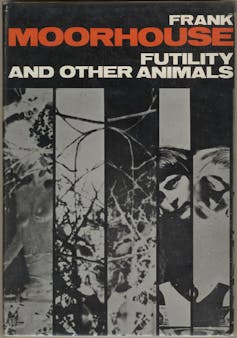
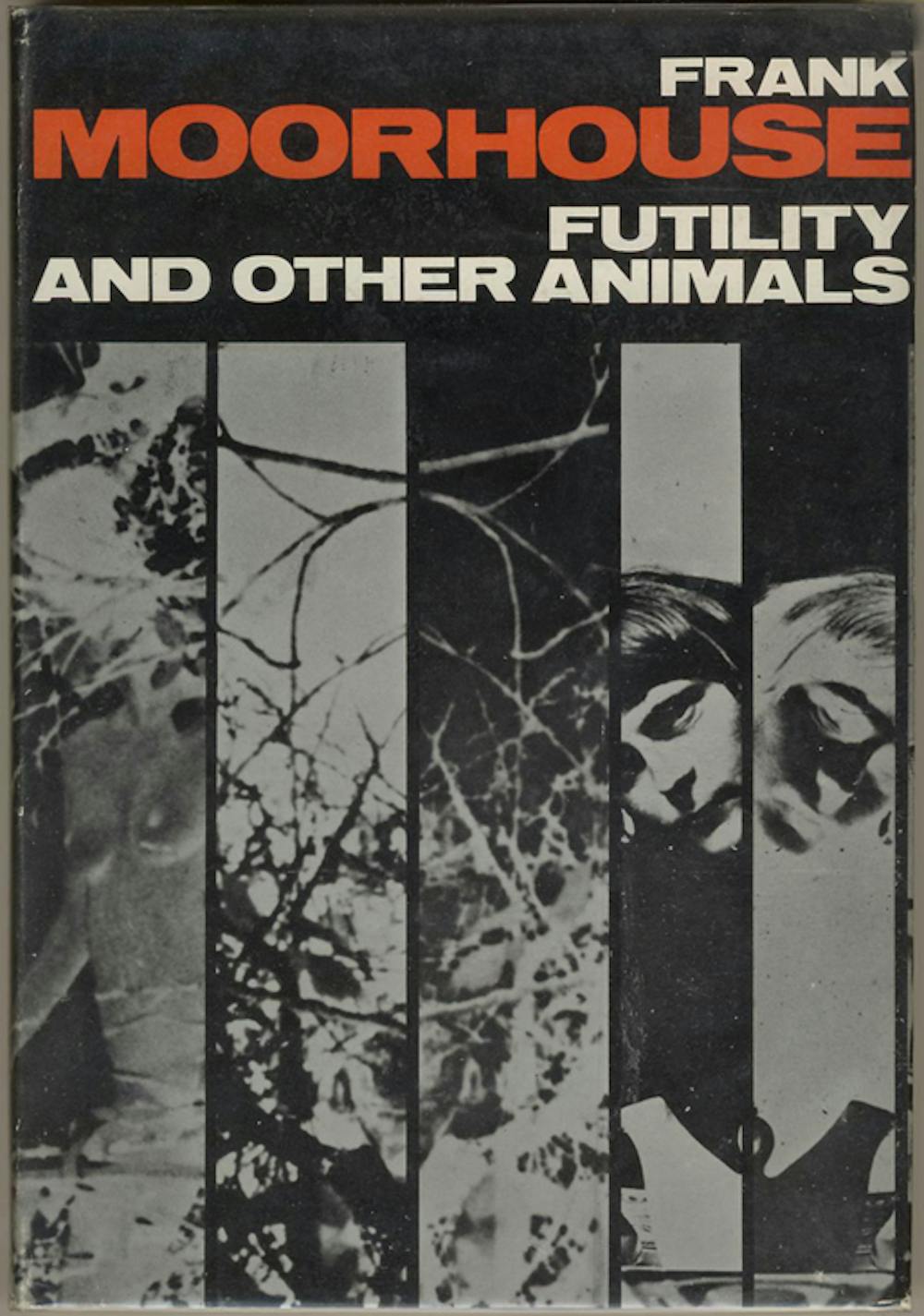
In one story in Futility and Other Animals he writes about a young man who develops a sexual crush on a visiting American:
There in the alcove of the pub our hands gripped. Mine partly the grip of a mate and partly the grip of a lover. Mark’s? How did Mark’s hands grip? And then a blush. And then a laugh.
Despite the growing visibility of the gay liberation movement in the Balmain milieu, straight men, even self-professed radicals, were not always comfortable with homosexuality, according to Moorhouse. He once told me that “there’s a difference between politics and what men in an intensely homosocial society
were prepared to acknowledge”.
Michael Wilding remarks on Moorhouse’s homosexuality in his memoir, Growing Wild:
Frank’s homosexuality was something it took me a while to realise […] Gillian and his other ex-girlfriends joked about our friendship, but I thought that was merely a joke and didn’t detect the dark undercurrents. His proud announcement that he had opened the dancing at the Purple Onion [a gay club] meant nothing to me, night clubs were never part of my world. As far as I knew his late-night runs in Rushcutters Bay park were just part of his exercise routine.
Moorhouse said of his writing about homosexuality, ‘when I was writing fiction, I had numbed myself to the risks I was taking’.
Author provided (no reuse)
Experimental times
Moorhouse grew up in a world where “passing” as straight was a basic necessity if you wanted to keep the love and approval of your family and the ability to earn a living and basic social acceptance.
The fact that he openly wrote homosexual characters into his first book of short stories is a mark of his commitment to his life as a writer, in the face of the undeniable pull his middle-class and conformist upbringing exercised on him.
In one story in Futility and Other Animals he writes about a young man who develops a sexual crush on a visiting American:
There in the alcove of the pub our hands gripped. Mine partly the grip of a mate and partly the grip of a lover. Mark’s? How did Mark’s hands grip? And then a blush. And then a laugh.
Despite the growing visibility of the gay liberation movement in the Balmain milieu, straight men, even self-professed radicals, were not always comfortable with homosexuality, according to Moorhouse. He once told me that “there’s a difference between politics and what men in an intensely homosocial society
were prepared to acknowledge”.
Michael Wilding remarks on Moorhouse’s homosexuality in his memoir, Growing Wild:
Frank’s homosexuality was something it took me a while to realise […] Gillian and his other ex-girlfriends joked about our friendship, but I thought that was merely a joke and didn’t detect the dark undercurrents. His proud announcement that he had opened the dancing at the Purple Onion [a gay club] meant nothing to me, night clubs were never part of my world. As far as I knew his late-night runs in Rushcutters Bay park were just part of his exercise routine.
 Michael Wilding (left, with Moorhouse at centre) said of his friend, ‘Frank’s homosexuality was something it took me a while to realise’.
Author provided (no reuse)
After this slightly anxious reflection on Moorhouse’s homosexual side, Wilding recounts that, “drunk or stoned after the pub or a party”, he once gave into the “experimental times” and decided to “experiment” with his friend.
I climbed into his bed. He lay there inert. I reached out in the direction of his genitals but encountered nothing. Significant absence, as the literary theorists put it. Then one of us fell out of the bed. It was a narrow one. I don’t know whether it was then that peering over the side to see where he had fallen, or lying on the floor looking under the bed, I saw the rifle.
It’s an interesting segue from the penis to the gun, and one guaranteed to waken the Freudian in Moorhouse. Wilding goes on to say that seeing the rifle caused him to harbour oddly unspecified “grim suspicions”.
Moorhouse was open about keeping a gun at the time of this incident. Indeed, as he recounts in the documentary A Writer’s Camp, made by director Judy Rymer in 1987, he bought a Winchester rifle with his first publisher’s advance, “to satisfy a boyish dream”.
In the film, which details the 19 years he spent at Ewenton Street in Balmain, where he had his writer’s studio, Moorhouse is interviewed by his desk and goes to the corner of his office to take the rifle out of its carrying case. He used the rifle for hunting with his friend and patron Murray Sime.
Moorhouse goes on to say that it played a number of parts in his life: “If it was under the bed, it scared away the phantoms of anxiety” and that “in very low periods it’s been the rifle I’ve considered using to end it all”.
Michael Wilding (left, with Moorhouse at centre) said of his friend, ‘Frank’s homosexuality was something it took me a while to realise’.
Author provided (no reuse)
After this slightly anxious reflection on Moorhouse’s homosexual side, Wilding recounts that, “drunk or stoned after the pub or a party”, he once gave into the “experimental times” and decided to “experiment” with his friend.
I climbed into his bed. He lay there inert. I reached out in the direction of his genitals but encountered nothing. Significant absence, as the literary theorists put it. Then one of us fell out of the bed. It was a narrow one. I don’t know whether it was then that peering over the side to see where he had fallen, or lying on the floor looking under the bed, I saw the rifle.
It’s an interesting segue from the penis to the gun, and one guaranteed to waken the Freudian in Moorhouse. Wilding goes on to say that seeing the rifle caused him to harbour oddly unspecified “grim suspicions”.
Moorhouse was open about keeping a gun at the time of this incident. Indeed, as he recounts in the documentary A Writer’s Camp, made by director Judy Rymer in 1987, he bought a Winchester rifle with his first publisher’s advance, “to satisfy a boyish dream”.
In the film, which details the 19 years he spent at Ewenton Street in Balmain, where he had his writer’s studio, Moorhouse is interviewed by his desk and goes to the corner of his office to take the rifle out of its carrying case. He used the rifle for hunting with his friend and patron Murray Sime.
Moorhouse goes on to say that it played a number of parts in his life: “If it was under the bed, it scared away the phantoms of anxiety” and that “in very low periods it’s been the rifle I’ve considered using to end it all”.
 It seems unlikely that Wilding, who was a close friend of Moorhouse’s at the time, would have been unaware that his fellow author owned at least one gun. Wilding’s anecdote about the fumbled sexual encounter and the gun under the bed is, however, illuminating on another count.
Moorhouse always juggled an apparent but central contradiction in his personality and his interests. On one hand, he was a man with a strong sense of his feminine side. Moorhouse had a lifelong interest in cross-dressing in private, and he talked openly in interviews about it. On the other, he always enjoyed traditionally masculine pursuits such as going bush and hunting.
This apparent contradiction in his own personality and persona is connected to his lifelong fascination with crossing borders – including the borders of gender and sexuality.
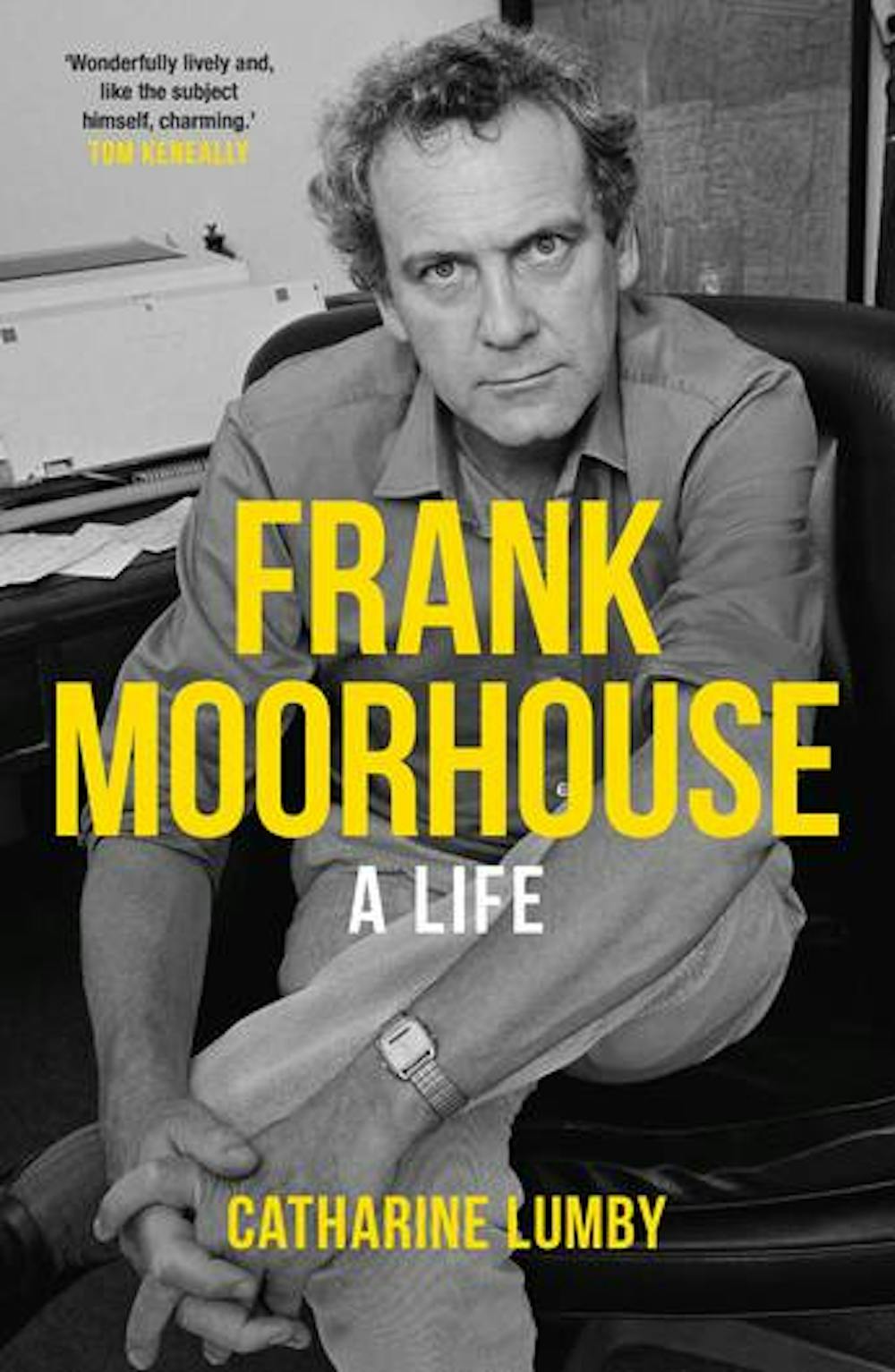
This is an edited extract from Frank Moorhouse: A Life by Catharine Lumby (Allen & Unwin).
Authors: Catharine Lumby, Professor of Media, Department of Media, University of Sydney
It seems unlikely that Wilding, who was a close friend of Moorhouse’s at the time, would have been unaware that his fellow author owned at least one gun. Wilding’s anecdote about the fumbled sexual encounter and the gun under the bed is, however, illuminating on another count.
Moorhouse always juggled an apparent but central contradiction in his personality and his interests. On one hand, he was a man with a strong sense of his feminine side. Moorhouse had a lifelong interest in cross-dressing in private, and he talked openly in interviews about it. On the other, he always enjoyed traditionally masculine pursuits such as going bush and hunting.
This apparent contradiction in his own personality and persona is connected to his lifelong fascination with crossing borders – including the borders of gender and sexuality.
This is an edited extract from Frank Moorhouse: A Life by Catharine Lumby (Allen & Unwin).
Authors: Catharine Lumby, Professor of Media, Department of Media, University of Sydney 
















