

Koalas need their booster shots too. Here's a way to beat chlamydia with just 1 capture and less trauma
- Written by Kenneth W Beagley, Professor of Immunology, Queensland University of Technology
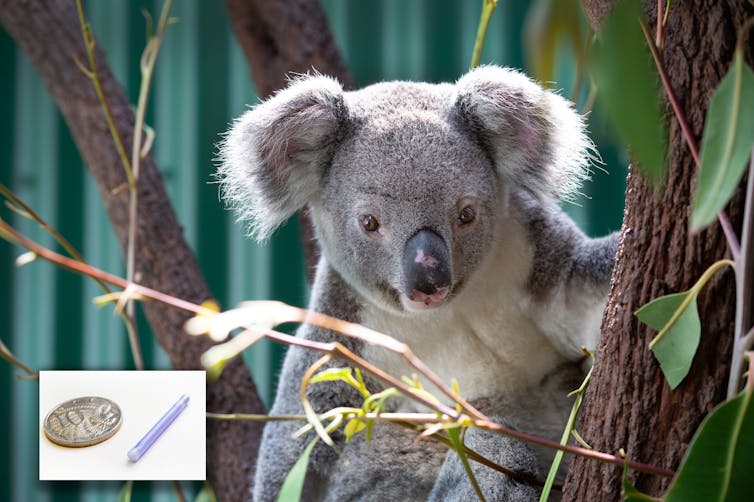
Chlamydia is a major threat to koala populations across Australia. This bacterial disease infects between 20% and 90% of individuals in koala populations. It’s a major cause of the rapid decline of many wild populations, particularly in South-East Queensland and northern New South Wales.
Our group at Queensland University of Technology (QUT) has developed two vaccines to target chlamydial infections. One of these vaccines, now being trialled in collaboration with Dr Michael Pyne and his staff at Currumbin Wildlife Hospital, has recently had some outstanding results in a wild koala population on the Gold Coast. This population had been declining rapidly due to high rates of the disease.
Two years into the five-year trial, we have seen more than 25 joeys born to vaccinated females. The program involved vaccinating, collaring and releasing 10-20% of young animals each year. All joeys and mums were chlamydia-free. In addition, 11 out of 13 young males vaccinated remain negative at 12–24 months after vaccination.
Like most vaccines, however, this vaccine requires two shots, 30 days apart. This means wild animals must be held in captivity for a month, which many don’t like, or released and recaptured for the booster dose. This is both expensive and traumatic for the animals.
It was during a chat over coffee a few years ago that we first pondered the question, “Could we develop a delayed-release vaccine implant that is given at the same time as the first vaccine and releases the booster vaccine dose 30 days later?”

Why vaccination is the best approach
Chlamydia is spread by direct physical contact between koalas. Symptoms include blindness, urinary tract infections (wet bottom), infertility in females and sperm damage in males.
While antibiotics can be used to treat the eye disease, they cannot be used to treat infertility. This is because antibiotics can destroy the gut bacteria essential for koalas to digest their food, eucalypt leaves.
The vaccine is the best option and is also very safe. We detected no adverse side-effects across multiple studies. The only complication is the need for a booster shot.
So are implants a solution? Our recent research suggests the answer is yes, at least in a sheep model. We have now received a grant from the federal Saving Koalas Fund to develop this implant technology for a koala vaccine against the Chlamydia bacterium.
In our sheep trial of a first-generation implant, animals that received the primary vaccination by injection plus a booster implant developed immune T cell numbers equivalent to animals receiving two vaccinations by injection, together with slightly reduced antibody levels.
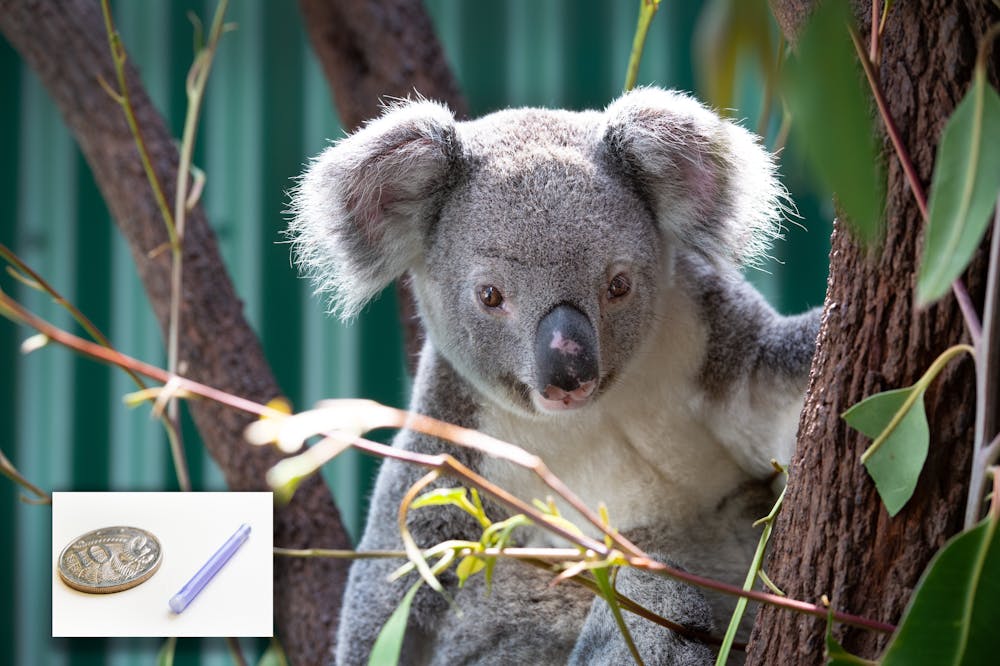 The implant (shown next to a 10-cent coin for a size comparison) is inserted into a koala when it receives its first vaccination, meaning the animal has to be captured only once.
Kenneth Beagley
The implant (shown next to a 10-cent coin for a size comparison) is inserted into a koala when it receives its first vaccination, meaning the animal has to be captured only once.
Kenneth Beagley
Read more: A cull could help save koalas from chlamydia, if we allowed it
How does the implant work?
The implant is a polymer tube developed by the QUT team. It borrows from technology already used by the group for making polymer scaffolds to support tissue growth. The team screened a range of biodegradable polymers for ones that would degrade over just a few weeks. They also had to be flexible enough to not break prematurely when implanted beneath the skin.
Manufacturing the polymer pellets into tubes allows the booster vaccine to be filled into the tube. It’s similar in size to the human Implanon contraceptive implant.
When the koala is injected with the first dose, the implant is also inserted under the skin. This starts a process of slow degradation of the implant until the walls of the tube fail and the vaccine is released as a burst. What is left of the implant dissolves as chemicals naturally found in the body.
Read more: A new 3D koala genome will aid efforts to defend the threatened species
What’s the next step?
To scale up the implants we are working with a company in the United States to develop methods to manufacture thousands of implants at once. Our federal funding will allow us to fine-tune a second-generation implant to deliver the chlamydia vaccine to koalas. We will test it for safety in sheep and then evaluate the implant in captive-bred koalas at Currumbin Wildlife Sanctuary.
Our ultimate aim is to be able to capture a wild koala once only and test it for chlamydia. This would be done using a rapid test we have developed. The test can be done in the back of a 4WD vehicle and takes 20–30 minutes.
If the koala is chlamydia-free, we would then vaccinate with the implant and release the animal back into the wild.
Authors: Kenneth W Beagley, Professor of Immunology, Queensland University of Technology

















