

What does having a 'good relationship with food' mean? 4 ways to know if you've got one
- Written by Clare Collins, Laureate Professor in Nutrition and Dietetics, University of Newcastle

Travelling on a train recently you couldn’t help but overhear two women deep in conversation about a mutual obsession with food, including emotional triggers that pushed them towards chocolate and pizza.
They shared feeling guilty about a perceived lack of willpower around food and regularly rummaging through the fridge looking for tasty treats to help soothe emotions. Both lamented not being able to stop and think before eating.
Their discussion was a long way from talking about physiological requirements for food to fuel your body and meet essential nutrient needs. Instead, it was highly emotive.
It got me thinking about the meaning of a healthy relationship with food, how a person’s eating behaviours develop, and how a “good” relationship can be nurtured. Here’s what a “healthy” food relationship can look like.
What does a ‘good relationship with food’ mean?
You can check whether your relationship with food is “healthy” by seeing how many items on this list you tick “yes” to. Are you:
in tune with your body cues, meaning you’re aware when you are hungry, when you’re not, and when you’re feeling full?
eating appropriate amounts and variety of foods across all food groups, at regular intervals so your nutrient, health and wellbeing needs are met?
comfortable eating with others and also eating alone?
able to enjoy food, without feelings of guilt or it dominating your life?
If you didn’t get many ticks, you might need to work on improving your relationship with food.
Read more: Thinking you're 'on a diet' is half the problem – here's how to be a mindful eater
Why does a good relationship with food matter?
A lot of “no” responses indicate you may be using food as a coping mechanism in response to negative emotions. The problem is this triggers the brain’s reward centre, meaning although you feel better, this behaviour becomes reinforced, so you are more likely to keep eating in response to negative emotions.
Emotional eating and bouts of uncontrolled eating are more likely to be associated with eating disorder symptoms and with having a worse quality diet, including lower intakes of vegetable and higher intakes of nutrient-poor foods.
A review of studies on food addiction and mental health found healthy dietary patterns were associated with a lower risk of both disordered eating and food addiction. Higher intakes of vegetables and fruit were found to be associated with lower perceived stress, tension, worry and lack of joy in a cohort of more than 8,000 Australian adults.

How to develop a healthy food relationship
There are ways to improve your relationship with food. Here are some tips:
1. keep a ‘food mood’ diary. Writing down when and where you eat and drink, whom you’re with, what you’re doing, and how all this makes you feel, will give you personal insights into when, what and why you consume the things you do. This helps increase awareness of emotions including stress, anxiety, depression, and factors that influence eating and drinking.
2. reflect on what you wrote in your food mood diary, especially “why” you’re eating when you eat. If reasons include stress, low mood or other emotions, create a distraction list featuring activities such as going for a walk or listening to music, and put it on the fridge, noticeboard or in your phone, so it’s easy to access.
3. practise mindful eating. This means slowing down so you become very aware of what is happening in your body and mind, moment by moment, when eating and drinking, without making any judgement about your thoughts and feelings. Mindless eating occurs when you eat without thinking at all. Being mindful means taking the time to check whether you really are hungry, or whether it’s “eye” hunger triggered by seeing food, “nose” hunger triggered by smells wafting from shops or cafes, “emotional hunger” triggered by feelings, or true, tummy-rumbling hunger.
4. learn about your nutrient needs. Learning why your body needs specific vitamins and minerals and the foods they’re in, rather than just mentally coding food as “good” or “bad”, can help you drop the guilt. Banning “bad” foods makes you want them more, and like them more. Mindfulness can help you gain an appreciation of foods that are both pleasing and nourishing.
5. focus on getting enjoyment from food. Mindless eating can be reduced by focusing on enjoying food and the pleasure that comes from preparing and sharing food with others. One intervention for women who had concerns about dieting and weight control used workshops to raise their awareness of food cues that prompt eating, including emotions, or being in places they normally associate with eating, and also sensory aspects of food including taste, touch, smell, sound and texture. It also aimed to instruct them in how to embrace pleasure from social, emotional and cultural aspects of food. The intervention led to a reduction in overeating in response to emotional cues such as sadness and stress. Another review of 11 intervention studies that promoted eating pleasure and enjoyment found promising results on healthy eating, including better diet quality, healthier portion sizes, healthier food choices and greater liking of healthy foods. Participants also reported healthy food tasted better and got easier to cook more often at home.
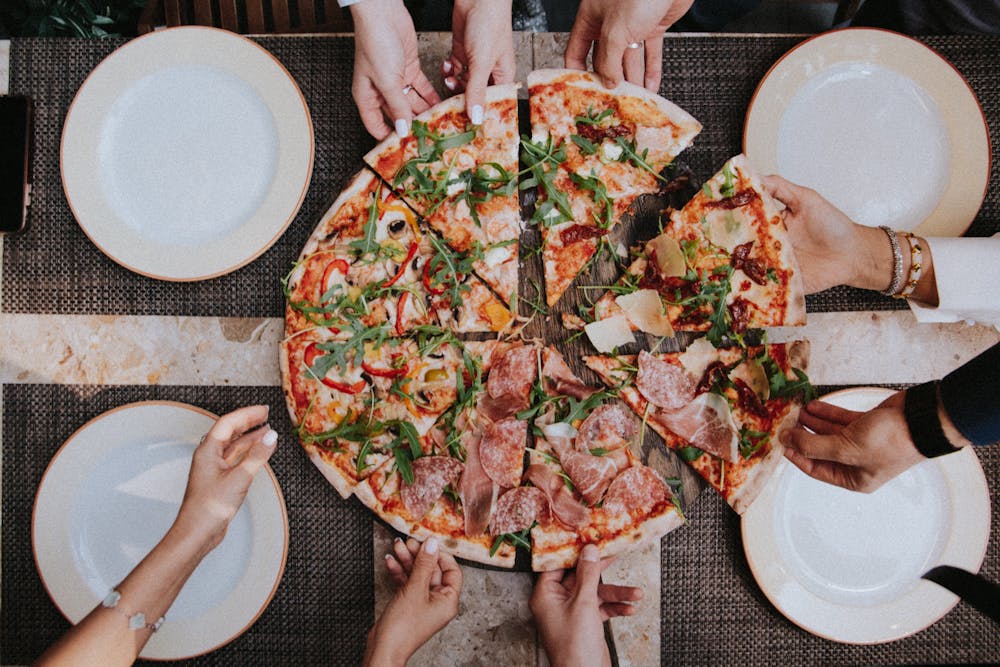 Sharing and enjoying food with others improves our relationship to food.
klara kulikova/Unsplash
Sharing and enjoying food with others improves our relationship to food.
klara kulikova/Unsplash
Where to get help to improve your relationship with food
A healthy relationship with food also means the absence of disordered eating, including binge eating, bulimia and anorexia.
If you, or someone you know, shows signs suggesting disordered eating, such as regularly using restrictive practices to limit food intake, skipping meals, food rituals dictating which foods or combinations to eat at specific times, binge eating, feeling out of control around food, secret eating, inducing vomiting, or use of diet pills, follow up with a GP or health professional.
You can get more information from InsideOut, an Australian institute for eating disorders. Try their online food relationship “check-up” tool.
The Butterfly Foundation also has specific resources for parents and teachers and a helpline operating from 8am to midnight, seven days a week on 1800 334673.
Read more: What is a balanced diet anyway?
Authors: Clare Collins, Laureate Professor in Nutrition and Dietetics, University of Newcastle

















