

disabled Australian author Dorothy Cottrell was 'the Liane Moriarty of the Jazz Age' but is almost unheard of here
- Written by Yves Rees, Lecturer in History, La Trobe University

In the late 1920s, poet Mary Gilmore – the woman on the A$10 note – declared she’d encountered only two instances of “genius” during her four decades in Australian literature. The first was a man who remains a household name: Henry Lawson, bush poet, author of iconic stories like The Drover’s Wife, who upon his death received a state funeral. Today, Lawson’s work is still widely taught in schools.
But what of Gilmore’s second genius? The writer who “wrote an Australia never before presented in prose”? This second virtuoso was a young, disabled woman and – funnily enough – she has been largely forgotten.
In the 1920s and 30s, Dorothy Cottrell (1902-1957) was an international bestselling novelist – not to mention a disability advocate, world traveller, and, disturbingly, a settler woman who effectively stole an Aboriginal child. Her short life was rich in drama and incident. But these days her works are out of print, and almost nobody knows her name.
Cottrell burst into the literary world in 1927 as an unknown 24-year-old from Ularunda, a remote sheep station on Bidjara land in southwest Queensland. That year, the unpublished author sent a fiction manuscript called The Singing Gold to the Ladies Home Journal, an American monthly that serialised fiction read by millions of subscribers. This was an audacious act: a complete nobody from the boondocks daring to submit her work to one of the world’s most prominent magazines.
But Cottrell’s gamble paid off. Barely six weeks later, she received a telegram from the Journal’s editor Barton Currie. “Glad to publish your novel in Ladies’ Home Journal and pay you 5000 dollars for all American and Canadian serial rights,” Currie wrote.
At the time, $5,000 was a small fortune. Currie also offered to help Cottrell find a book publisher. It was a fairy tale come true, every writer’s fantasy. At first, Cottrell didn’t believe it could be real. When the news finally sunk in, she “nearly died of joy”.
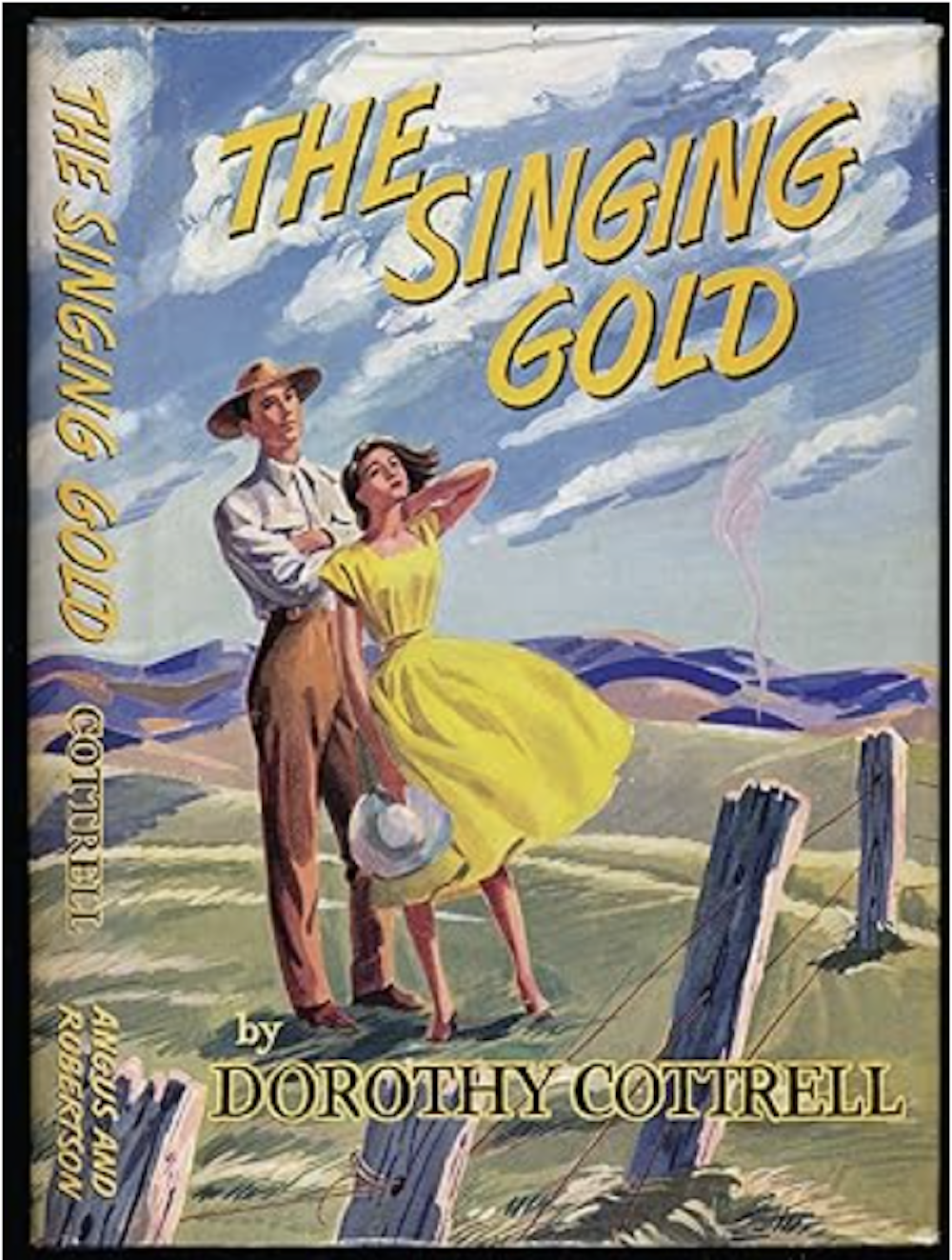
After the Sydney press got hold of the story, Cottrell was heralded as a “new star in the world of fiction”. She was a “brilliant new comet” whose “sensational rise to fame” promised to advertise the “spirit of Australia” to the world. In the Ladies Home Journal, Cottrell’s novel was introduced to American readers as “a work of genius” unsurpassed in recent years.
Within a year, Cottrell and her husband Walter were on a steamship to Los Angeles, where she was given a welcome fit for a film star. Everyone wanted a piece of the prodigy from Down Under. In a testament to her celebrity, the couple were gifted five acres of land in southern California’s Lake Elsinore, where they set about building an adobe mansion.
A stolen child
It was a dramatic beginning, but Cottrell always had a taste for drama. A few years earlier, she’d secretly married Walter – the bookkeeper from her family’s station – then ran off with him to remote Dunk Island on the Great Barrier Reef, much to the shock and horror of her relatives. The couple spent six months on Dunk, sleeping in a rustic shack and living off coconuts and fresh-caught fish. Later, they moved to Sydney, then worked as pedlars in rural NSW.
These adventures provided the raw material for her novel The Singing Gold. Notably, Cottrell did all this with a significant disability. A childhood bout of polio had left Cottrell paralysed from the waist down, and thereafter she spent her days in a wheelchair.
Cottrell also loved cars and guns. Aged ten, she was already a crack shot with a rifle. Later, she had automobiles adjusted so she could operate the controls by hand. After buying a six-cylinder Oaklands car with her earnings from the Ladies Home Journal, she and Walter set off on a road trip throughout Queensland and the Northern Territory during winter 1927.
Here we encounter a distressing part of Cottrell’s story. During this road trip, while at Alexandria Downs, the writer took an Aboriginal girl from her mother. The child, called May, was six years old. Under colonial law, this was all above board. Under the government policy of the day – protectionism – taking May from her family was encouraged.
Cottrell sought and was given approval from the local Protector of Aboriginals. In her mind, she was rescuing a vulnerable child. Today, however, it’s clear May was a member of the Stolen Generations, and Cottrell was the thief.
After returning to Ularunda, Cottrell was distracted by her writing, and soon lost interest in May. Female relatives stepped in to raise the child. When the writer left for California the following year, May – now renamed Barbara Cherry Lee – remained in Sydney in the care of an elderly aunt. As far as we know, May/Barbara was never reunited with her mother or Country.
‘The starving writer has vanished’
In 1929, with Cottrell now in California, The Singing Gold was published by Houghton Mifflin to rave reviews. The novel was an autobiographical bildungsroman, classic bush Australiana with a “sunburnt, hoydenish” heroine reminiscent of Sybylla in Miles Franklin’s My Brilliant Career (1902). The book ended up as the top six bestseller of 1929. Alongside US publication, The Singing Gold was also serialised in Australia and published in London. There was even talk of a Hollywood film adaption.
Read more: Guide to the classics: My Brilliant Career and its uncompromising message for girls today
In 1930, Cottrell’s second novel hit the shelves. Tharlane was another tale of outback Australia, this time with a male protagonist. That year, the Los Angeles Times reported Cottrell’s two novels “have aroused more interest throughout the English-speaking world than have any other pair by one author in the last few years.”
Thanks to all this hype, Cottrell was raking in the cash. “There is very great wealth in American writing,” she reported home. She was the Liane Moriarty of the Jazz Age.
After this stellar beginning, Cottrell’s career hit the skids during the Great Depression. As the literary market contracted, her income plummeted. Although a critical success, Tharlane had modest sales. Walter lost his job at the local bank. By 1932, the couple had lost their Lake Elsinore home.
They hit the road and eventually settled in Florida, where Cottrell made a living selling short fiction to magazines. Thanks to financial troubles and health concerns, the Cottrells found it impossible to return to Australia. In 1939, they became US citizens. For the next 15 years, Florida would be their base. Yet the couple remained keen travellers and crossed the US by road on six occasions.
 Goodreads
As economic conditions improved, Cottrell once again began to earn good money. She worked with top literary agents Eric Pinker and Paul Reynolds, and comfortably supported herself and her husband with her pen. “The starving writer has vanished,” she told one correspondent, “writing today is a very well-paid trade.”
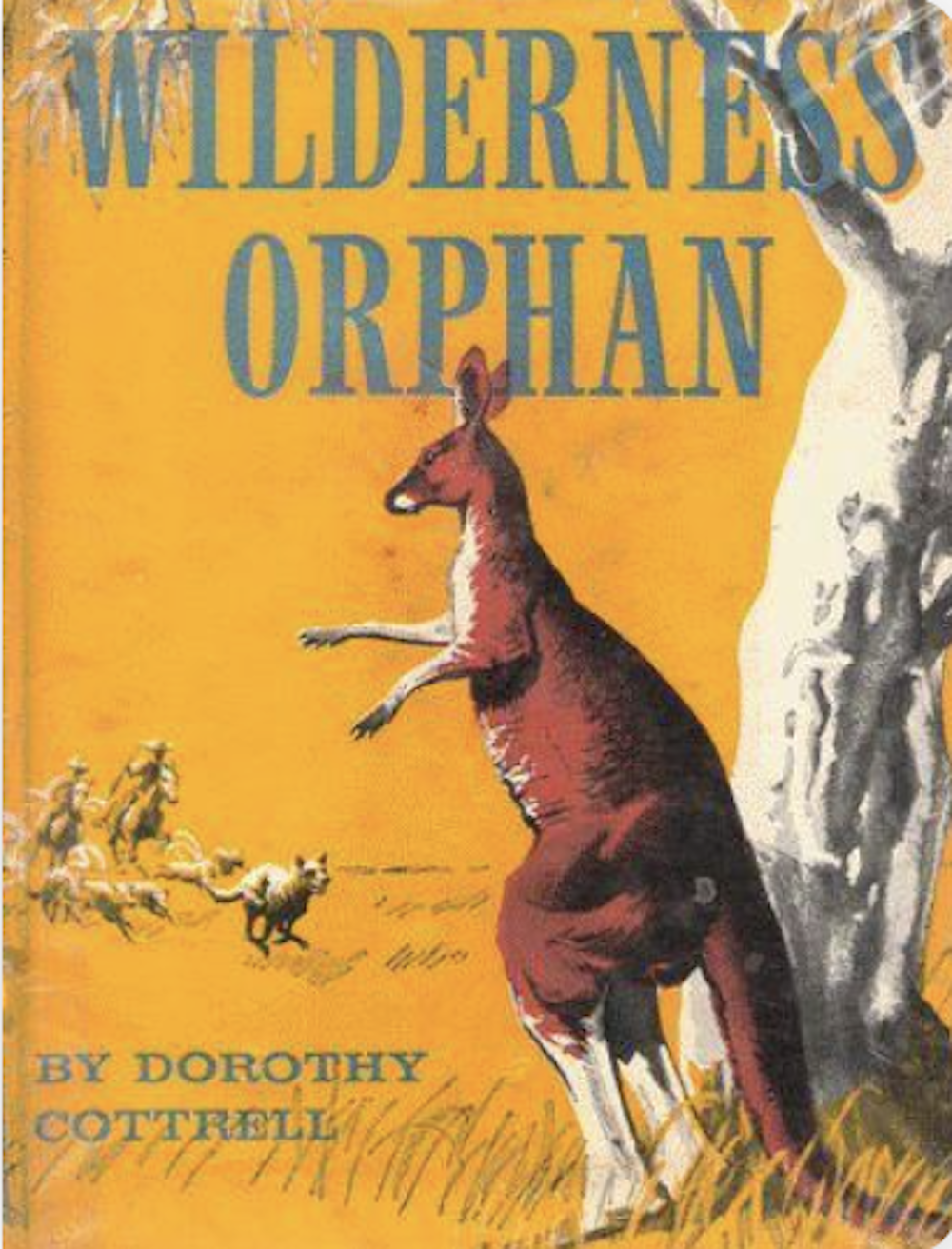
By the 1940s, Cottrell was a regular contributor to the Saturday Evening Post, then known as the top US literary/news magazine. In her mind, this was the ultimate sign she’d “made it”. Cottrell also published children’s fiction and in 1936 her story Wilderness Orphan was adapted for the screen by Sydney’s Cinesound studios.
‘How to Wear a Wheelchair’
In 1950, Cottrell published a Post feature called “How to Wear a Wheelchair” – a rare occasion in which this private woman spoke about her disability. In this piece, Cottrell challenged the stigma around disability, criticising the tendency to pity or recoil from those she called “the handicapped”.
In her analysis – which anticipated the “social model” of disability that emerged in the 1980s – disability was not an individual tragedy but “a fact of existence” that could be accommodated via environmental adjustments. “I have had a radiantly happy life,” she assured readers.
After leaving Australia in 1928, Cottrell did not return until 1954. That year, she and her husband came home to take over the family station. While in Queensland, they adopted an 11-year-old boy called Wayne. When the Cottrells returned to Florida in 1956, Wayne came with them. Tragically, Dorothy died of heart attack soon after, in June 1957. She was only 54. The next year, her widow and adoptive son made a permanent return to Queensland.
By the time of her death, Cottrell had been largely forgotten in her home country. The author did not receive a single obituary in the Australian press. In the 1970s, the librarian Barbara Ross – one of few researchers to study Cottrell’s work – had to fight to have her included in the Australian Dictionary of Biography. At the time, the dictionary’s internal reviewers dismissed Cottrell as a “trashy writer” who was “moreover an expatriate”.
This dismissal speaks volumes about the hierarchies of Australian culture. Although once hailed as a “genius” on two continents, Cottrell’s expatriatism and her success in the feminised world of commercial fiction ensured she would be sidelined by the local literary establishment.
She was too female, too popular, too “unAustralian” – and perhaps, too disabled – to be taken seriously. Lawson would be commemorated with a bronze statue in Sydney’s Domain, while Cottrell would remain an obscure footnote in the story of Australian literature.
Authors: Yves Rees, Lecturer in History, La Trobe University
Goodreads
As economic conditions improved, Cottrell once again began to earn good money. She worked with top literary agents Eric Pinker and Paul Reynolds, and comfortably supported herself and her husband with her pen. “The starving writer has vanished,” she told one correspondent, “writing today is a very well-paid trade.”
By the 1940s, Cottrell was a regular contributor to the Saturday Evening Post, then known as the top US literary/news magazine. In her mind, this was the ultimate sign she’d “made it”. Cottrell also published children’s fiction and in 1936 her story Wilderness Orphan was adapted for the screen by Sydney’s Cinesound studios.
‘How to Wear a Wheelchair’
In 1950, Cottrell published a Post feature called “How to Wear a Wheelchair” – a rare occasion in which this private woman spoke about her disability. In this piece, Cottrell challenged the stigma around disability, criticising the tendency to pity or recoil from those she called “the handicapped”.
In her analysis – which anticipated the “social model” of disability that emerged in the 1980s – disability was not an individual tragedy but “a fact of existence” that could be accommodated via environmental adjustments. “I have had a radiantly happy life,” she assured readers.
After leaving Australia in 1928, Cottrell did not return until 1954. That year, she and her husband came home to take over the family station. While in Queensland, they adopted an 11-year-old boy called Wayne. When the Cottrells returned to Florida in 1956, Wayne came with them. Tragically, Dorothy died of heart attack soon after, in June 1957. She was only 54. The next year, her widow and adoptive son made a permanent return to Queensland.
By the time of her death, Cottrell had been largely forgotten in her home country. The author did not receive a single obituary in the Australian press. In the 1970s, the librarian Barbara Ross – one of few researchers to study Cottrell’s work – had to fight to have her included in the Australian Dictionary of Biography. At the time, the dictionary’s internal reviewers dismissed Cottrell as a “trashy writer” who was “moreover an expatriate”.
This dismissal speaks volumes about the hierarchies of Australian culture. Although once hailed as a “genius” on two continents, Cottrell’s expatriatism and her success in the feminised world of commercial fiction ensured she would be sidelined by the local literary establishment.
She was too female, too popular, too “unAustralian” – and perhaps, too disabled – to be taken seriously. Lawson would be commemorated with a bronze statue in Sydney’s Domain, while Cottrell would remain an obscure footnote in the story of Australian literature.
Authors: Yves Rees, Lecturer in History, La Trobe University 
















