

Modern Australian
The Times

Container deposit schemes reduce rubbish on our beaches. Here’s how we proved it

  • Written by Kay Critchell, Lecturer in Oceanography, Deakin University
Container deposit schemes reduce rubbish on our beaches. Here’s how we proved it

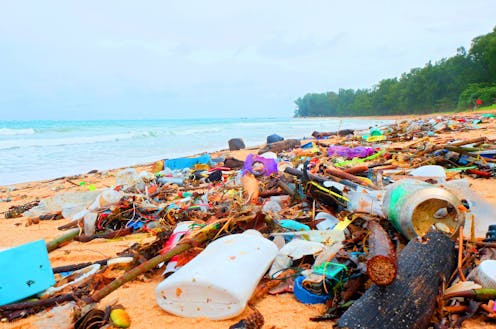
Our beaches are in trouble. Limited recycling programs and a society that throws away so much have resulted in more than 3 million tonnes of plastic polluting the oceans. An estimated 1.5–1.9% of this rubbish ends up on beaches.

So can waste-management strategies such as container deposit schemes make a difference to this 50,000–60,000 tonnes of beach rubbish?

The Queensland government started a container deposit scheme in 2019. We wanted to know if it reduced the rubbish that washed up on beaches in a tourist hotspot, the Whitsundays region.

To find out, our study, the first of its kind, used data from a community volunteer group through the Australian Marine Debris Initiative Database.

It turned out that for the types of rubbish included in the scheme – plastic bottles and aluminium cans – the answer was an emphatic yes.

Black and white photograph of a man walking along a beach covered in discarded drink cans and other rubbish
A rubbish-strewn Henley Beach in Adelaide, where public outrage led to Australia’s first container deposit scheme in April 1971. EPA/AAP

Read more: Spotting plastic waste from space and counting the fish in the seas: here's how AI can help protect the oceans

Container deposit schemes work

After the scheme began, there were fewer plastic bottles and aluminium cans on Whitsundays beaches. Volunteer clean-up workers collected an average of about 120 containers per beach visit before the scheme began in 2019. This number fell to 77 in 2020.

Not only that, but those numbers stayed down year after year. This means people continued to take part in the scheme for years.

Rubbish that wasn’t part of the scheme still found its way to the beaches.

However, more types of rubbish such as larger glass bottles are being added to the four-year-old Queensland scheme. Other states and territories have had schemes like this for many years, the oldest in South Australia since 1971.

But we didn’t have access to beach data from before and after those schemes started. So our findings are great news, especially as some of these other schemes are set to expand too. The evidence also supports the creation of new schemes in Victoria this November and Tasmania next year.

These developments give reason to hope we will see further reductions in beach litter.

Read more: Spin the bottle: the fraught politics of container deposit schemes

The data came from the community

To find out whether the scheme has reduced specific sorts of rubbish on beaches we needed a large amount of data from before and after it began.

The unsung heroes of this study are the diligent volunteers who provided us with these data. They have been recording the types and amounts of rubbish found during their cleanups at Whitsundays beaches for years.

Eco Barge Clean Seas Inc has been doing this work since 2009. In taking that extra step of counting and sorting the rubbish, they may not have known it at the time, but they were creating a data gold mine. We would eventually use their data to prove the container deposit scheme works.

Beached litter on a Whitsunday island where Eco Barge Clean Seas’ team has been cleaning up beaches since 2009. Eco Barge Clean Seas Inc. Used with permission, Author provided (no reuse)

The rubbish clean-ups are continuing. This means we’ll be able to see how adding more rubbish types to the scheme will further reduce rubbish on beaches.

The long-term perspective we can gain from such data is testament to this sustained community effort.

Read more: Local efforts have cut plastic waste on Australia's beaches by almost 30% in 6 years

There’s still more work to do

So if we recycle our plastics, why do we still get beaches covered in rubbish? The reality is that most plastics aren’t recycled. This is mainly due to two problems:

  • technological limitations on the sorting needed to avoid contamination of waste streams
  • inadequate incentives for people to reduce contamination by properly sorting their waste, and ultimately to use products made from recycled waste.

Our findings show we can create more sustainable practices and a cleaner environment when individuals are given incentives to recycle.

However, container deposit schemes don’t just provide a financial reward. Getting people directly involved in recycling fosters a sense of responsibility for the environment. This connection between people’s actions and outcomes is a key to such schemes’ success.

Two volunteers pick up rubbish on a beach
Community volunteers not only help clean up beaches, they also can provide valuable data for researchers and policymakers. Jono Searle/AAP

Read more: The new 100% recyclable packaging target is no use if our waste isn't actually recycled

Our study also shows how invaluable community-driven clean-up projects are. Not only do they reduce environmental harm and improve our experiences on beaches, but they can also provide scientists like us with the data we need to show how waste-management policies affect the environment.

Waste management is a concern for communities, policymakers and environmentalists around the world. The lessons from our study apply not only in Australia but anywhere that communities can work with scientists and governments to solve environmental problems.

Authors: Kay Critchell, Lecturer in Oceanography, Deakin University

Read more https://theconversation.com/container-deposit-schemes-reduce-rubbish-on-our-beaches-heres-how-we-proved-it-213562

Road Signs: Understanding Their Role in Clear and Effective Signage

Effective signage and display hardware can help businesses communicate information, promote products and organise customer or visitor movement. Road...

Bottle Label Printing: Key Factors to Consider Before Your Next Packaging Run

Effective packaging begins with understanding the product, bottle material, artwork and production requirements when planning bottle label printing. H...

Planning a Long-Distance Move With Interstate Movers Melbourne

Moving between states involves more planning than a typical local relocation. Along with packing and transporting household belongings, you need to...

Understanding the Role of an I/O Controller in Industrial Automation

Modern industrial systems depend on accurate communication between sensors, machines and control systems. An I/O controller can help manage this commu...

How the Right Mining Hose Supports Demanding Operations

Mining environments place considerable demands on equipment used for material transfer, water management and processing. Hoses operating in these co...

Simple Ideas for Making Social Gatherings More Memorable

We have all been to those parties where everyone just stands around the kitchen island, staring at their phones, waiting for someone else to make a mo...

Outdoor Wall Lights: Improving Exterior Lighting Around Your Home

Lighting can influence how a room looks, feels and functions, so the right fitting should be selected according to both appearance and practical req...

Commercial Office Cleaning: Combining Routine Office Cleaning With Melbourne Service

Keeping a workplace clean requires a service that can accommodate everyday tasks as well as the particular needs of the business. Professional comme...

Caravan Sales in Queensland: How to Find the Right Caravan for Sale QLD

Caravan ownership is about more than having somewhere to sleep while travelling. For many Queenslanders, it is one of the best ways to explore regio...

What Sir Walter Buffalo Turf Actually Costs in 2026 (And Why Quotes Vary So Much)

Two quotes landed on a Hills District homeowner's kitchen table last spring for the exact same 80-square-metre backyard. One said $12 a metre. The o...

Nearly 1,300 NSW Hospital Beds Are Occupied By People Who Are Ready To Go Home

1,276 people in NSW hospitals have been medically cleared for discharge but remain in hospital because they're still waiting for NDIS or aged care sup...

National Survey Launched to Measure Operational Impacts of Federal NDIS Policy Reforms

The effects of recent NDIS reforms are beginning to move beyond policy papers and into day to day service delivery. A new national survey is asking ...

Beyond the Nappy Cake: Baby Shower Gifts That Get Used

What new Australian parents unwrap, keep, and quietly thank you for months later. Six weeks after my daughter was born, I did an audit of the baby sh...

Parent-Advocates Are Reshaping Frontline Disability Service Delivery

Parents have always been part of the disability sector. They advocate, coordinate services, challenge decisions and often become the person holding ev...

Vista Cruises Enters "Two-Flagship Era" as Vista Aurora Completes Inaugural Voyage

Vista Aurora Sets Sail along the Yangtze. (Photo courtesy of the company)YICHANG, China — August 5, 2026 — Vista Aurora, a high-end interprovinc...

A Digital Preparation Checklist For International Medical Conferences

An international medical conference compresses many responsibilities into a few days. A delegate may need to present research, move between venues, ...

The Growing Popularity of Lab Grown Diamonds in Sydney and Hong Kong

The diamond industry has changed significantly in recent years as more buyers seek ethical, affordable, and sustainable alternatives to mined diamon...

Modern AI SEO Agency vs Traditional SEO: What’s the Difference

Search engine optimisation has changed dramatically over the past few years. Search engines have become smarter, user behaviour has evolved, and bus...
















