

The disability royal commission delivers its findings today. We must all listen to end violence, abuse and neglect
- Written by Sally Robinson, Professor, Disability and Community Inclusion, Flinders University
The Royal Commission into Violence, Abuse, Neglect and Exploitation of People with Disability will hand its final report and recommendations to the Australian governor general today.
Many people are waiting keenly to hear how the recommendations can make a difference to the lives of people with disability. Others are unsure how the royal commission could improve people’s safety and wellbeing.
Since it was established in mid-2019, the disability royal commission has held 32 public hearings with evidence from 837 witnesses and received 7,944 submissions – 55% from people with disability and 29% from family members.
While we wait for the report to be made public, we can learn from how government action from the previous child abuse royal commission helped improve people’s lives.
What was involved
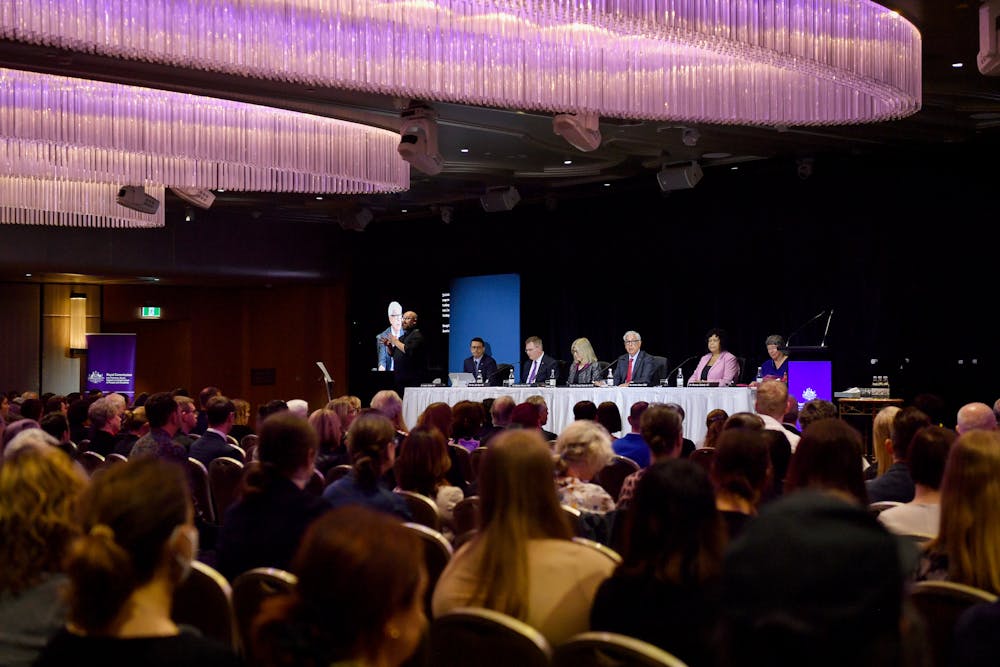
The disability royal commission was a big and long investigation. Over four and half years, it held hearings, heard stories from witnesses, received submissions and conducted research. All the evidence shared by people about their experiences and the poor quality of our current policies means many now have high expectations that the commission must generate change.
High rates of violence and harm against people with disability have not improved very much over many decades. The impact of this ongoing history of violence was evident in the grief and trauma expressed by the thousands of people at the commission’s public and private hearings.
Research about violence, harm prevention and personal safety shows change needs be in two parts.
Making changes to specialist systems such as the National Disability Insurance Scheme (NDIS) – currently under review – will help those involved. Bigger change is also needed to address the social problems and criminal acts that compromise the safety and wellbeing of people with disability. This fundamental change is urgently needed.
Read more: Inclusion means everyone: 5 disability attitude shifts to end violence, abuse and neglect
Ableism and ‘othering’
Violence can happen when people with disability are seen as less valuable, or even less than human – a perspective called “othering”.
People with disability are often treated in ways that are not acceptable for any member of society. When people without disability are prioritised, it is called “ableism”. When people with disability are viewed or treated as inferior, it is called “disablism”.
An example of these types of discrimination is when a waiter asks a carer what a person with disability wants, instead of asking the person themselves. Or when a person with disability is expected to live with strangers who hit them, because that is the only housing available.
Read more: Ableism and disablism – how to spot them and how we can all do better
You might think excluding people in these ways does not happen anymore or does not matter. But our current social structures make it depressingly common.
Children with disability report high rates of loneliness and bullying at school. People using disability services are grouped together and called “clients” or “participants” instead of by their names. People cannot reliably find a usable, accessible toilet when they are out and this can stop them from leaving their home at all.
These daily problems set a norm where violence is usual and less likely to be checked or punished.
What we hope the commission will recommend
The disability royal commission listened to people with disability, family members and organisations about what they want to happen. A consistent view is that it is not enough to focus on stopping violent acts where they are happening now. We need strong government responses that address the root causes of segregation, discrimination and exclusion.
Law and policy must prioritise people with disability and their allies in the way solutions are found and implemented.
We know from the government responses to the previous child abuse commission that four factors made an immediate difference to the safety and wellbeing of children:
- bringing child sexual abuse into public discussion
- prioritising the voices of children and survivors in policy and practice about them
- compulsory compliance for any organisation in contact with children to meet safety standards
- requiring any organisation with a history of child abuse to participate in a redress scheme, with sanctions if they refuse or delay.
The disability royal commission recommendations and government responses should follow the example set by the child abuse commission. The need for a voice, compliance and quality standards remains relevant to people affected by disability policy.
And the responsibility for real change stretches beyond government. Change happens when the responsibility to listen and act is taken up by all organisations, communities and members of the public.
What happens next
The disability royal commission recommendations to the government will be important not only for preventing and responding to violence, but also for how people with disability are treated fairly by every person, every day.
Equally, how the government responds to the recommendations is vital. Immediate action, as we saw in the child abuse commission, will demonstrate priority for the rights of people with disability.
Everyone’s contribution to changing attitudes, building belonging and recognising people’s shared humanity is needed to defeat exclusion and prevent violence.
Poet Andy Jackson recited his work Listen at the disability royal commission’s ceremonial closing sitting two weeks ago. His words were a powerful call to action, including the lines:
Here in this awkward, sacred stillness open your mouth, ears, hands
The air is full of seeds
This time let your discomfort mean something
This cannot be the end of listening but its beginning[.]
Authors: Sally Robinson, Professor, Disability and Community Inclusion, Flinders University


















