

Have some economists severely underestimated the financial hit from climate change? Recent evidence suggests yes
- Written by Timothy Neal, Senior lecturer in Economics / Institute for Climate Risk and Response, UNSW Sydney
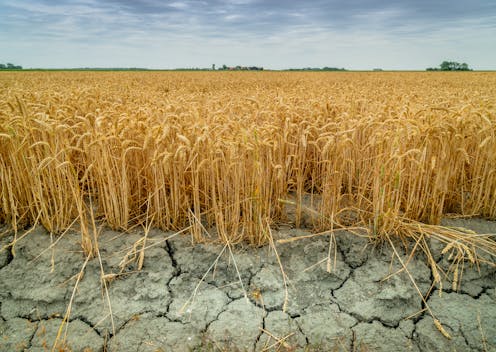
Scientists say severe climate change is now the greatest threat to humanity. Extreme weather is expected to upend lives and livelihoods, intensifying wildfires and pushing ecosystems towards collapse as ocean heatwaves savage coral reefs. The threats are far-reaching and widespread.
So what effect would you expect this to have on the economy in coming decades? It may surprise you, but most economic models predict climate change will just be a blip, with a minor impact on gross domestic product (GDP).
Heating the planet beyond 3℃ is extraordinarily dangerous. The last time Earth was that warm was three million years ago, when there was almost no ice and seas were 20 metres higher. But economic models predict even this level of heat to have very mild impacts on global GDP per capita by century’s end. Most predict a hit of around 1% to 7%, while the most pessimistic modelling suggests GDP shrinking by 23%.
In these models, some countries are completely unaffected by climate change. Others even benefit. For most countries, the damage is small enough to be offset by technological growth. Australia’s recent Intergenerational Report suggests something similar.
This, it is becoming abundantly clear, is a failure of the modelling. To make these models, economists reach into the past to model damage from weather. But severe climate change would be a global shock that is wholly outside our experience. Inevitably, models can’t come close to capturing the upheavals climate change could cause in markets fundamental to human life, such as agriculture.
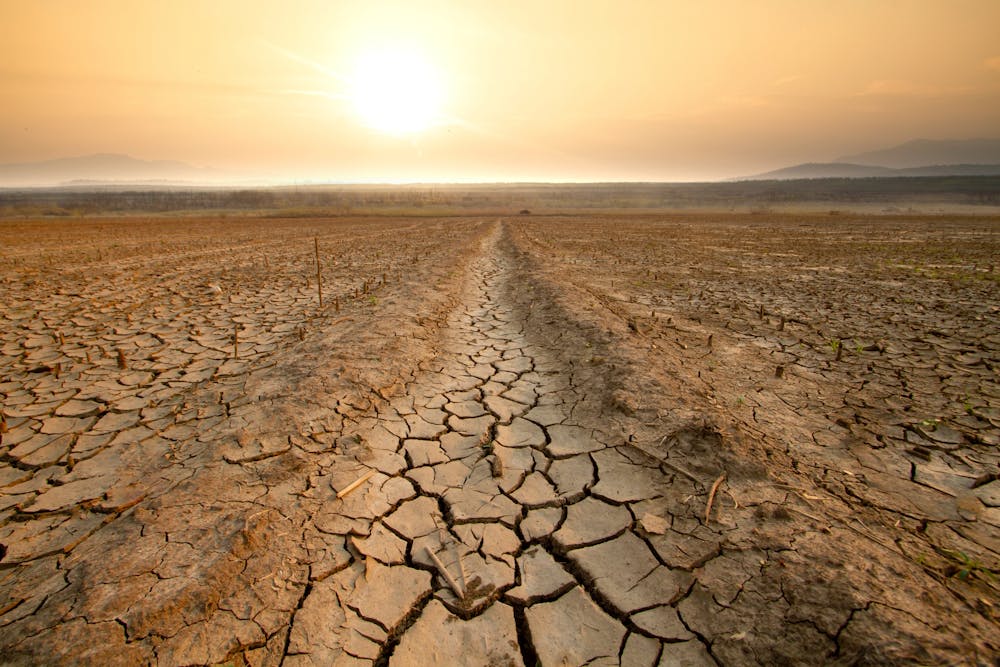
Economic models aren’t capturing the reality
When the Intergenerational Report came out in August, it pictured what Australia would look like in 2063.
What would unchecked climate change mean for the economy? The report estimated what it would do to labour productivity – Australia’s GDP would be lower by between A$135 and $423 billion. Over 40 years, that figure is actually vanishingly small, implying an average yearly effect of around 0.3% of today’s GDP.
The report stressed that a number of impacts of severe climate change were not modelled. Even so, it appears the damages that were included weren’t likely to be major economic concerns.
So why the disconnect between climate scientists and economists?
Most economic models in this area rely on a fundamental premise – that we can gain useful insight into future damage by looking at how economies have been hit by earlier weather shocks.
But there’s a fundamental limitation here. Historically, weather shocks tended to be local or regional. Even if there’s intense drought in, say, India, harvests will still be good elsewhere. And, for economists, that means you can potentially trade your way out of danger.
There is some truth to it. Almost every country – including Australia – uses international trade to cushion themselves from weather shocks. Even in regular years, large parts of the globe rely on imported food.
Here’s how it works. During the intense 2018–2020 drought in eastern Australia, wheat production across the country roughly halved compared to 2017.
In New South Wales and Queensland, the production of all grains fell below consumption levels. That forced these states to import grain, largely from Western Australia where the drought was not as severe.
But what would have happened if Australia’s western and eastern grain regions were hit by severe drought at the same time? Prices would rise significantly. Wholesalers would look to import grains from overseas.
But climate change makes it more and more likely that several parts of the world could be in severe drought at the same time. As Australian researchers have found, climate change could indeed lead to crop failures across multiple regions at once. If that happened, food prices would surge to unprecedented levels.
Read more: What if several of the world's biggest food crops failed at the same time?
You can see the early warning signs already. When there are food production shortfalls, the first thing exporters tend to do is stop exporting to try to keep down domestic prices. India did exactly this earlier this year because of damage to their crops from extreme weather. At a stroke, the world’s largest rice exporter stopped half their exports – and made it harder for other countries to trade their way out of food shortages. Top soy and corn producer Argentina had less to export this year too due to severe drought.
Already, the world’s surging growth in farm productivity has slowed to the lowest rate in 60 years. Yet the risk of global food insecurity is not captured in economic models of climate change.
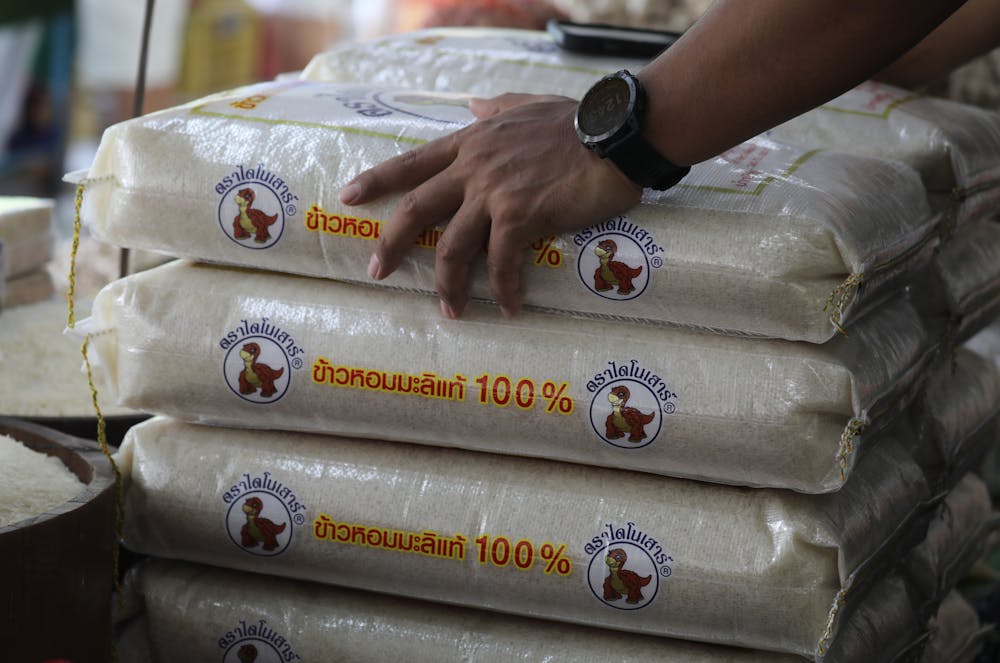 When India banned exports of many types of rice in July, prices in Thailand shot up.
Narong Sangnak/EPA
When India banned exports of many types of rice in July, prices in Thailand shot up.
Narong Sangnak/EPA
Global shocks are greater than the sum of their parts
National security experts and the United Nations have warned climate change makes wars more likely, as countries fight over water, food or land. Climate change also threatens crop yields and damage to homes and infrastructure from extreme weather and sea level rise.
A collapse in biodiversity and mounting extinctions could also have fundamental implications for our economy. That’s to say nothing of labour productivity, health impacts, zoonotic virus spillover, and mass migration among other possibilities. These upheavals will interact in unpredictable ways.
When economists model how economies perform in the future, they often have to simplify by ignoring certain risks or variables. The Intergenerational Report did just this by focusing on the climate impact on labour productivity and crop yields.
But these kinds of damage can overlap and make others worse. Because our global economy is so tightly interwoven, what happens elsewhere affects us here in many ways, as we saw during the early COVID years and the global financial crisis.
We need better economic models of climate damage
So why, in 2023, are we still not properly accounting for the real risks? It’s hard, but it is possible. My research – as well as that of other other economists – is working towards building global weather shocks into modelling of what climate change will do to individual economies, which should radically change economic predictions.
In the meantime, when you see economic modelling suggesting climate change won’t do much, you should treat it with serious scepticism. Look at what is being modelled – and everything left out.
The impact of climate change on natural systems is well understood. We don’t know nearly as much about what it will do to human systems. We must hope the world decarbonises before we find out the hard way.
Authors: Timothy Neal, Senior lecturer in Economics / Institute for Climate Risk and Response, UNSW Sydney

















