

delving into the emotional and political lives of three young Renaissance queens
- Written by Jessica O'Leary, Research Fellow, Gender and Women's History Research Centre, Australian Catholic University
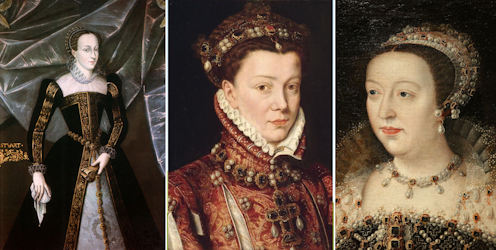
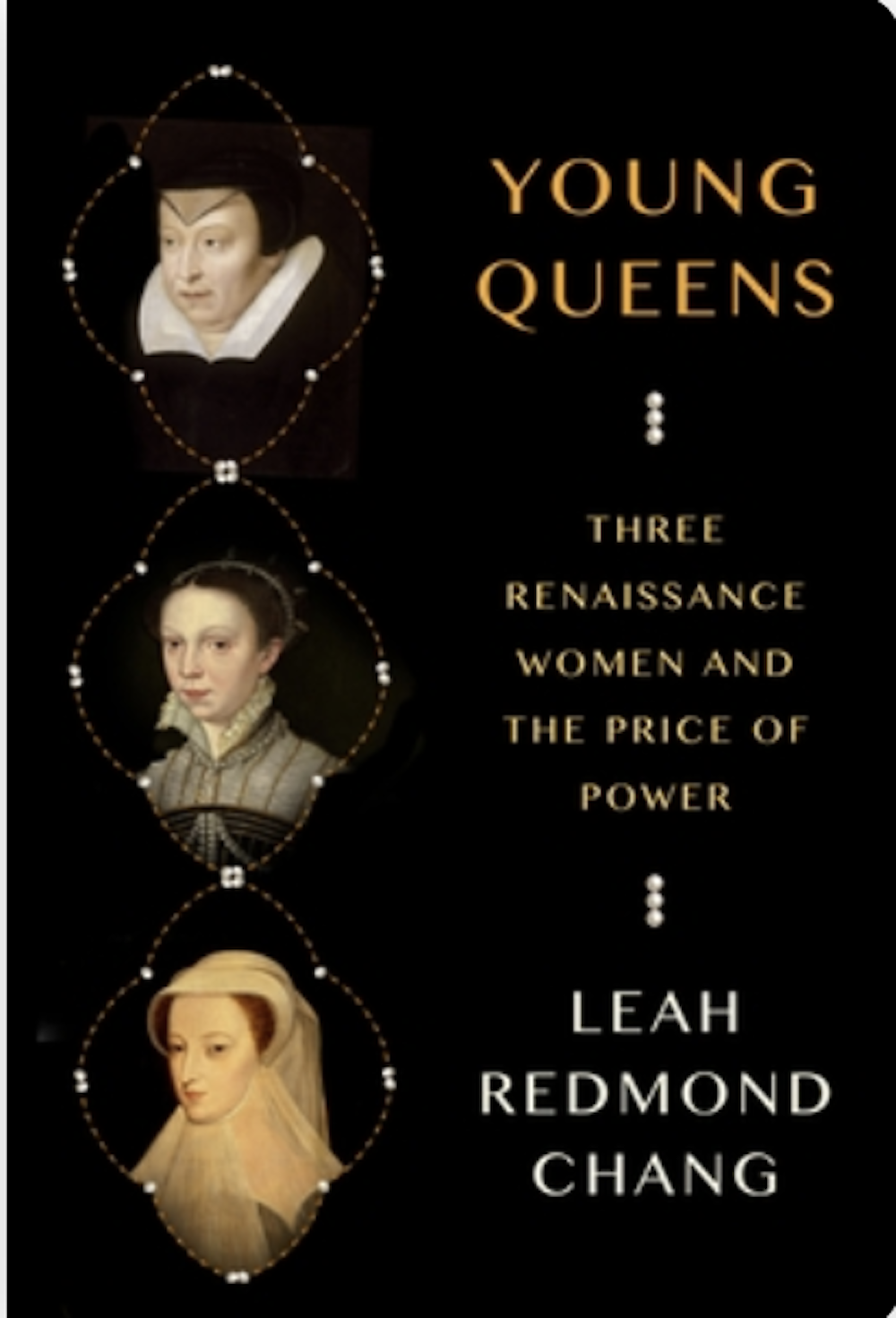
Young Queens tells the entwined stories of Catherine de’ Medici, her daughter Elisabeth, Queen of Spain and her daughter-in-law, Mary, Queen of Scots. Each of these women was a different type of queen: Queen Regnant, Queen Consort and Dowager Queen.
Author Leah Redmond Chang delves into the early lives of each queen, interweaving the relational, emotional and political challenges these women encountered over the course of their lives. The book is a remarkable attempt to capture the tumultuous nature of the 16th century in Europe through the eyes of three influential queens.
Review: Young Queens: Three Renaissance Women and the Price of Power – Leah Redmond Chang (Bloomsbury)
Queenship studies has exploded in the last 30 years, as scholars rewrite master narratives to recover women’s histories, adding complexity to how we understand power in the past. Queens were not accessories but complex individuals whose actions and relationships influenced the political dynamics of royal spaces.
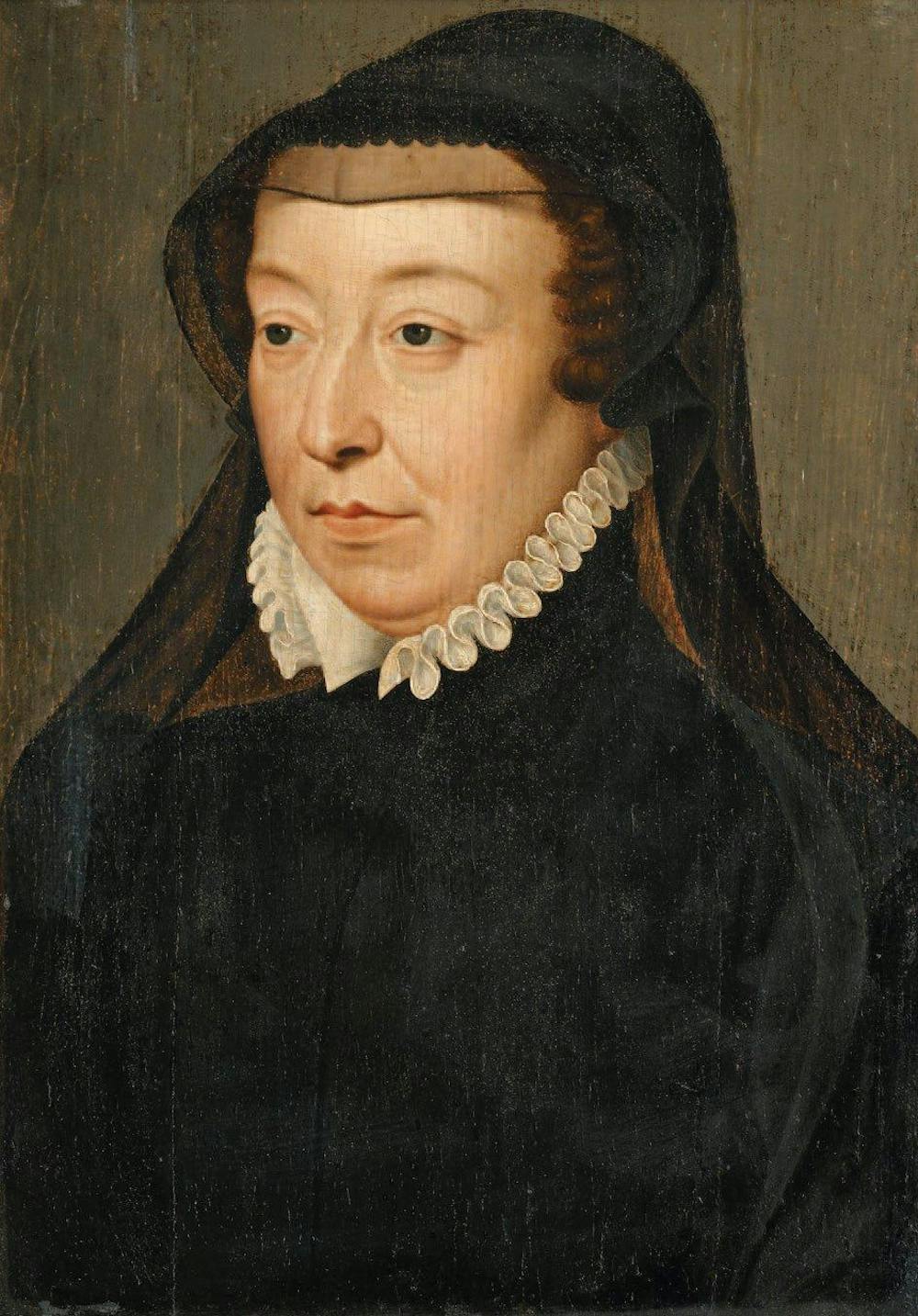 Catherine de’ Medici wearing the black cap and veil of widow, after 1559.
Workshop of François Clouet (1510–1572)
The decadent descriptions of 16th-century chateaux interspersed with political intrigue and fleeting intimacies make for a rich narrative tapestry. The arrival of Mary, Queen of Scots, (who married the dauphin, Francis, in 1548) and the quiet tension between Catherine and her husband’s mistress Diane de Poitiers is captured well. As is Catherine’s tenure as “Queen Mother,” a title she assigned herself, in 1549 – arguably the period from which much of her infamy is derived.
Catherine de’ Medici has a number of dark legends associated with her rule, reflecting her alleged manipulative and ruthless nature. She has been accused of having a “flying squadron” of attractive women who seduced courtiers to achieve her political goals and practising witchcraft. She has also been accused of masterminding the Bartholomew’s Day massacre of 1572, which resulted in the deaths of thousands of Huguenots (French Protestants).
Redmond Chang is not the first to write from the perspective of Catherine de’ Medici, but the focus on the queen’s early life is welcome.
Mary, Queen of Scots
Mary, Queen of Scots, arrived at the French court a decade after Catherine. One year after her marriage, Francis became King and Mary, Queen of France. However, Francis’s reign was brief and he died in 1560. Mary returned to Scotland shortly afterwards and her later life is recounted by Redmond Chang.
Catherine de’ Medici wearing the black cap and veil of widow, after 1559.
Workshop of François Clouet (1510–1572)
The decadent descriptions of 16th-century chateaux interspersed with political intrigue and fleeting intimacies make for a rich narrative tapestry. The arrival of Mary, Queen of Scots, (who married the dauphin, Francis, in 1548) and the quiet tension between Catherine and her husband’s mistress Diane de Poitiers is captured well. As is Catherine’s tenure as “Queen Mother,” a title she assigned herself, in 1549 – arguably the period from which much of her infamy is derived.
Catherine de’ Medici has a number of dark legends associated with her rule, reflecting her alleged manipulative and ruthless nature. She has been accused of having a “flying squadron” of attractive women who seduced courtiers to achieve her political goals and practising witchcraft. She has also been accused of masterminding the Bartholomew’s Day massacre of 1572, which resulted in the deaths of thousands of Huguenots (French Protestants).
Redmond Chang is not the first to write from the perspective of Catherine de’ Medici, but the focus on the queen’s early life is welcome.
Mary, Queen of Scots
Mary, Queen of Scots, arrived at the French court a decade after Catherine. One year after her marriage, Francis became King and Mary, Queen of France. However, Francis’s reign was brief and he died in 1560. Mary returned to Scotland shortly afterwards and her later life is recounted by Redmond Chang.
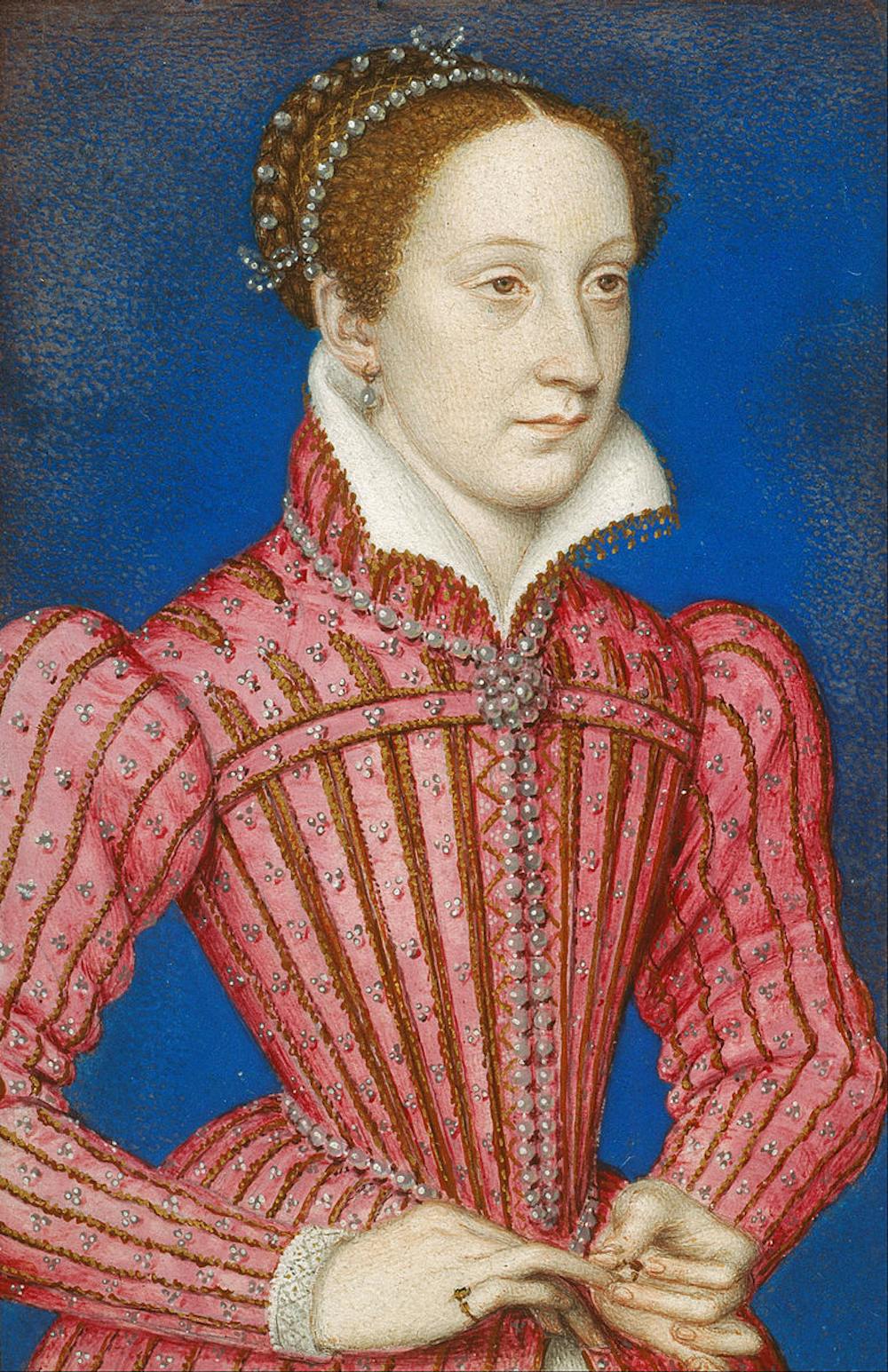 Mary, Queen of Scots, painted by Francois Clouet.
Wikimedia Commons
At times, there are some repetitive and chronological jumps that make the narrative difficult to follow. Moreover, readers well accustomed with Mary’s story will find some narrative choices curious, particularly the acceptance of the veracity of the Casket Letters. These letters were a 1567 collection of self-incriminating letters allegedly written by Mary that discussed a plot to murder her second husband, Lord Darnley.
But, overall, the decision to situate Mary in relation to her French heritage (her mother was a member of the Guise dynasty who came to prominence during the French Wars of Religion of 1562-1598) offers a new perspective to readers more accustomed with Mary’s fight for survival in Tudor England. Mary had a legitimate claim to the English throne and was locked in a battle with Elizabeth I for the remainder of her life while also defending herself from Scottish lords who opposed her rule in Scotland.
Read more:
Mary, Queen of Scots is newly relevant in the age of #MeToo
Elisabeth, a bride at 14
Finally, Elisabeth of Valois, Queen of Spain, enters the fold as a childhood companion of Mary and pawn in her mother Catherine de’ Medici’s politics. Following the conclusion of the Italian Wars (between 1494-1559) Catherine de’ Medici and Philip II, king of Spain, agreed to unite their houses in the Peace of Cateau-Cambrésis in 1559.
Aged just 14, Elisabeth became Philip II’s third wife in the same year. Despite the two-decade age gap, the marriage appeared to be relatively happy. Redmond Chang’s retelling of Elisabeth’s few years in Spain are compelling and the reader is left wanting more.
Mary, Queen of Scots, painted by Francois Clouet.
Wikimedia Commons
At times, there are some repetitive and chronological jumps that make the narrative difficult to follow. Moreover, readers well accustomed with Mary’s story will find some narrative choices curious, particularly the acceptance of the veracity of the Casket Letters. These letters were a 1567 collection of self-incriminating letters allegedly written by Mary that discussed a plot to murder her second husband, Lord Darnley.
But, overall, the decision to situate Mary in relation to her French heritage (her mother was a member of the Guise dynasty who came to prominence during the French Wars of Religion of 1562-1598) offers a new perspective to readers more accustomed with Mary’s fight for survival in Tudor England. Mary had a legitimate claim to the English throne and was locked in a battle with Elizabeth I for the remainder of her life while also defending herself from Scottish lords who opposed her rule in Scotland.
Read more:
Mary, Queen of Scots is newly relevant in the age of #MeToo
Elisabeth, a bride at 14
Finally, Elisabeth of Valois, Queen of Spain, enters the fold as a childhood companion of Mary and pawn in her mother Catherine de’ Medici’s politics. Following the conclusion of the Italian Wars (between 1494-1559) Catherine de’ Medici and Philip II, king of Spain, agreed to unite their houses in the Peace of Cateau-Cambrésis in 1559.
Aged just 14, Elisabeth became Philip II’s third wife in the same year. Despite the two-decade age gap, the marriage appeared to be relatively happy. Redmond Chang’s retelling of Elisabeth’s few years in Spain are compelling and the reader is left wanting more.
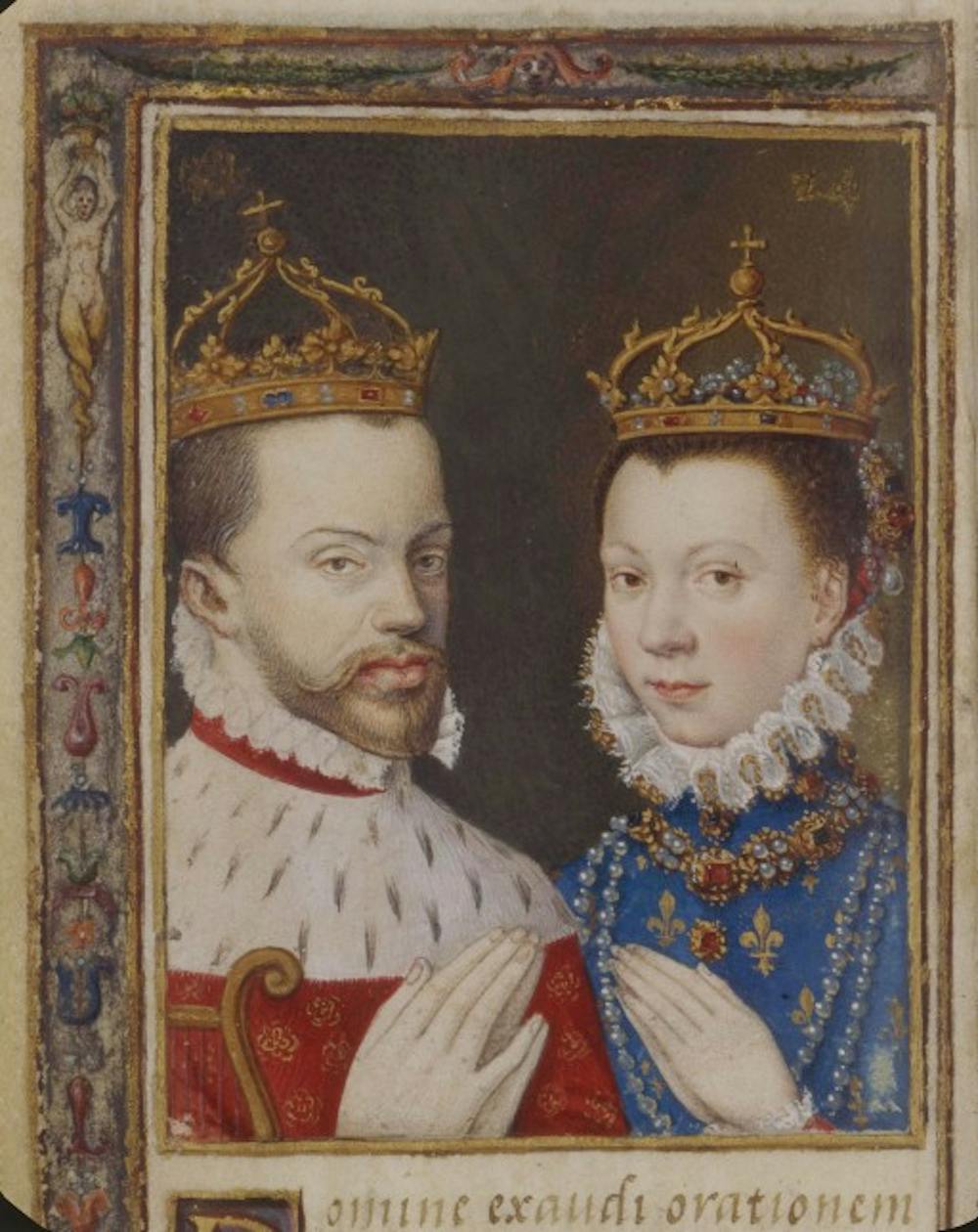 Elisabeth de Valois with her husband, Philip II of Spain. Miniature from a prayer book of Catherine de’ Medici. Bibliothèque nationale de France, Paris.
Wikimedia Commons
Elisabeth’s life was “tightly controlled” compared to the French court. Her days were spent following a strict protocol in the Spanish fashion: outings were orchestrated “from the ornamentation on the horses’ saddles down to the rank and file of litters, ladies and lackeys.” Elisabeth enjoyed art and writing to her mother, who maintained a voluminous correspondence with her daughter.
Closely observed for signs of pregnancy, her various ailments alarmed those around her. Eventually she gave birth to two daughters but the labours of childbirth were too much for her frail body. Sadly, Elisabeth died only a decade into her marriage.
Again, here, there are some instances of chronological confusion. However, the sensitive attention paid to Elisabeth’s string of miscarriages and difficult births is engaging and provides the reader with a gripping depiction of the extremely challenging lives of early modern women.
Even the Queen of Spain, with all of the wealth of the New World, could not escape the gruelling nature of childbirth in the 16th century.
Read more:
How a 16th century Italian anatomist came up with the word 'placenta': it reminded him of a cake
Blurring history and fiction
Young Queens excels when the reader is immersed in the rich relationship dynamics of women at this time. Unlike their menfolk, elite women moved between different houses, which usually involved learning new languages and cultures. Often, marriages were pragmatic and young wives must have felt isolated and lonely in a foreign land.
There were, of course, exceptions, as the three protagonists of Young Queens illustrate. Catherine’s own experiences perhaps led her to insulate her young children and daughter-in-law against the loneliness of her childhood. Catherine housed them together in a separate chateau, where they had each other’s company and the supervision of tutors.
Redmond Chang situates each woman at the centre of their own stories rather than as supporting characters in the careers of their husbands.
Yet, her commitment to vivid storytelling occasionally leads to some rhetorical devices that blur the line between history and fiction. A comment that Catherine’s union with Henri II was “the strangest marriage” on account of the presence of Diane de Poitiers veers towards the bombastic as many noble marriages were often crowded. (De Poitiers was 20 years’ Henri II senior and his mistress for close to 25 years).
The commitment to modernisms, for example, a comment that “boys will be boys” in relation to Francis’s penchant for sports, can be jarring for the expert reader, but is a small price to pay to open up a fascinating and engaging series of entwined stories to a wider audience.
In the epilogue, Redmond Chang briefly summarises two events that have preoccupied scholars of Mary and Catherine for centuries: the Babington Plot (a 1586 conspiracy to kill Elizabeth I and replace her with Mary, Queen of Scots) and the St Bartholomew’s Day massacre. Perhaps this was a deliberate decision to steer attention towards the queens themselves, rather than the narratives that made them infamous.
Admittedly, the book is titled Young Queens and so such quibbles about their later lives may be unwarranted. Indeed, while Catherine lived to the age of 70, Mary and Elisabeth only survived to the ages of 45 and 23, respectively.
Authors: Jessica O'Leary, Research Fellow, Gender and Women's History Research Centre, Australian Catholic University
Elisabeth de Valois with her husband, Philip II of Spain. Miniature from a prayer book of Catherine de’ Medici. Bibliothèque nationale de France, Paris.
Wikimedia Commons
Elisabeth’s life was “tightly controlled” compared to the French court. Her days were spent following a strict protocol in the Spanish fashion: outings were orchestrated “from the ornamentation on the horses’ saddles down to the rank and file of litters, ladies and lackeys.” Elisabeth enjoyed art and writing to her mother, who maintained a voluminous correspondence with her daughter.
Closely observed for signs of pregnancy, her various ailments alarmed those around her. Eventually she gave birth to two daughters but the labours of childbirth were too much for her frail body. Sadly, Elisabeth died only a decade into her marriage.
Again, here, there are some instances of chronological confusion. However, the sensitive attention paid to Elisabeth’s string of miscarriages and difficult births is engaging and provides the reader with a gripping depiction of the extremely challenging lives of early modern women.
Even the Queen of Spain, with all of the wealth of the New World, could not escape the gruelling nature of childbirth in the 16th century.
Read more:
How a 16th century Italian anatomist came up with the word 'placenta': it reminded him of a cake
Blurring history and fiction
Young Queens excels when the reader is immersed in the rich relationship dynamics of women at this time. Unlike their menfolk, elite women moved between different houses, which usually involved learning new languages and cultures. Often, marriages were pragmatic and young wives must have felt isolated and lonely in a foreign land.
There were, of course, exceptions, as the three protagonists of Young Queens illustrate. Catherine’s own experiences perhaps led her to insulate her young children and daughter-in-law against the loneliness of her childhood. Catherine housed them together in a separate chateau, where they had each other’s company and the supervision of tutors.
Redmond Chang situates each woman at the centre of their own stories rather than as supporting characters in the careers of their husbands.
Yet, her commitment to vivid storytelling occasionally leads to some rhetorical devices that blur the line between history and fiction. A comment that Catherine’s union with Henri II was “the strangest marriage” on account of the presence of Diane de Poitiers veers towards the bombastic as many noble marriages were often crowded. (De Poitiers was 20 years’ Henri II senior and his mistress for close to 25 years).
The commitment to modernisms, for example, a comment that “boys will be boys” in relation to Francis’s penchant for sports, can be jarring for the expert reader, but is a small price to pay to open up a fascinating and engaging series of entwined stories to a wider audience.
In the epilogue, Redmond Chang briefly summarises two events that have preoccupied scholars of Mary and Catherine for centuries: the Babington Plot (a 1586 conspiracy to kill Elizabeth I and replace her with Mary, Queen of Scots) and the St Bartholomew’s Day massacre. Perhaps this was a deliberate decision to steer attention towards the queens themselves, rather than the narratives that made them infamous.
Admittedly, the book is titled Young Queens and so such quibbles about their later lives may be unwarranted. Indeed, while Catherine lived to the age of 70, Mary and Elisabeth only survived to the ages of 45 and 23, respectively.
Authors: Jessica O'Leary, Research Fellow, Gender and Women's History Research Centre, Australian Catholic University 
















