

Early heat and insect strike are stressing urban trees – even as canopy cover drops
- Written by Gregory Moore, Senior Research Associate, School of Ecosystem and Forest Sciences, The University of Melbourne
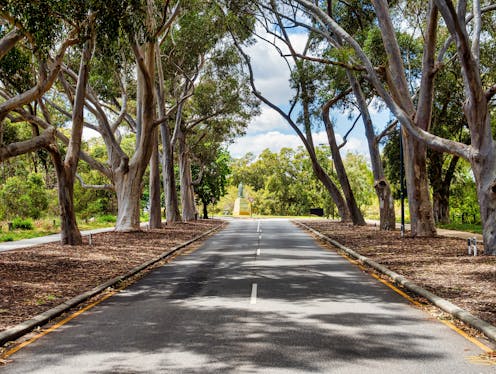
Have you noticed street trees looking oddly sad? You’re not alone. Normally, spring means fresh green leaves and flowers. But this year, the heat has come early, stressing some trees.
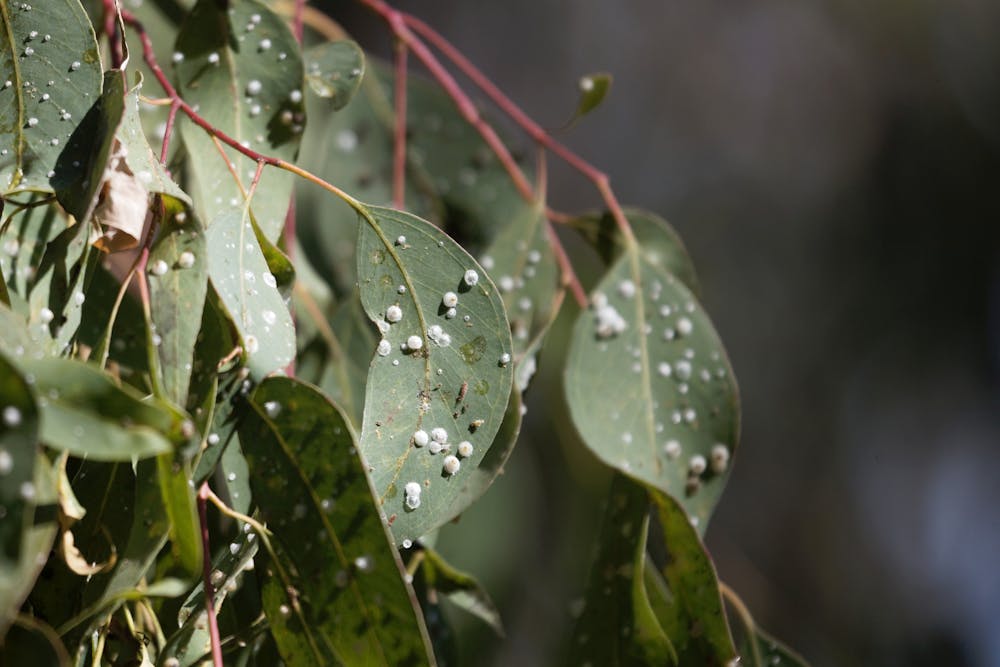
But there’s more going on – insects are on the march. Many eucalypts are showing signs of lerp or psyllid attack. These insects hide underneath leaves and build little waxy houses for themselves. But as they feed on the sap, they can give the leaves a stressed, pinkish look. When they appear in numbers – as they are this year – they can defoliate a whole tree with a serious infestation.
How did we get here? Milder, wetter summers during three successive La Niña years mean boomtime for insects. This year, we’ve had a warm winter and a warm spring, meaning insects are up and about early and in large numbers.
This summer will be an El Niño, which usually means drier and hotter weather for most of Australia. For those of us interested in urban trees, these conditions are troubling.
But it’s more than that. The fact our urban trees are in danger should tell us something – we need to value and protect them better. As the world heats up, our urban forests will be even more at risk.
What’s different this year?
In most years, insect infestations arrive later. That gives trees time to produce a flush of new growth. As a result, they’re rarely lethal. Trees can put out more leaves and recover.
But this year, they’re attacking early and in numbers. It also makes it more likely we’ll see more and more infestations over a long summer. End result: stressed trees, and even deaths from sap-sucking and other insect damage.
That’s not ideal for us either. In an El Niño summer, we’ll likely face hotter days. This year is unusually hot, due to unchecked climate change. The heatwaves to come could make us sick, hospitalise us, or even kill.
Urban trees are one of our best methods of protecting ourselves. Suburbs with greater tree canopy cover are significantly cooler. Trees shade the ground and their foliage emits water, which cools the air. Good canopy cover can cut temperatures by up to 6℃.
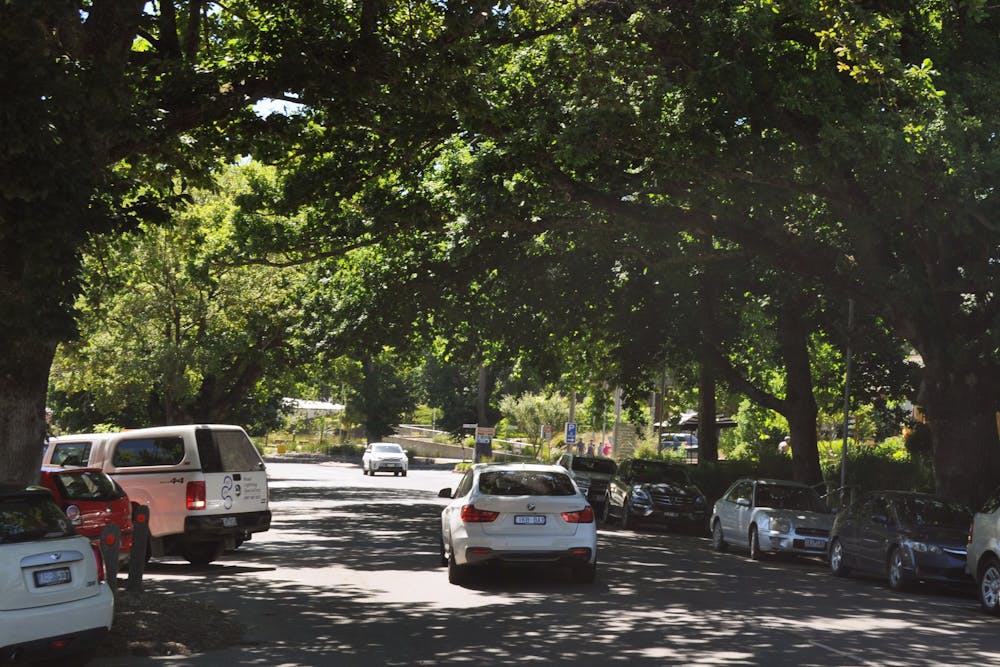 Suburbs and towns with good canopy cover feel far more pleasant in hot summers.
AAP
Suburbs and towns with good canopy cover feel far more pleasant in hot summers.
AAP
So, it’s not good news for us that our urban trees are looking stressed. Worse is the fact that our urban tree canopy is actually declining, due to bad urban planning of new suburbs with no space for canopy trees coupled with tree loss from subdivisions or apartment builds. Our state governments talk about this in their planning documents, but efforts to correct the problem don’t seem to be working.
What happens in hot summers with fewer trees? More air conditioner use, sending energy demand and electricity bills soaring.
We can hope this summer acts as a wake up call about the importance of healthy urban trees as we head into ever-hotter years.
Read more: Here are 5 practical ways trees can help us survive climate change
What can you do for your trees?
It’s worth looking after your own trees in anticipation of the tough summer ahead.
As soils are already drying out, keep up the moisture and add quality mulch under trees to a good depth.
The longer you can keep them healthy and stress free, the more likely trees are to be able to cope with the summer stress and insect attacks.
If water restrictions are imposed in your town or city, it’s likely irrigating trees and gardens will be the first activity restricted.
If your plants have been kept stress free as long as possible, they are more likely to survive.
Read more: We need urban trees more than ever – here's how to save them from extreme heat
An irony here is that if trees are water-stressed, many species will start to defoliate by shedding leaves. That means we lose both shade and transpirational cooling when we could use them most.
Councils, state governments and water authorities face a dilemma in these situations. Save the water for human use? Or keep urban trees alive and reduce the risk of heat illness and death?
Time to value our urban trees
What this summer will show is the need for local and state governments to place greater value on their urban forests and canopy cover.
In many places, urban canopy cover is dropping by about 1-1.5% per year. Many tree removals are thoughtless and unnecessary.
Sometimes, these losses provoke outcry. Adelaide, for instance, has been losing an estimated 75,000 trees a year in recent years. That prompted a parliamentary inquiry into how to better protect urban forests.
For things to change for the better, our local governments need the ability to protect mature trees in the front and back yards of developed sites and to set out minimum areas of green space and numbers of canopy trees for new developments.
In most states, giving councils these powers would require changes to state planning laws. But without them, the urban forest and canopy cover of most major cities, regional centres and country towns will continue to decline.
With proper planning, we can have both new housing and canopy trees. If we simply aim to maximise housing, our towns and suburbs will be economically and environmentally unsustainable.
So when you see sick trees on our streets this spring, see them as a symptom. We need to value them. We would most certainly notice if they were gone.
Read more: Urban patchwork is losing its green, making our cities and all who live in them vulnerable
Authors: Gregory Moore, Senior Research Associate, School of Ecosystem and Forest Sciences, The University of Melbourne

















