

How should I add sunscreen to my skincare routine now it's getting hotter?
- Written by Monika Janda, Professor in Behavioural Science, The University of Queensland
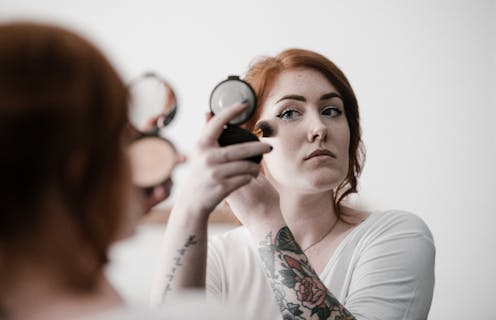
Sun exposure is the number one cause of skin cancer – including the most deadly form, melanoma. High levels of sun exposure cause an estimated 7,200 melanomas in Australia each year.
Too much sun exposure can also lead to premature ageing, resulting in wrinkles, fine lines and age spots.
Can a tweak to your skincare routine help prevent this?
Read more: Sunscreen: here’s why it’s an anti-ageing skincare essential
When should I start wearing sunscreen?
In Australia, we are advised to wear sunscreen on days when the ultraviolet (UV) index reaches three or higher. That’s year-round for much of Australia. The weather forecast or the Cancer Council’s free SunSmart app are easy ways to check the UV Index.
Besides “primary sunscreens”, which are dedicated sun-protection products, a sun protection factor (SPF) is also found in many beauty products, such as foundations, powders and moisturisers. These are called “secondary sunscreens” because they have a primary purpose other than sun protection.
Primary sunscreens are regulated by the Therapeutic Goods Administration and the SPF must be determined by testing on human skin. SPF measures how quickly skin burns with and without the sunscreen under intense UV light. If the skin takes ten seconds to burn with no sunscreen, and 300 seconds to burn with the sunscreen, the SPF is 30 (300 divided by 10).
Is the SPF in makeup or moisturisers enough to protect me the whole day?
Simple answer? No. SPF 30 mixed into foundation is not going to be as effective as a primary SPF 30 sunscreen.
Also, when people use a moisturiser or makeup that includes SPF, they generally don’t do the three key steps that make sunscreens effective:
- putting a thick enough amount on
- covering all sun exposed areas
- reapplying regularly when outdoors for a sustained amount of time.
One study had 39 participants apply their usual SPF makeup/moisturisers and photographed them with UV photography in the morning, then again in the afternoon, without reapplying during the day. The UV photography allowed the researchers to visualise how much protection these products were still providing.
They found participants missed some facial areas with the initial application and the SPF products provided less coverage by the afternoon.
Another consideration is the product type. Liquid foundation may be applied more thickly than powder makeup, which is generally lightly applied.
The Therapeutic Goods Administration tests primary sunscreens so they’re effective when applied at 2mg per 2 square centimetres of skin.
For the face, ears and neck, this is about one teaspoon (5mL) – are you applying that much powder?
It’s unlikely people will cake on their moisturiser thickly and reapply during the day, so these products aren’t effective sun protection if outdoors for a sustained amount of time when used alone.
If skin products with SPF aren’t giving me better protection, should I stop using them?
These products can still serve a protective purpose, as some research suggests layering sunscreen and makeup products may help to cover areas that were missed during a single application.
When layering, SPF factors are not additive. If wearing an SPF 30 sunscreen and makeup with SPF 15, that doesn’t equal SPF 45. You will be getting the protection from the highest product (in this scenario, it’s the SPF 30).
A good metaphor is SPF in makeup is like “icing on the cake”. Use it as an add-on and if areas were missed with the initial sunscreen application, then there is another chance to cover all areas with the SPF makeup.
Read more: Explainer: how does sunscreen work, what is SPF and can I still tan with it on?
Should I apply sunscreen before or after makeup?
It depends on whether you’re using a chemical or physical sunscreen. Chemical sunscreens need to absorb into the skin to block and absorb the sun’s rays, whereas physical sunscreens sit on the surface of the skin and act as a shield.
When the main ingredient is zinc oxide or titanium dioxide, it’s a physical sunscreen – think the classic zinc sticks you used to apply to your nose and lips at the beach. Physical sunscreens are recommended for people with sensitive skin and although they used to be pretty thick and sticky, newer versions feel more like chemical sunscreens.
For maximum sun protection when using chemical sunscreens, apply sunscreen first, followed by moisturiser, then makeup. Give the sunscreen a few minutes to dry and sink into the skin before starting to put on other products. Chemical sunscreen should be applied 20 minutes before going outdoors.
When using a physical sunscreen, first apply moisturisers, followed by sunscreen, and then makeup.
When reapplying sunscreen, it’s recommended to wash off makeup and start fresh, but this isn’t going to be practical for many people, so gently patting sunscreen over makeup is another option. Physical sunscreens will be most effective for reapplication over makeup.
What type of sunscreen should I use?
The best sunscreen is the one you actually like to apply. Protecting your skin on a daily basis (and not just for trips to the beach!) is a must in Australia’s high UV climate, and should be done with a primary sunscreen.
Look for sunscreens that have the label “broad spectrum”, which means it covers for UVA and UVB, and has at least SPF30.
Then experiment with features like matte finish, milk texture or fragrance-free to find a sunscreen you like.
Read more: How to pick the right sunscreen when you're blinded by choice
No sunscreen provides 100% protection so you should also use other sun protection such as protective clothing, hats, sunglasses, using shade and avoiding the sun during peak UV hours.
Skin care and makeup products with SPF is better than nothing, but don’t rely solely on your morning makeup for sun protection the entire day.
Authors: Monika Janda, Professor in Behavioural Science, The University of Queensland

















