

School suspensions entrench disadvantage. What are the alternatives and how have they worked overseas?
- Written by Linda J. Graham, Professor and Director of the Centre for Inclusive Education, Queensland University of Technology

Suspension from school is meant to be a last resort for serious problem behaviour. Despite that, an alarming number of children are suspended every year, often at young ages, for minor reasons.
Indigenous children, those with a disability, and/or those living in out-of-home care are grossly over-represented.
So what are the alternatives to suspension and how have they worked overseas?
Combining prevention with intervention
Prevention is better than cure. This means targeting the root problems underpinning behaviours leading to suspension and teaching children the skills they need to avoid making errors in the first place.
This is best achieved using a model known as multi-tiered systems of support, sometimes shortened to MTSS.
This approach involves screening all children in a cohort to identify issues that could lead to problems down the track (such as struggling with reading or difficulty regulating emotions).
Schools can then provide academic, social-emotional, and behavioural supports to students who need it and use data to track their progress over time.
This approach recognises several issues can be linked. For example, reading difficulties can affect a child’s self-esteem, leading to frustration, disengagement, disruptive behaviour and truancy.
The multi-tiered systems of support approach helps educators identify these children early, accurately interpret what they need and provide targeted interventions.
What does this approach look like in practice?
Multi-tiered systems of support has been used in many US public school districts for the last decade.
This involves things like learning about emotions and social skills at school and embedding structured literacy instruction in daily teaching.
Students might, for example, go on a daily “reading walk” where they divide up and join a group working on a particular reading skill, such as vocabulary.
Group membership changes as soon as the focus skill is learnt and children progress to the next skill. The groups fluctuate. Difficulties are addressed early, groups are flexible and children get the support they need without being stigmatised or pigeonholed.
It is through these tiered approaches that some public school systems in the United States, such as Chicago Public Schools, have been able to reduce suspension, while improving safety and student attendance, perceptions of school climate, and academic outcomes.
A similar approach is now in place in countries like Finland.
How might this apply to behaviour?
Many incidents resulting in suspension are rooted in cognitive or emotional overwhelm. This can be prevented by providing children with reasonable adjustments (such as extra time for certain tasks or being able to work in a quiet place) and evidence-based interventions.
For example, a child could be taught to recognise the signs of overwhelm and use a “chill out” card when they need to. This card allows them to retreat – without being interrogated about it by the teacher – to a safe space. Once there, they can recover and then rejoin the fray.
In Vermont, another US state where schools are using the multi-tiered systems of support approach, classrooms have been designed to have these safe spaces.
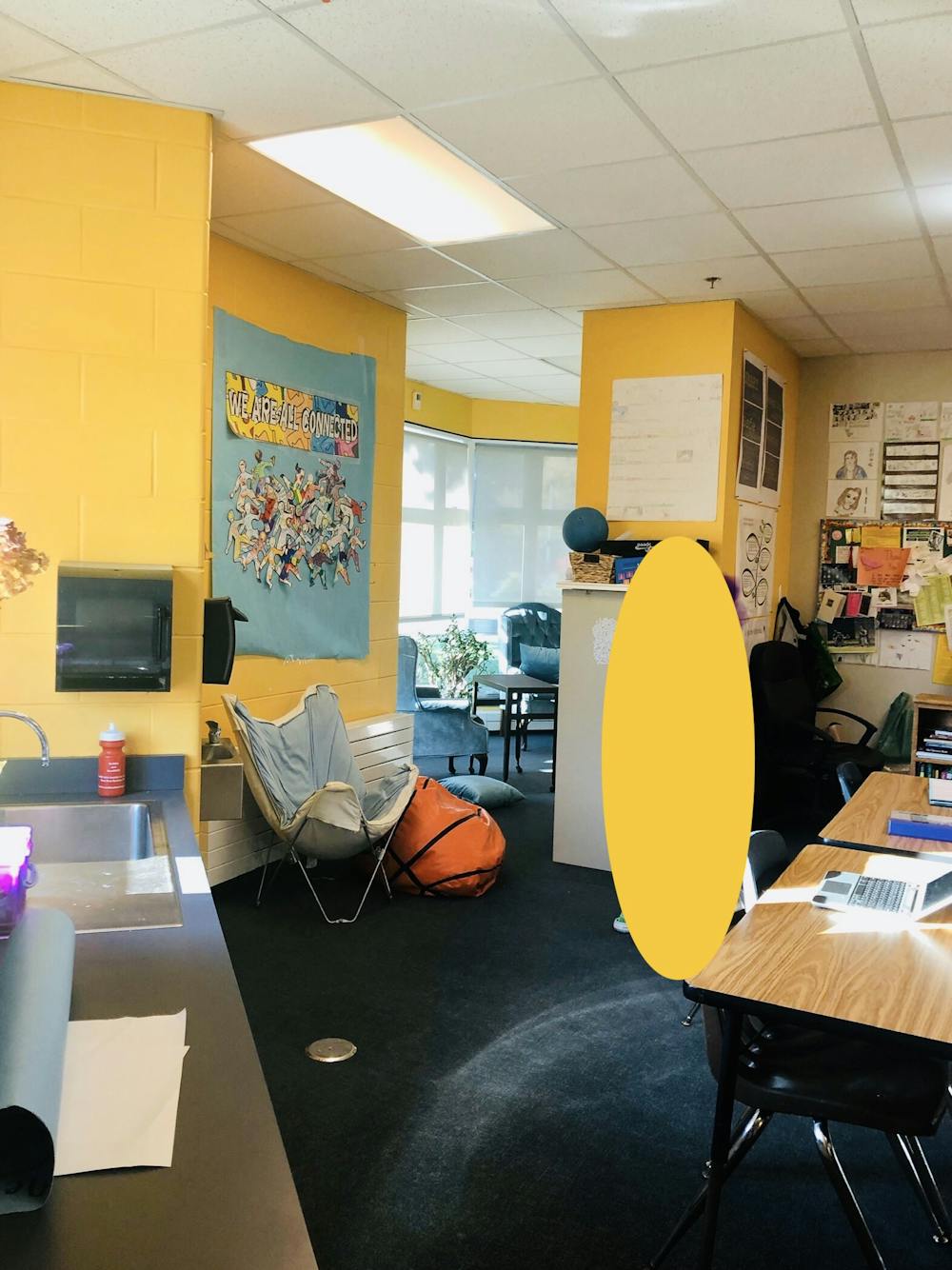
However, teachers must also be able to detect when a child is beginning to spiral so they can intervene to diffuse situations before they escalate. This may require professional learning in inclusive practice.
But it isn’t just down to individual teachers
One of the most common reasons for suspension is coded in incident reports as “physical aggression” or “physical misconduct”. This is when children hit, kick or push.
Again, this can be the result of overwhelm, which induces a fight-or-flight response. However, it can also be a response to teasing, bullying or racism. These incidents often happen outside the classroom.
The incidence of physical aggression in schools can be reduced by:
establishing clear and consistent expectations with the input of students
addressing racism at school
valuing religious, ethnic and cultural diversity and providing meaningful opportunities for children to interact and learn about each others heritage
having more adults in the playground and reducing low-visibility areas where bullying might occur
making sure teaching is culturally responsive and respectful of First Nations students’ families, culture, languages, history and knowledge and that curriculum is relevant to the local context
implementing quality interventions that include anti-bullying programs and mental health support services
supporting the development of positive school climates, peer-peer and teacher-student relationships by engaging students in school improvement processes
providing teachers with training and time to plan adjustments, empathise with students, use inclusive practices, manage diverse classrooms and problem-solve with support staff and parents.
Even after all this, some children will still have difficulty complying with expectations. For these children, there are alternatives to suspension.
Alternatives can reduce suspension and teacher stress
A growing body of evidence suggests an educative response works better than a punitive one.
One educative approach developed in the US is known as collaborative and proactive solutions. It aims to identify underlying difficulties with particular skills and frame them as “unsolved problems”.
The focus is on understanding the cause of behaviour, rather than simply suppressing it. In this model, a teacher might respond to disruptive behaviour by:
hearing the student’s perspective about the cause
explaining their own perspective and
describing the wider impacts for the student and their classmates.
The teacher and student then work towards a solution addressing the underlying issue: in this case, supporting the student to develop strategies to self-regulate.
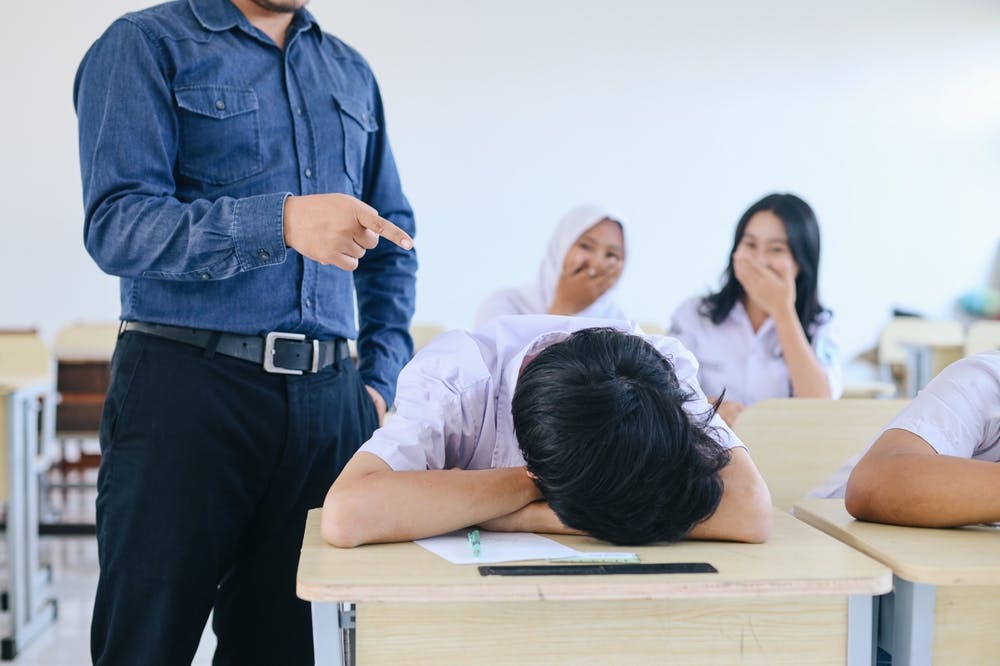 An educative approach is better than a punitive one.
Shutterstock
An educative approach is better than a punitive one.
Shutterstock
Parents of neurodivergent children have advocated strongly for Australian education departments to implement collaborative and proactive solutions.
One US study found training teachers in the collaborative and proactive solutions approach can reduce problem behaviour and teacher stress.
Another approach, used internationally, is known as restorative justice. The aim is to educate students about the impacts of behaviour, ensure wronged parties are heard and repair relationships.
If implemented correctly – with a focus on educating, not punishing – restorative practices can improve conflict resolution, promote positive relationships, reduce suspensions and enhance school connectedness.
The recent report of the Royal Commission into Violence, Abuse, Neglect and Exploitation of People with Disability recommended suspension be the last resort.
Suspension does not provide children with the skills they need to succeed at school and it can make problem behaviour worse.
Australian schools can, with the right support and leadership from governments, take steps to reduce suspension by finding alternatives that work better for students and teachers alike.
Read more: Expanding suspension powers for schools is harmful and ineffective
Authors: Linda J. Graham, Professor and Director of the Centre for Inclusive Education, Queensland University of Technology

















