

what to know about Australia's most common flies and how to keep them away
- Written by: Thomas White, Senior lecturer, University of Sydney
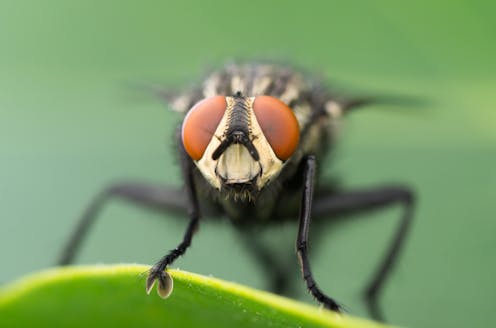
As the days grow longer and temperatures climb, we’re greeted by a familiar chorus of buzzing. It’s fly season again.
This year is off to a bumper start, with bush flies swarming beach-goers, March flies on the march, and mosquitoes taking to the skies en masse.
But with almost a million species worldwide and some 30,000 calling Australia home, the (unusually) warm weather also presents an opportunity to appreciate these remarkable and essential insects with whom we share our world.
Despite their sheer diversity, we’re likely to encounter only a select few flies daily. So who are these curious insects, and how should we think about their presence in our lives?
Familiar faces
Bush flies (Musca vetustissima) are the iconic Australian fly, and are found country-wide. They slake their thirst on the sweat and tears of mammals and so linger around our heads, shoulders and faces in search of a refreshing drink.
They’re so persistent that they’re credited with inspiring the “Aussie salute”. These small explorers are otherwise harmless, and pose no serious threat to health or home beyond being a mild nuisance.

Similar in appearance are house flies (Musca domestica), which frequent our homes. Unlike bush flies, however, they’re more interested in scraps of food and waste left unprotected. They regurgitate digestive juices to break solids into a mush more amenable to their straw-like mouths, and can pose a minor hygiene concern as a consequence.
Blowflies bring some sparkle to the fly world, and are easily recognised by their often large, shiny bodies. Although sometimes a pest, they’re also voracious scavengers and effective pollinators. In this way they do their bit to break down organic matter, recycle nutrients, and transport pollen to support plant life.
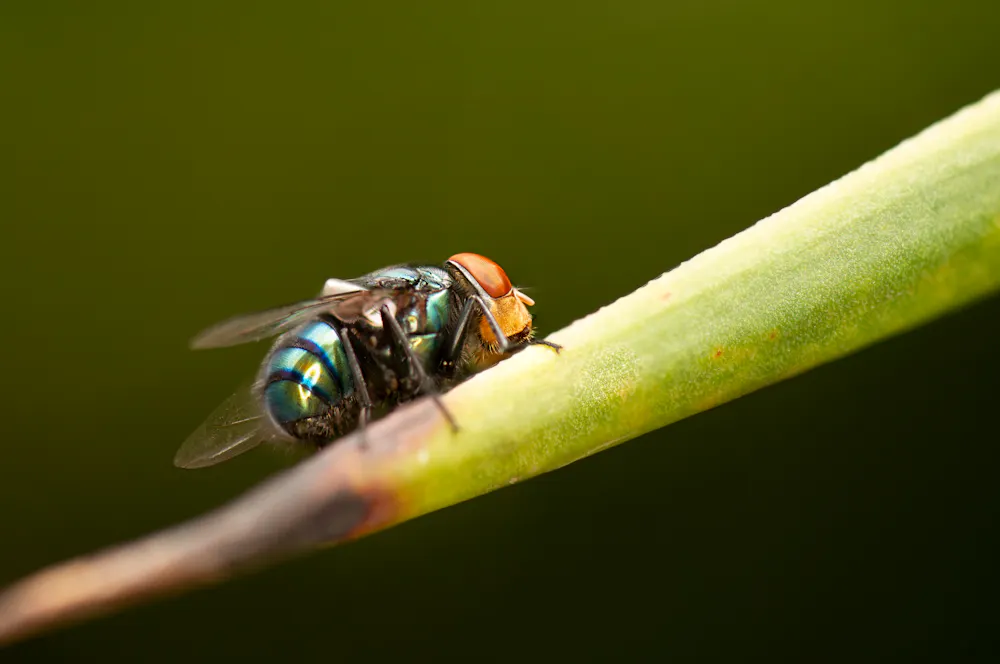 The golden bluebottle (Chrysomya incisuralis) is one of many species of Australian blowfly.
Shutterstock
The sheer size of horseflies makes them powerful fliers, which can often be heard and seen at a distance. Females demand a blood meal and so pack a hearty bite to mammals, including us, and can be a nuisance to livestock. They are also, however, excellent pollinators, with some orchids relying on their hard work and specialised mouthparts for survival.
Read more: Does Zika virus pose a threat to Australia?
Finally, and famously, are mosquitoes. (Yes, they are a type of fly.) Many summer evenings are spent swatting females as they sip our blood.
More serious is their role as vectors for diseases that have helped to topple empires, and which remain a significant health burden, especially in the Global South. Malaria is among the farthest-reaching, while Ross River Virus, chikungunya, zika and dengue all circulate with help from mosquitoes.
Shoo fly?
For the minority of flies that prove a recurring annoyance, the primary goal is to deter rather than kill them. In this case, the remedies are simple:
- use topical repellents containing DEET or Picaridin, and wear loose-fitting clothing when outside
- install flyscreens in the house, and check them regularly for holes
- keep your food covered, both at home and when out enjoying the warm weather
- empty your bins regularly and minimise standing water, both of which can attract unwanted attention.
Read more: The battle against bugs: it's time to end chemical warfare
Avoid reaching for the bug-bombs and sprays, which have devastating impacts on beneficial insects. If a chemical last resort is required, choose selective sprays rather than broad-spectrum options such as pyrethroids and neonicotinoids, which kill the many good bugs with the few bad ones.
Similarly, those noise-emitting, electrified or smelly gadgets that promise a fly-free existence are best avoided, as most are either ineffective, or harm far more than their intended targets.
From pesky to paramount
While our daily encounters with a handful of fly species may taint our perception of the group as a whole, such a view is both unwarranted and unjustified. Flies are among the most diverse animals on the planet, and are utterly crucial for the healthy function of our ecosystems.
Many, like hover flies, are important pollinators. In an era of pollinator declines and heightened food insecurity, their ongoing work is key to supporting agricultural production, and plant life more generally.
On the other side of the circle of life are outstanding decomposers, such as black soldier flies. Each individual larva can eat twice its bodyweight daily, which at the scale of tens of thousands of grubs presents a promising pathway towards sustainable waste management. They are also a rich source of protein for livestock, or even humans.
Read more: Food for thought: feeding our growing population with flies
Just as a very few flies are pests, many serve as remedies in their role as biological controls. The 10,000-odd species of tachinid, or example, make a living as parasitoids of other insects. That is, they lay their eggs inside, and eventually kill, the developing young of others, which include pest caterpillars, flies and bugs.
Moreover, flies have proven invaluable in forensics, medicine and scientific research, and environmental monitoring, underscoring how deeply our lives intertwine with theirs.
Fly on
As the warm weather rolls around, then, take the opportunity to look a little closer at our nimble neighbours, and consider both their staggering diversity and the vital roles they humbly fill. The natural world – us included – would not be the same without them.
Read more: Trust Me, I'm An Expert: forensic entomology, or what bugs can tell police about when someone died
Authors: Thomas White, Senior lecturer, University of Sydney




















