

Saltwater crocodiles are slowly returning to Bali and Java. Can we learn to live alongside them?
- Written by: Brandon Michael Sideleau, PhD student studying human-saltwater crocodile conflict, Charles Darwin University
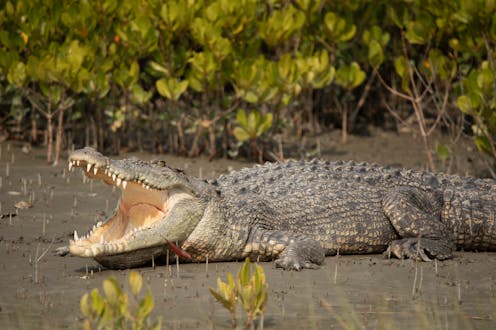
On January 4 this year, a three-metre saltwater crocodile heaved itself out of the water and up the beach. Nothing unusual about that – except this croc was on Legian Beach, one of Bali’s most popular spots. The emaciated reptile later died.
Only four months later, a large crocodile killed a man who was spearfishing with friends in Lombok’s Awang Bay, about 100 kilometres east of Bali. Authorities caught it and transferred it to captivity.
You might not associate crocodiles with Bali. But the saltwater crocodile once roamed most of Indonesia’s waters, and attacks are still common in some regions. I have been collecting records of crocodilian attacks since 2010, as the creator of the worldwide database CrocAttack. What’s new is that they’re beginning to return to areas where they were wiped out.
Does this mean tourists and residents should be wary? It’s unlikely these islands can host anywhere near the same population densities as the wide, fish-filled rivers of Australia’s tropical north. And in Bali, it’s unlikely we’ll see any crocodile recovery because of the importance of beaches to tourism and a high human population.
What happened to Indonesia’s crocodiles?
Saltwater crocodiles (Crocodylus porosus) are also known as estuarine crocodiles, as they prefer to live in mangrove-lined rivers. They’re the largest living reptile, reaching up to seven metres in length – far larger than Indonesia’s famous Komodo dragon, which tops out at three metres.
Historically, crocodiles lived throughout the Indonesian archipelago. We have records of attacks on humans in Bali from the early 20th century and across much of Java until the 1950s. Even Indonesia’s capital, Jakarta, had crocodiles resident in many rivers running through the city.
Crocodiles in Bali and Lombok were killed off by the mid-20th century, and later across Java. But they survived in more remote parts of the island nation.
Salties are now being regularly sighted in Indonesia’s densely populated island of Java, including in seas off Jakarta. At least 70 people are killed by crocs every year across the archipelago, with the highest numbers of attacks being reported from the Bangka-Belitung islands off Sumatra and the provinces of East Kalimantan, East Nusa Tenggara, and Riau.
Are crocodiles returning in numbers?
These incidents means numbers are increasing. But recovery may not be as significant as it seems.
On many Indonesian islands, there’s very limited mangrove habitat suitable for crocodiles, and many creeks and rivers may be naturally too small for more than a small number of them. Even a small population recovery could quickly fill up the croc capacity of estuaries and creeks. These crocodiles are the most territorial of all crocodilians. Dominant males push out smaller male crocodiles, who set out in search of new habitat.
To date, Indonesia’s crocodile surveys reveal mostly small and low-density populations. But even the arrival of a single crocodile into human territory can spark conflict – and threaten the conservation of the species.
Worldwide, saltwater crocodiles are listed as a species of least concern on the IUCN Red List of Threatened Species, thanks to their full population recovery in parts of northern Australia after hunting was banned in the early 1970s. But in Cambodia, Thailand, and Vietnam the species is extinct.
Even in sparsely populated northern Australia, there’s still conflict between humans and crocs, though this conflict is comparatively rare. In Indonesia, the problem is compounded by a massive human population which puts pressure on crocodile habitat.
Where are Bali’s crocs coming from?
You might look at a map and think crocodiles moving back into Bali are coming from Australia. But there is currently no evidence of significant crocodile movement between Australia and Indonesia. It would be a brave crocodile to swim more than 1,000 kilometres from Australia to Bali.
What we are likely witnessing is a crocodile exodus from nearby areas, though we would need to do genetic analysis to prove it. That’s because the surviving croc population centres are much closer than Australia. For Bali and Lombok, crocodiles are likely migrating from the islands to the east, such as Flores, Lembata, Sumba and Timor.
The most likely source of Java’s crocodile arrivals is southern Sumatra, which is less than 30km from Java at its nearest. This area has long been prone to crocodile attacks.
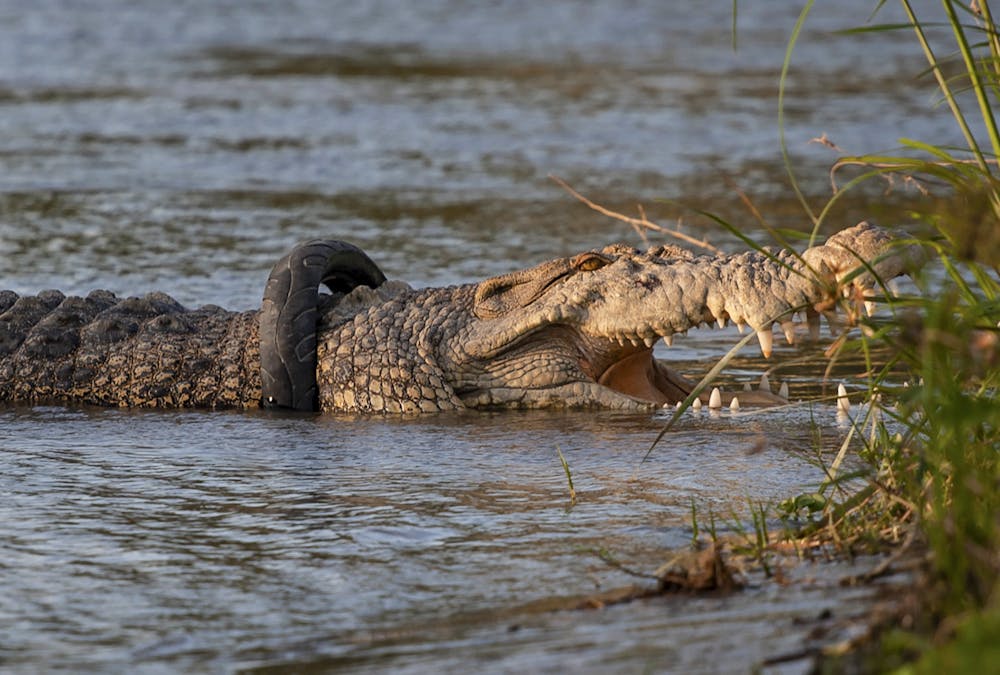 Saltwater crocodiles have long been gone from many parts of Indonesia – but in other parts, such as the island of Sulawesi, they never left.
Opan Bustan/EPA
Saltwater crocodiles have long been gone from many parts of Indonesia – but in other parts, such as the island of Sulawesi, they never left.
Opan Bustan/EPA
What does this mean for residents and tourists?
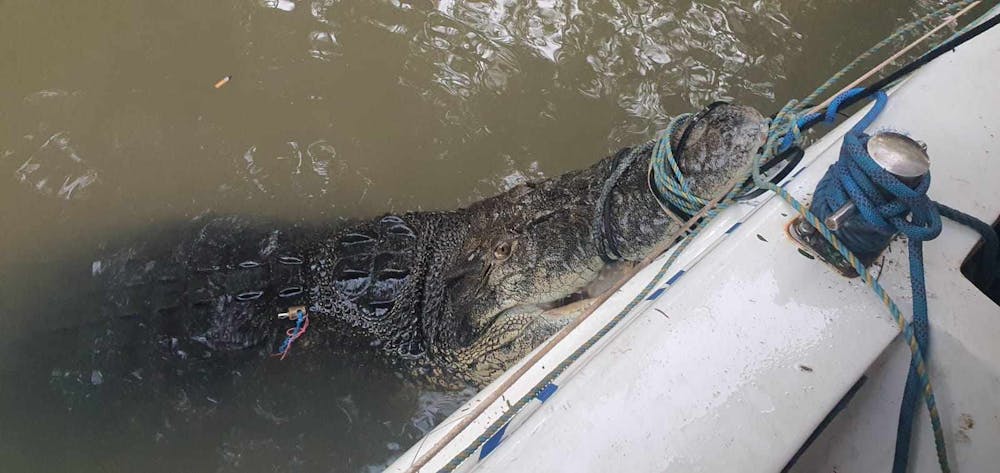
Earlier this month, a relatively large crocodile was photographed basking on a large fish trap in West Lombok, less than 50km from the tourist hotspot of the Gili Islands.
The spike in sightings and attacks suggests we’re going to have to find ways of living alongside these reptiles. The coastal waters and estuaries of Lombok and western Java are now likely home to a small resident population.
What can be done to prevent attacks? First, people have to know that crocs are back. Increasing crocodile awareness and caution is vital to save lives.
Some researchers believe attacks on us and our livestock get more likely if mangroves have been destroyed or fishing grounds fished out. Protecting crocodile habitat and prey species can both secure the future of the species and cut the risk of attacks.
Does it mean you should cancel your next Bali trip? No. While restoration efforts have brought back tracts of mangroves along some coastlines in Bali, the sheer popularity of the island means it’s unlikely any crocodile population will ever be reestablished there.
But we could well see crocodiles slowly return to less populated parts of Java and Lombok. While that may fill us with anxiety, they’re a vital part of the ecosystem. Crocodiles are meant to be there.
Read more: The Northern Territory does not have a crocodile problem – and 'salties' do not need culling
Authors: Brandon Michael Sideleau, PhD student studying human-saltwater crocodile conflict, Charles Darwin University


















