

Property woes and punk sensibilities define Paradise Estate, Max Easton's witty new novel
- Written by Suzie Gibson, Senior Lecturer in English Literature, Charles Sturt University

Max Easton’s novel Paradise Estate offers a variation on the share-house drama epitomised by Monkey Grip (1977), Helen Garner’s chronicle of communal living in Melbourne.
In contrast to the post-hippie lifestyle depicted in Garner’s novel, however, Paradise Estate engages with the difficulties of contemporary rental accommodation: skyrocketing prices, an overabundance of tenants and a dearth of potential abodes.
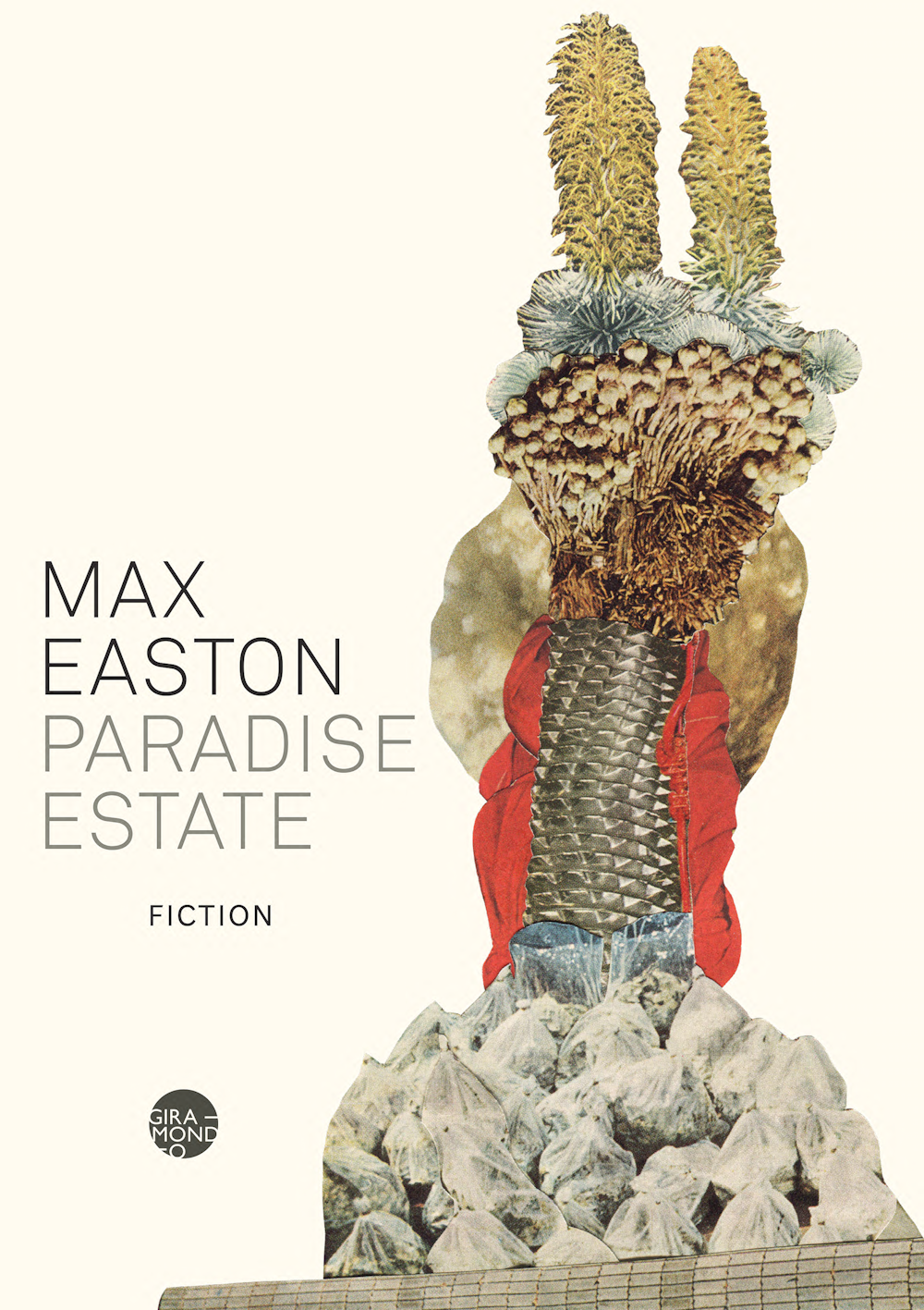
Review: Paradise Estate – Max Easton (Giramondo)
 It is significant that Helen only secures the rental by pointing out its flaws to other prospective renters. In particular, it is drearily hemmed in by encircling apartments. Again and again, Easton’s novel highlights the tensions of a concentrated living that for many is no longer a temporary housing option, but a permanent circumstance.
The high-density living evokes the cinematic precedents of Alfred Hitchcock’s Rear Window (1954), a film that meditates on voyeurism via a protagonist who watches his neighbours through a telephoto lens, and Roman Polanski’s cult classic The Tenant (1976), which dramatises a lodger’s paranoia – a condition intensified by the intrusive surveillance of his neighbours.
Paradise Estate is neither a Hitchcock thriller nor a Polanski horror, but it is keenly aware of the “stage-like” visibility of its central household. It is a novel where “seeing” is doubled: Easton’s characters are watched by their neighbours, who are scrutinised by us, as readers, overseeing the entirety of the drama.
Read more:
In Bon and Lesley, Shaun Prescott has written an Australian horror story of uniquely local proportions
Humour and shared grief
The lack of privacy becomes a source of humour when Sunny tries to entertain housemates and friends by performing a loud punk song in the exposed backyard:
Alice watched in horror as Sunny pulled back the drop sheet […] It revealed the drum kit Sunny promised not to use, and two amps that towered over the people sitting cross legged before them. The squealing of the guitar amp started at ten p.m. […] It drew neighbours to their balconies […] Four police marched down the side of the house.
Sunny is a multifaceted character, who is referred to with the gender-neutral pronoun “they”. Easton neither declares nor heralds Sunny’s non-binary status. It is simply part of the fabric of the share house, and by extension a novel that foregrounds the manifold nature of identities and relationships.
The friendship between Sunny and Helen is particularly significant. Grief unites these central characters, both of whom are mourning the death of Helen’s brother Walt, who was once Sunny’s lover.
Sunny is motivated to preserve Walt’s revolutionary ideas — philosophies wedded to a now largely extinct punk sensibility. In fact, Sunny thinks so highly of Walt that they liken him to the late Mark Fisher, a respected k-punk blogger, whose analytical range extended from politics to cultural criticism and music theory.
It is significant that Helen only secures the rental by pointing out its flaws to other prospective renters. In particular, it is drearily hemmed in by encircling apartments. Again and again, Easton’s novel highlights the tensions of a concentrated living that for many is no longer a temporary housing option, but a permanent circumstance.
The high-density living evokes the cinematic precedents of Alfred Hitchcock’s Rear Window (1954), a film that meditates on voyeurism via a protagonist who watches his neighbours through a telephoto lens, and Roman Polanski’s cult classic The Tenant (1976), which dramatises a lodger’s paranoia – a condition intensified by the intrusive surveillance of his neighbours.
Paradise Estate is neither a Hitchcock thriller nor a Polanski horror, but it is keenly aware of the “stage-like” visibility of its central household. It is a novel where “seeing” is doubled: Easton’s characters are watched by their neighbours, who are scrutinised by us, as readers, overseeing the entirety of the drama.
Read more:
In Bon and Lesley, Shaun Prescott has written an Australian horror story of uniquely local proportions
Humour and shared grief
The lack of privacy becomes a source of humour when Sunny tries to entertain housemates and friends by performing a loud punk song in the exposed backyard:
Alice watched in horror as Sunny pulled back the drop sheet […] It revealed the drum kit Sunny promised not to use, and two amps that towered over the people sitting cross legged before them. The squealing of the guitar amp started at ten p.m. […] It drew neighbours to their balconies […] Four police marched down the side of the house.
Sunny is a multifaceted character, who is referred to with the gender-neutral pronoun “they”. Easton neither declares nor heralds Sunny’s non-binary status. It is simply part of the fabric of the share house, and by extension a novel that foregrounds the manifold nature of identities and relationships.
The friendship between Sunny and Helen is particularly significant. Grief unites these central characters, both of whom are mourning the death of Helen’s brother Walt, who was once Sunny’s lover.
Sunny is motivated to preserve Walt’s revolutionary ideas — philosophies wedded to a now largely extinct punk sensibility. In fact, Sunny thinks so highly of Walt that they liken him to the late Mark Fisher, a respected k-punk blogger, whose analytical range extended from politics to cultural criticism and music theory.
 Mark Fisher.
MACBA, via Wikimedia Commons, CC BY-SA
Easton’s prose is witty and sharp, and has an energising effect, but the commentary on music stretches the allusion to Fisher (one also made in the back-cover blurb). When the novel attempts to explore the politics of its characters through their aesthetic tastes, the passages lack Fisher’s philosophical complexity and can feel forced at times.
A crucial taped conversation between Sunny and Walt, for instance, records their discussion of poptimism, American rapper Cardi B, and punk rock. Walt suggests that in the late 1970s, the introduction of Top 40 music into rock clubs undermined the punk “underground”. Sunny quips: “That’s just a 2019 way of saying ‘Disco Sucks’.”
The term “disco sucks” has racist, sexist and homophobic connotations. As British music journalist Alex Petridis observes, disco was “predominantly made by black artists, dominated by female stars and with a core audience that was, at least initially, largely gay”. Fisher would hardly have approved of this kind of blithe allusion to an ugly backlash against a crucial musical and social movement.
It is only after some quite confusing back-and-forth in the taped dialogue between Sunny and Walt – a minor readability flaw in the book – that a female character finally comes along and clearly articulates all that is wrong with a culture that has long had men at its centre. Sunny’s acerbic flatmate Beth, who has a unique ability to call out bullshit, points out that “hardcore punk” may be associated with “toxic masculinity”, but to her mind it’s “toxic boyhood”.
Mark Fisher.
MACBA, via Wikimedia Commons, CC BY-SA
Easton’s prose is witty and sharp, and has an energising effect, but the commentary on music stretches the allusion to Fisher (one also made in the back-cover blurb). When the novel attempts to explore the politics of its characters through their aesthetic tastes, the passages lack Fisher’s philosophical complexity and can feel forced at times.
A crucial taped conversation between Sunny and Walt, for instance, records their discussion of poptimism, American rapper Cardi B, and punk rock. Walt suggests that in the late 1970s, the introduction of Top 40 music into rock clubs undermined the punk “underground”. Sunny quips: “That’s just a 2019 way of saying ‘Disco Sucks’.”
The term “disco sucks” has racist, sexist and homophobic connotations. As British music journalist Alex Petridis observes, disco was “predominantly made by black artists, dominated by female stars and with a core audience that was, at least initially, largely gay”. Fisher would hardly have approved of this kind of blithe allusion to an ugly backlash against a crucial musical and social movement.
It is only after some quite confusing back-and-forth in the taped dialogue between Sunny and Walt – a minor readability flaw in the book – that a female character finally comes along and clearly articulates all that is wrong with a culture that has long had men at its centre. Sunny’s acerbic flatmate Beth, who has a unique ability to call out bullshit, points out that “hardcore punk” may be associated with “toxic masculinity”, but to her mind it’s “toxic boyhood”.
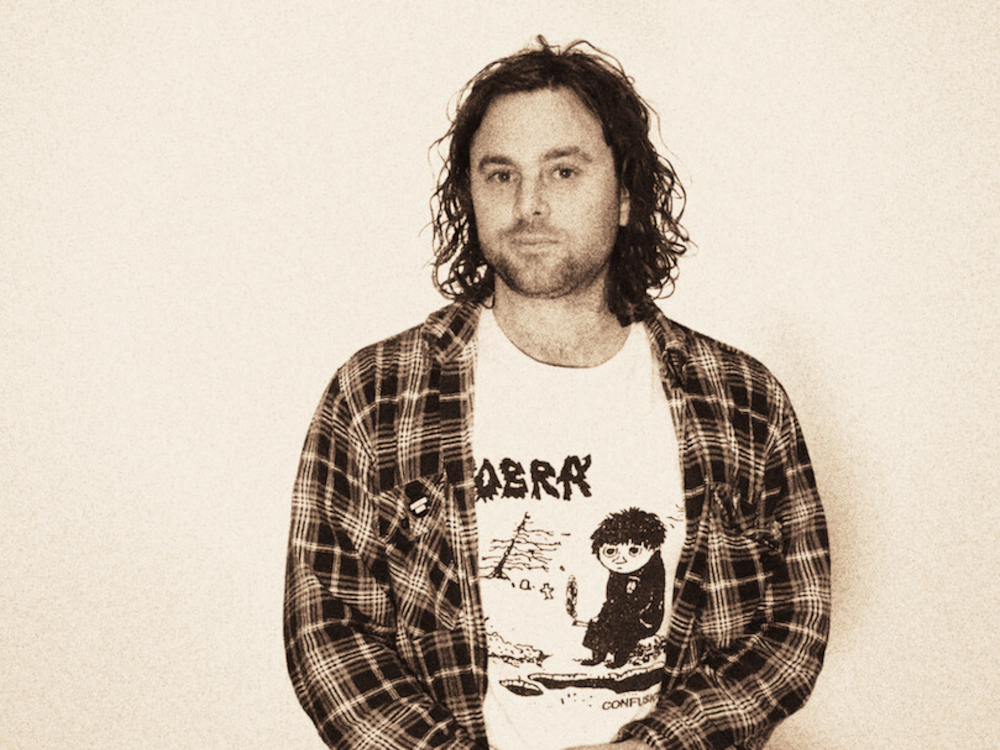 Max Easton.
Del Lumanta/Giramondo
Read more:
Reality and fantasy combine in Immaculate, Anna McGahan's award-winning debut novel
A 21st-century commune
The desire for a collectivism that might counter the alienation of modern city dwelling is voiced many times in Paradise Estate.
Flatmate Nathan is particularly keen to convert the Hurlstone dwelling into a self-sufficient commune, with the aid of his long-suffering girlfriend Alice, an enthusiastic gardener who can’t grow anything. In another comical moment, Helen observes how her flatmates treat Nathan with suspicion because of his over-reliance on the royal pronoun “we” , which she describes as the “sociopath’s first person”.
Nathan is indeed a potential cult leader, who works as a casual history tutor by day, but is also the self-appointed leader of a left-wing group called “The Centre”. The most extraordinary thing to come out of Nathan’s “Centre” is Dale, an antisocial alcoholic, whose residency in the share house is short-lived. He causes an outbreak of maggots, stalks flatmate Beth, and is finally caught masturbating with his bedroom door ajar.
Dale is an apolitical whirlwind who leaves a mark on flatmates and readers alike — so much so that his replacement “Rocco” is christened the “anti-Dale”. He brings a grunge element to the house and the novel.
In a way, he resembles the dissipated character of Gordon Buchanan in Andrew McGahan’s Praise (1992). But unlike Gordon, who is sexually active, Dale is sex-starved. His frustration produces more up-to-date comedy when his thinly veiled incel status is revealed through his drunken protests about a so-called “wave of sex negativity”:
These days, no one wants to talk about sex. And people aren’t fucking as much either.
The dream of a share-house commune is not realised, as genuine collaboration and community is sabotaged by egotism. Helen’s assessment of Nathan comes true, though he proves to be more narcissist than sociopath. The novel follows the trajectory of the share house’s disintegration, closing with the scattering of its characters, who seek shelter and safety elsewhere. What stands out from the emotional rubble is Alice’s hilarious assessment of her ex-flatmates and Nathan:
She closed her eyes, feeling hopeless, carted away by her boyfriend the plagiarist, away from her housemates that included an animal killer, a hoarder, a self-described spinster, and a wannabe concubine…
Alice’s descriptions capture the wit of Easton’s novel. Yet despite its exposure of the frailties and shortcomings of its characters, Paradise Estate retains a sense of compassion and humanity. Fittingly, it ends with the three characters who have upheld its moral and psychological world – Helen, Sunny and Walt – and the completion of Sunny’s labour of love: Walt’s collected writings, titled “Walt Coleman’s Unpublishable Works of (Non)Fiction”.
Easton has produced an ultra-contemporary novel that references pop music, COVID 19, Donald Trump, the storming of the Capitol building, Twitter (now X), TikTok and the Indigenous Voice to Parliament. These references run the risk of quickly dating the text, but Paradise Estate should transcend the present. Its witty and intelligent chronicle of share-house living and micro-world of complex politics and idealistic desires ultimately speak to broader social concerns.
Authors: Suzie Gibson, Senior Lecturer in English Literature, Charles Sturt University
Max Easton.
Del Lumanta/Giramondo
Read more:
Reality and fantasy combine in Immaculate, Anna McGahan's award-winning debut novel
A 21st-century commune
The desire for a collectivism that might counter the alienation of modern city dwelling is voiced many times in Paradise Estate.
Flatmate Nathan is particularly keen to convert the Hurlstone dwelling into a self-sufficient commune, with the aid of his long-suffering girlfriend Alice, an enthusiastic gardener who can’t grow anything. In another comical moment, Helen observes how her flatmates treat Nathan with suspicion because of his over-reliance on the royal pronoun “we” , which she describes as the “sociopath’s first person”.
Nathan is indeed a potential cult leader, who works as a casual history tutor by day, but is also the self-appointed leader of a left-wing group called “The Centre”. The most extraordinary thing to come out of Nathan’s “Centre” is Dale, an antisocial alcoholic, whose residency in the share house is short-lived. He causes an outbreak of maggots, stalks flatmate Beth, and is finally caught masturbating with his bedroom door ajar.
Dale is an apolitical whirlwind who leaves a mark on flatmates and readers alike — so much so that his replacement “Rocco” is christened the “anti-Dale”. He brings a grunge element to the house and the novel.
In a way, he resembles the dissipated character of Gordon Buchanan in Andrew McGahan’s Praise (1992). But unlike Gordon, who is sexually active, Dale is sex-starved. His frustration produces more up-to-date comedy when his thinly veiled incel status is revealed through his drunken protests about a so-called “wave of sex negativity”:
These days, no one wants to talk about sex. And people aren’t fucking as much either.
The dream of a share-house commune is not realised, as genuine collaboration and community is sabotaged by egotism. Helen’s assessment of Nathan comes true, though he proves to be more narcissist than sociopath. The novel follows the trajectory of the share house’s disintegration, closing with the scattering of its characters, who seek shelter and safety elsewhere. What stands out from the emotional rubble is Alice’s hilarious assessment of her ex-flatmates and Nathan:
She closed her eyes, feeling hopeless, carted away by her boyfriend the plagiarist, away from her housemates that included an animal killer, a hoarder, a self-described spinster, and a wannabe concubine…
Alice’s descriptions capture the wit of Easton’s novel. Yet despite its exposure of the frailties and shortcomings of its characters, Paradise Estate retains a sense of compassion and humanity. Fittingly, it ends with the three characters who have upheld its moral and psychological world – Helen, Sunny and Walt – and the completion of Sunny’s labour of love: Walt’s collected writings, titled “Walt Coleman’s Unpublishable Works of (Non)Fiction”.
Easton has produced an ultra-contemporary novel that references pop music, COVID 19, Donald Trump, the storming of the Capitol building, Twitter (now X), TikTok and the Indigenous Voice to Parliament. These references run the risk of quickly dating the text, but Paradise Estate should transcend the present. Its witty and intelligent chronicle of share-house living and micro-world of complex politics and idealistic desires ultimately speak to broader social concerns.
Authors: Suzie Gibson, Senior Lecturer in English Literature, Charles Sturt University 

















