

Snowy 2.0 was a bad idea from the start. Let's not make the same mistake again
- Written by Bruce Mountain, Director, Victoria Energy Policy Centre, Victoria University
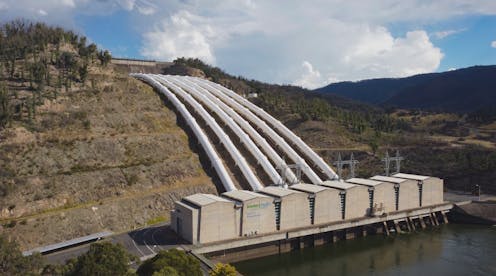
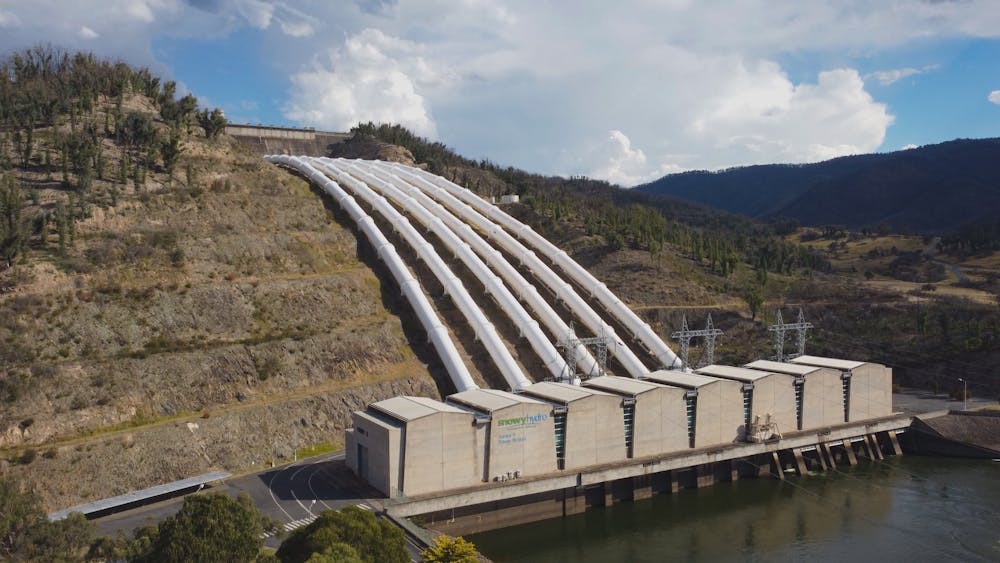
Last night ABC’s Four Corners investigated the problem-plagued Snowy 2.0 pumped hydro power station, focusing on a bogged tunnelling machine, toxic gas and an unexpected volume of sludge.
While these specific problems are new, we have criticised this project since 2019 and outlined six key problems even earlier elsewhere.
How did we get here?
In March 2017, then-Prime Minister Malcolm Turnbull announced the project, lauding it as a game changer for our clean-energy revolution.
In his memoir, Turnbull dubbed Snowy 2.0 “the single most important and enduring decision of the many I made on energy”.
Alas, Snowy 2.0 has not gone well. The warning signs were there from the start. Both the government-appointed Snowy Hydro Board and federal government were warned they had greatly under-costed it, underestimated the construction time and failed to recognise the damage it would do to the Kosciuszko National Park.
In August this year, the government bumped up funding for Snowy 2.0 to A$12 billion – triple the October 2018 figure, when the final decision was made to go ahead, and six times what Turnbull first claimed it would cost in March 2017. That’s before counting the new transmission lines through the controversial HumeLink and VNI West transmission projects. When complete, Snowy 2.0 plus transmission could cost upwards of $20 billion – over ten times the figure Turnbull claimed.
Energy minister Chris Bowen put the Snowy failures and blowouts down to poor execution. Was it still worthwhile? Yes, he said. But Bowen also admits to being swayed by the sunk cost – the government has already spent over $4 billion on it.
Snowy Hydro’s new CEO Dennis Barnes has claimed that while costs have blown out, the public benefits have increased as well.
To date, nothing has been released to substantiate claims of extra benefit despite requests by journalists and by the Senate. All that has been released is a one-page press release and a highly redacted report.
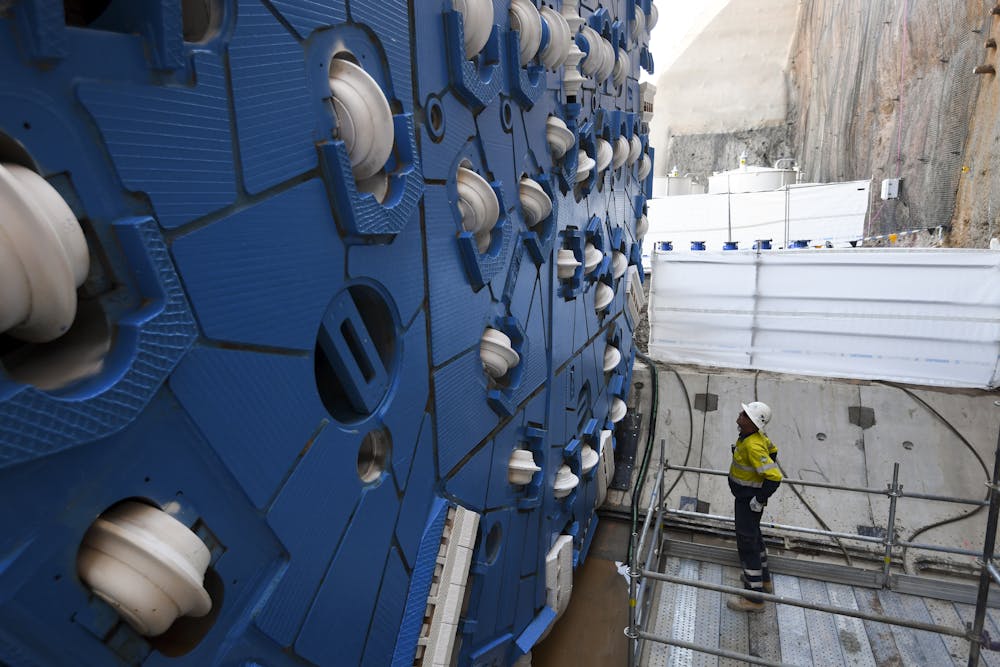 A bogged tunnelling machine like this one is one of the causes of delays, but not the only one.
Lukas Coch/AAP
A bogged tunnelling machine like this one is one of the causes of delays, but not the only one.
Lukas Coch/AAP
What are the lessons here?
Pumped hydro is essentially a hydroelectricity plant with the ability to pump water back up to the top reservoir. You use cheap power to pump it uphill, and run water back down through turbines to generate power as needed.
The technology isn’t new. It had a previous burst of popularity in developed nations in the 1970s. But since then, there’s been very little pumped hydro built except in China.
Since the 1970s, Australia has had three pumped-hydro generators supplying the National Electricity Market, two in New South Wales and one in Queensland. Data on their generation shows they have only a minor role in energy storage.
None of these are comparable to Snowy 2.0, which would be vastly bigger than any we’ve built before. Snowy 2.0 has by far the longest tunnels – 27 kilometres – of any pumped-hydro station ever built.
Read more: NSW has approved Snowy 2.0. Here are six reasons why that's a bad move
Even our smaller pumped-hydro projects are proving harder to complete than expected. The depleted Kidston gold mine in Queensland is being converted to a 250 megawatt pumped-hydro station. The project is much simpler and smaller than Snowy 2.0 and has had extensive policy and financial support by federal and state governments. But it too is running over budget and late, although not remotely close to the same extent as Snowy 2.0.
These projects present hard and expensive engineering problems. They do not deliver economies from learning because each is different from the other.
By contrast, chemical batteries are increasingly standardised. They’re attracting huge investment in research and production. They improve the capacity of existing transmission. They’re made in factories so become cheaper as the industry scales, they have much lower capital outlays per unit of storage, so you get a much quicker payback. And you can resell them easily.
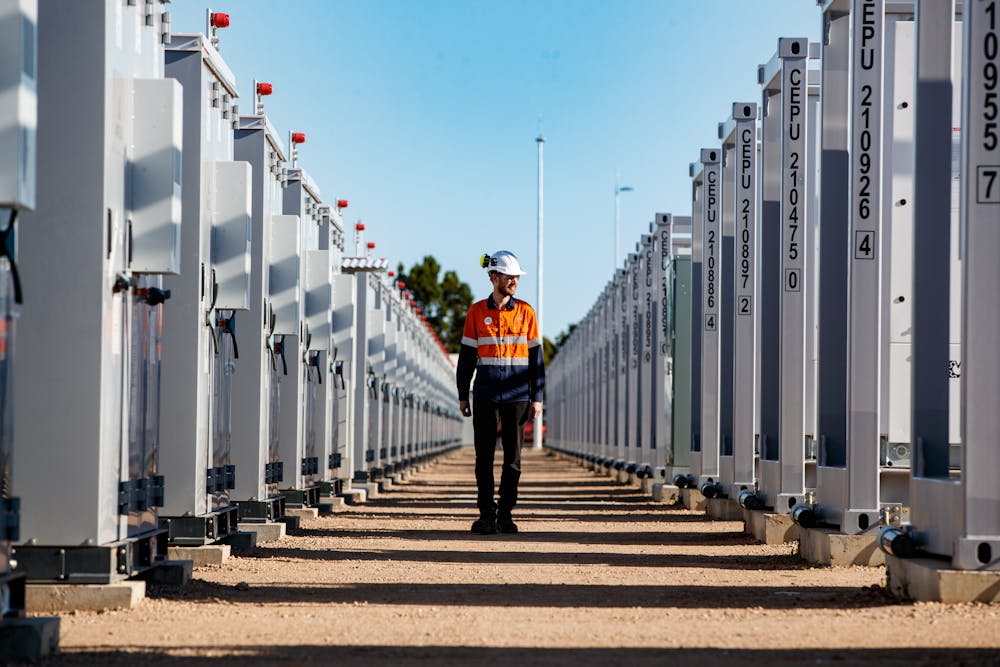 Grid-scale batteries like this one on Torrens Island in Adelaide are less sexy than pumped hydro megaprojects, but they have advantages in standardisation, economies of scale and rapid technology development.
Matt Turner/AAP
Grid-scale batteries like this one on Torrens Island in Adelaide are less sexy than pumped hydro megaprojects, but they have advantages in standardisation, economies of scale and rapid technology development.
Matt Turner/AAP
How did we make such an expensive mistake?
One simple explanation is that it was a political decision. The original Snowy Hydro scheme is famed as a nation-building project in post-war Australia. Snowy 2.0 was framed in the same way. Then there’s the need to be seen to “do something”, with economic and technical merit a distant third place.
But there’s another factor – a failure to acknowledge the pace of technology change in ever-better solar panels and wind turbines as well as in battery storage. Apparently insurmountable problems are being solved quickly, such as rapid manufacturing and installation of solar panels, the ability to harness low quality winds, and producing batteries able to service different markets at different points in the grid.
Given the pace of change, it would seem sensible to make the most of cheaper solutions which can be built quickly and don’t lock us in or out to technologies for the long term.
In practice, that means we should focus first on Australia’s huge potential for solar on warehouse and factory rooftops close to our cities. It’s easy to store rooftop solar surpluses for local use. We should make the most of the enormous local potential before reaching for complex, risky, expensive and distant alternatives.
By analogy, don’t try to summit the mountain before climbing its foothills. From base camp, we are bound to find the mountain looks quite different to how we imagined it from a great distance.
Read more: How to ensure the world's largest pumped-hydro dam isn't a disaster for Queensland's environment
Energy expert Ted Woodley contributed to this article.
Authors: Bruce Mountain, Director, Victoria Energy Policy Centre, Victoria University

















