Growing your own food and foraging can help tackle your ballooning grocery bill. Here's how
- Written by Kate Neale, Researcher, Southern Cross University
Up to 3.7 million Australian households have been hit by food insecurity this year – many for the first time.
Of these households, four in five say the reason is the rising cost of living, as interest rate rises and many other cost increases force them to make unwelcome trade-offs – such as food.
These figures come from a new hunger survey from Foodbank, which found almost half of us (48%) now feel anxious about putting food on the table or struggle to access food consistently. About 70% of those polled said rising food prices were a reason for their food insecurity and 48% reported cutting back on buying fresh food.
Cutting back on food waste helps control costs. But what about growing your own food – is that financially sensible? Yes, to a degree. It’s generally not feasible to grow enough food to support yourself. But done cleverly and cheaply, you can cut your food bills with fresh greens, vegetables, herbs and even by foraging.
Growing food on the cheap
If you don’t already have an established veggie patch or balcony garden, the set-up cost can be enough to put you off.
It’s worth looking first to see if there are community gardens near you. These let you grow your own food without having to shell out for garden beds, compost and gardening tools.
Some gardens have been running for decades. They’re usually run by local like-minded gardeners who can share their knowledge of what grows well where you are.
For those hoping to grow closer to home, you could consider “guerrilla gardening”, where you convert your neighbourhood nature strips to food gardens. Before starting, it’s important to check if your local planning laws allow it. Some councils do, but some do not. To get started, consult the guidelines by Farmers of the Urban Footpath.
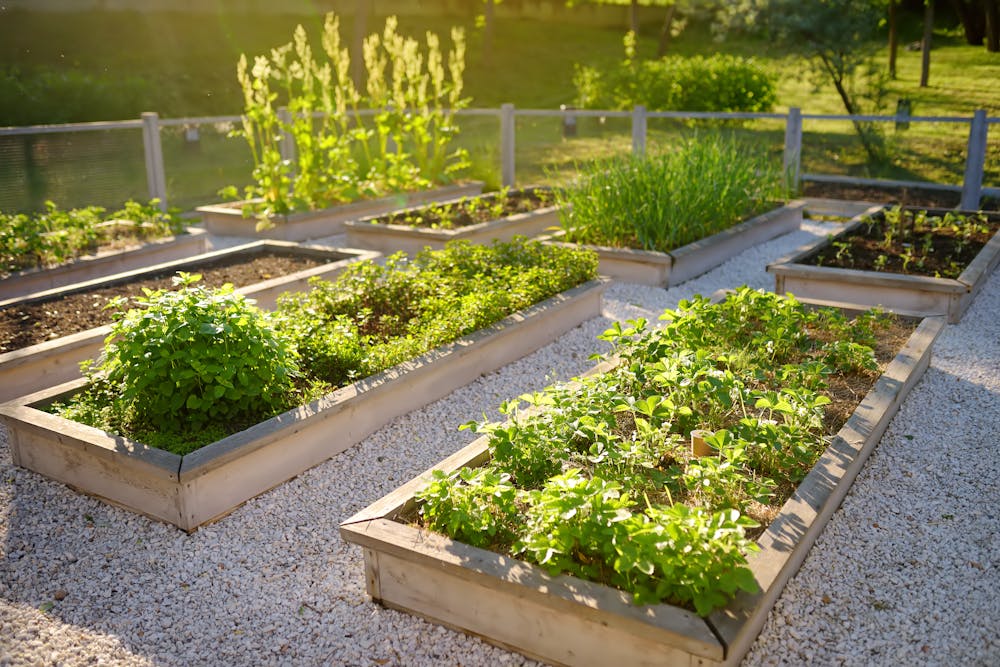
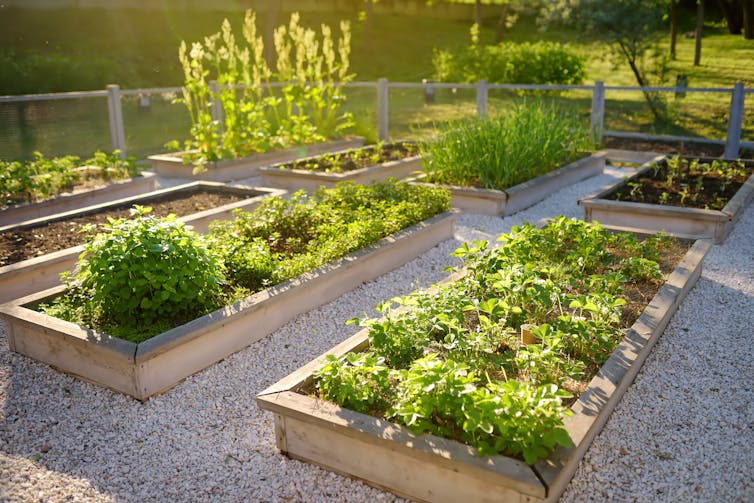
If you have the space, you could set up your own veggie patch. Many raised garden beds operate as closed systems, saving water and nutrients for later use by the plants. Good quality growing compost will improve harvest yields and save you money longer term.
What about apartment residents? If you have sunlight, you can grow food cheaply. Old food-safe containers, plastic pots or even repurposed household items can be an easy way to start growing. Make sure to consider potential contaminants if you take this approach, to make sure your soil and the food growing in it is clean.
If you get more serious, you could even dispense with soil entirely and look at retail hydroponic units. These allow you to produce a vast quantity of leafy greens from seed in just two or three weeks. While more expensive up front, hydroponics offer a more controlled growing environment to ensure higher yields and protect your plants against extreme or unpredictable weather as the climate changes.
Does it make financial sense?
If you plant onions, cabbage and broccoli, you’ll find they take up space in the garden, grow reasonably slowly and only yield a harvest once. Similarly, it’s not usually worth planting carrots and potatoes as they’re among the cheapest to buy.
Instead, go for plants that offer you several harvests over many weeks. These include herbs, lettuces, cucumbers, zucchinis, silverbeets, peas, beans and tomatoes. Consult sites such as Gardenate for month-by-month guides on what to grow in your growing zone, as well as tips on companion planting and how long until you can eat your produce.
When you’re starting out, it can be easy to get carried away by the thought of exotic vegetables. Artichokes? Rhubarb? Asparagus? But to cut your food bill, focus on what your household actually eats.
It’s common for beginner vegetable gardeners to plant once and then wait. But this can result in a glut and then nothing. Instead, explore succession planting, where you plant new plants every few weeks to extend your harvest.
When it’s time to harvest, pick only what you need for each meal. Lettuce and herbs are great because they can be picked by the leaf. That means there’s little to no waste and the plant can regrow. Savings add up particularly fast for herbs. Coriander, oregano and so on are often the most expensive produce per kilogram. Worse, they’re sold in bunches too big for one meal and can then quietly rot in your fridge.
Grow and swap
Sharing your excess veggies, lemons and eggs is a great way to share the abundance of your crops with like-minded people. You can also do produce swaps. Sharing harvests is as old as agriculture, but what’s new now is the variety of ways we can share it, whether by app, website or regular meeting.
Read more: Food sharing with a 21st-century twist – and Melbourne's a world leader
For advanced cost-cutting, consider foraging
Perhaps the ultimate way to avoid any cost associated with growing your own is not to do it at all. Instead, you could make the most of foraging and edible weeds – going out and actively looking for food.
It’s not new – during the Great Depression, many Australians supplemented food from the markets with rabbits, dandelions and foraged fruit. It’s important to be respectful in where and how you harvest – and be mindful of the safety of the produce. Avoid foraging near busy roads, for instance, as the soil may have lead or other heavy metals in it.
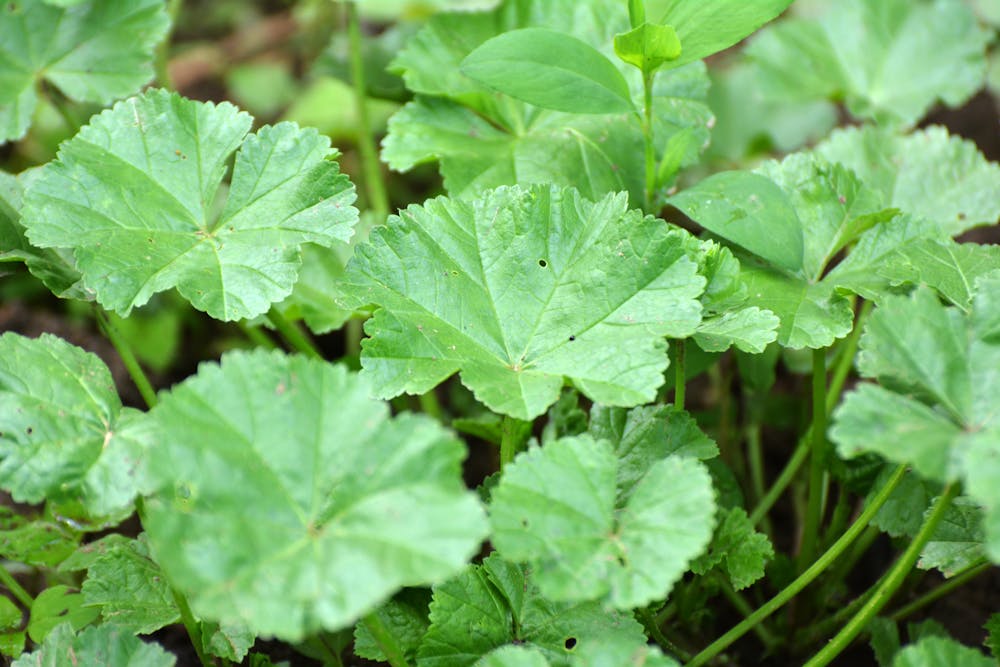 Edible weeds like mallow (Malva parviflora) sprout seemingly everywhere in gardens and suburbs.
Shutterstock
Edible weeds like mallow (Malva parviflora) sprout seemingly everywhere in gardens and suburbs.
Shutterstock
The largest edible weeds and foraging Facebook group in Australia has almost 90,000 people. Communities like this are an excellent source of knowledge, suggestions and recipes, such as swapping mallow for expensive kale when you make kale chips. Of course, it’s vitally important to eat only what is safe. When starting out, use foraging guides to confirm identification.Whatever you choose, the most important benefit of growing or foraging your own produce are the social connections you can make. After all, times are tough and one of the best things we can do is stay connected to our local communities and feel comforted by knowing we’re not alone – help is at hand.
Read more: Supermarket shelves stripped bare? History can teach us to 'make do' with food
Horticulturist and green infrastructure expert Michael Casey contributed to this article
Authors: Kate Neale, Researcher, Southern Cross University