

I was a geriatrician on Old People's Home for Teenagers. Here's why I joined this TV experiment
- Written by Stephanie Ward, Senior Research Fellow, Centre for Healthy Brain Ageing (CHeBA), UNSW Sydney
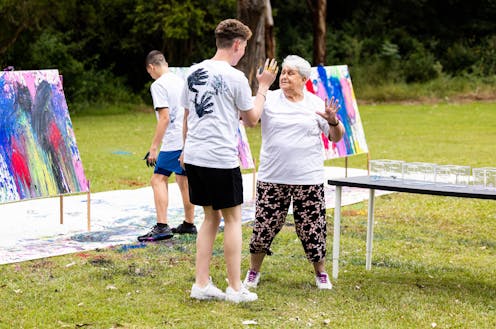
Many people will have heard about “intergenerational practice” via the TV.
This is the purposeful bringing together of different generations, aiming to benefit all involved. It’s the idea central to ABC TV’s Old People’s Home for Teenagers, and its predecessor Old People’s Home for 4 Year Olds. Both show the positive aspects of mixing age groups, for the older people featured, as well as the teenagers or preschoolers.
I’m a geriatrician, a doctor who specialises in the medical care of older people, one of two geriatricians who took part in this TV experiment. Here’s why I got involved.
Read more: Curious Kids: why do people get old?
The benefits of mixing it up
The positive aspects of mixing age groups may seem intuitive. Just think of how special it can be when grandparents spend time with their grandchildren. When older and younger people are together, each can share their experiences and perspectives. Meaningful connections can develop.
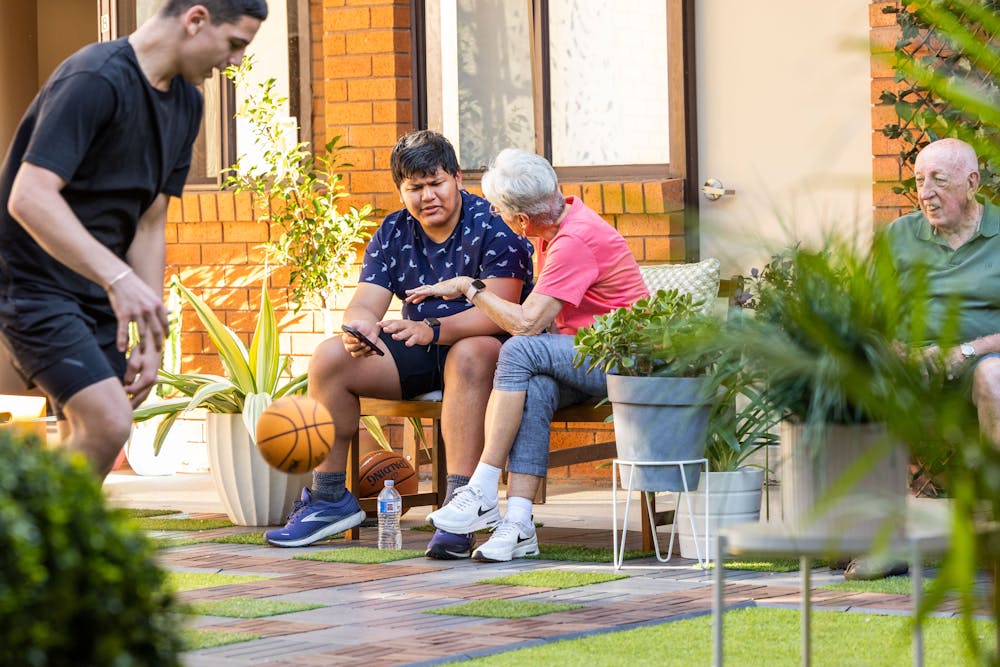
But in Australia today, many older people have no such opportunities. Multi-generational households are the exception, not the norm.
One quarter of people aged 65 and over living in private homes live alone. Nearly 200,000 live in retirement villages and around the same number live in residential aged care. Both of the latter, by definition, accommodate only a single generation.
Intergenerational programs overcome these barriers by creating a structured and supported forum in which two age groups can regularly connect.
These programs can involve different populations: from toddlers through to university students, from independent, active retirees through to aged care residents and hospital patients.
Read more: A new project shows combining childcare and aged care has social and economic benefits
Programs can take several forms, for example:
The common aim is to improve wellbeing, restore purpose, and bring joy to older participants, while helping to develop social skills, confidence and empathy in young people. These programs can potentially also address ageism, by creating understanding and empathy for each generation and by challenging negative stereotypes.
Read more: Kids dressing up as older people is harmless fun, right? No, it's ageist, whatever Bluey says
There are challenges ahead
There are wide-ranging challenges ageing may throw at us – an increased burden of chronic disease and frailty, a decline in physical and cognitive abilities, or changes in hearing, vision and balance.
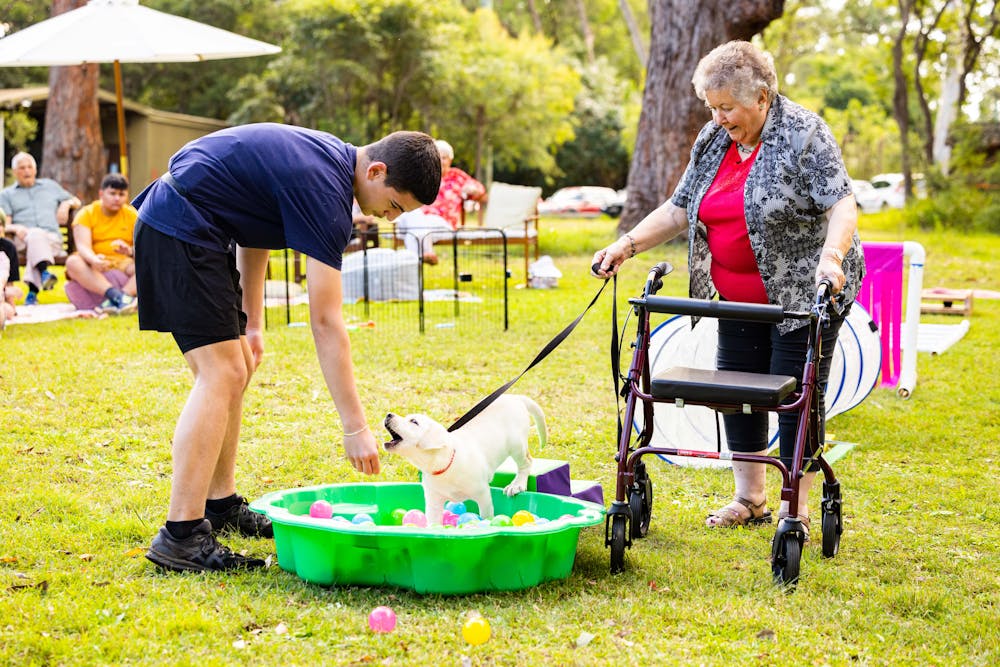 The program encouraged both young people, such as Ayden, and older people, such as Maz, to be more active.
EndemolShine Australia, CC BY-ND
The program encouraged both young people, such as Ayden, and older people, such as Maz, to be more active.
EndemolShine Australia, CC BY-ND
Changes in occupational and social roles often also occur as we get older, for instance, as older people retire from paid work or care for a sick partner. Conversely, older people may lose their role as caregivers, after grandchildren grow up, or after the loss of a loved one.
All these ageing-related changes can lead to a loss of social connection and loneliness. Loneliness itself is bad for health. Loneliness increases risks for depression, cardiovascular disease, dementia and may even lead to a shorter life span. Reducing loneliness in older adults remains a challenge.
How I got involved
So when a chance to become involved in Old People’s Home for 4 Year Olds, I eagerly jumped on board. This featured an experimental intergenerational preschool. Young and old took part in a series of structured and supported activities such as playing dress-ups, going on walks and having a sports carnival.
At the time, intergenerational programs were far from mainstream, especially in Australia.
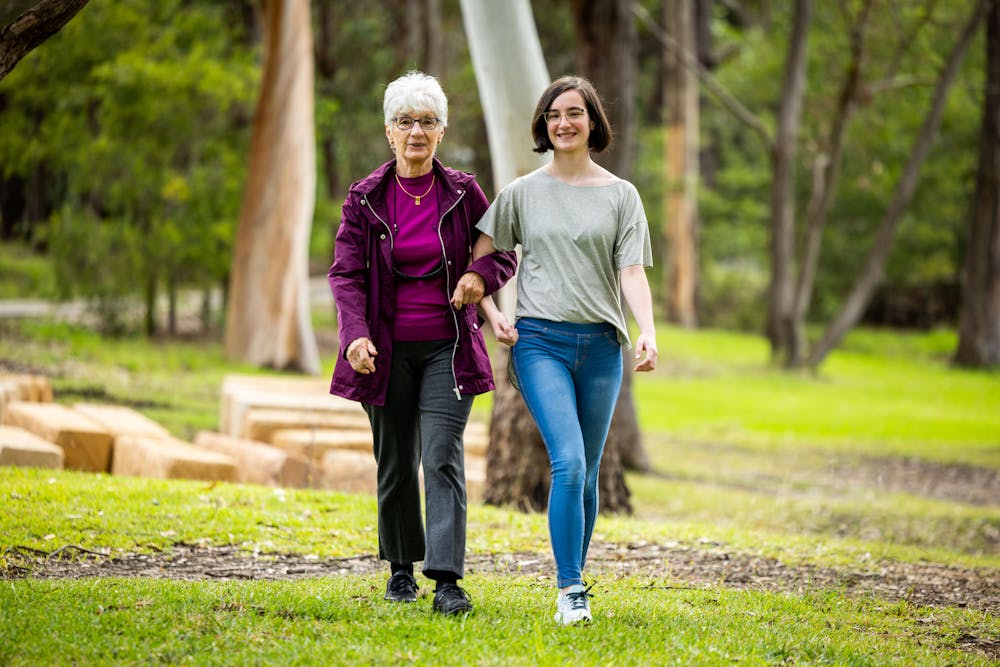 Annelise said she was lonely at the start of the series, but formed a bond with teenager Amelie.
EndemolShine Australia, CC BY-ND
Annelise said she was lonely at the start of the series, but formed a bond with teenager Amelie.
EndemolShine Australia, CC BY-ND
I joined the TV program with a panel of experts including a physiotherapist and psychologist.
We screened the older adults at the start of the experiment for issues such as depression, and assessed signs of physical frailty including speed of walking, muscle strength and activity levels. We then assessed them again after six weeks.
While we were cautiously hopeful, the overall improvements were better than anticipated, and some of the individual transformations were extraordinary.
For instance, three of four participants who originally screened positive for depression had scores in the normal range by the end of the program. For one woman in her 80s her score improved by eight points on a 15-point scale. Improvements in fitness levels across the group were impressive too.
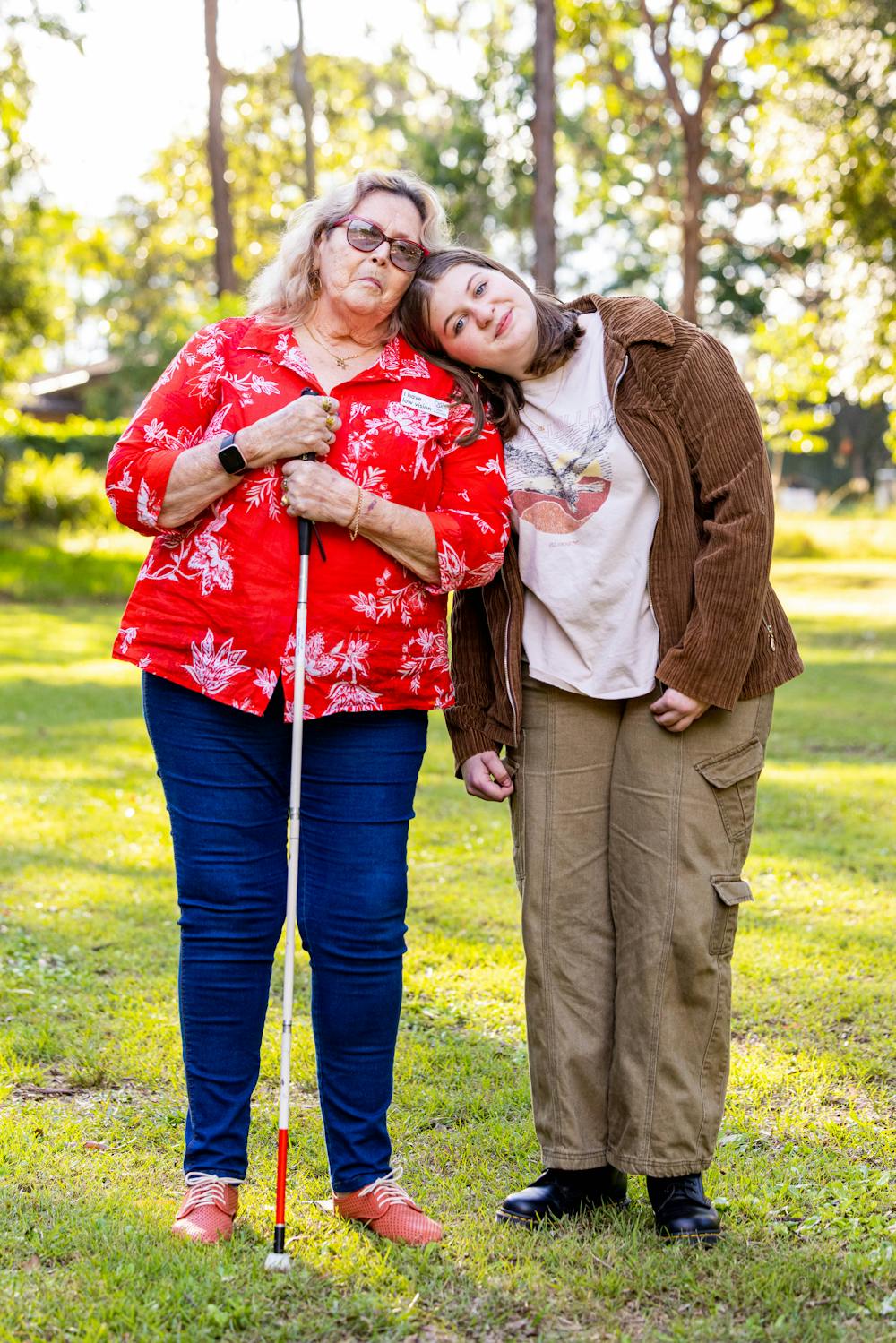 Dale was concerned about how her visual impairment affected her day-to-day life, but soon connected with Abi.
EndemolShine Australia, CC BY-ND
Dale was concerned about how her visual impairment affected her day-to-day life, but soon connected with Abi.
EndemolShine Australia, CC BY-ND
Since then, the series has evolved to involve differing populations: from residents of aged care facilities and retirement villages, to older adults living in the community, and from preschoolers to teenagers.
Each program has been adapted to the needs of each group involved. At times, we have focused on a particular issue, such as loneliness, depression, concerns about memory, physical frailty and falls.
But in each we have continued to see benefits for both age groups, in line with what a growing evidence base is telling us about the potential benefits of such programs.
This is perhaps even more so in the Old People’s Home for Teenagers series, with the second season currently on air. The teenage participants are articulate in describing how truly valuable it is for younger people to spend enriched time with older mentors. Their confidence increases, they take on new challenges, and new meaningful connections develop, many of which continue to enrich lives long after the cameras stop rolling.
Read more: I think my teen is depressed. How can I get them help and what are the treatment options?
No-one is pretending such intergenerational programs are going to end loneliness for all older people, or can remove all the challenges they may face later in life. And equally, people do not need to be lonely, frail or isolated to participate.
Alongside the TV programs, there has been an upswing in community interest in intergenerational practice, from researchers to educators to aged care providers, to hospitals/health services and schools.
We need continued investment into workforce training, support for such programs to develop, and robust evaluation of each program to ensure they meet the goals of all the stakeholders involved – especially those of the participants themselves.
The “Old People’s Home” model did not invent the concept of intergenerational programs. Nor are the models of practice used in each series the only way intergenerational programs must run. But they do demonstrate what intergenerational programs could achieve.
Learn more about intergenerational programs in Australia and find one near you. If this article has raised issues for you, or if you’re concerned about someone you know, call Lifeline on 13 11 14.
Authors: Stephanie Ward, Senior Research Fellow, Centre for Healthy Brain Ageing (CHeBA), UNSW Sydney

















