

Christos Tsiolkas's new novel celebrates a quiet ethics of care in a culturally noisy world
- Written by Jessica Gildersleeve, Professor of English Literature, University of Southern Queensland
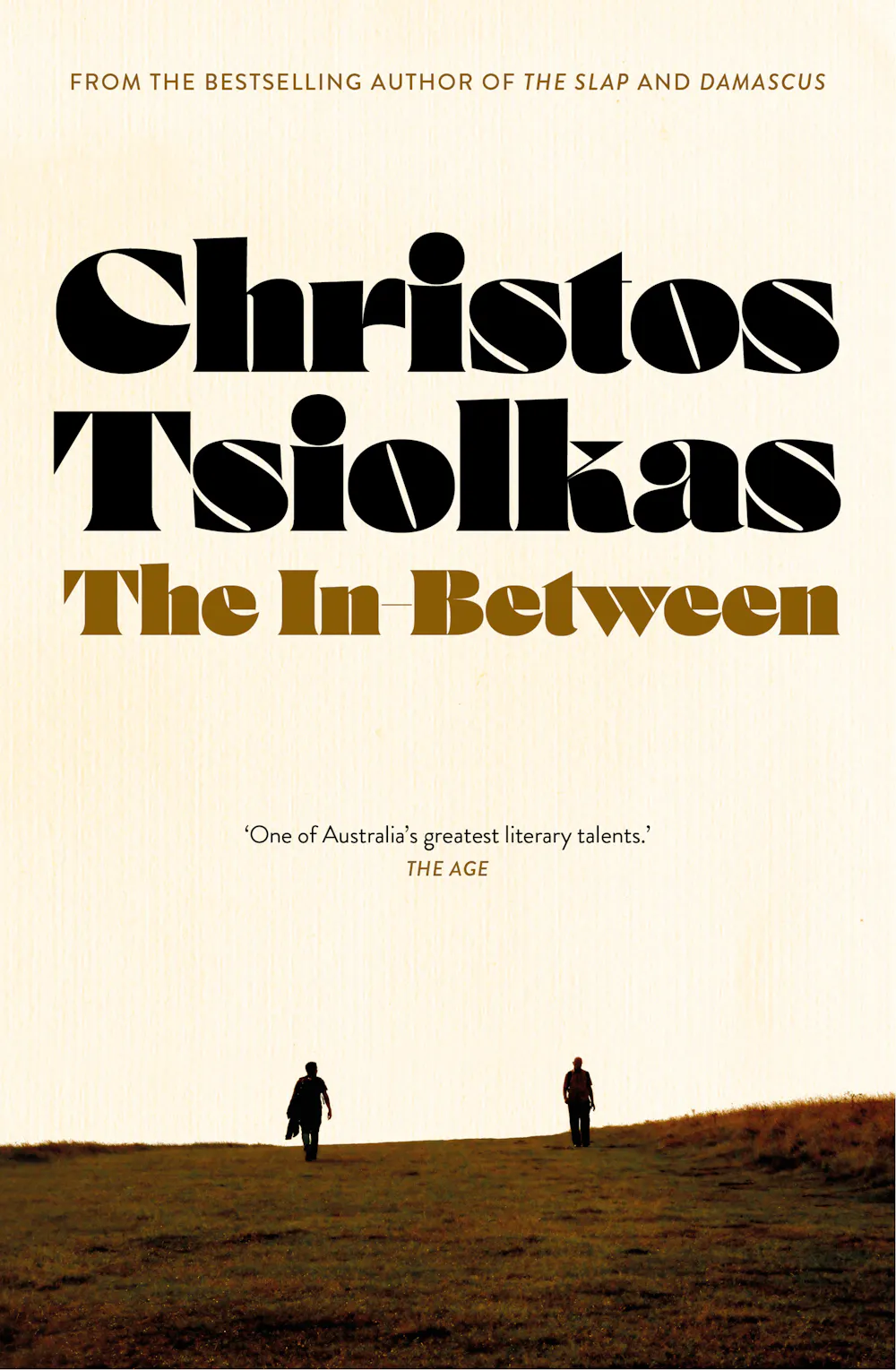
Christos Tsiolkas’s eighth novel, The In-Between, is a work of social realism set in the immediate present – a return to the form and style of some of his most popular novels.
This follows his experiment with cinematic techniques and authorial presence in 7 ½ (2021), and the significant historical shift of Damascus (2019), which was based around the gospels and letters of St Paul, and focused on characters one or two generations from the death of Christ.
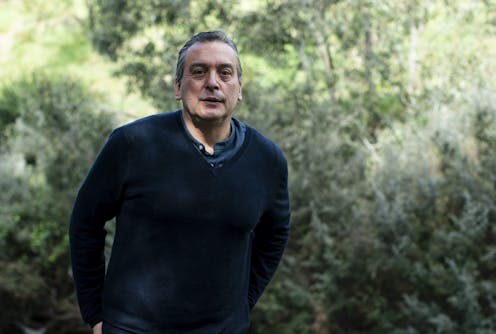
 Global news corporations don’t tell Australian readers the most important news: what’s happening close to us.
Andres Kudacki/AAP
Class and the cultural cringe
Such an interest in the world at large appears to be an extension of the Australian “cultural cringe”, now manifested as an insistence by some characters on Australia’s racism and conservatism.
For them, Australia is written off – “a racist shithole”. These are characters “in-between” class, “middle-class Australians” with a “tendency […] to endlessly deride their own country”, demonstrating a “habit” shared by “the bourgeoisie the world over”, as Perry observes. “Cosmopolitan Europeans are just as annoying in their shallow, condescending generalisations,” he continues.
Such generalisations pepper the narrative, and are even shared by Perry himself, who thinks, for instance, “Touts les australiens sont comme des enfants”. (All Australians are like children.) Meanwhile, a Greek taxi driver criticises Australians’ insularity and their reluctance to learn even a few words of his language. A guest in a restaurant (misidentifying the men’s nationality) mocks Ivan for making a loud expression of approval: “It’s morning and the Englishman is already drunk.”
These kinds of derision represent criticism without an ethic of care, or tolerance for the other. Instead, Tsiolkas celebrates – as he does in all of his work – those who create, tend, or share. Especially when this is constituted by manual labour: the work of the hands.
Stu, Ivan’s workmate, a gardener and landscaper, possesses an “odour” that “is harsh, defiant, that compound of sweat and tobacco and earth, the masculine scents simultaneously sour and stirring”. For Tsiolkas, this is always the mark of authenticity and honesty.
Anna, an elderly client of Ivan’s, is similarly valued: appreciated for her uncritical generosity and hospitality, for the coffee and cakes she serves, for her devotion to her family and her extension of this to all in her immediate community.
Anna’s difficult decision to renovate the “fertile wonder” of her garden, replacing it with landscaping that will be easier for her to tend, is an example of the broader way her ethic of care seems to be dwindling in the contemporary world.
Global news corporations don’t tell Australian readers the most important news: what’s happening close to us.
Andres Kudacki/AAP
Class and the cultural cringe
Such an interest in the world at large appears to be an extension of the Australian “cultural cringe”, now manifested as an insistence by some characters on Australia’s racism and conservatism.
For them, Australia is written off – “a racist shithole”. These are characters “in-between” class, “middle-class Australians” with a “tendency […] to endlessly deride their own country”, demonstrating a “habit” shared by “the bourgeoisie the world over”, as Perry observes. “Cosmopolitan Europeans are just as annoying in their shallow, condescending generalisations,” he continues.
Such generalisations pepper the narrative, and are even shared by Perry himself, who thinks, for instance, “Touts les australiens sont comme des enfants”. (All Australians are like children.) Meanwhile, a Greek taxi driver criticises Australians’ insularity and their reluctance to learn even a few words of his language. A guest in a restaurant (misidentifying the men’s nationality) mocks Ivan for making a loud expression of approval: “It’s morning and the Englishman is already drunk.”
These kinds of derision represent criticism without an ethic of care, or tolerance for the other. Instead, Tsiolkas celebrates – as he does in all of his work – those who create, tend, or share. Especially when this is constituted by manual labour: the work of the hands.
Stu, Ivan’s workmate, a gardener and landscaper, possesses an “odour” that “is harsh, defiant, that compound of sweat and tobacco and earth, the masculine scents simultaneously sour and stirring”. For Tsiolkas, this is always the mark of authenticity and honesty.
Anna, an elderly client of Ivan’s, is similarly valued: appreciated for her uncritical generosity and hospitality, for the coffee and cakes she serves, for her devotion to her family and her extension of this to all in her immediate community.
Anna’s difficult decision to renovate the “fertile wonder” of her garden, replacing it with landscaping that will be easier for her to tend, is an example of the broader way her ethic of care seems to be dwindling in the contemporary world.
 For Tsiolkas, the work of the hands is ‘always the mark of authenticity and honesty’.
Lisa Fotios/Pexels
Another young couple for whom Ivan works represent selfishness at worst, individualism at best. The young woman never invites the landscapers inside (as Anna had done), never offers them a drink or use of the bathroom. Similarly, Ivan is forced out of his own carefully renovated home after his former lover demands his financial share in the property after their split.
But Ivan’s daughter’s decision to purchase a small house in a once-industrial suburb suggests the counter to this loss. Kat will invest in the home, and by extension, in the suburb – as will other young families like her own. The gardens and houses will be tended. The suburb and its community will be revived.
Read more:
The concept of class is often avoided in public debate, but it's essential for understanding inequality
Choosing imperfect love
Like Tsiolkas’s most recent novel, 7 ½, The In-Between insists on the simple power of choosing love: of accepting flaws, mistakes, imperfections, and choosing love anyway.
For Tsiolkas, the work of the hands is ‘always the mark of authenticity and honesty’.
Lisa Fotios/Pexels
Another young couple for whom Ivan works represent selfishness at worst, individualism at best. The young woman never invites the landscapers inside (as Anna had done), never offers them a drink or use of the bathroom. Similarly, Ivan is forced out of his own carefully renovated home after his former lover demands his financial share in the property after their split.
But Ivan’s daughter’s decision to purchase a small house in a once-industrial suburb suggests the counter to this loss. Kat will invest in the home, and by extension, in the suburb – as will other young families like her own. The gardens and houses will be tended. The suburb and its community will be revived.
Read more:
The concept of class is often avoided in public debate, but it's essential for understanding inequality
Choosing imperfect love
Like Tsiolkas’s most recent novel, 7 ½, The In-Between insists on the simple power of choosing love: of accepting flaws, mistakes, imperfections, and choosing love anyway.
 This morality was gestured towards at the end of The Slap, and perhaps too in The Jesus Man and Barracuda, all of which emphasise some kind of friendship, community or connection as antidotes to the weaknesses of fear and hostility.
The happiness Perry and Ivan seek throughout the novel can ultimately, it seems, only be found when we truly accept the other as they are and accept the past as it occurred – instead of living with bitterness, petty aggression, old hurts and quarrels, or masking and lying out of malice.
Yet, at the same time, the novel presents a sense of the arbitrariness and pointlessness of such connections. Anna’s abrupt death is one such instance - her “joyous laughter”, so “solid”, such a “guide” for Ivan, is snuffed out in a moment.
Another comes in the final paragraphs of the novel, as an apparently loving couple move into and then out of the narrative’s spotlight:
They are there, a faint silhouette in the black of the night, impossible to tell where one ends and the other begins. There is that faint impression. Then there is the merging, the disappearing, and the belonging to the night.
There is an echo of Virginia Woolf’s concept of “moments of being” here. In a sense, the reader is encouraged to recognise those intimate webs of interconnection – even as they also bear witness to life’s inevitable chaos.
Life is fleeting, love is fleeting, the scene suggests. But it still matters, even if life is simply a series of moments “in-between”.
Authors: Jessica Gildersleeve, Professor of English Literature, University of Southern Queensland
This morality was gestured towards at the end of The Slap, and perhaps too in The Jesus Man and Barracuda, all of which emphasise some kind of friendship, community or connection as antidotes to the weaknesses of fear and hostility.
The happiness Perry and Ivan seek throughout the novel can ultimately, it seems, only be found when we truly accept the other as they are and accept the past as it occurred – instead of living with bitterness, petty aggression, old hurts and quarrels, or masking and lying out of malice.
Yet, at the same time, the novel presents a sense of the arbitrariness and pointlessness of such connections. Anna’s abrupt death is one such instance - her “joyous laughter”, so “solid”, such a “guide” for Ivan, is snuffed out in a moment.
Another comes in the final paragraphs of the novel, as an apparently loving couple move into and then out of the narrative’s spotlight:
They are there, a faint silhouette in the black of the night, impossible to tell where one ends and the other begins. There is that faint impression. Then there is the merging, the disappearing, and the belonging to the night.
There is an echo of Virginia Woolf’s concept of “moments of being” here. In a sense, the reader is encouraged to recognise those intimate webs of interconnection – even as they also bear witness to life’s inevitable chaos.
Life is fleeting, love is fleeting, the scene suggests. But it still matters, even if life is simply a series of moments “in-between”.
Authors: Jessica Gildersleeve, Professor of English Literature, University of Southern Queensland 
















