

Worried about getting a blood test? 5 tips to make them easier (and still accurate)
- Written by Sapha Shibeeb, Senior lecturer in Laboratory Medicine , RMIT University
Blood tests are a common medical procedure, offering valuable insights into a person’s health. Whether you’re getting a routine check-up, diagnosing a medical condition or monitoring treatment progress, understanding the process can make the experience more comfortable and effective.
For the majority of patients, blood collections are a minor inconvenience. Others may feel uneasy and anxious.
Preparation strategies can help get you through the procedure.
How blood is collected
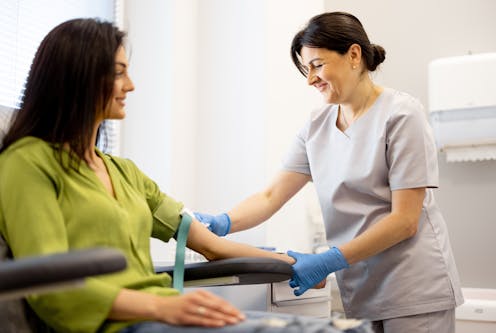
During venipuncture (blood draw), the phlebotomist (blood collector) inserts a needle through the skin into a vein and a small amount of blood is collected and transferred into a test tube.
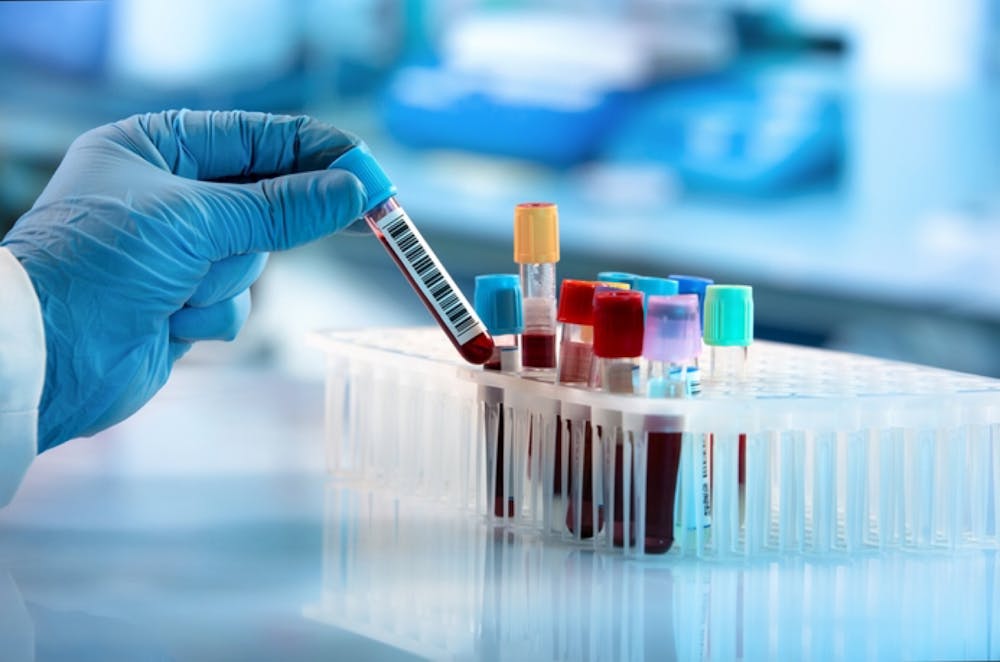
Tubes are sent to a laboratory, where the blood is analysed. A laboratory technician may count or examine cells and measure the levels of minerals/salts, enzymes, proteins or other substances in the sample. For some tests, blood plasma is separated out by spinning (centrifuging) the sample. Others pass a light beam through the sample to determine the amount of a chemical present.
For collection, the phlebotomist usually selects a vein in the crook of your elbow, where veins are readily accessible. Blood can also be drawn from veins in the wrists, fingers or heels. A tourniquet may be applied to restrict blood flow and make the chosen vein puff out.
Read more: Why do I bruise so easily? Could it be something serious?
Different tests require different preparation
Before a blood test, the GP or health-care provider will give you specific instructions.
These may include fasting for up to 12 hours or temporarily discontinuing certain medications.
It is crucial to follow these guidelines meticulously as they can significantly impact the accuracy of your test results. For example, fasting is required before glucose (blood sugar) and lipids (blood fats) testing because blood sugar and cholesterol levels typically increase after a meal.
If the blood test requires fasting, you will be asked not to eat or drink (no tea, coffee, juice or alcohol) for about eight to 12 hours. Water is allowed but smoking should be avoided because it can increase blood sugar, cholesterol and triglyceride levels.
Generally, you will be asked to fast overnight and have the blood collection done in the morning. Fasting for longer than 15 hours could impact your results, too, by causing dehydration or the release of certain chemicals in the blood.
If you have diabetes, you must consult your doctor prior to fasting because it can increase the risk of hypoglycemia (low blood sugar) in people with type 1 diabetes. Most type 2 diabetics can safely fast before a blood test but there are some exceptions, such as people who are taking certain medications including insulin.
5 tips for a better blood test
To improve your blood collection experience, consider these tips:
1. Hydrate
Drink plenty of water right up to 30 minutes before your appointment. Adequate hydration improves blood flow, making your veins more accessible. Avoid strenuous exercise before your blood test, which can increase some blood parameters (such as liver function) while decreasing others (such as sodium).
2. Loose clothing
Wear clothing that allows easy access to your arms to ensure a less stressful procedure.
3. Manage anxiety
If the sight of blood or the procedure makes you anxious, look away while the needle is inserted and try to keep breathing normally. Distraction can help – virtual reality has been trialled to reduce needle anxiety in children. You could try bringing something to read or music to listen to.
4. Know your risk of fainting
If you’re prone to fainting, make sure to inform the phlebotomist when you arrive. You can have your blood drawn while lying down to minimise the risk of passing out and injury. Hydration helps maintain blood pressure and can also reduce the risk of fainting.
5. Discuss difficult veins
Some people have smaller or scarred veins, often due to repeated punctures, chemotherapy or blood thinner use. In such cases, venipuncture may require multiple attempts. It is important to talk to the phlebotomist if you feel discomfort or significant pain. A finger prick can be performed as an alternative for some tests, such as blood glucose levels. But other comprehensive tests require larger blood volume.
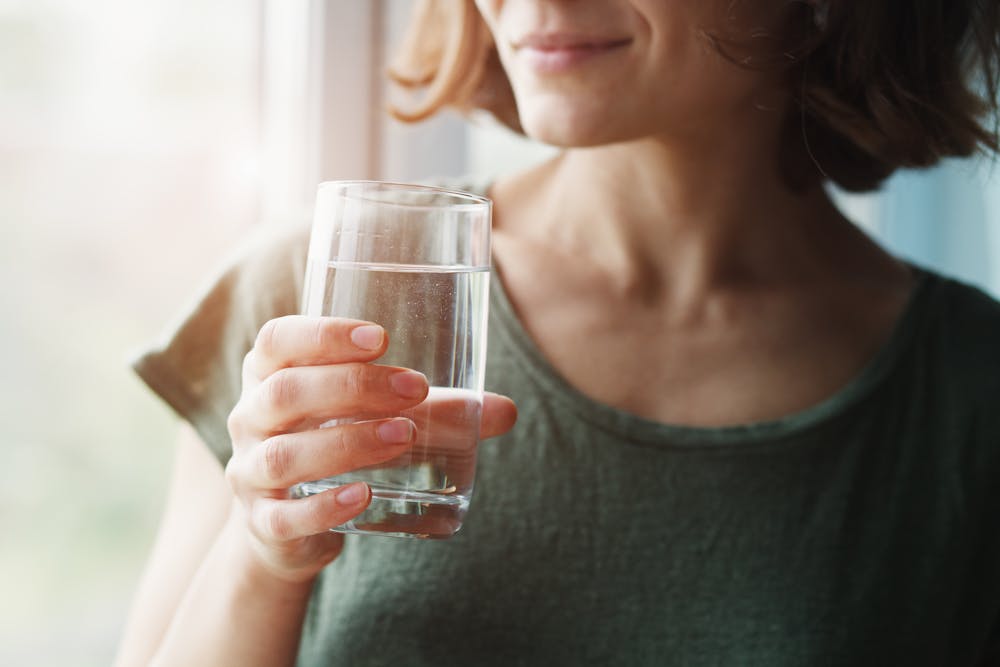 Being well hydrated can help blood flow.
Shutterstock
Being well hydrated can help blood flow.
Shutterstock
Read more: What can go wrong in the blood? A brief overview of bleeding, clotting and cancer
Blood draws after lymph node removal
Historically, there were concerns about drawing blood from an arm that had undergone lymph node removal. This was due to the risk of lymphedema, a condition marked by fluid build-up in the affected arm. Lymph nodes may have been removed (lymphadenectomy) for cancer diagnosis or treatment.
However, a 2016 study showed people who’ve had lymph nodes removed are not at a higher risk of developing lymphedema following blood draws, even when drawing blood from the affected arm.
Read more: What are lymph nodes? And can a massage really improve lymphatic drainage?
After your blood test
The whole blood test procedure usually lasts no more than a few minutes. Afterwards, you may be asked to apply gentle pressure over a clean dressing to aid clotting and reduce swelling.
If you do experience swelling, bruising or pain after a test, follow general first aid procedures to alleviate discomfort. These include applying ice to the site, resting the affected arm and, if needed, taking a pain killer.
It is usually recommended you do not do heavy lifting for a few hours after a blood draw. This is to prevent surges in blood flow that could prevent clotting where the blood was taken.
Authors: Sapha Shibeeb, Senior lecturer in Laboratory Medicine , RMIT University

















