

Conflict pollution, washed-up landmines and military emissions – here's how war trashes the environment
- Written by Stacey Pizzino, PhD Candidate, The University of Queensland
When armed conflict breaks out, we first focus on the people affected. But the suffering from war doesn’t stop when the fighting does. War trashes the environment. Artillery strikes, rockets and landmines release pollutants, wipe out forests and can make farmland unusable.
One in six people around the world have been exposed to conflict this year, from civil war in Sudan to Russia’s war in Ukraine to the Israel-Hamas war.
War has returned. Conflicts are at their highest point since the second world war. Deaths are at a 28-year high. As we grapple with the immediate plight of people, we must not lose sight of what war leaves behind – the silent casualty of the environment.
What damage does war do?
Armed conflict leaves a long trail of environmental damage, which in turn can worsen our health and that of other species.
Chemical weapons and pollution from weapons stay in the environment as a toxic legacy. Explosives release pollutants such as depleted uranium into soil, while landscapes can be destroyed by troop movement and the breakdown of infrastructure.
The damage can last far longer than you’d think. The bloody WWI Battle of Verdun in France left the once-fertile farmland contaminated. Over a century later, no one can live in the Red Zone due to the threat from unexploded bombs.
As the Russia-Ukraine war wears on, severe air pollution, deforestation and soil degradation have mounted.
Conflict also causes habitat loss and decreased biodiversity. Between 1946 and 2010, wildlife noticeably declined in African nations affected by armed conflict.
Landmines are particularly bad, as they are designed to remain in place until stepped on. Long after a war ends, they can still kill people or animals. Landmines also cause degradation and limit access to safe land, which can then become over-exploited. Landmines have been unearthed by flood waters in Libya, Ukraine, Lebanon and Bosnia Herzegovina.
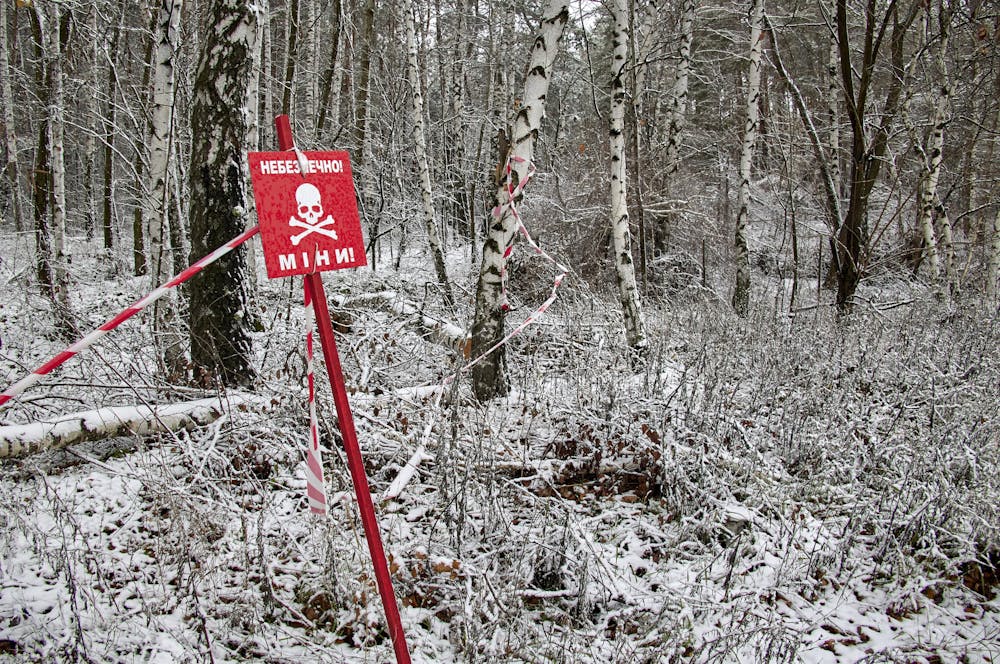
Many explosive weapons are designed to withstand short periods of intense heat. But when high temperatures linger, unexploded bombs can detonate. As the world heats up, we may see more explosions – not just from remnant bombs, but from munitions dumps.
Read more: The war on Tigray wiped out decades of environmental progress: how to start again
In the fast-heating Middle East, this is already happening. In Iraq, six arms depots exploded during intense heatwaves between 2018 and 2019. In Jordan, heatwaves have been blamed for a similar arms dump explosion in 2020.
At war’s end, weapons are often dumped in the ocean. From the first world war until the 1970s, out of date munitions and chemical weapons in the United Kingdom were dumped into the sea. It may have seemed like an easy solution, but the bombs haven’t gone away. Over 1 million tonnes of munitions litter the floor of a natural ocean trench between Northern Ireland and Scotland. These sometimes detonate underwater, while chemical weapons have washed up on beaches.
During the second world war, intense fighting took place on the Solomon Islands. Even today, people die or are wounded every year when uncovered bombs go off. Fishers have to be wary of underwater bombs.
Environmental exploitation such as illegal logging or diamond mining can accelerate during wartime, with profits used to buy weapons to fuel more fighting. At least 40% of civil war and internal conflicts between 1946–2006 were tied to natural resources such as teak and gold, according to the United Nations.
Sometimes, natural resources can become targets, as in the deliberate firing of oil wells in Kuwait or destruction of Ukraine’s Kakhovka Dam. These scorched-earth tactics do untold damage to the environment.
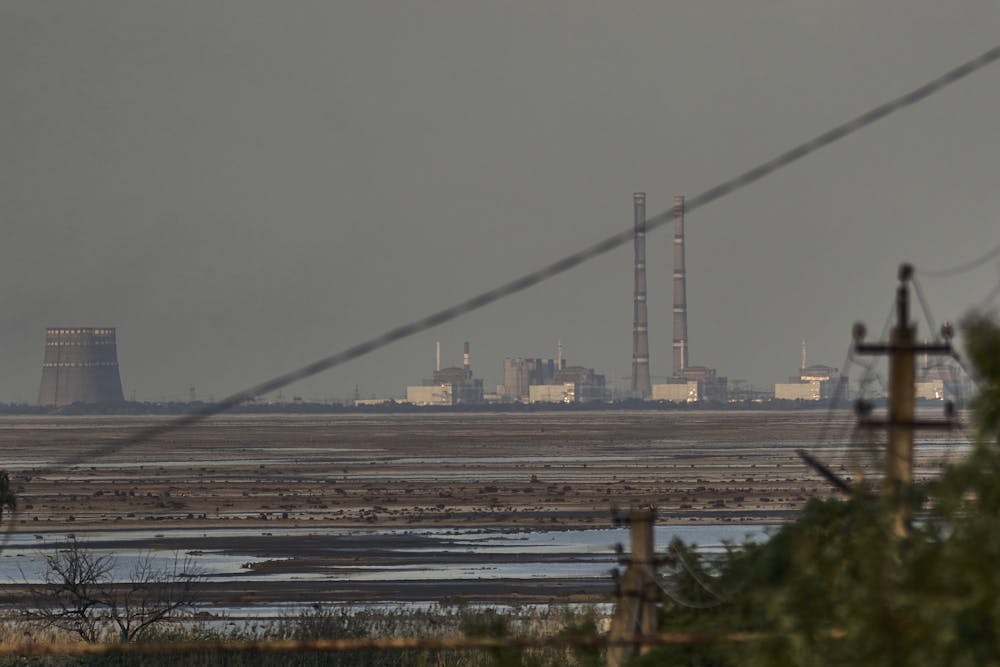 Russia blew up Ukraine’s Kakhovka Dam in June this year, triggering floods, emptying the reservoir and causing environmental damage.
LIBKOS/AP
Russia blew up Ukraine’s Kakhovka Dam in June this year, triggering floods, emptying the reservoir and causing environmental damage.
LIBKOS/AP
How do war and climate change interact?
The long-running war in Sudan’s Darfur region has been dubbed the world’s first climate change war due to its origins in drought and ecological crisis. While it’s difficult to clearly draw a link between the changing climate and an armed conflict, climate change is at minimum an indirect driver of armed conflict and can exacerbate existing social, economical and environmental factors. In turn, conflict worsens the damage done by climate change as it limits people’s ability to respond or cope with climate shocks.
Wars and extreme weather can both force people from their homes. At the end of last year, the number of people forced to seek refuge elsewhere in their own country was at an all time high. When people are forced to move, the disruption can add extra environmental damage through plastic and other types of waste.
When wars are raging, they take priority for governments. That, in turn, can limit efforts to reduce emissions or adapt to climate change.
That can make disasters worse. Colombia’s deadly 2017 landslide killed over 300 people. Why was it so deadly? In part, because many people had fled to the affected town, Mocoa, to avoid war and had built makeshift houses with no protection against disasters. We also know deaths from disasters increase in nations riven by armed conflict.
The world’s military forces are intense users of fossil fuels, accounting for 5.5% of global emissions. If we took the world’s military forces as one country, they would be the fourth highest emitter, after China, America and India.
We can no longer ignore the devastating coupling between war and environmental damage, including climate change. Wars make our ability to adapt to climate change worse, and environmental damage from conflict will exacerbate climate change.
Read more: War leaves a toxic legacy that lasts long after the guns go quiet. Can we stop it?
Authors: Stacey Pizzino, PhD Candidate, The University of Queensland


















