

Promotional techniques on junk food packaging are a problem for children's health – Australia could do better
- Written by Gary Sacks, Professor of Public Health Policy, Deakin University
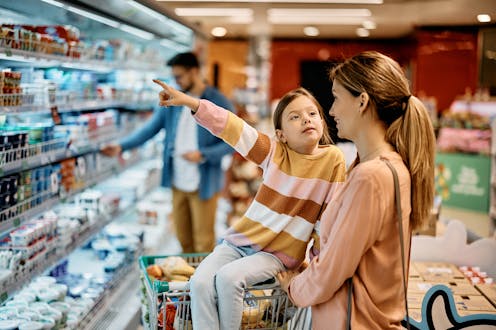
Too many Australian children are eating diets high in added sugars, saturated fats, salt, energy and ultra-processed foods. And often they’re not getting enough fruits, vegetables and wholegrains.
A key driver of unhealthy diets among Australian children is that unhealthy foods and drinks are ever-present and aggressively marketed.
In a new study, we looked at how manufacturers are targeting Australian children with marketing techniques on the packaging of unhealthy foods. We found widespread, unregulated use of promotional techniques, like cartoon characters, that directly appeal to children.
Read more: Social media platforms need to do more to stop junk food marketers targeting children
Children are vulnerable to food marketing
There’s strong evidence food marketing works. When children are exposed to food marketing, such as in ads on social media or on TV, it increases brand awareness, results in positive brand attitudes, and leads to increased purchase and consumption of marketed products.
Even very young children are affected. For example, there’s evidence kids as young as 18 months can recognise corporate labels, at 20 months can associate items with brand names, at two years old can make consumer choices, and by two to three can draw brand logos.
The way food packaging is designed can also have an important influence on what people buy and consume.
The use of techniques such as cartoon and movie characters, gifts, games and contests on product packs has been shown to encourage children to think of these products as tasty, more fun and more appropriate for them.
Kids’ vulnerability to food marketing leaves parents having to juggle competing desires and demands. The concept of “pester power” recognises the power children have in influencing purchasing decisions.
Our study
We analysed the packages of around 8,000 Australian foods and drinks across a range of categories. These included biscuits, confectionery, breakfast cereals, non-alcoholic drinks, dairy, snack foods, and foods for infants and young children.
We assessed the number of products carrying child-directed promotional techniques on the pack, and grouped the techniques into two major categories:
“child-directed characters”, including branded or licensed cartoon characters, children or child-like figures, personified characters (for example, spoons with faces) and celebrities that appeal to children
“non-character-based elements”, including gifts, games and contests that appealed to kids, unconventional packaging, or product names that specifically reference children (for example, “kids bar”).
We then assessed the healthiness of products that used child-directed promotional techniques on the pack.
What we found
Some 901 out of 8,006 (11.3%) products had one or more child-directed promotional technique on the pack. Promotions were most common on foods for infants and young children, confectionery, snack foods, and dairy.
Child-directed characters were twice as common as non-character-based elements. Personified characters were the most popular tactic.
We found the vast majority of products using child-directed promotional techniques on their packaging were unhealthy. Some 81% of the child-directed marketing was on ultra-processed products, and the average health star rating of the products with child-directed marketing was 2.34 (out of 5).
How are other countries managing this issue?
To protect children’s health, the World Health Organization recommends governments implement policies to restrict children’s exposure to the marketing of unhealthy foods and drinks across a wide range of media.
In line with those recommendations, several countries have rules in place that ban child-directed promotions on food packaging.
For example, in Chile and Mexico, legislation prohibits the use of child-directed promotions on packaging of products that are high in ingredients such as sugar and salt. These bans are part of broader efforts to address unhealthy diets.
If Australia adopted similar legislation to Mexico, 95.5% of the products in our study with child-directed promotions would have to remove them from the pack.
What regulations does Australia have in place?
In Australia, there are some limited government regulations that restrict some unhealthy food advertising on free-to-air television during dedicated children’s programs.
There are also a range of voluntary guidelines developed by the food and advertising industries that restrict some types of food advertising.
But public health experts have criticised these voluntary codes for being weak and ineffective. They also exclude product packaging.
If Australia is serious about improving children’s health, stronger regulation of child-directed promotional techniques on the packaging of unhealthy foods is warranted.
What changes are needed?
Australia could draw inspiration from Chile and Mexico, which have integrated marketing restrictions with their front-of-pack labelling policies.
In Australia, a similar approach would mean foods that score below a threshold health star rating (say less than 3.5 out of 5) would not be able to use child-directed promotions on the pack. For this to operate effectively, the health star rating system, which is currently voluntary, would need to be made mandatory on all packs.
Read more: Is it finally time to ban junk food advertising? A new bill could improve kids' health
In the short term, it’s worth noting nearly two-thirds of products using child-directed promotions in our analysis were made by just 15 manufacturers. This offers some potential for action targeting specific manufacturers to request they voluntarily stop using such tactics on unhealthy foods.
This may be particularly fruitful for Australia’s large supermarket chains, given international examples where this has worked. Lidl in the UK removed cartoon characters from a selection of its own-brand cereals, for instance.
However, given the likely reality that most manufacturers won’t voluntarily abandon the revenue they gain from marketing to children in this way, government regulations are likely to be necessary to drive meaningful and sustained change.
Authors: Gary Sacks, Professor of Public Health Policy, Deakin University

















