
Why are we obsessed with renovation? Amanda Lohrey explores the promise and limits of transforming our environment
- Written by: Monique Rooney, Senior lecturer in literature, film and new media, Australian National University

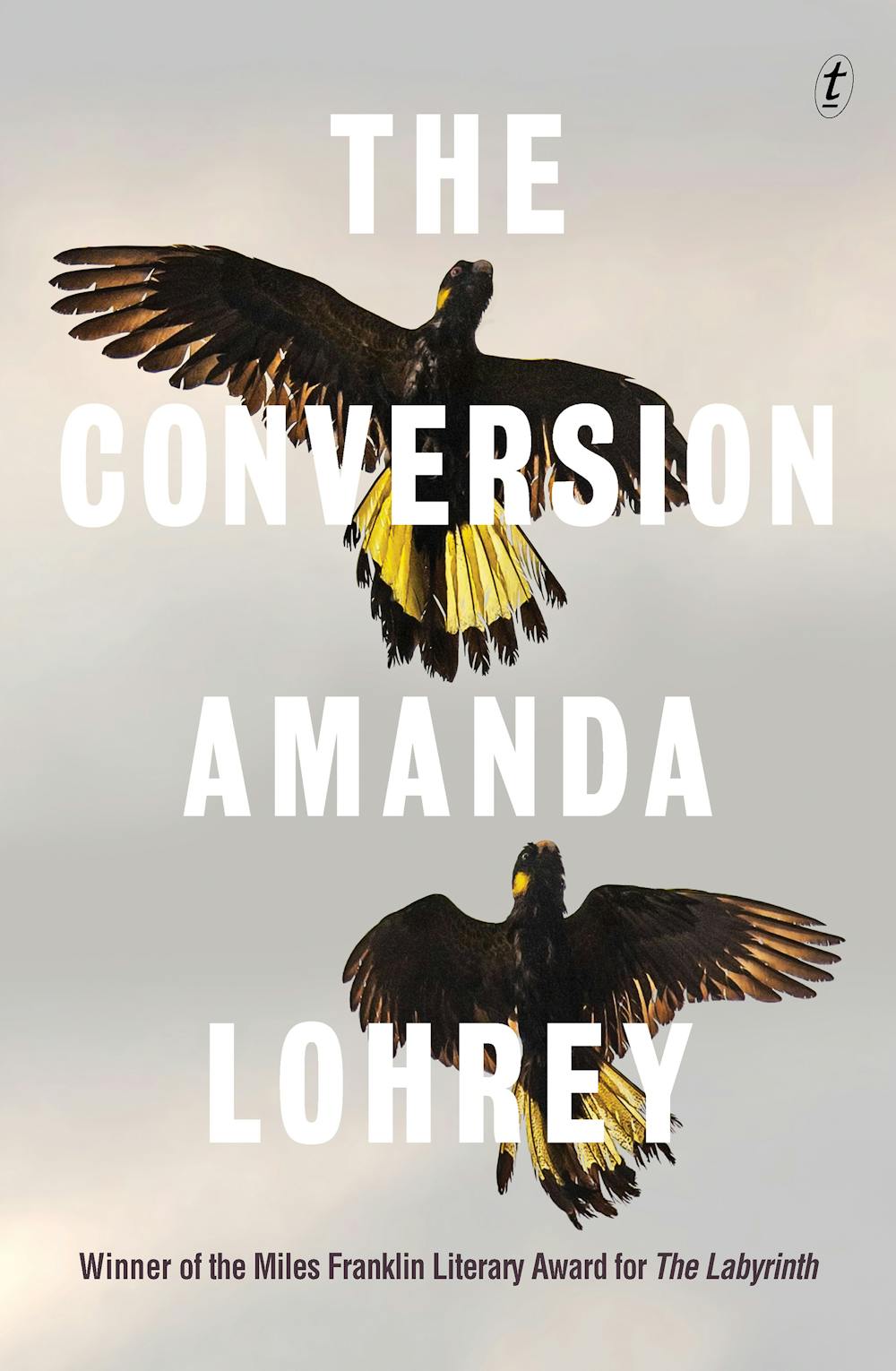
The cover of The Conversion is an image of two yellow-tailed black cockatoos ascending against a pale sky, their horizontal outstretched wings crossed by the vertical lines that run from their beaks to their tail feathers.
 Amanda Lohrey.
Richard Bugg/AAP
Read more:
Intellectual fearlessness, politics and the spiritual impulse: the remarkable career of Amanda Lohrey
Orders of conversion
In her book Renovation Nation, Fiona Allon describes how the Australian dream of home ownership has become an obsessive nightmare involving market gaming, prestige homes and profit maximisation. Such renovation practices are noted when Zoe’s friend Helen mentions the gutting of a “worker’s cottage” in order to install a “plunge pool”.
This real-estate obsession gives an ironic cast to Zoe’s renovation, given that her church is named after St Martin, a Roman soldier who converted to Christianity, and was sainted for cutting his cloak in half and sharing it with a stranger in need.
The national fetish for conversion even extends to the former reverend of Zoe’s church, who now lives in a “concrete box with floor-to-ceiling glass walls” that overlook fields planted with garlic. His house is “so different from the church and its lancet windows with their pointed arch”, thinks Zoe.
Ideas of transformation are extended in the second part of the novel, which considers the rewards and costs of religious, psychological, artistic and architectural conversions. Each of the novel’s characters becomes involved in one conversion or another.
Zoe employs Mick Hanlon and his son Travis to remove the font (a receptacle used for baptism ceremonies) from the church using their Genie lift. While Mick would like his son to be involved in the earth-moving business he dreams of starting, Travis has other ideas. His hidden talents surface when he performs the lead part in August Strindberg’s A Dream Play, directed by schoolteacher Melanie and staged within the walls of the church. Teacher and students temporarily transform the church interior into a stage and auditorium.
The transformative destruction brought by early settlers is touched upon when Zoe reflects on whether she and others “were intruders, always bending something out of its natural shape”. The catastrophic changes brought by colonisation are also alluded to by Zoe’s new neighbour Berenice Hanlon, who mentions that certain ancestors of Crannock residents had been complicit in the massacre of Indigenous people.
Conversion is associated in the novel with attempts to silence the past. Neville expresses this idea when he likens conversion to “cancel culture”. It is a way of cancelling the “old naysayers, the sermonisers, the ones who told you not to have sex before marriage”.
But Zoe remains uncertain as to how she can put her “stamp” on the church. It is not as if “she could sweep in and cancel the history of a building with a few knick-knacks”.
Amanda Lohrey.
Richard Bugg/AAP
Read more:
Intellectual fearlessness, politics and the spiritual impulse: the remarkable career of Amanda Lohrey
Orders of conversion
In her book Renovation Nation, Fiona Allon describes how the Australian dream of home ownership has become an obsessive nightmare involving market gaming, prestige homes and profit maximisation. Such renovation practices are noted when Zoe’s friend Helen mentions the gutting of a “worker’s cottage” in order to install a “plunge pool”.
This real-estate obsession gives an ironic cast to Zoe’s renovation, given that her church is named after St Martin, a Roman soldier who converted to Christianity, and was sainted for cutting his cloak in half and sharing it with a stranger in need.
The national fetish for conversion even extends to the former reverend of Zoe’s church, who now lives in a “concrete box with floor-to-ceiling glass walls” that overlook fields planted with garlic. His house is “so different from the church and its lancet windows with their pointed arch”, thinks Zoe.
Ideas of transformation are extended in the second part of the novel, which considers the rewards and costs of religious, psychological, artistic and architectural conversions. Each of the novel’s characters becomes involved in one conversion or another.
Zoe employs Mick Hanlon and his son Travis to remove the font (a receptacle used for baptism ceremonies) from the church using their Genie lift. While Mick would like his son to be involved in the earth-moving business he dreams of starting, Travis has other ideas. His hidden talents surface when he performs the lead part in August Strindberg’s A Dream Play, directed by schoolteacher Melanie and staged within the walls of the church. Teacher and students temporarily transform the church interior into a stage and auditorium.
The transformative destruction brought by early settlers is touched upon when Zoe reflects on whether she and others “were intruders, always bending something out of its natural shape”. The catastrophic changes brought by colonisation are also alluded to by Zoe’s new neighbour Berenice Hanlon, who mentions that certain ancestors of Crannock residents had been complicit in the massacre of Indigenous people.
Conversion is associated in the novel with attempts to silence the past. Neville expresses this idea when he likens conversion to “cancel culture”. It is a way of cancelling the “old naysayers, the sermonisers, the ones who told you not to have sex before marriage”.
But Zoe remains uncertain as to how she can put her “stamp” on the church. It is not as if “she could sweep in and cancel the history of a building with a few knick-knacks”.
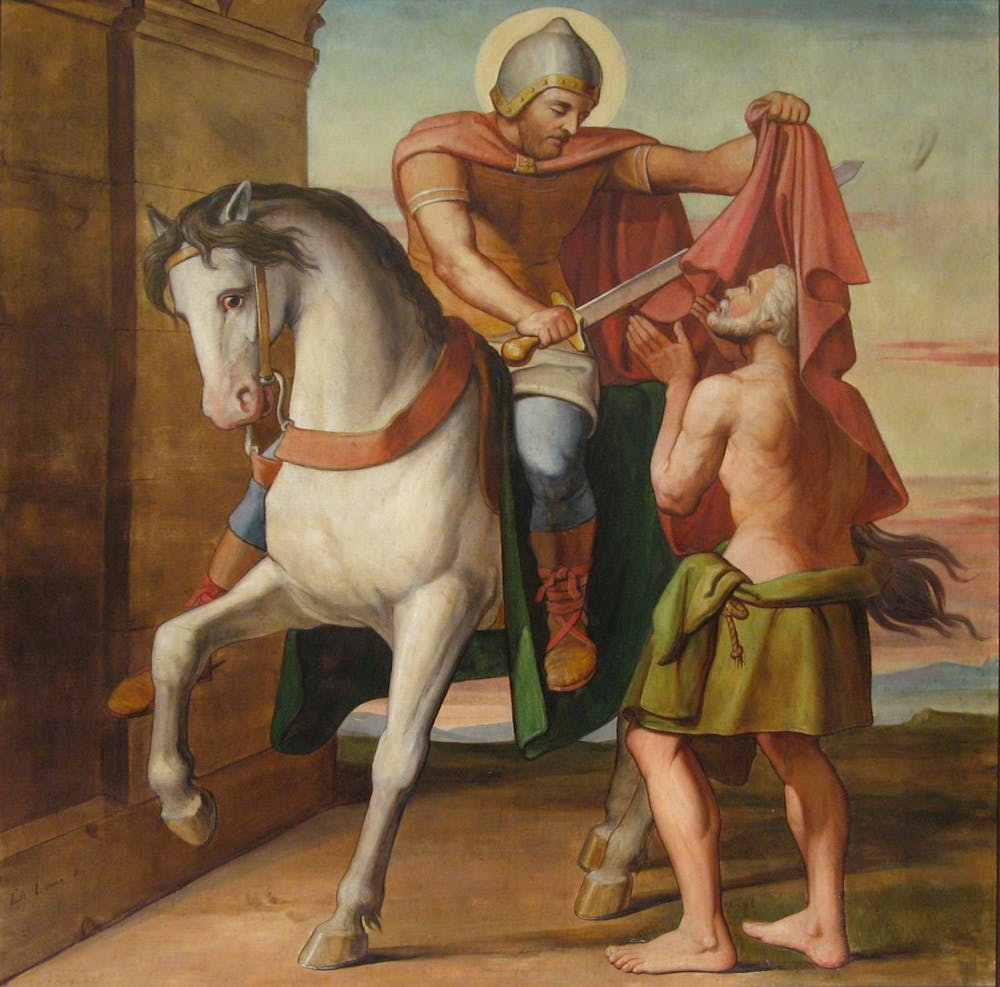 The Charity of Saint Martin – Louis Anselme Longa.
Abmg, via Wikimedia Commons, CC BY-SA
Read more:
Big-picture thinking: in The Bell of the World, Gregory Day listens to the music of common things
Vertical light and resistance to conversion
Zoe opposes the effects created by the vertical lines of the church to those created by the horizontal design of the Reverend’s house. She also harks back to talks with Nick about the architectural “unity” resulting from the “harmony” of vertical and horizontal lines.
The meaning of these lines strikes her after the church’s font is removed:
[…] she sees that the unity of the whole has been tilted out of balance. The church had been a body, and now it had lost a limb. The buyer of a church must impose their own dream, which means they can only live in it if all trace of its original purpose is camouflaged or destroyed: As much as possible, vertical space (heaven) must be rendered horizontal (earth).
These evocative lines resonate in passages where Zoe observes light filtering to the floor via the high stained-glass windows above. On the one hand, the novel associates this verticality with the authority of priests who “communicated the sacred language” from the pulpit. On the other hand, it reminds us that such priests stood in front of windows whose stained glass stories communicated to the “illiterate”.
The Charity of Saint Martin – Louis Anselme Longa.
Abmg, via Wikimedia Commons, CC BY-SA
Read more:
Big-picture thinking: in The Bell of the World, Gregory Day listens to the music of common things
Vertical light and resistance to conversion
Zoe opposes the effects created by the vertical lines of the church to those created by the horizontal design of the Reverend’s house. She also harks back to talks with Nick about the architectural “unity” resulting from the “harmony” of vertical and horizontal lines.
The meaning of these lines strikes her after the church’s font is removed:
[…] she sees that the unity of the whole has been tilted out of balance. The church had been a body, and now it had lost a limb. The buyer of a church must impose their own dream, which means they can only live in it if all trace of its original purpose is camouflaged or destroyed: As much as possible, vertical space (heaven) must be rendered horizontal (earth).
These evocative lines resonate in passages where Zoe observes light filtering to the floor via the high stained-glass windows above. On the one hand, the novel associates this verticality with the authority of priests who “communicated the sacred language” from the pulpit. On the other hand, it reminds us that such priests stood in front of windows whose stained glass stories communicated to the “illiterate”.
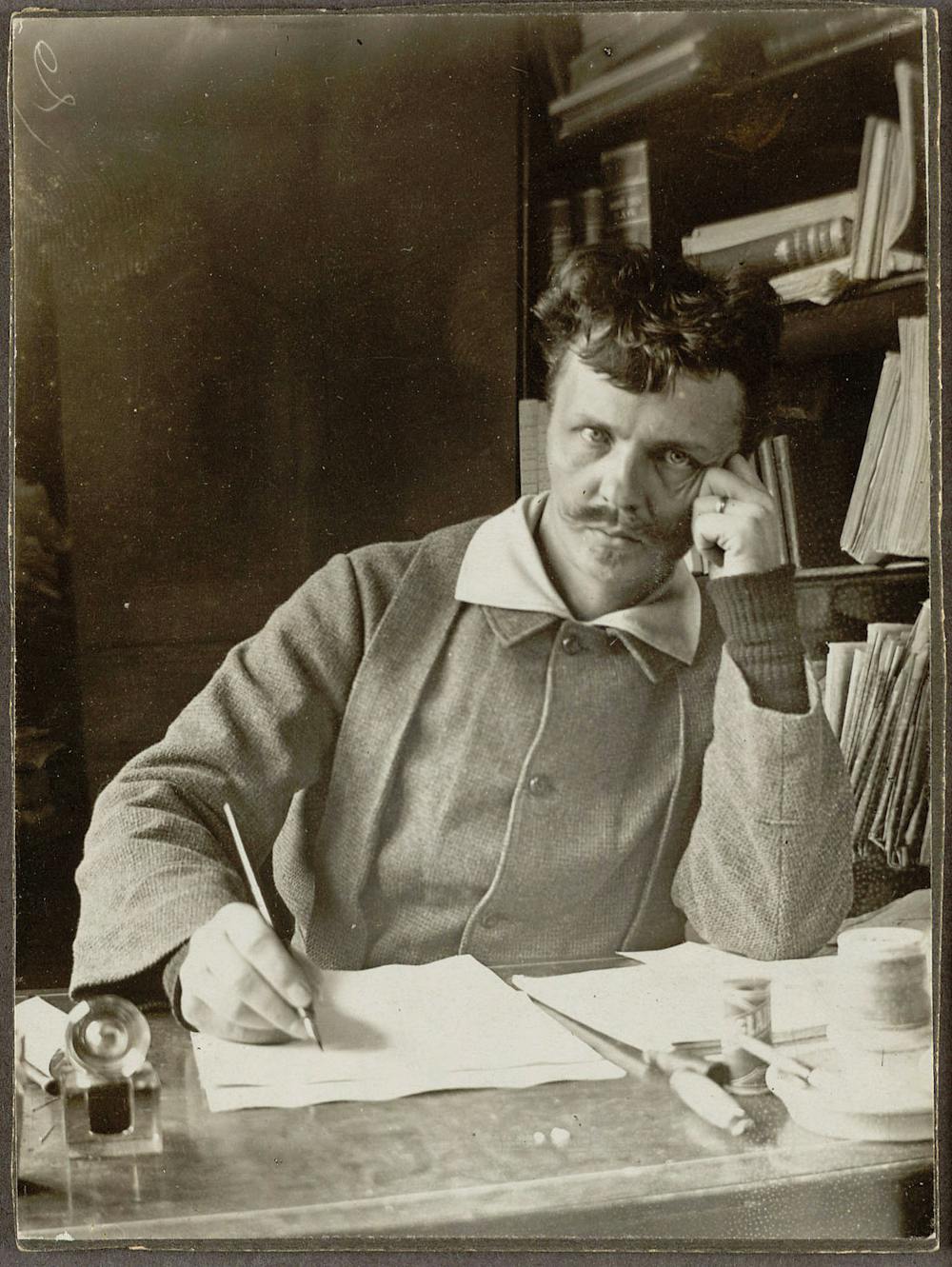 August Strindberg (1886).
National Library of Sweden, via Wikimedia Commons
I find intriguing this idea that stained glass windows once spoke directly to illiterate church-goers, and I admire very much the novel’s ambitious reach, though sometimes I wondered whether certain characters are vehicles for these ideas. Such non-realistic treatment may be Lohrey’s nod to Strindberg and his deliberate creation of “symbolic” characters for his Dream Play.
Plausibility of plot and character development are occasionally sacrificed in the service of Lohrey’s pursuit of the question of renewal from different angles. But this weakness is also a strength, as The Conversion delves into what it means to change one thing into another thing, exploring ideas of conversion that range from everyday renovation to the allure of religious cults and the meaning of our ever-updating culture.
Mentions of “cancel culture” and Zoe’s trawling of Pinterest remind readers of the internet, raising questions about the fate of the contemporary novel within a technological environment. Do novels continue to deliver truths from within this restless space? Or has the novel – like the colonial Victorian church – been changed?
St Martin’s church may have lost its “mystique” once its font, pulpit, nave and sacristy are removed, but it remains recognisable as a church. The Conversion may not deliver the kinds of characters we meet in a Victorian novel, yet it poses questions that matter to how we read, write and live now.
Authors: Monique Rooney, Senior lecturer in literature, film and new media, Australian National University
August Strindberg (1886).
National Library of Sweden, via Wikimedia Commons
I find intriguing this idea that stained glass windows once spoke directly to illiterate church-goers, and I admire very much the novel’s ambitious reach, though sometimes I wondered whether certain characters are vehicles for these ideas. Such non-realistic treatment may be Lohrey’s nod to Strindberg and his deliberate creation of “symbolic” characters for his Dream Play.
Plausibility of plot and character development are occasionally sacrificed in the service of Lohrey’s pursuit of the question of renewal from different angles. But this weakness is also a strength, as The Conversion delves into what it means to change one thing into another thing, exploring ideas of conversion that range from everyday renovation to the allure of religious cults and the meaning of our ever-updating culture.
Mentions of “cancel culture” and Zoe’s trawling of Pinterest remind readers of the internet, raising questions about the fate of the contemporary novel within a technological environment. Do novels continue to deliver truths from within this restless space? Or has the novel – like the colonial Victorian church – been changed?
St Martin’s church may have lost its “mystique” once its font, pulpit, nave and sacristy are removed, but it remains recognisable as a church. The Conversion may not deliver the kinds of characters we meet in a Victorian novel, yet it poses questions that matter to how we read, write and live now.
Authors: Monique Rooney, Senior lecturer in literature, film and new media, Australian National University 


















