

The Ethical Slut has been called 'the bible' of non-monogamy – but its sexual utopia is oversimplified
- Written by Andrea Waling, ARC DECRA Senior Research Fellow in Sex & Sexuality, La Trobe University

In 2022, University of Melbourne evolutionary psychologist Dr Khandis Blake estimated that among young people, “around 4-5 per cent of people might be involved in a polyamorous relationship, and about 20 per cent have probably tried one”.
Polyamory statistics in Australia are limited. But recent research in the US shows just over 11% of people are currently in polyamorous relationships, while 20% have engaged in some form of non-monogamy. In the UK, just under 10% of people would be open to a non-monogamous relationship.
“To us, a slut is a person of any gender who celebrates sexuality according to the radical proposition that sex is nice and pleasure is good for you,” write the co-authors of The Ethical Slut, a now-classic guide to non-monogamy (tagged “the Poly Bible”).
When it was first published more than 25 years ago, shattered social norms and stigma around non-traditional relationship styles. Now in its third edition, revised to address cultural changes like gender diversity and new technological innovations (like dating apps), it’s sold over 200,000 copies since its first publication in 1997.
As a non-monogamous practitioner myself, I welcome literature that aims to destigmatise relationships that sit outside monogamy.
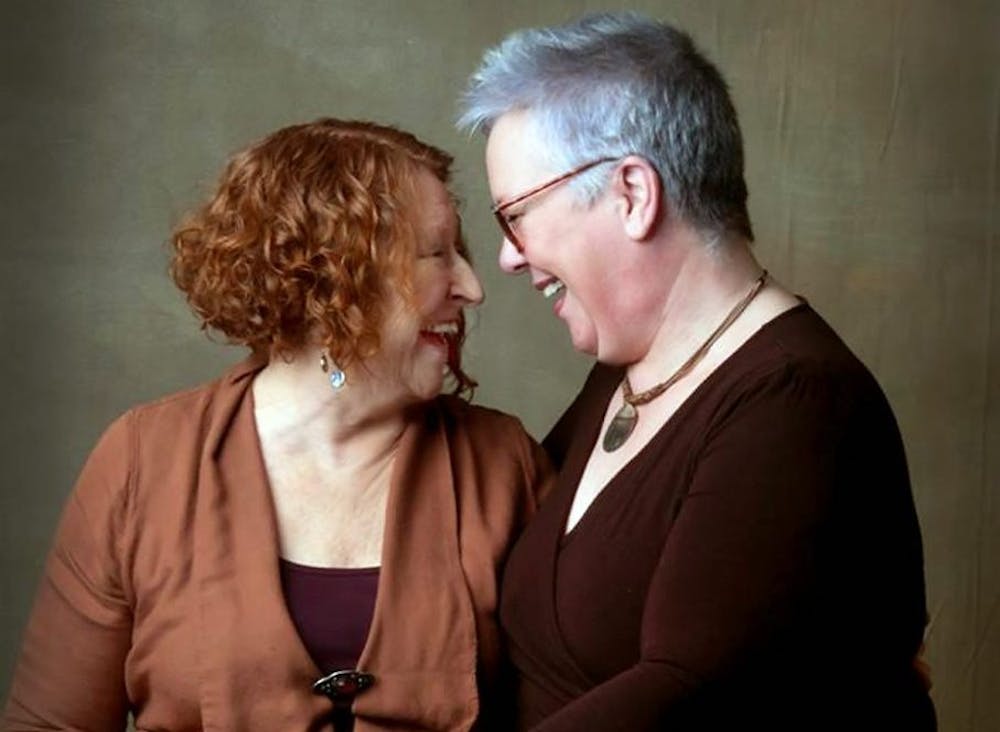
Sexual educator Janet W. Hardy and psychotherapist Dossie Easton, two self-described queer, polyamorous “ethical sluts” – friends, lovers and frequent collaborators – bring readers into their world of multiple partners and multiple kinds of sex. It encourages them to think about their own desires, and how they might be achieved in ethical ways.
Easton decided against monogamy after leaving a traumatic relationship, with a newborn daughter, in 1969. She taught her first class in “unlearning jealousy” in 1973. Hardy left a 13-year marriage in 1988, after realising she was no longer interested in monogamy. The pair met in 1992, through a San Francisco BDSM group.
Two years later, sick in bed, Hardy stumbled on the film Indecent Proposal, where a marriage crumbles after millionaire Robert Redford offers a madly-in-love (but struggling with money) married couple, played by Woody Harrelson and Demi Moore, a million dollars for one night with Demi.
The 1993 film Indecent Proposal sparked The Ethical Slut.“A million dollars and Robert Redford, and they have a problem with this? It made no sense to me,” Hardy told Rolling Stone. “I really got it at that point, how distant I had become from mainstream sexual ethics.” And so she reached out to Easton to propose they collaborate on a book on non-monogamy.
The Ethical Slut is a significant guide to navigating sexual freedom, open relationships and polyamory – responsibly and thoughtfully. It’s aimed at readers exploring non-monogamy, or supporting loved ones to do so.
Read more: Hook-ups, pansexuals and holy connection: love in the time of millennials and Generation Z
What is The Ethical Slut?
The book is divided into four parts, each offering mental exercises to help readers embrace a sexually diverse lifestyle. It aims to support those interested in exploring non-monogamous relationships, free from stigma or shame.
 The first part offers an overview of non-monogamy. An ethical slut approaches their relationships with communication and care for their partner(s), whether casual or committed, while staying true to their desires.
In the second part, the authors urge readers to break free from the “starvation economy” mindset, which conditions us to think love and intimacy are scarce resources. This is what leads to fear and possessiveness in dating, sex and relationships, they explain.
In part three, readers learn how to handle jealousy and insecurity, while managing conflicts effectively.
Finally, the authors cover various non-monogamous sexual practices. There are tips for navigating swinging and open relationships as a single person, group sex (orgies), and advice on asking for what you want in a sexual encounter.
‘Everything’s out on a big buffet’
The Ethical Slut’s appeal lies in its ability to help people shift their mindset about monogamy, in a society where other forms of relationships have often been deemed immoral. (Though this is changing.)
Co-author Hardy told the Guardian in 2018:
What I’m seeing among young people is that they don’t have the same need to self-define by what they like to do in bed, or in relationships, like my generation did. Everything’s out on a big buffet, and they try a little of everything.
The first part offers an overview of non-monogamy. An ethical slut approaches their relationships with communication and care for their partner(s), whether casual or committed, while staying true to their desires.
In the second part, the authors urge readers to break free from the “starvation economy” mindset, which conditions us to think love and intimacy are scarce resources. This is what leads to fear and possessiveness in dating, sex and relationships, they explain.
In part three, readers learn how to handle jealousy and insecurity, while managing conflicts effectively.
Finally, the authors cover various non-monogamous sexual practices. There are tips for navigating swinging and open relationships as a single person, group sex (orgies), and advice on asking for what you want in a sexual encounter.
‘Everything’s out on a big buffet’
The Ethical Slut’s appeal lies in its ability to help people shift their mindset about monogamy, in a society where other forms of relationships have often been deemed immoral. (Though this is changing.)
Co-author Hardy told the Guardian in 2018:
What I’m seeing among young people is that they don’t have the same need to self-define by what they like to do in bed, or in relationships, like my generation did. Everything’s out on a big buffet, and they try a little of everything.
 Ezra Miller has talked about his ‘polycule’.
Greg Allen/AAP
Five years later, in 2023, many celebrities openly identify as polyamorous. Ezra Miller has talked about his “polycule” (a network of people in non-monogamous relationships with one another), musician Yungblud has called himself polyamorous, and Shailene Woodley has been in and out of open relationships.
Books like Neil Strauss’s The Game (2005) view sex and relationships as ongoing competitions, requiring varied strategies to effectively land a partner. Instead, The Ethical Slut encourages developing genuine, consensual connections through communication and honesty. Relationships are seen as fluid and open to change, with endings viewed as opportunities for growth and development, not failures.
Rather than teach readers to mimic a social norm that will “win” them sex or relationships, The Ethical Slut pushes readers to think beyond what is “normal”.
Dating apps like Feeld, PolyFinda and OkCupid enable individuals to link profiles with their partners, promoting transparency and openness about their relationship status and desire for diverse sexual experiences.
And more books with varied and nuanced takes on non-monogamy have emerged since 1997, such as More than Two, Opening Up and Many Love.
Read more:
Ethical non-monogamy: what to know about these often misunderstood relationships
A utopian mirage?
There’s much to appreciate in the messages The Ethical Slut conveys. However, it’s framed with a utopia in mind – one that doesn’t quite exist.
A key aspect of this book is challenging the starvation economy that influences monogamous relationships. In an ideal world, breaking free from this mindset about love and intimacy seems like paradise. The idea of loving more than one person is beautiful, connected and certainly achievable. But it’s also a significant challenge.
For many, longing for love and connection is not just a concept but a real, lived experience. Withholding affection in relationships can be emotionally abusive and manipulative. It’s essential to recognise non-monogamous people may still be susceptible to – or even perpetuate – these behaviours.
The authors present themselves as spiritually and morally enlightened in their non-monogamous choices and their sexual practices. Monogamy is framed as a negative byproduct of a regressive culture, rather than a genuine choice in its own right. Substance use is severely frowned on, echoing longstanding taboos around the use of drugs in sexual play.
Ezra Miller has talked about his ‘polycule’.
Greg Allen/AAP
Five years later, in 2023, many celebrities openly identify as polyamorous. Ezra Miller has talked about his “polycule” (a network of people in non-monogamous relationships with one another), musician Yungblud has called himself polyamorous, and Shailene Woodley has been in and out of open relationships.
Books like Neil Strauss’s The Game (2005) view sex and relationships as ongoing competitions, requiring varied strategies to effectively land a partner. Instead, The Ethical Slut encourages developing genuine, consensual connections through communication and honesty. Relationships are seen as fluid and open to change, with endings viewed as opportunities for growth and development, not failures.
Rather than teach readers to mimic a social norm that will “win” them sex or relationships, The Ethical Slut pushes readers to think beyond what is “normal”.
Dating apps like Feeld, PolyFinda and OkCupid enable individuals to link profiles with their partners, promoting transparency and openness about their relationship status and desire for diverse sexual experiences.
And more books with varied and nuanced takes on non-monogamy have emerged since 1997, such as More than Two, Opening Up and Many Love.
Read more:
Ethical non-monogamy: what to know about these often misunderstood relationships
A utopian mirage?
There’s much to appreciate in the messages The Ethical Slut conveys. However, it’s framed with a utopia in mind – one that doesn’t quite exist.
A key aspect of this book is challenging the starvation economy that influences monogamous relationships. In an ideal world, breaking free from this mindset about love and intimacy seems like paradise. The idea of loving more than one person is beautiful, connected and certainly achievable. But it’s also a significant challenge.
For many, longing for love and connection is not just a concept but a real, lived experience. Withholding affection in relationships can be emotionally abusive and manipulative. It’s essential to recognise non-monogamous people may still be susceptible to – or even perpetuate – these behaviours.
The authors present themselves as spiritually and morally enlightened in their non-monogamous choices and their sexual practices. Monogamy is framed as a negative byproduct of a regressive culture, rather than a genuine choice in its own right. Substance use is severely frowned on, echoing longstanding taboos around the use of drugs in sexual play.
 The Ethical Slut frames monogamy as ‘a negative byproduct of a regressive culture’, rather than a choice.
Cottonbro Studio/Pexels
The Ethical Slut makes universal assumptions about people’s experiences without considering broader social and personal influences. For instance, the section on flirting assumes a global understanding on what constitutes flirting cues between people. It lacks cultural, gendered and neurodiversity awareness.
Rejecting sex is not always easy
The authors assert “being asked [for sex], even by someone you don’t find attractive, is a compliment and deserves a thank-you”. Yet a simple “Thank you, I am not interested” is not always easy.
Research has shown women need to find ways to gently reject cisgender, heterosexual men to avoid violence (like “I have a boyfriend/husband”). And many men often do not take no as an answer. Thanking men for compliments can also lead to further hostility and aggression.
The authors advocate for women to say yes more, assuming women only say no due to shame and stigma. But the real fear of experiencing violence is a major deterrent. For example, recent research in the UK on recreational sex clubs has found that cisgender, heterosexual men may show sexual interest in trans women, only to immediately become violent with them.
These assumptions are echoed in discussions about barrier methods, sexual health testing, birth control and abortion options. The Ethical Slut assumes everyone has equitable access to sexual health education, and reproductive health services and products.
Yet the overturn of Roe vs Wade in the US has shown this is not the case. People who experience menstruation and pregnancy are increasingly losing – or never had – those reproductive freedoms.
Emotions are ‘choices’
The book envisions an idealised world where emotion and logic unite to challenge social constructs of monogamy, possessiveness and control. It’s underpinned by a belief our emotions (including jealousy) are choices we make about life events.
In The Ethical Slut, jealousy is solely attributed to the person experiencing it, overlooking its complexity in various contexts. Jealousy can be a sign of insecurity, grief or relationship issues, among other things.
Managing jealousy is presented as something an individual needs to address on their own. The book lacks guidance for dealing with partners who might contribute to jealousy by not fulfilling emotional needs, breaking boundaries, failing to communicating effectively, or purposely trying to evoke the feeling.
The person experiencing jealousy is held solely responsible for their emotion, ignoring the role of the non-jealous partner. Suggested responses, like “I’m sorry you feel that way, I have to go on my date now”, reaffirm this mindset.
Jealous partners are advised to write journal entries, practice mindfulness or go on a walk to deal with their emotion. In a book about sex that is fundamentally about relations with others, jealousy becomes lost in the hyperfocus on the individual.
The Ethical Slut frames monogamy as ‘a negative byproduct of a regressive culture’, rather than a choice.
Cottonbro Studio/Pexels
The Ethical Slut makes universal assumptions about people’s experiences without considering broader social and personal influences. For instance, the section on flirting assumes a global understanding on what constitutes flirting cues between people. It lacks cultural, gendered and neurodiversity awareness.
Rejecting sex is not always easy
The authors assert “being asked [for sex], even by someone you don’t find attractive, is a compliment and deserves a thank-you”. Yet a simple “Thank you, I am not interested” is not always easy.
Research has shown women need to find ways to gently reject cisgender, heterosexual men to avoid violence (like “I have a boyfriend/husband”). And many men often do not take no as an answer. Thanking men for compliments can also lead to further hostility and aggression.
The authors advocate for women to say yes more, assuming women only say no due to shame and stigma. But the real fear of experiencing violence is a major deterrent. For example, recent research in the UK on recreational sex clubs has found that cisgender, heterosexual men may show sexual interest in trans women, only to immediately become violent with them.
These assumptions are echoed in discussions about barrier methods, sexual health testing, birth control and abortion options. The Ethical Slut assumes everyone has equitable access to sexual health education, and reproductive health services and products.
Yet the overturn of Roe vs Wade in the US has shown this is not the case. People who experience menstruation and pregnancy are increasingly losing – or never had – those reproductive freedoms.
Emotions are ‘choices’
The book envisions an idealised world where emotion and logic unite to challenge social constructs of monogamy, possessiveness and control. It’s underpinned by a belief our emotions (including jealousy) are choices we make about life events.
In The Ethical Slut, jealousy is solely attributed to the person experiencing it, overlooking its complexity in various contexts. Jealousy can be a sign of insecurity, grief or relationship issues, among other things.
Managing jealousy is presented as something an individual needs to address on their own. The book lacks guidance for dealing with partners who might contribute to jealousy by not fulfilling emotional needs, breaking boundaries, failing to communicating effectively, or purposely trying to evoke the feeling.
The person experiencing jealousy is held solely responsible for their emotion, ignoring the role of the non-jealous partner. Suggested responses, like “I’m sorry you feel that way, I have to go on my date now”, reaffirm this mindset.
Jealous partners are advised to write journal entries, practice mindfulness or go on a walk to deal with their emotion. In a book about sex that is fundamentally about relations with others, jealousy becomes lost in the hyperfocus on the individual.
 The person experiencing jealousy is held solely responsible for their emotion.
Vera Arsic/Pexels
The book’s explanation that emotions like jealousy are normal and natural, may emerge unexpectedly and should not be shamed, contradicts the idea that emotions are choices. People don’t necessarily choose to feel grief, anxiety, insecurity or sadness. Intellectualising emotions as conscious choices does more harm than good.
The book also praises compersion, the act of feeling joy at your partner’s happiness – even with other partners – as a positive experience, possible when a partner feels secure. “A lot of us experience jealousy that we don’t want, so compersion can offer a pathway to a better place,” says Easton. Yet the book provides little guidance in how this can be achieved.
Compersion can also be weaponised against those who experience insecurities, with statements like “if you were really poly/non-monogamous, you’d feel compersion for me”. Some have suggested compersion should be seen as a bonus, not a requirement, in non-monogamy.
‘A too-perfect picture’
Non-monogamists may face challenging conversations about emotional needs. The book’s advice assumes a certain level of emotional intelligence, experience and good intentions. It lacks guidance on dealing with emotionally unintelligent partners, malicious intentions, potential abuse, or what to do when conversations go terribly awry.
While I applaud the book’s push towards destigmatising non-monogamy, it paints a too-perfect picture. The odd sense of censorship is even there in its depictions of potential challenges, which seem cherry-picked to demonstrate a sense of ease with the lifestyle.
Stories about managing jealousy come to neat and tidy endings. One example is Janet’s story about falling in love with another partner and having the discussion about it with her “primary” partner. Her primary handles the discussion well and they go on to have a fulfilling relationship. There are few genuinely negative examples.
As a result, The Ethical Slut feels like it’s working to hide any potential downfalls to embracing a non-monogamous lifestyle. But providing examples of where things do not work and how people manage that could be quite useful.
Nevertheless, the book is an important introduction to non-monogamy. Perhaps it’s best used as a stepping stone for deeper exploration.
Authors: Andrea Waling, ARC DECRA Senior Research Fellow in Sex & Sexuality, La Trobe University
The person experiencing jealousy is held solely responsible for their emotion.
Vera Arsic/Pexels
The book’s explanation that emotions like jealousy are normal and natural, may emerge unexpectedly and should not be shamed, contradicts the idea that emotions are choices. People don’t necessarily choose to feel grief, anxiety, insecurity or sadness. Intellectualising emotions as conscious choices does more harm than good.
The book also praises compersion, the act of feeling joy at your partner’s happiness – even with other partners – as a positive experience, possible when a partner feels secure. “A lot of us experience jealousy that we don’t want, so compersion can offer a pathway to a better place,” says Easton. Yet the book provides little guidance in how this can be achieved.
Compersion can also be weaponised against those who experience insecurities, with statements like “if you were really poly/non-monogamous, you’d feel compersion for me”. Some have suggested compersion should be seen as a bonus, not a requirement, in non-monogamy.
‘A too-perfect picture’
Non-monogamists may face challenging conversations about emotional needs. The book’s advice assumes a certain level of emotional intelligence, experience and good intentions. It lacks guidance on dealing with emotionally unintelligent partners, malicious intentions, potential abuse, or what to do when conversations go terribly awry.
While I applaud the book’s push towards destigmatising non-monogamy, it paints a too-perfect picture. The odd sense of censorship is even there in its depictions of potential challenges, which seem cherry-picked to demonstrate a sense of ease with the lifestyle.
Stories about managing jealousy come to neat and tidy endings. One example is Janet’s story about falling in love with another partner and having the discussion about it with her “primary” partner. Her primary handles the discussion well and they go on to have a fulfilling relationship. There are few genuinely negative examples.
As a result, The Ethical Slut feels like it’s working to hide any potential downfalls to embracing a non-monogamous lifestyle. But providing examples of where things do not work and how people manage that could be quite useful.
Nevertheless, the book is an important introduction to non-monogamy. Perhaps it’s best used as a stepping stone for deeper exploration.
Authors: Andrea Waling, ARC DECRA Senior Research Fellow in Sex & Sexuality, La Trobe University 
















