

Australia's secrecy laws include 875 offences. Reforms are welcome, but don't go far enough for press freedom
- Written by Peter Greste, Professor of Journalism and Communications, Macquarie University
In 2019, the New York Times declared that “Australia may well be the world’s most secretive democracy”.
The Times published the piece shortly after the Australian Federal Police raided journalists from two news organisations, searching for evidence of sources for stories that were embarrassing to the government.
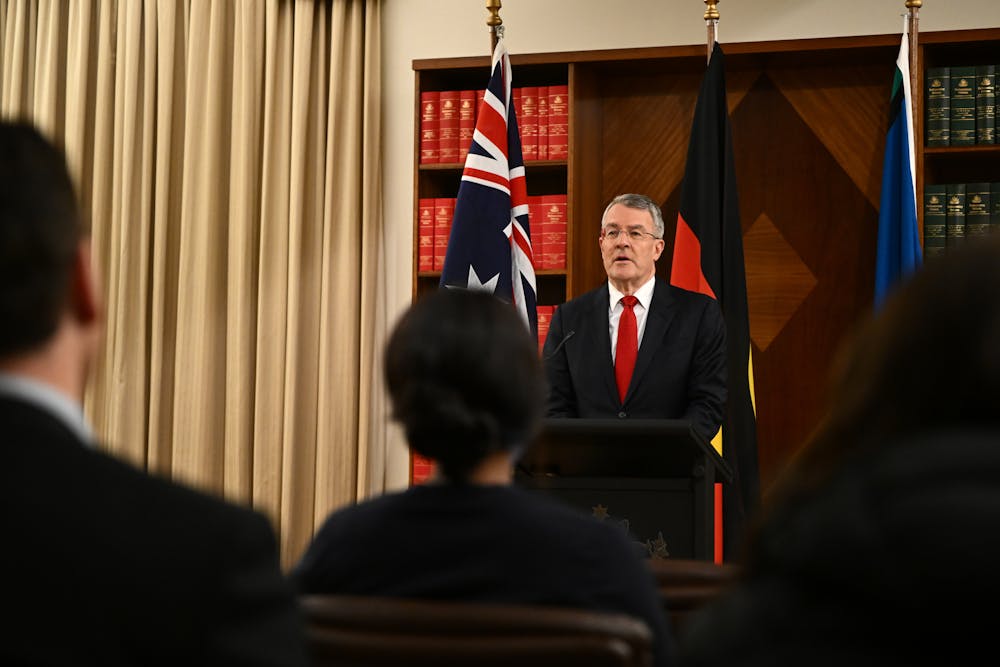
Four years on, Attorney-General Mark Dreyfus today released a comprehensive review of secrecy laws that acknowledges a woefully complicated mess.
The government’s plan to clean it up is a good first step, but it’s just the tip of a very big iceberg.
Read more: Journalists must be protected in police investigations. Here's our five point plan for reform
Progress on much-needed change
To make its case in 2019, The Times pointed to a bewildering array of legal and political obstacles embedded in Australian law that stand in the way of the transparency considered essential to a fully functioning democracy.
In principle, the government seems to agree.
The review points to 875 secrecy offences covering everything from national security to tax laws, and a dysfunctioning system for protecting whistleblowers.
It also recognises the chilling effect on the ability of journalists to work with sources from inside government, and hold it to account.
To fix the problem, the report comes up with 11 recommendations, including reducing the number of offences to a more manageable (but still excessive) 707.
It establishes a set of guiding principles that will help consolidate the law and make it more consistent.
And it says there should be a narrower range of information defined as “secret”, with clear harm to the public interest in any breach of secrecy before a prosecution can take place.
It also calls for specific defences for public-interest journalism to be inserted into key secrecy laws.
All this is laudable, and it starts to untie the Gordian Knot of legislation that created the culture of secrecy the Times was concerned about, but it is simply not enough.
A patchwork quilt of laws
The enormous number of secrecy offences currently on the books points to the central problem. Whenever lawmakers have spotted a hole in the law, they’ve stuck a patch over it.
That is understandable, particularly in a post-September 11 world when national security has become the overriding concern of governments everywhere.
But it has created a confusing, inconsistent and incoherent mess that the attorney-general appears to be trying to fix with yet more patches.
To be fair, some of them are larger and more coherent than the current ones, but it is still insufficient to deal with the fundamental problem. The Australian government remains dangerously secretive.
Read more: It’s time for the government to walk the talk on media freedom in Australia
Another of the recommendations is a general secrecy offence that says Commonwealth officers can’t can’t disclose anything that would be “prejudicial to the effective working of government”.
A general secrecy offence helps simplify things, but the threshold is worryingly sweeping and runs counter to a recommendation the Australian Law Reform Commission made back in a 2010 report that triggered the review in the first place.
Dangerous plan for journalism
The report also makes much of the need to protect public-interest journalism.
Again, it is laudable that the attorney-general recognises the threats to media freedom embedded in the law, and said he’s prepared to tackle them.
But the answers in the report are more of the same: a set of band aids, rather than a comprehensive cure.
Controversially, that includes a commitment to maintain a ministerial directive from the former Attorney-General Christian Porter.
Porter issued his directive in the wake of the 2019 raids, in an attempt to underline the government’s commitment to press freedom. The directive declared that the director of public prosecutions had to seek the attorney-general’s approval before prosecuting a journalist.
One of the fundamental principles of our democracy is a clear separation between the political and legal systems.
Yet the directive clearly crosses that line.
As we saw with the allegations of sexual assault levelled at Porter, and subsequent legal action against the ABC, the attorney-general is as vulnerable to journalistic investigation as anyone else. Giving him the last word about whether or not to prosecute a journalist is a dangerous, if well-intentioned, step.
Time for a whole new approach
The report also declines to reverse the burden of proof when it comes to publishing government secrets in the public interest.
A number of media organisations (including the Alliance for Journalists’ Freedom that I work for) have argued there should be a presumption in favour of publishing, unless the investigators can show a clear harm to the public interest.
In other words, they should have to prove the harm in publishing rather than forcing journalists to show the value in their story. The report released today rejected that idea.
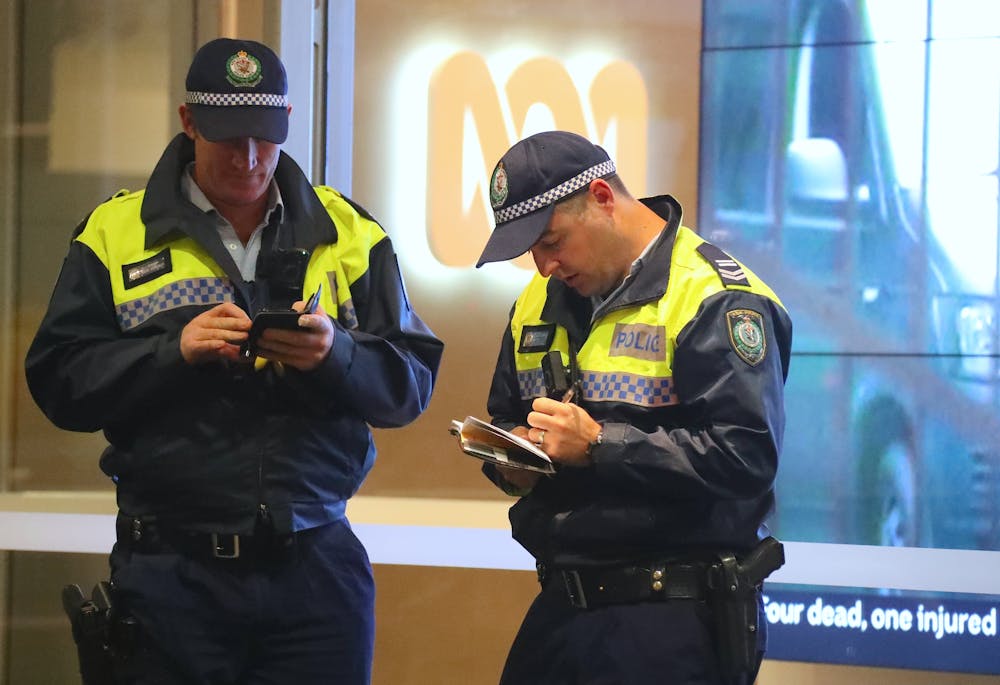 The Australian Federal Police raided the ABC’s Ultimo offices in 2019.
David Gray/AAP
The Australian Federal Police raided the ABC’s Ultimo offices in 2019.
David Gray/AAP
At least when it comes to media freedom, the Alliance for Journalists’ Freedom has a far simpler and more comprehensive solution.
Rather than patches, we are proposing a Media Freedom Act that would establish a set of overarching principles in law.
First, it would compel parliament to always consider media freedom when passing new legislation.
And second, the courts would be obliged to interpret existing laws, like secrecy and espionage laws, in ways that are consistent with media freedom.
Read more: Australia needs a Media Freedom Act. Here's how it could work
That would include a presumption in favour of protecting a journalist’s sources and in publishing. The police would have to show why the public interest in an investigation is more important than the public interest in the story itself.
That law alone wouldn’t be enough to solve all the problems - there would need to be a lot of amendments to make it work effectively - but it elegantly creates a set of principles and frameworks that protect the underlying objective: to create the kind of transparency necessary for a healthy democracy, without putting national security at risk.
Authors: Peter Greste, Professor of Journalism and Communications, Macquarie University

















