

Really need those new shoes? Why you might spend up big at the Black Friday sales
- Written by: Paul Harrison, Director, Master of Business Administration (MBA); Co-Director, Better Consumption Lab, Deakin University, Deakin University
If you’re one of those people who line up for the Black Friday sales, jump online for Singles Day, or are thinking you’ll queue outside the local department store on Boxing Day for the “real bargains”, rest assured, you are not alone.
Just like the thousands of people who line the harbour in Sydney to get a glimpse of the New Year’s Eve fireworks, one of those 30-somethings who are desperate for tickets for Taylor Swift’s Eras tour, or the crazy Melburnians who sleep outside for days to get AFL grand final tickets, we’re all victims of some basic psychological factors.
These responses have evolved over millennia, even if the stimuli are very much contemporary.
Scarcity and the need to belong
When you succumb to the appeal “It’s finally here” or “get in before you miss out” or even “Hurry, these offers expire at midnight”, don’t be too hard on yourself. It’s an evolutionary thing and it’s actually quite useful.
As human beings, we assume if lots of people want something, then we should want it too. We also believe if something is rare, or scarce, it must be desirable. This is because everybody else seems to want it and they want it now.
Humans are social animals. Although we’d like to think we’re all independent thinkers, it is impossible to think about everything we do in isolation and on its merits. So, we look to others to help us decide.
If everyone in our “in-group” is buying the latest fashion, then we assume the group knows best, so we should do the same. Yes, we are all sheep. Well-dressed sheep, but sheep nonetheless.
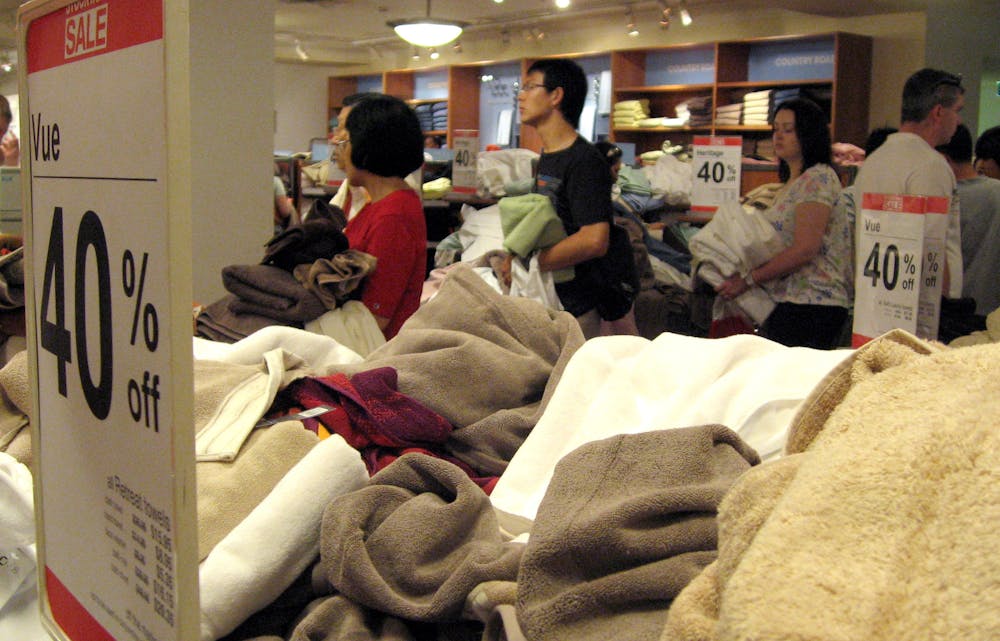
But you shouldn’t be worried about that. We all do it, depending on the so-called attitude object, that is, the item we form feelings about.
For example, adults criticising the “crazy” kids lining up to buy new sneakers or phones might be the same people who travel the world, spending thousands of dollars to see an opera.
Funnily enough, we reconcile this process by assuring ourselves we are not followers, but have gone through an independent, rational process to justify our actions. We also tame our ego by believing we are more sensible, rational and considered than the rest of the people in our group. It makes it easier to justify our sometimes irrational decisions.
When it comes sales, there is also another retail-specific factor at play.
Ego Depletion
When we walk into a shopping centre with lights, music, noise, hard surfaces, people and general overstimulation, we experience some form of ego depletion. It also plays out online, when we are confronted with huge amounts of information and pop-ups that say things like “four other people are looking at this product right now”
Ego depletion doesn’t mean you instantly become a humble, thoughtful person. In psychology, we use this term to describe how people don’t always think through their decisions rationally when they are stressed. Although there’s some criticism of how researchers describe ego depletion, in general, too much stimulation leads to less rational decision making.
Read more: What you need to know about compulsive shopping — the modern addiction no one's talking about
So, all that noise, colour and movement isn’t just the shopping centre getting into the sales season, it’s also a technique to get you to respond to emotional cues, such as social norms, the fear of missing out and the ritual of the sale.
Our inability to forecast and anticipated regret
Psychological research tells us humans aren’t very good at predicting the future. Or perhaps we just have an overinflated sense of our accuracy in predicting the future — we rely on how we feel right now to predict how we might feel about something later. Psychologists call this “affective forecasting”.
So, when we are “in” the moment of the sale, we buy things we feel we need. But we discount all the other things that we’ve bought.
We’re also victims of a psychological phenomenon called “anticipated regret”. This occurs when we think about the future and see ourselves regretting having not taken the opportunity when it presented itself. When we think about the future, we not only anticipate events, we also experience the associated emotions of those events.
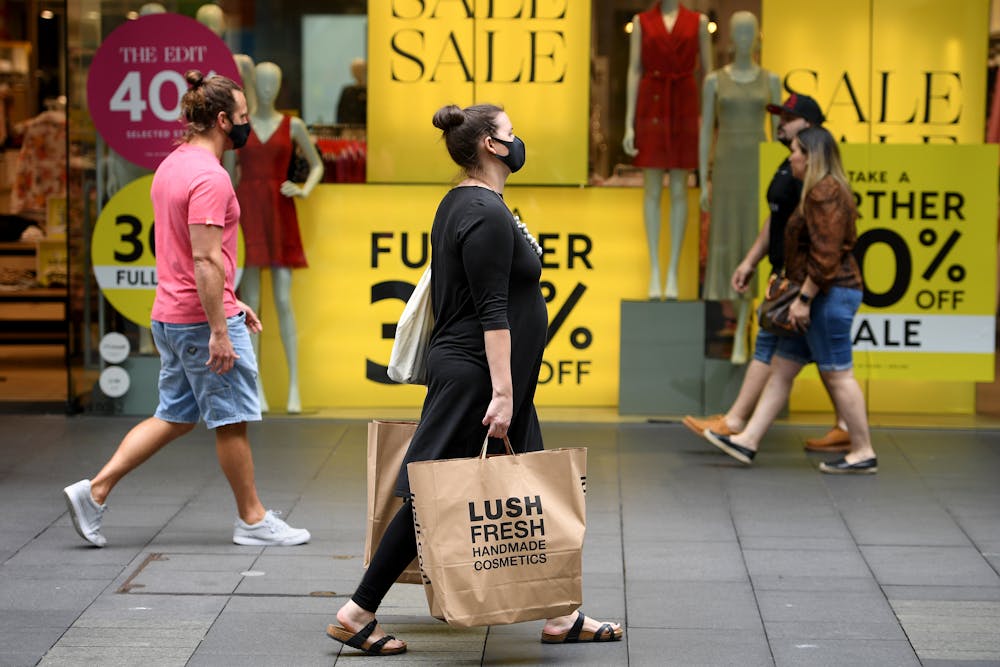 We can suffer from anticipated regret - a fear we will regret it later if we don’t buy an item now.
Dan Himbrechts/AAP
We can suffer from anticipated regret - a fear we will regret it later if we don’t buy an item now.
Dan Himbrechts/AAP
We also anticipate social effects. When other people might get what we are contemplating getting now, we may fall into anticipated envy, where we imagine them having the item and us wishing we had it.
Sales release a whole range of psychological responses and, for the most part (and in the short term), they work. When it comes to sales, we rarely plan, and so we are more susceptible to the gentle nudges of the marketers when we are stressed, in a hurry, and trying to do ten things at once.
The importance of ritual
All of these responses have parallels with a whole bunch of other rituals that we participate in.
Christmas, Halloween, and Valentine’s Day are all examples of rituals humans are drawn to help them to participate in the social world. While there is material consumption with these events, there is also a sense of community.
Read more: Drawn to bustling markets, shops or malls this holiday season? Good vibes could explain it
As human beings, we look for rituals, we look for community through the things we do, and as other community rituals and institutions such as churches or strong familial and neighbourhood linkages break down, we look for ways to replace that.
The same basic principle is playing out with the Black Friday sales. What the sales are doing is playing upon our need to participate in rituals, but with a different objective. Sales are purely transactional and their goal is to sell us something, rather than giving us the opportunity to participate in perhaps the more rewarding rituals of Christmas or even Halloween.
So what can we do?
There are ways to avoid giving into these psychological tendencies:
1. Slow down
The best advice I can give is to slow down the process. Giving yourself time to think (as opposed to respond) may help you to make a better decision. The marketers want you to move through the decision-making process as quickly as possible so that you are responding to your feelings, not your thoughts.
2. Talk it through
Before you buy, talk your purchase over with a friend (preferably one who doesn’t enable you too much). This is connected with the first piece of advice, it leads you to think a bit more.
3. Make a list
I know it’s boring, but if your motivation for attending the sale is to save money, making a list of what you want and giving yourself a budget is the best way to approach sales. And be prepared to walk away if it isn’t right.
4. Calm down
Try listening to music that calms you or simply take some deep breaths — a calm state is more likely to result in a more rational decision.
5. Remember a sales person is not your friend
Remind yourself the sales person is not your friend. They may be lovely, but their main role is to get you to buy. Reciprocity theory tells us one of the best techniques of sales is to blur the line between social interactions and business interactions. A salesperson being nice to you (or offering you a discount) doesn’t mean that you have to buy their product (but do be nice back to them).
6. Walk away
A trick for the online world, is to put the item in your basket, then (virtually) walk away. Many online algorithms will send you an even better discount later on (although if it is connected with Black Friday sales this isn’t guaranteed).
Authors: Paul Harrison, Director, Master of Business Administration (MBA); Co-Director, Better Consumption Lab, Deakin University, Deakin University


















