

It's extremely hot and I'm feeling weak and dizzy. Could I have heat stroke?
- Written by: Lily Hospers, PhD Candidate, University of Sydney
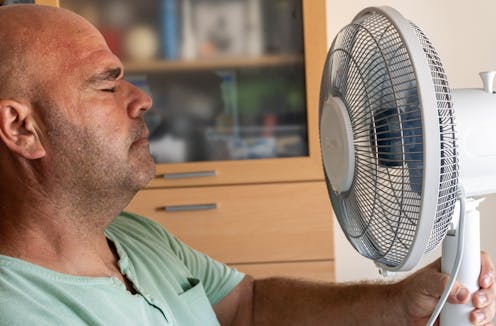
Australia is braced for a hot, dry summer. El Nino is back, and this year it will occur alongside an Indian Ocean dipole, a climate pattern which will further amplify this hot and dry effect.
Hot weather can place great stress on our bodies. When the environmental conditions exceed the limit at which we can adequately cope, we can suffer from heat-related illnesses.
Heat illnesses can vary, from relatively mild heat exhaustion to the potentially life-threatening condition of heat stroke.
Read more: Extreme weather is landing more Australians in hospital – and heat is the biggest culprit
What are the signs and symptoms?
If you’re suffering from heat exhaustion, you may feel weakness, nausea, headaches or dizziness.
Mild symptoms of heat exhaustion can often be treated at home by reducing your levels of physical activity, finding shade, removing excess clothing, hydrating with water and perhaps even taking a cool shower.
If left unchecked, heat exhaustion can progress to the far more serious condition of heat stroke, where your core temperature climbs upwards of 40°C. Symptoms can develop rapidly and may include confusion, disorientation, agitation, convulsions, or it could even result in a coma.
Heat stroke is a medical emergency and requires urgent treatment. Call an ambulance and start rapid, aggressive cooling by immersing the person in cold water (such as a cold bath). If this isn’t possible, apply ice packs to their neck, armpits and groin and cover the skin with lots of cool water.
When it comes to cooling someone with suspected heat stroke, the quicker the better: cool first, transport second.
Why do we overheat?
Environmental conditions play an important role in determining our heat stress risk. If the air temperature, humidity and levels of sun exposure are high, we are much more likely to dangerously overheat.
When the body gets hot, the heart pumps more warm blood to our skin to help lose heat. As air temperature rises, this way of shedding heat becomes ineffective. When air temperature is higher than the temperature of the skin (normally around 35°C), we start gaining heat from our surroundings.
Sweating is by far our most effective physiological means of keeping cool. However, it is the evaporation of sweat from our skin that provides cooling relief.
When the air is humid, it already contains a lot of moisture, and this reduces how efficiently sweat evaporates.
Our physical activity levels and clothing also impact heat stress risk. When we move, our bodies generate metabolic heat as a by-product. The more intense physical activity is, the more heat we must lose to avoid dangerous rises in core temperature.
Finally, clothing can act as an insulator and barrier for the evaporation of sweat, making it even more difficult for us to keep cool.
Who is most vulnerable in the heat?
Some people are at greater risk of developing heat illness than others. This can result from physiological limitations, such as a decreased capacity to sweat, or a reduced capacity to adapt our behaviour. When these two risk factors coincide, it’s a perfect storm of vulnerability.
Take, for example, an elderly outdoor agricultural worker. Being aged over 60, their physiological capacity to sweat is reduced. The worker may also be wearing heavy safety clothing, which may further limit heat loss from the body. If they don’t slow down, seek shelter and adequately hydrate, they become even more vulnerable.
Read more: 5 reasons to check on your elderly neighbour during a heatwave
When a person dies of heat stroke – which is relatively easy to diagnose – heat will be listed as a cause of death on a death certificate. Between 2001 and 2018 in Australia, 473 heat-related deaths were officially reported.
However, the true association between heat and death is thought to be far greater, with an estimated 36,000 deaths in Australia between 2006 and 2017.
This is because most people who die during extreme heat events do not die from heat stroke. Instead, they they die of other medical complications such as cardiovascular or renal collapse, as additional strain is placed on essential organs such as the heart and kidneys.
People with underlying health conditions are more likely to succumb to heat-associated complications before they develop critical core temperature (over 40°C) and heat stroke.
In such cases, while the additional physiological strain imposed by the heat probably “caused” the death, the official “cause of death” is often listed as something else, such as a heart attack. This can make understanding the true health burden of extreme heat more difficult.
How to stay safe in the heat
Thankfully, there are effective, low-cost ways of staying safe in the heat. These include:
- staying adequately hydrated
- getting out of the heat to a cooler area indoors or shaded area outdoors
- loosening or removing clothing
- cooling down any way you can:
- using an electric fan (which can be used at 37°C and below, irrespective of age and humidity)
- using a cold-water spray
- applying a cool, damp sponge or cloth
- wetting clothes and skin
- having a cool shower or bath
- applying ice packs or crushed ice in a damp towel on the neck, groin and armpits.
Read more: Top 10 tips to keep cool this summer while protecting your health and your budget
Authors: Lily Hospers, PhD Candidate, University of Sydney

















