

Taken together, the NDIS review and the royal commission recommendations could transform disability housing
- Written by Di Winkler, Adjunct Associate Professor, La Trobe University
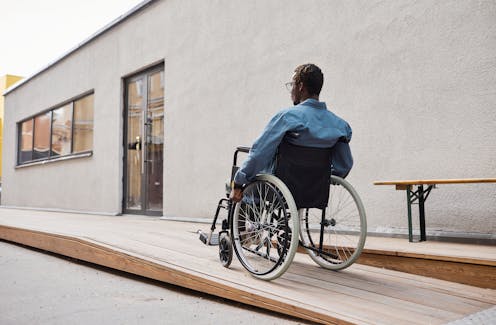
A home – in the physical and emotional sense – is foundational to living an ordinary life with a feeling of inclusion. National Disability Insurance Scheme (NDIS) participants with the highest support needs require housing and living services. Disability can make living in mainstream housing impossible for some people, or they may need housing where support can be efficiently and safely provided.
Nearly 41,000 NDIS participants receive seven-day, around-the-clock support. At an annual cost of A$8.8 billion and increasing at a rate of 7% each year, these supports represent one-quarter of the annual cost of the scheme.
Given the federal government’s 8% cost growth target, transforming disability housing and support in Australia is critical to the future of the NDIS.
Both the recent disability royal commission and NDIS review recommendations say big changes are needed so people with disability can choose from a range of quality housing and living services where they are free from abuse, neglect and exploitation.
Read more: Recommendations to reboot the NDIS have finally been released. 5 experts react
Problems with group homes
The original intent of the NDIS market-based approach was to drive innovation and the design of new user-led models of support.
Group homes are still the predominant model of disability housing in Australia. The disability royal commission and a recent government report found people living in group homes are at significant risk of harm.
The NDIS review reported many NDIS participants receiving 24/7 supports have limited choice in where, how and with whom they live. Group homes do not deliver good outcomes and are not cost effective. In addition to the human toll, the yearly cost of violence, abuse, neglect and exploitation of Australians with disability is estimated to be $46 billion.
Pointing to a way forward
The NDIS review builds on earlier recommendations and outlines a suite of actions with the potential to transform disability housing in Australia. Central to this is the implementation of independent housing and living navigators for participants receiving 24/7 supports.
Most of these participants are currently on providers’ books. But in the current system there are no drivers for providing high quality or efficient support. And change is urgently needed for people living in old housing stock.
Proactive planning is needed to support people with disability who want to live in supported accommodation with peers, rather than ageing family members or carers.
A skilled and independent national workforce of housing navigators would systematically support NDIS participants to realise their human right to make an informed choice on where and with whom they live.
And if the NDIS partners with existing organisations and expertise to train and establish this network, it could be a quick win for government.
Timely implementation of an independent national workforce of housing navigators is also critical because they will support the collation of much-needed quality data on the housing and support needs and preferences of NDIS participants. Without it, the specialist disability accommodation market is building social infrastructure that is not fit for purpose and will be with us for the next 30 years.
What home looks like
Better quality data along with more flexible pricing could see new housing built in locations that help participants maintain their informal support networks. Friends, family and neighbours are critical for keeping people safe, quality outcomes and minimising lifetime care costs. NDIS participants are most at risk of harm when they live in closed settings and mostly only interact with people who are all paid by the one provider.
For some people with cognitive impairments, the opportunity to trial new living arrangements before they commit is essential.
Given the annual average investment of nearly $400,000 in 24/7 support, getting the match between the person and their living arrangement right is well worth the investment.
New housing and living solutions need to be both evidence-based and co-designed. Like government, people with disability want to get good value out of their NDIS plans and are frustrated by inefficiency and waste in the scheme.
We await detail on how housing and living support will be determined in a clear, fair and consistent way.
Success will see less segregation and more inclusive housing for people with disability. Some of the people currently receiving 24/7 support have the potential to move to mainstream housing if more accessible housing is made available. The NDIS review recommends a commitment from the remaining jurisdictions (New South Wales and Western Australia) to sign up to the Livable Housing Design Standards in the National Construction Code.
What to watch for
Innovative and individualised housing
The review builds on the royal commission findings and recommends an urgent shift away from group homes. No one should be forced to enter a living arrangement that is not of their choosing, including young people living in aged care.
How this might work in practice is unclear. The NDIS review recommendations state shared funding does not necessarily equate to living with others. It would be a missed opportunity if new NDIS legislation merely results in the proliferation of three-bedroom houses where NDIS participants are forced to live with two other people.
We hope to see innovative and individualised housing solutions that foster new cost-effective models of high quality and efficient shared support, including mobile attendant care and a diverse range of individualised living options.
New regulation
Practice standards that hold support providers accountable are urgently needed. The recommendation to separate housing providers from providers of support is critical to stop the commodification of some of the most vulnerable NDIS participants.
But we should also watch out for additional layers of regulation that add cost and complexity but do little to improve the lives of people with disability.
Change is coming
The government has laid the foundations for change with new National Cabinet funding agreements and says it will start announcing reforms based on review recommendations in 2024. Smart implementation will see people with disability who are dependent on providers for their basic needs live free from abuse, neglect and violence.
New models of housing that foster independence and enable the delivery of efficient support are critical to containing rising costs and ensuring scheme sustainability.
Adequate housing is fundamental to unlocking the potential of people with disability who want to work, contribute to society and be part of the community.
Read more: States agree to do more heavy lifting on disability, in exchange for extra health and GST funding
Authors: Di Winkler, Adjunct Associate Professor, La Trobe University

















