

Australia's 'deeply unfair' housing system is in crisis – and our politicians are failing us
- Written by Laurence Troy, Senior Lecturer in Urbanism, University of Sydney
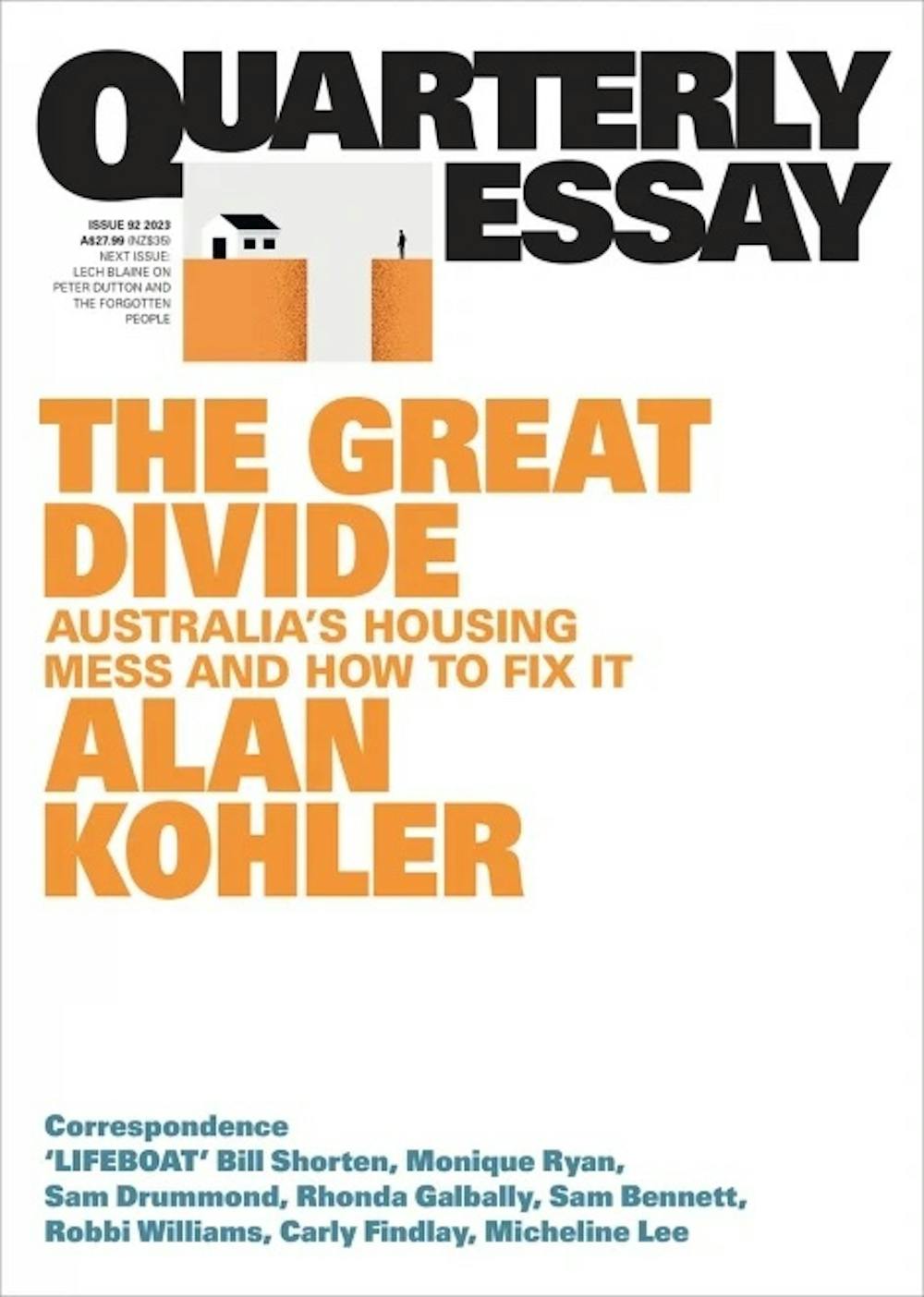
“The fact that one of the least populated countries on Earth contains the world’s second most expensive housing is a national calamity, and a stunning failure of public policy,” writes Alan Kohler, in the latest Quarterly Essay.
He doesn’t mince words. We are in a housing crisis – and it is a public policy failure of the biggest kind. This crisis is about more than housing: it is a social and economic crisis, creating a society defined by inherited wealth.
Review: Quarterly Essay 92: The Great Divide – Australia’s Housing Mess and How to Fix It by Alan Kohler (Black Inc.)
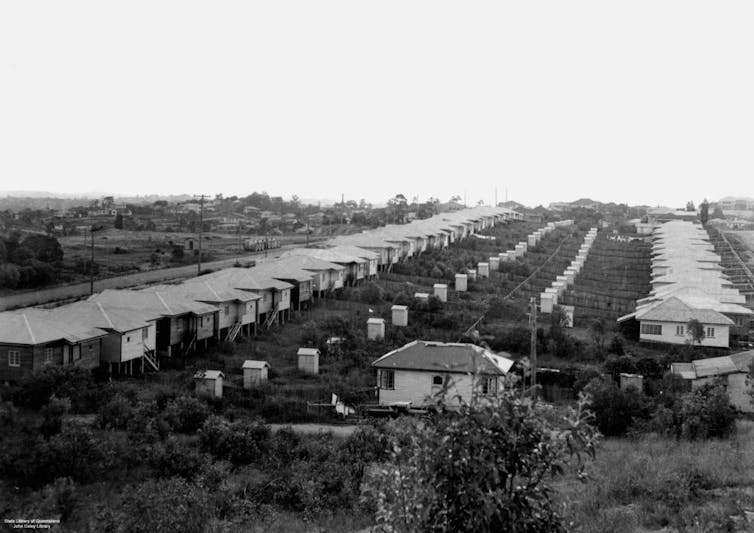
This has not happened overnight. Kohler maps out 70 years of housing public policy in Australia, starting with changes to the Commonwealth and State Housing Agreement in 1954, when the program was redirected to support home ownership by forcing the states to sell much of what was being built.
By 1971, approximately 40% of the houses built by the Commonwealth State Housing Agreement – which had included 96,000 in its first decade, from 1945 to 1955 – had been sold.
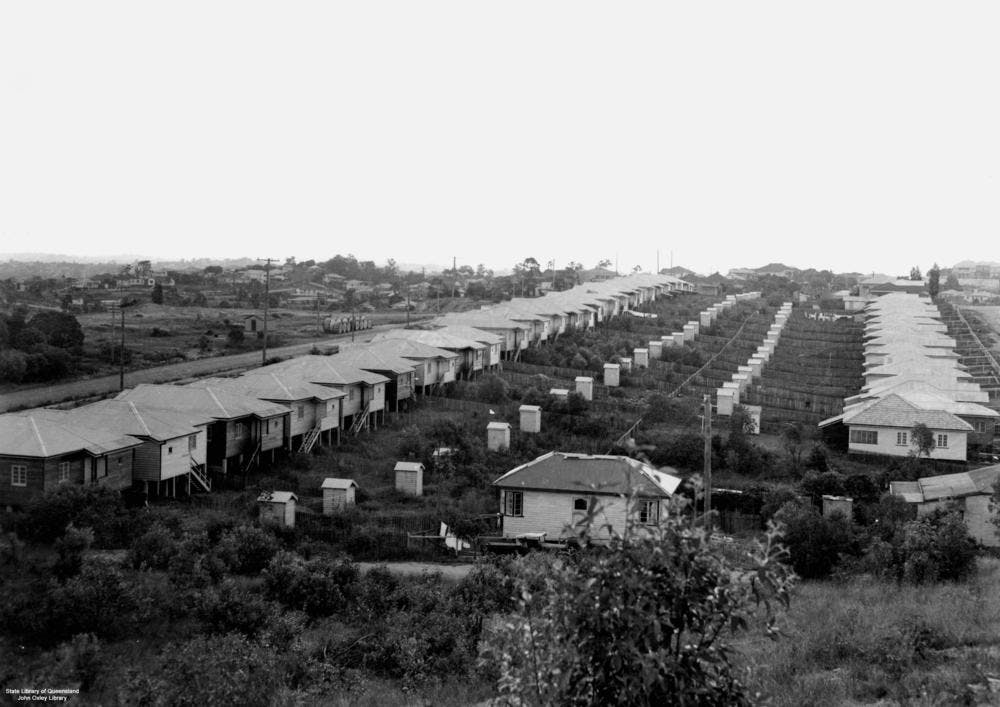
These changes have led to a generational fracture in housing pathways and a breakdown in one of the key pillars that defined Australia’s welfare state in the 20th century.
Somewhat refreshingly, Kohler captures a sentiment many of us with newly minted mortgages or stuck in private rental know, deep down: Australia’s housing system is in crisis, it is deeply unfair and our politicians are failing us.
Read more: Friday essay: how policies favouring rich, older people make young Australians Generation F-d
‘Housing is a human right’
Kohler argues the seeds of the problems we now face were established not long after the second world war, when, as he points out, the Australian government was directly funding the delivery of over 50,000 dwellings annually. Over half a century, the decline in government support for the development of new housing – and in particular for new public housing – underlies the current crisis.
In 1947, just 53.4% of Australians owned a home. By 1966, this had risen to 71.4%. Robert Menzies, prime minister from 1949 to 1966, claimed the credit. Now, in 2023, it’s dropped to around 66%.
But, Kohler says, the credit Menzies claimed for expanding access to housing is “unjustified” – instead, he and his Minister for Social Services, Bill Spooner, “destroyed” public housing and “set the scene for decades of mistakes by their successors in the Coalition”.
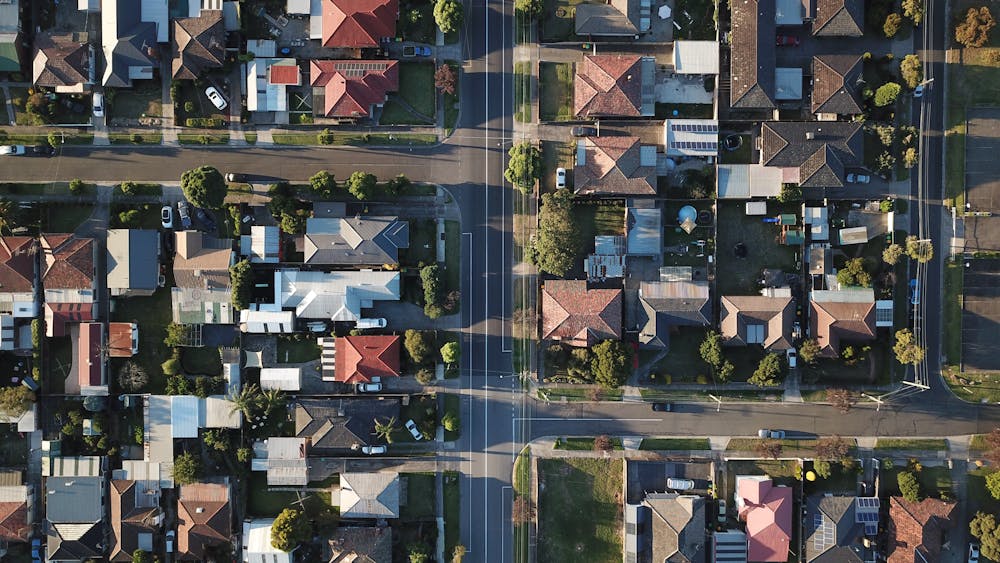 In 1966, 71.4% of Australians owned a home. Now, it’s around 66%.
Tom Rumble/Unsplash
In 1966, 71.4% of Australians owned a home. Now, it’s around 66%.
Tom Rumble/Unsplash
The subversion of the public housing program from the mid-50s onwards, reflecting the conservative and nationalist agenda of the Menzies government that instigated it, shifted the policy position on public housing from being a key plank in the building of a modern nation, to one of residual welfare. Kohler makes the case that “housing is not welfare, it’s an economic right”.
Housing is more than that: it is a human right. The wider point though, is that housing and housing policy is integral to the economic welfare of all Australians – and only considering it in terms of social welfare, a policy space that has suffered from malign neglect over half a century, has consigned housing policy to the wilderness.
Tax reduction and capital gains
While the conditions may have been set long ago, the key changes that culminated in this affordability crisis began around 2000. Discounts on capital gains, introduced by the Howard government in 1999, lit the fuse on this housing bonfire.
The tax and wealth advantages of property investing were so beneficial, it unleashed a tidal wave of demand in housing. High-income-earners in particular could reduce tax on their income, then get a kicker on capital gains later. Kohler notes that these changes have meant:
whereas in the rest of the world investing in real estate is all about getting rental income from tenants, in Australia it’s about getting an income tax deduction and then capital gain.
The charts presented in the essay can almost pinpoint the exact moment these changes passed through parliament (see below). Dwelling prices detached themselves from income growth.
Since 2000, there has been a 6% component growth in dwelling values, compared with only 3% for incomes. Prices are so detached from incomes, it is no longer possible for the average earning household to afford the average house.
Housing now defines class
As the essay’s title suggests, Kohler makes the case that over the past 30 years, public policy has created a society increasingly defined and divided by inherited wealth. Wealth is now determined, he argues, by two things: where you live, and the house you inherit from your parents.
There are two important dimensions to this. The first is that wealth (and wealth creation) has been deeply embedded in housing ownership. Lisa Adkins, Melinda Cooper and Martijn Konings at the University of Sydney have termed this the “asset economy” and argue new class positions are being defined through housing assets.
Traditionally, class was often defined through the type of job you did. Now, it is increasingly defined by how much property you own. Renters of course, don’t even get a look-in. This change really got underway from the mid-1980s, led by the then-Labor government through financial deregulation, broad privatisation of urban services and residualisation of welfare.
Secondly, opportunity is now no longer tied to education and hard work: it’s now inherited. The simple arithmetic on the historical trends Kohler presents exposes how the scale of the problem has shifted since the 1990s. The median price of housing has grown from around three times the median income in 1990 to around eight times in 2023.
For housing to be affordable, house prices would need to halve, or incomes would need to grow at 4% per year for 20 years, while house prices stayed the same. Neither is likely. As our recent research has shown, the problem is so extreme that in places like Sydney, the only pathway to ownership is through inherited wealth and the bank of Mum and Dad.
 In places like Sydney, the only path to home ownership is inherited wealth.
Ketut Subiyanto/Pexels
In places like Sydney, the only path to home ownership is inherited wealth.
Ketut Subiyanto/Pexels
Housing: ‘a cartel of the majority’
Many of the broad threads of this essay were on point. They lay out how policy has not only failed to address housing problems, but actively created them. There were, however, some contradictory moments.
The first was around housing supply. After noting the key historical threads, Kohler points the finger at recalcitrant planners for blocking development. But planners, as he points out, “do not build housing, developers do”. Moreover, he acknowledges the whole “property development business model favours selling apartments to individual investors who can pay more”.
Blaming planners is not new, but it ultimately misses the point. A recent analysis suggested there were over 100,000 approved but unbuilt dwelling units in Australia between 2012 and 2000. The supply system itself is now thoroughly geared to capital flowing from investors. If developers cannot sell to them, or simply cannot make enough profit, the banks won’t lend and developers won’t build.
As Kohler notes, the politics of this is simple:
housing is a cartel of the majority, with banks and developers helping them maintain high house prices with the political class actively supporting them.
Even if financing constraints could be overcome and developers could build what they liked, the Reserve Bank Australia itself noted this would only drop prices by about 2.5%. When prices rose by 25% in 2021, this hardly seems revolutionary.
 The real issue of supply is exposed in the essay, but unfortunately not returned to in the resolution. Our recent analysis showed Australia would need to deliver around 45,000 social housing dwellings per year for 20 years to meet the current backlog in demand.
When Commonwealth and state governments managed to create over 50,000 dwellings in 1950, when the population was one third what it is today, meeting today’s need should not be a problem. But the current government ambition is just 30,000 over five years – which is woeful. Even if those numbers are delivered, the share of social housing will still be going backwards.
There is much to like in this essay, which clearly demonstrates that the current housing crisis is about so much more than the shelter it represents.
Housing is deeply implicated in the very idea of what it means to be Australian and the egalitarian values many Australians hold dear. Unfortunately, the inequalities that are emerging are cementing new class inequalities – now, your chances in life will be completely dependent on the family you were born into.
The sooner we realise this, the sooner there can be a collective reflection. We need to ask: is that what we really want?
Authors: Laurence Troy, Senior Lecturer in Urbanism, University of Sydney
The real issue of supply is exposed in the essay, but unfortunately not returned to in the resolution. Our recent analysis showed Australia would need to deliver around 45,000 social housing dwellings per year for 20 years to meet the current backlog in demand.
When Commonwealth and state governments managed to create over 50,000 dwellings in 1950, when the population was one third what it is today, meeting today’s need should not be a problem. But the current government ambition is just 30,000 over five years – which is woeful. Even if those numbers are delivered, the share of social housing will still be going backwards.
There is much to like in this essay, which clearly demonstrates that the current housing crisis is about so much more than the shelter it represents.
Housing is deeply implicated in the very idea of what it means to be Australian and the egalitarian values many Australians hold dear. Unfortunately, the inequalities that are emerging are cementing new class inequalities – now, your chances in life will be completely dependent on the family you were born into.
The sooner we realise this, the sooner there can be a collective reflection. We need to ask: is that what we really want?
Authors: Laurence Troy, Senior Lecturer in Urbanism, University of Sydney 

















