

Should women be allowed to wear pants? It was a topic of contention in Australian parliament in 1933
- Written by: Lorinda Cramer, Lecturer, Cultural Heritage and Museum Studies, Deakin University
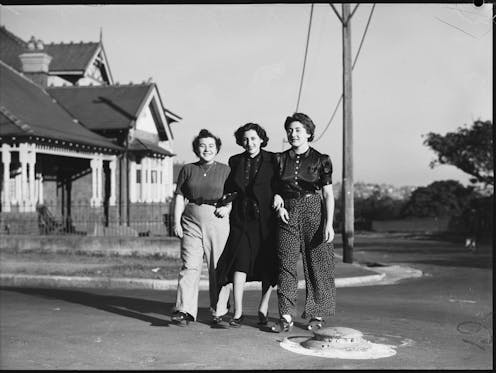
In 1933, trousers rocked Australia.
They had entered the 20th century as a symbol of masculinity. Essential to the suit, trousers exuded power, professionalism and authority for the men who wore them.
But increasing numbers of Australian women had begun to slip on slacks.
Pants on women were immodest, some shouted. Others shuddered at what they considered unbecoming and unfeminine attire.
At the heart of the concern for women in slacks that rippled around Australia – including parliament where senators deliberated over whether they should be banned from Parliament House that year – was the challenge to gender norms.
(Women in pants would not be banned from entering Parliament House, though the requirement for “proper attire” meant they could be denied admission to the Senate galleries.)
For the women who adopted trousers, they meant something different: freedom of movement and steps towards equality.
Read more: What is suffragette white? The colour has a 110-year history as a protest tool
1933: the shock of slacks
The month after Australian newspapers reported on the Senate ban, Brisbane’s Courier-Mail printed a slew of letters to the editor. People put pen to paper in horror or support of the wife of Brisbane’s Lord Mayor – the Lady Mayoress, Mrs J. W. Greene – who announced she would wear slacks to the beach. They were “so comfortable and so much the fashion”, she raved.

One writer insisted, however, “slacks are for men only. I say this not because I consider them immodest, but because women look far from attractive in them”. Others thought differently, reasoning that clothing needed to move with the times.
The die had been cast by German screen icon Marlene Dietrich. Three years earlier, Dietrich starred in Morocco, shocking some movie-goers by wearing a man’s tuxedo.
Charismatic, glamourous and androgynous, by the time Dietrich went on holiday in 1933 she packed no dresses in her luggage. She wore a dinner jacket and trousers instead.
As news of this attire rippled around the world, tailors were “rushed with orders for the Dietrich trousers of grey flannel”.
Melbourne department store Myer advertised “Marlene Dietrich slacks” in its mail order catalogue for spring-summer the following year. Offering more than grey flannel, they came in black, saxe (grey-blue), red, bottle (green), white and other colours.
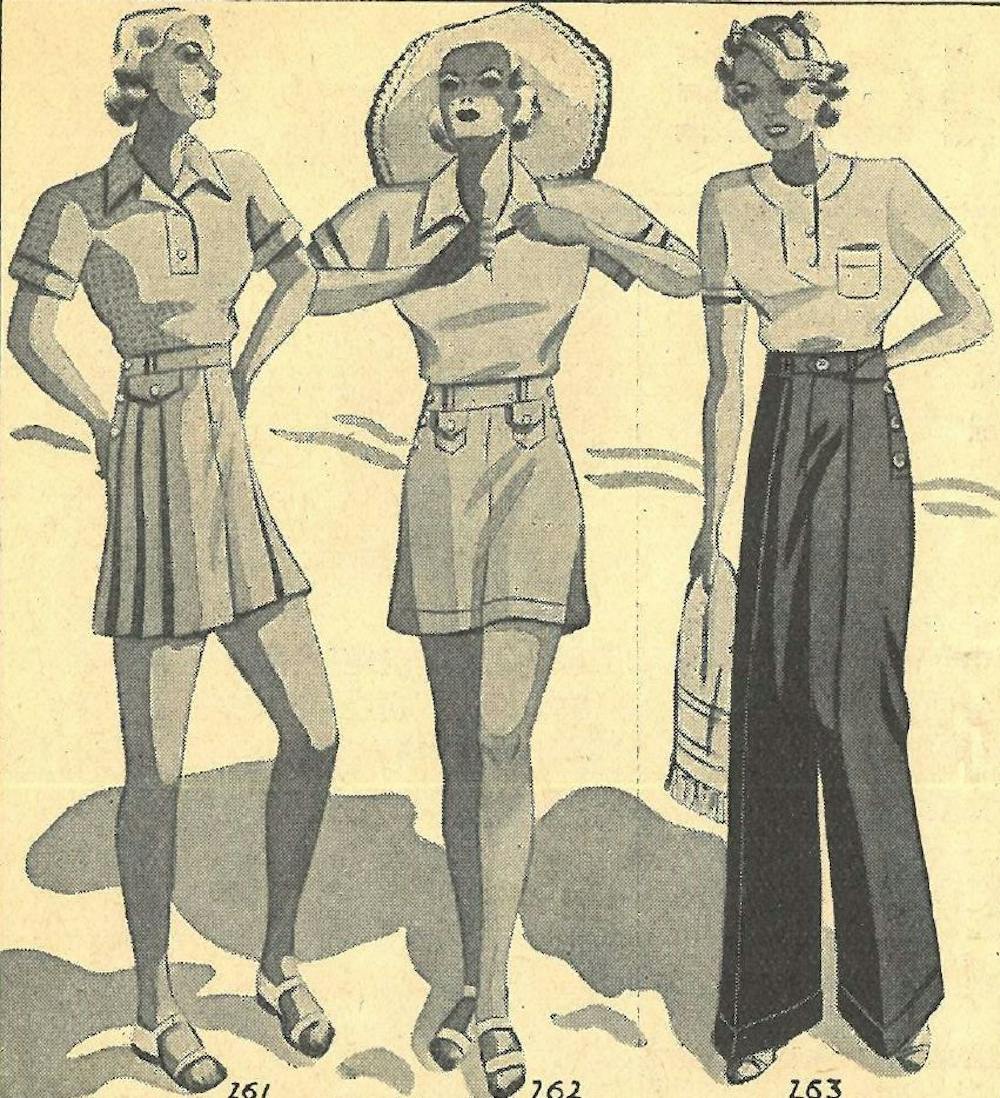 ‘Marlene Dietrich slacks’ in a 1934 Myer Catalogue.
National Library of Australia
‘Marlene Dietrich slacks’ in a 1934 Myer Catalogue.
National Library of Australia
Pushing the boundaries
Trouser-wearing women, however, have a much longer history in Australia. Although women wearing men’s clothes in the 19th century was often framed as a disguise – or worse, deception – they had different reasons for putting on pants.
Pants were practical as white settlers spread through the colonies. Annie Baxter Dawbin resized her husband’s trousers to move more freely on the land than when wearing full skirts.
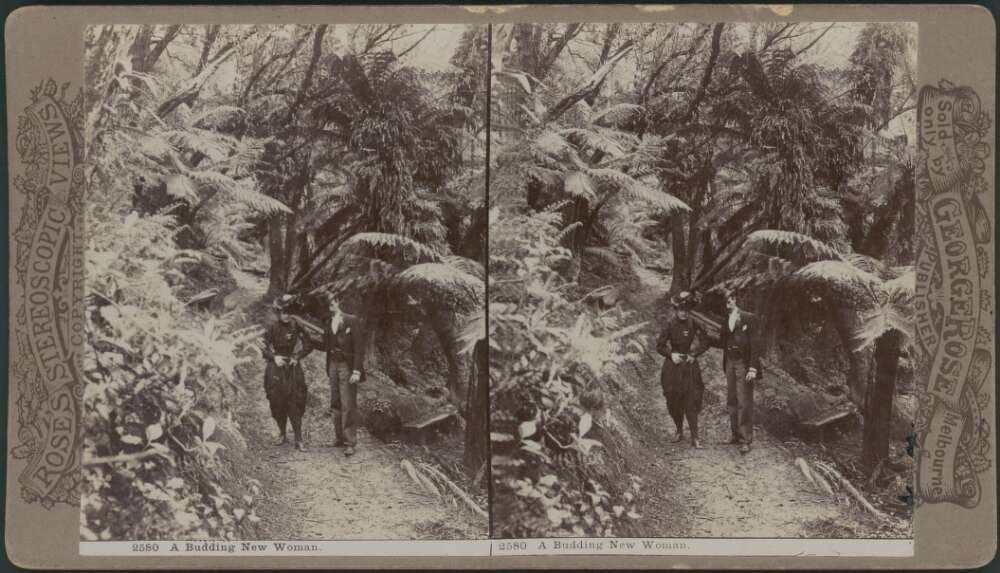 Women wearing pants in the 19th century was framed as a deception – but perhaps it was just practical.
George Rose/National Library of Australia
Women wearing pants in the 19th century was framed as a deception – but perhaps it was just practical.
George Rose/National Library of Australia
Pants offered protection. “The female digger” described in 1853 in The Emigrant’s Guide to Australia cut her hair, then donned a broad brimmed hat and trousers. In “parting with my sex” as Harriet – or Mr Harry as she was known in this costume – put it, there was safety on the diggings.
Harriette Walters thought the same. Ellen Clacy described in her gold-rush account how Harriette “disguis[ed] her sex”: by adopting a masculine “colonial costume” that included “loose trowsers [sic]”, she passed as “a young lad”.
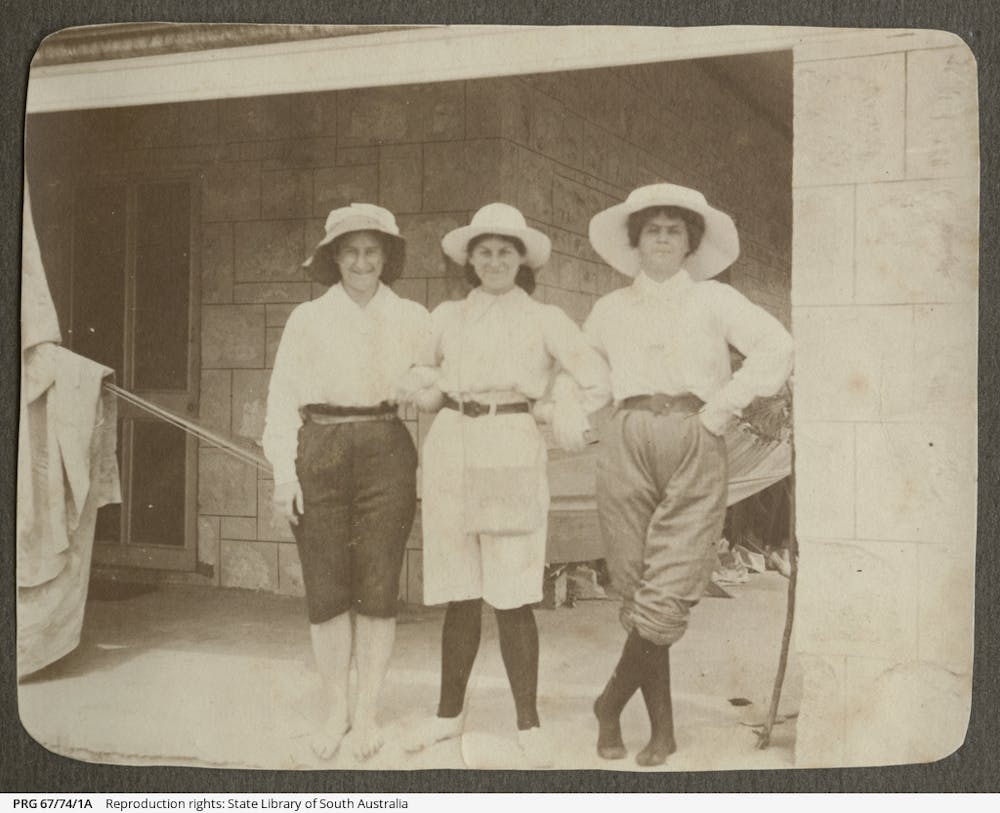 With loose trousers, a woman could pass for a ‘young lad’.
State Library of South Australia
With loose trousers, a woman could pass for a ‘young lad’.
State Library of South Australia
At this time, Amelia Bloomer, and her dress reform counterparts in America advocated for the “bloomer costume”. It included full trousers, gathered at the ankle, worn under a shorter skirt. Australian newspapers duly reported on the “novelty” that had “excited some curiosity on this side the Atlantic”.
As the 19th century neared its end, Australian women tested divided skirts for cycling and other activities. It was not until the 20th century, however, that women donned pants in any numbers.
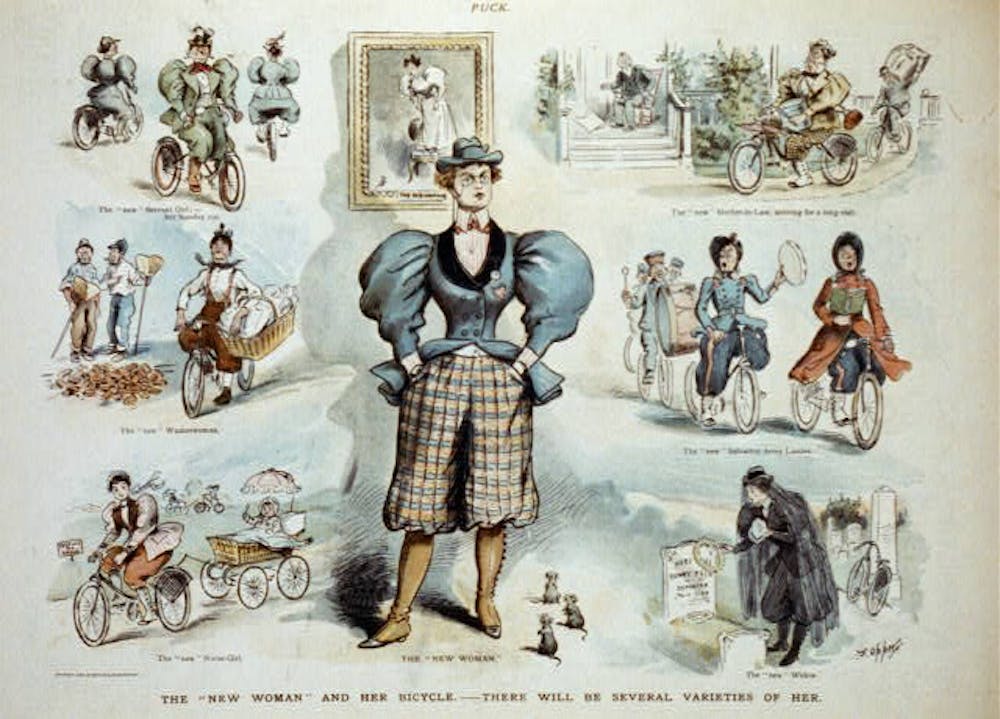 The rise of cycling contributed to women wearing pants.
Library of Congress
The rise of cycling contributed to women wearing pants.
Library of Congress
Even in 1922, when the Evening News quizzed Sydney’s police on the law for women walking “the city streets in a pair of pants”, they admitted that while there were no prohibitions on trousers as ordinary street wear they were still a rare sight.
After the 1933 debates
While women in trousers were hotly debated in 1933, it took decades for pants-wearing to reach critical mass.
Some women contributed essential “manpower” to the second world war’s war effort in overalls and trousers.
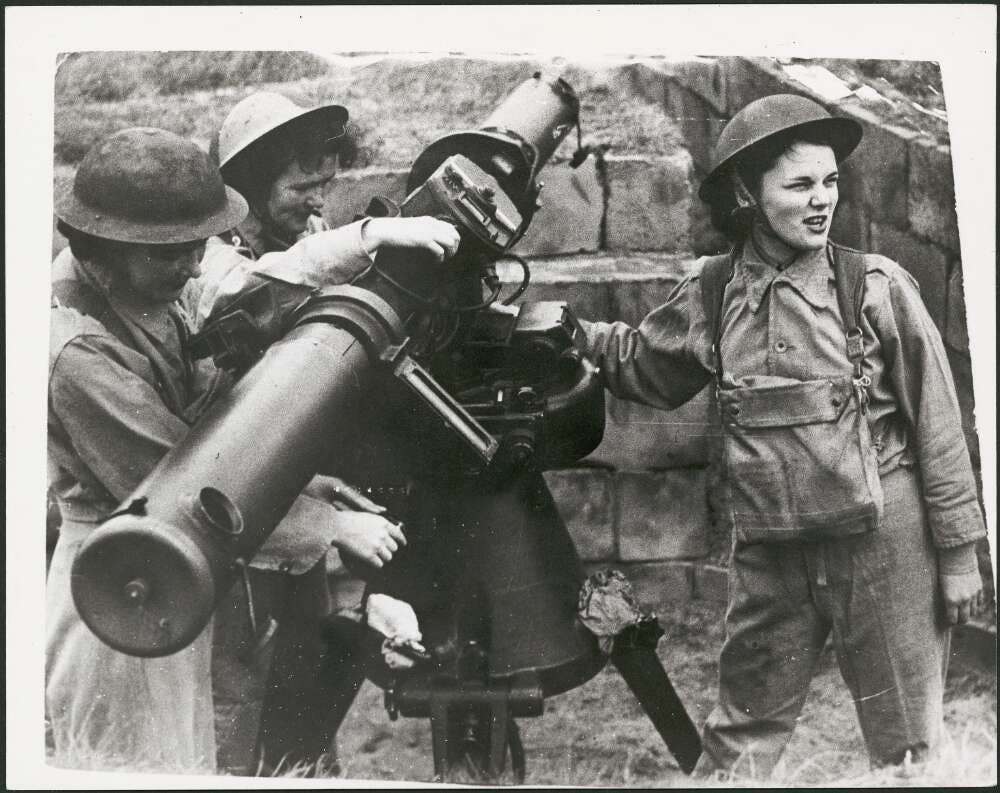 Women wore pants while working for the war effort.
National Library of Australia
Women wore pants while working for the war effort.
National Library of Australia
Attitudes swung from admiration to concern when young women pulled on pants at the war’s end. Widgies, a 1950s youth subculture (with Bodgies their male counterparts), wore pedal-pushers and jeans as part of their “startling fashions” that caused moral panic.
The Mods of the 1960s embraced jeans, too, with some young women buying them from menswear departments or wearing “tomboy” trouser suits.
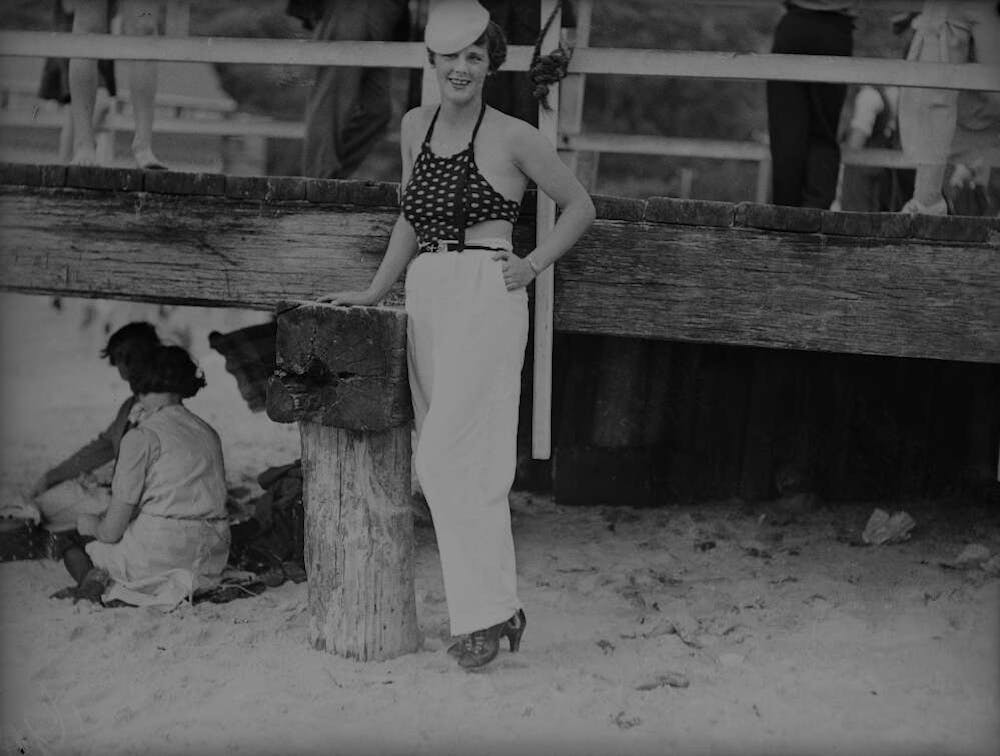 Slacks were a much more practical option for the beach, as this woman from 1950 attests.
National Library of Australia
Slacks were a much more practical option for the beach, as this woman from 1950 attests.
National Library of Australia
And slacks in stretch fabrics, for holiday or relaxed wear, rose in popularity that decade. Made from new synthetics, they tapered slimly to the legs and ankles. But even then, women wearing pants could be denied entry to venues with more conservative dress codes.
Trousers gained further ground in the 1970s with the women’s liberation movement. “Dress for comfort not for style”, one placard read at the International Women’s Day March in Melbourne in 1975, as its holder strode the streets in jeans – like many around her.
In the decades that followed, pants eased into popular wear. 90 years on from those 1933 debates, the question is no longer who wears the pants but who doesn’t.
Read more: Friday essay: will the perfect men's dress ever exist – and would men wear it?
Authors: Lorinda Cramer, Lecturer, Cultural Heritage and Museum Studies, Deakin University


















