

Australian literature’s legacies of cultural appropriation
- Written by: Michael R. Griffiths, Lecturer in English and Writing, University of Wollongong
Non-Indigenous Australian writers face a dilemma. On the one hand, they can risk writing about Aboriginal people and culture and getting it wrong. On the other, they can avoid writing about Aboriginal culture and characters, but by doing so, erase Aboriginality from the story they tell.
What such writers are navigating is the risk of cultural appropriation: the often offensive taking of another’s culture. It is particularly problematic when the appropriator is in a dominant or colonising relationship with a culture’s custodians. Australian literature has a long history of appropriating and misrepresenting Aboriginal culture.
Take anthropologist A.P. Elkin and his associate W.E. Harney. These white men collaborated in the 1940s on a book translating Aboriginal songlines into anglophone ballads.
In “Our Dreaming”, a dedicatory poem to the resulting collection Songs of the Songmen, the pair open with a self-aggrandising appropriation. This opening text emphasises their ownership of works that they are merely translating.
Together now we chant the ‘old time’ lays,Calling to mind camp-fires of bygone days.We hear the ritual shouts, the stamping feet,The droning didgeridoos, the waddies’ beat.
An unpublished 1943 revision by Harney, altered by Elkin, even more noticeably emphasises the two authors’ claim on these songlines. The poem is titled “To You My Friend” and the first line reads, “To you my friend I dedicate these lays,” as though Harney is bestowing this culture on Elkin directly.
The pair claim to write:
not of their huts, the bones, the dirt, Nor the strange far look in a native’s eyes,As he looks to his country ‘ere he dies.
Rather than this vision of the apparently doomed “native”, Songs of the Songmen would purport to extol the romantic figure of the noble savage. The poem continues:
Tis not of these we muse today:For the ‘Dreaming’ comes, and we drift awayInto myth and legend where we’ve caughtThe simple grandeur of their thought.
The pair’s poetry claims in this way to be able to salvage and recapture the “Dreaming”, represented as no longer accessible to Aboriginal people themselves.
This example shows how appropriation, far from innocent, is bound up with attitudes such as the idea of a “doomed race”. It can also be connected to such projects as assimilation and child removal; Elkin advocated both.
The Jindyworobak group
The most famous literary movement in Australia to be engaged in appropriation formed in the 1930s. They were the Jindyworobak group, their founder Rex Ingamells drawing the word from his friend James Devaney’s book The Vanished Tribes, which included a Woiwurung word list.
Jindyworobak means “to annex” or “to join” in Woiwurung. The practices of its writers were, however, more annexation of Aboriginal culture than any inclusive joining together.
 Ingamells’ knowledge of Aboriginal culture came from white translators and not from Aboriginal people themselves. He visited Harney on several occasions. The Jindyworobaks both believed in the myth that Aboriginal people were doomed to extinction and advocated the appropriation of Aboriginal culture.
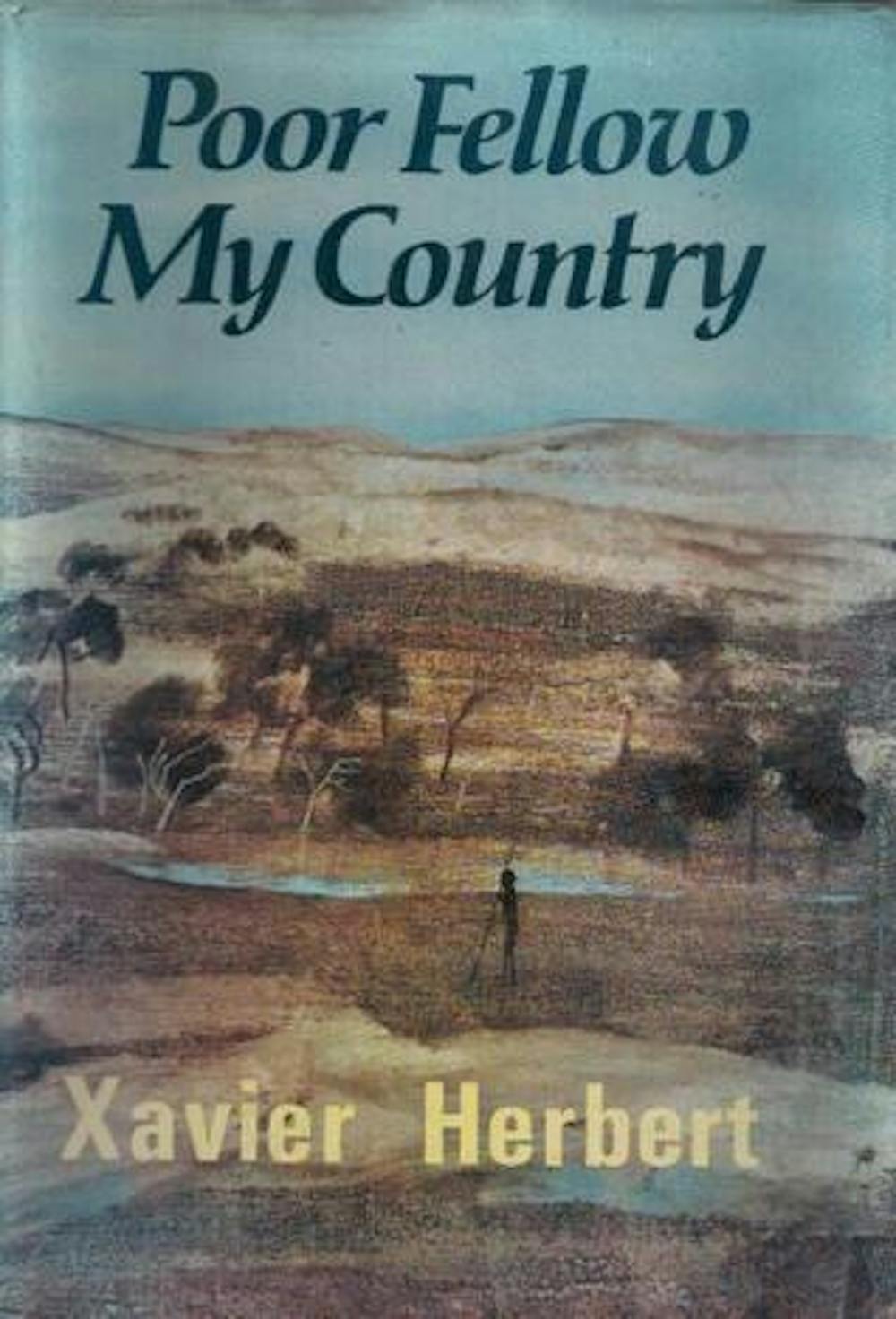
Another writer who found Harney to be a useful source was Xavier Herbert. Herbert drew on Harney’s notes on the Yanyuwa kinship system (Harney spelled the name Anula) and turned skin names into character names in his 1976 epic Poor Fellow My Country. He had Harney’s permission but not that of the Yanyuwa themselves. Herbert’s novel arguably offers a distorted view of Aboriginal kinship.
Contemporary currents
Some of Les Murray’s verse can be read as inheriting from Jindyworobak and its legacy of appropriation – notably his 1977 Buladelah-Taree Holiday Song Cycle, which presents a non-Indigenous family holiday as sacred to the equivalent of an Indigenous song cycle. Murray’s poetry is often innovative, but its progenitor is also famous for positing a near equivalence between non-Indigenous and Indigenous belonging
Murray has lent his name and ability to publications such as Quadrant, whose editors famously denied the existence of a Stolen Generation. Even where the poetry might be compelling for some, Murray’s reputation is nonetheless associated with Quadrant’s dismissal of Aboriginal perspectives on history and self-representation.
This history of appropriation is dispossession, using another’s culture for gain and without their permission. Yet some have been calling recently for Australian literature to return to and revive these legacies.
Read more:
Read, listen, understand: why non-Indigenous Australians should read First Nations writing
Critic and poet R.D. Wood has rhetorically asked, in the context of a discussion about the translation of song-cycles, “what might a Jindyworobak project for the 21st century look like?”. Such a project augurs poorly as a means of engagement for non-Indigenous writers.
South African-born, Western Australian poet John Mateer has used Noongar words in poems such as In the Presence of a Severed Head. The Western Australian poet John Kinsella has contextualised Mateer’s poetry, by saying that it:
utilises borrowings and usages from a number of languages in order to reconstitute their original implications, while also building in the agency of new meaning in the language in which they are being deployed.
But I would argue this is exactly where we need to be careful. While such transnational borrowings can enrich the English they emerge in, what is the effect on the speakers of the original language who are still recovering their culture in the face of colonisation?
As Noongar writer Kim Scott suggests in relation to Mateer’s work:
… there are very few forums for Noongar people to come to terms with the ideas of their ancestors … so it can feel doubly wrong when recent arrivals use those representations for their own purposes.
Others, more globally, have taken umbrage with critiques of appropriation. Kwame Anthony Appiah, for instance, has recently suggested that the idea of cultural ownership is vested in the commodity and not useful for thinking about cultural borrowing. Yet, he does not consider the numerous ways in which Indigenous culture is non-transferable – because it is a form of property grounded in kinship and Country.
Some poets who engage ethically with Aboriginal ways of writing and using language include Phillip Hall and Stuart Cooke. Hall engages with the same Gulf of Carpentaria Indigenous people, the Yanyuwa, from whom Herbert stole, but he does it through a reciprocal and ethical engagement. Hall has permission to write about these relationships. Cooke’s work includes translations of song cycles from the West Kimberley, for instance one written with the permission of George Dyunjgayan.
Non-Indigenous writers, if they wish to engage ethically with Indigenous culture, must learn to respect it as a form of property grounded in kinship and Country.
Michael Griffiths is the author of The Distribution of Settlement: Appropriation and Refusal in Australian Literature and Culture (UWAP).
Ingamells’ knowledge of Aboriginal culture came from white translators and not from Aboriginal people themselves. He visited Harney on several occasions. The Jindyworobaks both believed in the myth that Aboriginal people were doomed to extinction and advocated the appropriation of Aboriginal culture.
Another writer who found Harney to be a useful source was Xavier Herbert. Herbert drew on Harney’s notes on the Yanyuwa kinship system (Harney spelled the name Anula) and turned skin names into character names in his 1976 epic Poor Fellow My Country. He had Harney’s permission but not that of the Yanyuwa themselves. Herbert’s novel arguably offers a distorted view of Aboriginal kinship.
Contemporary currents
Some of Les Murray’s verse can be read as inheriting from Jindyworobak and its legacy of appropriation – notably his 1977 Buladelah-Taree Holiday Song Cycle, which presents a non-Indigenous family holiday as sacred to the equivalent of an Indigenous song cycle. Murray’s poetry is often innovative, but its progenitor is also famous for positing a near equivalence between non-Indigenous and Indigenous belonging
Murray has lent his name and ability to publications such as Quadrant, whose editors famously denied the existence of a Stolen Generation. Even where the poetry might be compelling for some, Murray’s reputation is nonetheless associated with Quadrant’s dismissal of Aboriginal perspectives on history and self-representation.
This history of appropriation is dispossession, using another’s culture for gain and without their permission. Yet some have been calling recently for Australian literature to return to and revive these legacies.
Read more:
Read, listen, understand: why non-Indigenous Australians should read First Nations writing
Critic and poet R.D. Wood has rhetorically asked, in the context of a discussion about the translation of song-cycles, “what might a Jindyworobak project for the 21st century look like?”. Such a project augurs poorly as a means of engagement for non-Indigenous writers.
South African-born, Western Australian poet John Mateer has used Noongar words in poems such as In the Presence of a Severed Head. The Western Australian poet John Kinsella has contextualised Mateer’s poetry, by saying that it:
utilises borrowings and usages from a number of languages in order to reconstitute their original implications, while also building in the agency of new meaning in the language in which they are being deployed.
But I would argue this is exactly where we need to be careful. While such transnational borrowings can enrich the English they emerge in, what is the effect on the speakers of the original language who are still recovering their culture in the face of colonisation?
As Noongar writer Kim Scott suggests in relation to Mateer’s work:
… there are very few forums for Noongar people to come to terms with the ideas of their ancestors … so it can feel doubly wrong when recent arrivals use those representations for their own purposes.
Others, more globally, have taken umbrage with critiques of appropriation. Kwame Anthony Appiah, for instance, has recently suggested that the idea of cultural ownership is vested in the commodity and not useful for thinking about cultural borrowing. Yet, he does not consider the numerous ways in which Indigenous culture is non-transferable – because it is a form of property grounded in kinship and Country.
Some poets who engage ethically with Aboriginal ways of writing and using language include Phillip Hall and Stuart Cooke. Hall engages with the same Gulf of Carpentaria Indigenous people, the Yanyuwa, from whom Herbert stole, but he does it through a reciprocal and ethical engagement. Hall has permission to write about these relationships. Cooke’s work includes translations of song cycles from the West Kimberley, for instance one written with the permission of George Dyunjgayan.
Non-Indigenous writers, if they wish to engage ethically with Indigenous culture, must learn to respect it as a form of property grounded in kinship and Country.
Michael Griffiths is the author of The Distribution of Settlement: Appropriation and Refusal in Australian Literature and Culture (UWAP).
Authors: Michael R. Griffiths, Lecturer in English and Writing, University of Wollongong
Read more http://theconversation.com/australian-literatures-legacies-of-cultural-appropriation-103672


















