
Google AI


Modern Australian

Interest rates will eventually fall but it's a bit early for mortgagees to break out the champagne

  • Written by: John Hawkins, Senior Lecturer, Canberra School of Politics, Economics and Society, University of Canberra
Interest rates will eventually fall but it's a bit early for mortgagees to break out the champagne

Suddenly the talk in global financial markets has spun from “when will interest rates next rise?” to “how soon before they fall?”.

Some commentators are flagging the shift as a “pivot party”.

This change has been most prominent in the United States. It was prompted by the Federal Reserve, the US equivalent of the Reserve Bank of Australia, releasing its latest “dot chart”. This shows most members of its policy-setting Federal Open Market Committee expect their interest rate would be lower by the end of 2024.

FOMC participants’ assessments of appropriate monetary policy
US Federal Reserve, CC BY-SA The recent review of the Reserve Bank in Australia wanted more transparency. But, after the whacking former Governor Phil Lowe got when he wrongly predicted rates would stay low until “at least” 2024, I doubt his successor Michele Bullock will be keen to publish a similar chart. Even so, financial markets in Australia are also now implying interest rates will fall over the course of next year. The latest indicators The Australian economy has continued to slow according to the latest national accounts. Consumer spending did not increase at all in the September quarter, despite an increase in population. Exports contracted. Overall GDP grew by a mere 0.2%. The news from the labour market was mixed. There was a solid rise in employment in November. The hours worked data, however, have been basically flat for the past six months. The government maintained fiscal discipline in the mid-year budget update released last week. They saved rather than spent almost all the extra revenue from higher than expected commodity prices. The minutes of the Reserve’s latest meeting on December 5 show the board noted “encouraging signs of progress” in returning inflation to the target. Subsequent events have suggested inflation will likely continue on its downward trajectory, which means the Reserve has increased interest rates enough. Another development since the Reserve last met is an update of the Statement on the Conduct of Monetary Policy between Treasurer Jim Chalmers and the board. This sets out the common understanding between them about Australia’s monetary policy framework. Much of this statement carries over the existing framework. The bank’s primary tool is its cash rate target and it is varied to achieve a medium-term inflation target of 2-3%. Employment considerations influence how quickly it is regained when shocks move inflation away from it. The statement explicitly refers to the midpoint of the target, reflecting a suggestion in the recent Reserve Bank review. Some commentators have interpreted this as indicating the bank cannot cut rates as its forecast for inflation only has it reaching the top, not the middle, of the range by the end of 2025. Read more: The 7 charts that show Australians struggling as saving falls to near zero I disagree. The bank has always aimed at the midpoint of the target as the most likely way to ensure inflation averages within it. If the board was happy at its December meeting to have reached 3% by the end of 2025 on its way to achieving 2.5% later, there is no reason for it to change this view in February. So what will the Reserve Bank do? On balance, the economic news does not suggest the Reserve Bank will feel a need to raise rates in February. But with inflation still high, and plenty of uncertainty, they are unlikely to cut rates any time soon. The bank does not generally make sharp U-turns with the average gap between the last interest rate increase in a cycle and the first cut being ten months. At its next meeting, on February 5-6, the Reserve board may have a new member, deputy governor Andrew Hauser, and a new adviser, chief economist Sarah Hunter. They share a British background so will be familiar with the Bank of England model, which influenced the Reserve Bank review. The impact of (eventual) lower interest rates The movements in the Reserve Bank’s interest rate matters most to the third of households with a mortgage. Most of these have variable rate loans where the interest rate closely follows that set by the Reserve. An interest rate cut would ease the cost-of-living pressures they have been facing. A household with the average loan size of around A$600,000 would have seen their monthly repayments rise by almost $1,700 since early 2022. This would drop by $100 if rates were cut by 0.25%. While the impact on mortgagees always gets the most attention, interest rates affect other members of the community too. Read more: Will the RBA raise rates again? Unless prices surge over summer, it's looking less likely Lower interest rates mean a lower income to retirees dependent on interest on their savings. They tend to boost the prices of assets such as shares and houses. They encourage borrowing and spending and reduce incentives to save. They tend to lower the exchange rate, making imports more expensive for Australians but our exports cheaper to foreigners. The net impact is generally to lower unemployment. A lot of people are therefore looking forward to an interest rate cut. But they should not be holding their breath. Financial markets may be getting prematurely excited. The last thing the Reserve Bank would want is to find themselves having lowered rates too quickly and see inflation turn back up, necessitating the interest rate cut to be reversed. More likely, they will wait for inflation to drop much closer to their target before there is any easing of interest rates.

Authors: John Hawkins, Senior Lecturer, Canberra School of Politics, Economics and Society, University of Canberra

Read more https://theconversation.com/interest-rates-will-eventually-fall-but-its-a-bit-early-for-mortgagees-to-break-out-the-champagne-220038

Better Business Photos Without Misleading Customers: An Australian Guide

A timber dining set looks inviting against a sunny deck, with cushions, lanterns and enough chairs for the whole family. But imagine the retailer sell...

Understanding a dental implant Melbourne Treatment Plan

A dental implant Melbourne patients may consider is one option for replacing a missing tooth, but suitability depends on oral health, bone support a...

How 3PL Logistics Australia Supports Faster and More Efficient Supply Chains

Why Has 3PL Logistics Become Important for Growing Businesses?  Gone are the days when supply chains were simpler and in minimal quantity. Now, the...

Common Skin Concerns and Treatment Options Available in Melbourne

Skin concerns can develop gradually or become noticeable following changes in age, lifestyle, sun exposure or hormonal factors. Pigmentation, rednes...

Why a Code-Compliant Home Can Still Feel Uncomfortable

When people build or renovate a home, they usually expect that meeting current building requirements will also produce a comfortable place to live. ...

Breach of Contract in Business: What Are Your Options?

Contracts are essential to business relationships. They establish expectations, allocate responsibilities and provide a framework for delivering goods...

How Pest Control Companies Can Rank for the Problems Customers Search First

Introduction SEO for Pest Control needs to start with the customer’s problem. Most people do not search for pest services in a neat or technical wa...

What Are the Benefits of Renovating an Older Home in Sydney?

Sydney has plenty of character homes, from Federation cottages to mid-century brick homes. Renovating rather than rebuilding can preserve what makes t...

Pool and Deck Design: How to Plan the Perfect Outdoor Living Space for Your Sydney Home

For many Australians, the backyard is where life happens. Summer barbecues, weekend swims and long evenings outdoors are all part of the lifestyle, ...

Is Solar Pool Heating Worth It? What Sydney Homeowners Should Know

There's nothing quite like a backyard pool on a hot Sydney day. But once autumn rolls in, many pools sit unused for months because the water is simp...

Planning a Luxury House Move: A Week-by-Week Timeline for Prestige Sydney Homes

Selling or buying a prestige home is a major milestone. Whether it's a waterfront residence in Birchgrove, a grand Federation home in Haberfield or ...

Downsizing or Upgrading Your Caravan? Here's How to Sell It Without the Hassle

Selling a caravan can feel like a major task, especially when you are unsure about its value, paperwork, or how to find a buyer. Whether you are dow...

The Best Overseas Adventure Holidays for Australians Who Love the Outdoors

Australia offers no shortage of incredible outdoor experiences, but sometimes the best way to satisfy your sense of adventure is to head overseas. A...

Cape Town Wine Shuttle: Winelands Tasting & Tours

Embark on an unforgettable journey through the picturesque Cape Winelands, where world-class wines and breathtaking scenery await. Our Cape Town Win...
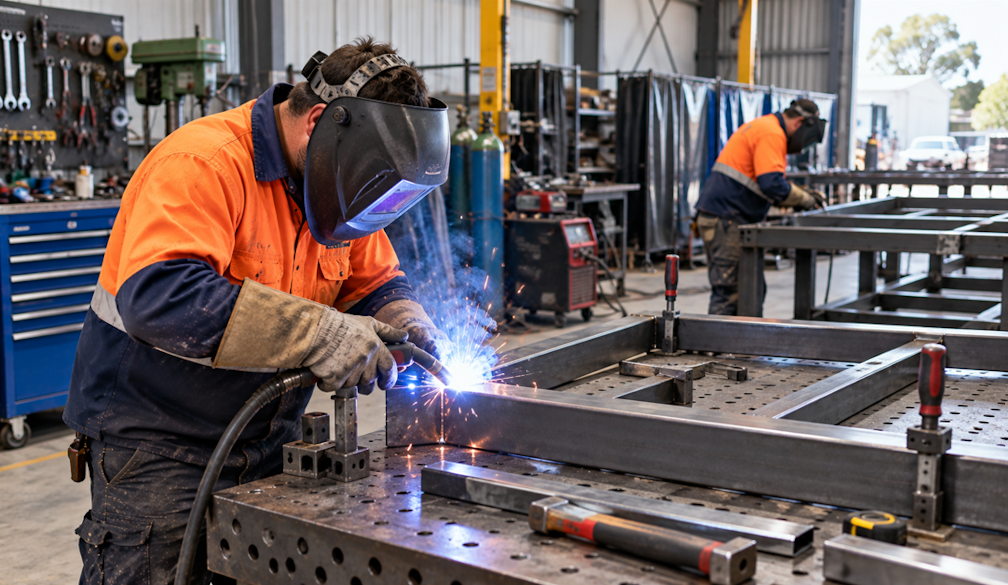
Metal Fabrication: Choosing Metal Fabrication Melbourne Services for Custom Projects

What Modern Metal Fabrication Involves From individual components to complete structures, metal fabrication brings together processes such as desig...

Why Giant Rats Tail Grass Keeps Coming Back After Spraying

Giant Rats Tail Grass (GRT) is one of the most frustrating pasture weeds for farmers and lifestyle property owners. You spray an infested area, see th...

When Custom Cardboard Boxes Make Sense for Your Business

Custom cardboard boxes can be useful when a standard carton does not fit a product, packing method or presentation requirement particularly well. A ...

Full-Height vs. Pop-Top Caravan: Which Is Better for Family Travel across WA?

A pop-top caravan is an excellent choice for travellers who want the comfort of a caravan without committing to a larger, bulkier setup. With a lowe...