Invasive grasses are worsening bushfires across Australia's drylands
- Written by Andrew Edwards, Research Fellow Bushfires, Charles Darwin University
As the semi-arid Pilliga Scrub burns in New South Wales, many of us are thinking about fire once again. It’s an El Niño summer in the hottest year on record. And there’s a remarkable amount of grass drying out and ready to burn.
Over the past few years, more rain than usual has fallen over vast regions of Australia’s rangelands, the arid and semi-arid regions that account for most of our land mass.
These rains have triggered an enormous boom in native grasses. But it’s also boom time for introduced species such as buffel grass (Cenchrus ciliaris) in the deserts, and Gamba grass (Andropogon Gayanus) in the savannas. These fast-growing grasses have outcompeted native grasses in many areas.
As they dry out, they become fuel for grass fires. Fuel loads have become extreme, especially in areas where invasive grasses are abundant. Already this fire season, enormous tracts of rangelands have burned, covering an area the size of Spain.
Our bushfire-mapping site has captured the rangeland fire season so far. Fast-moving grassfires recently hit South Australia. These grassfires can have fronts hundreds of kilometres wide. Yet this is only the beginning of the summer fire season.
Arid lands and buffel grass
When we think of fire in Australia, we often think of bushfires raging through a forest. But grassfires are very common once you leave the coast.
In Australia’s northern savannas, research has shown the direct link between fires, dried grass fuel at the end of the dry season in October, and how much rain fell over the year. Put simply, more rain leads to more grass, which usually leads to more fire.
These past few La Niña years have dumped enough rain to trigger major grass growth in the deserts – producing enough fuel to carry very widespread fire.
Buffel grass has made the problem far worse. This tussock grass native to parts of Africa and Asia was introduced for pasture, as it grows fast, roots deeply, spreads easily and needs less rain than other grasses. But these traits have now made it the biggest risk to biodiversity in arid Australia. Buffel has been a declared weed in South Australia since 2015, and the Northern Territory is considering whether to follow suit.
Management burns are needed to reduce the hazard but are increasingly difficult to implement. Buffel grass grows right up to trees and regrows quickly, promoting hotter and more frequent fires. Fire encourages buffel to regrow, which creates a grass-fire cycle. Native plants and fauna can’t adapt to this.
Buffel also grows more evenly across a landscape, rather than in patches like many natives. At a fine scale, this means fire damage is worse, with more trees and shrubs killed. At a broader scale, areas invaded by buffel grass create links between flammable native plant communities previously separated by open patches.
The result? Fires can spread across larger tracts of land from a single ignition point, as we saw in Tjoritja National Park (West MacDonnell) in 2019.
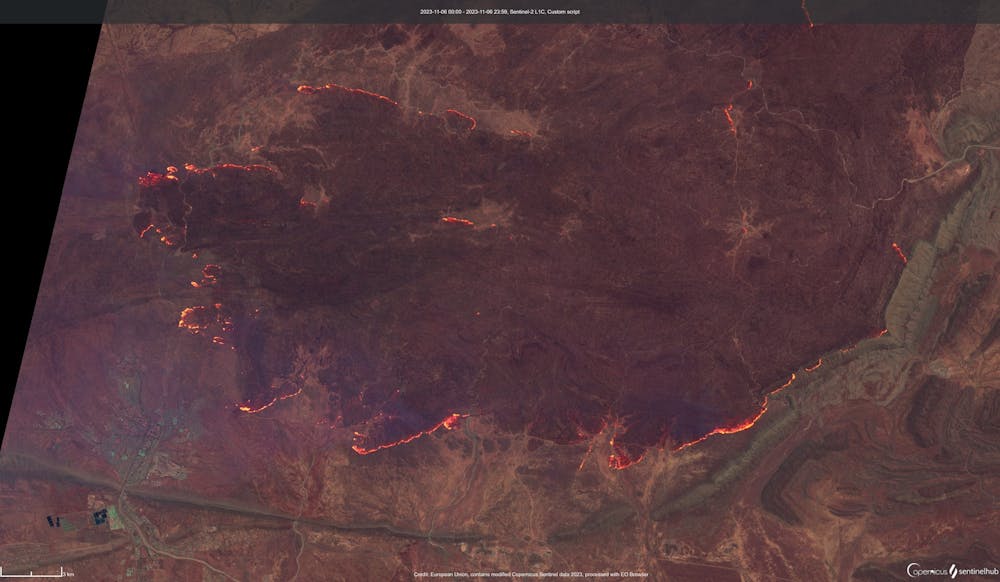
Because fires spread so easily, management burns become much more risky and also more damaging to native shrubs and trees – even in winter. That’s a problem, because we need these burns to reduce fuel loads. More intense and wide-ranging fires are likely to injure or kill more native animals, both directly and from the loss of shelter and food after the fire.
Fires can start from lightning – or from simply driving through long, dry grass. Historical weather and fire information indicates central Australia is in for a long hot summer.
How much fire might we see? In 2011, a year when we saw similar fuel loads, about 45% of arid and semi-arid lands had burned by the end of the summer.
Gamba grass on the savanna
In northern Australia’s tropical savannas, there’s a similar problem: fast-growing Gamba grass. This African tussock grass can grow up to four metres high. It’s invading new areas rapidly – government surveys show it increased from about 1,500 sites to more than 9,000 sites in six years in the Greater Darwin Region.
When Gamba dries out, the fuel loads it creates are many times greater than native grasses. Gamba is now widespread throughout the greater Darwin rural area, including large areas of Litchfield National Park.
When Gamba grass burns, the fire runs so hot it can kill tall trees and devastate biodiversity. It’s also more dangerous for firefighters. The high fuel loads produce very high greenhouse gas emissions and harmful pollutants such as particulate matter.
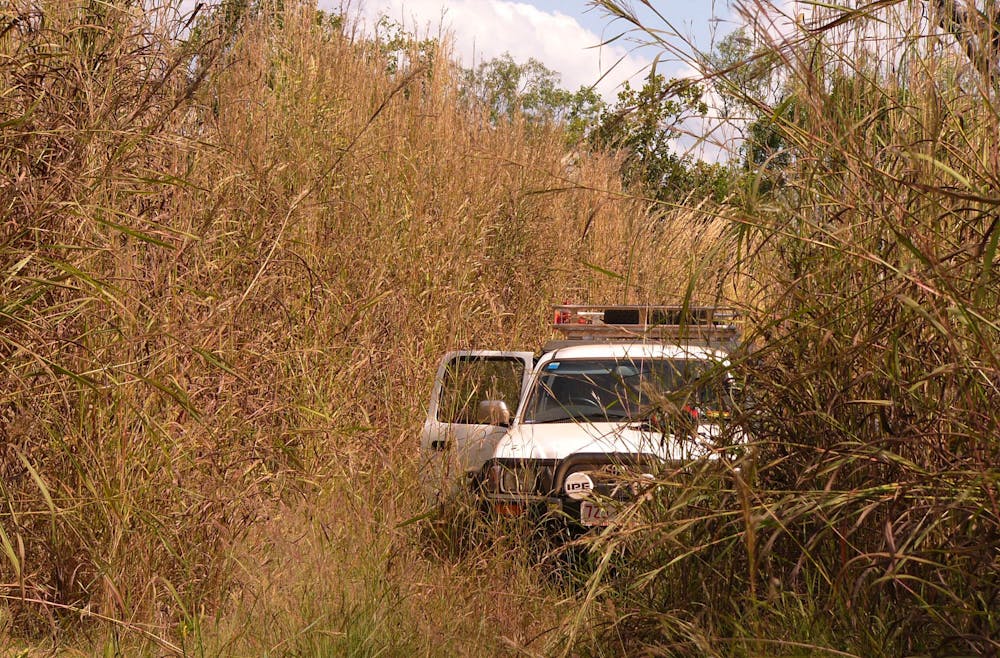 Gamba grass can grow up to four metres high.
AAP
Gamba grass can grow up to four metres high.
AAP
Unlike Buffel, Gamba is a declared weed in the NT. The territory government is putting in considerable effort to reduce the damage it does through prescribed burning and requiring property owners to control Gamba.
Unfortunately, these control efforts have a cost. Days with very high levels of air pollution in Darwin are increasing each year, caused by the burning of Gamba to reduce fuel load and the chance of big fires later in the dry season. Polluted air is damaging human health.
To combat this, we need to use weather forecasting to advise volunteer firefighters (who do most of the prescribed burns) of the best time to burn.
As the heat of summer continues, we can expect to see more extensive grassfires in central and northern Australia. Highly flammable invasive grasses will make them worse still. We cannot ignore the changes they are making to central and northern fire regimes.
Read more: The summer bushfires you didn't hear about, and the invasive species fuelling them
Authors: Andrew Edwards, Research Fellow Bushfires, Charles Darwin University