

How Boxing Day evolved from giving Christmas leftovers to servants to a retail frenzy
- Written by: Robert Crawford, Professor of Advertising, RMIT University

The Boxing Day sales are an essential part of Australia’s festive season.
Every year on December 26 news outlets invariably feature stories about excited shoppers queuing up at the major department stores hoping to score bargains and heavily discounted products. While such reports portray the day’s sales as a time-honoured tradition, they are only a recent ritual.
The origins of Boxing Day date back to the Middle Ages, when English masters gave their servants a day off after the Christmas celebrations. The servants would be given a box containing leftover food and treats to share with their families. In 1871 the day was formally recognised as a public holiday in the United Kingdom. Australian colonies later followed suit.
Read more: Really need those new shoes? Why you might spend up big at the Black Friday sales
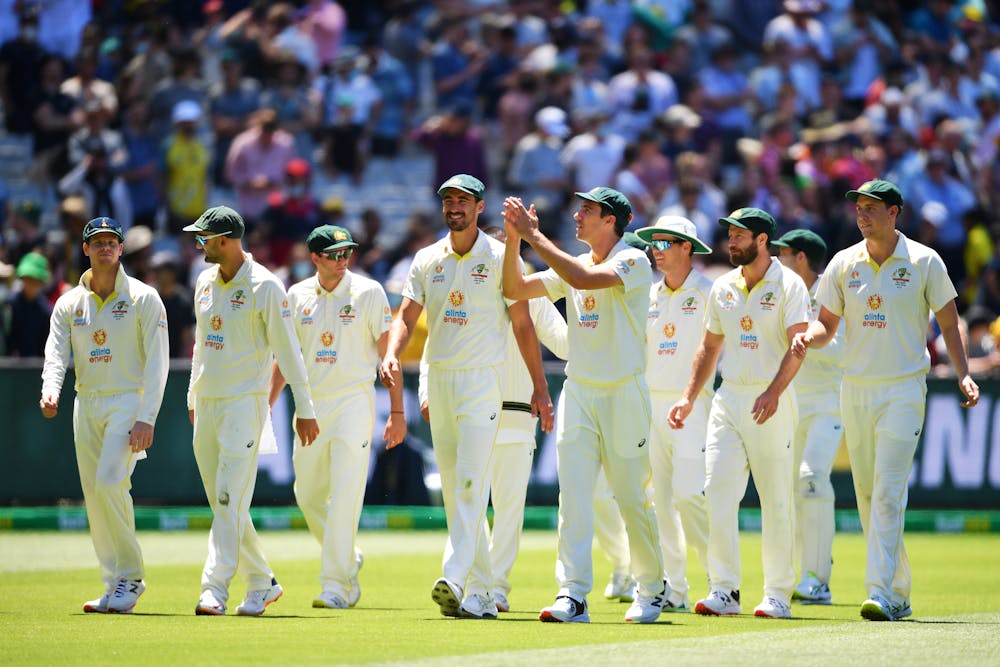
In the 19th and the early 20th centuries, the Boxing Day holiday was largely a day of rest and entertainment. Community sporting events were often held – a tradition that continues in Australia with the Boxing Day Test in Melbourne and the Sydney to Hobart yacht race.
As Boxing Day was an official public holiday, major retailers like department stores were not permitted to trade. These stores only re-opened for business three to five days after Christmas. Retailers certainly advertised “post Christmas bargains”, but most used this period to prepare for the annual stocktake sales that began shortly after New Year’s Day.
When the day became all about shopping
A gradual shift occurred during the economic boom after the second world war.
As consumer expenditure increased, the competition between retailers intensified. Eager to get ahead of the pack, Myer was advertising its “pre-stocktaking sale” in 1954. As others began their post-Christmas stocktake sales earlier, they became a key part of the retail annual cycle.
Read more: How Christmas music in adverts and shops harnesses nostalgia to encourage you to spend more
By the 1980s retail trading hours were coming under pressure. Since the beginning of the 20th century, retail was confined to 9am-6pm on weekdays and 9am-midday on Saturdays. Changing work patterns meant many Australians were only able to do their shopping in a mad rush on Saturday mornings. Over the 1980s and 1990s, trading hours were progressively extended in each state.
 The after-Christmas sales became popular in the post-second world war boom.
Alex Desanshe/Shutterstock
The after-Christmas sales became popular in the post-second world war boom.
Alex Desanshe/Shutterstock
The liberalisation of Victoria’s retail trading hours coincided with a further intensification of competition across the department store sector. Daimaru, a Japanese department store, opened a branch in Melbourne in 1991. In its battle to steal market share from Myer and David Jones, Daimaru pioneered new initiatives, including 24-hour trading in the lead up to Christmas and trading on Boxing Day.
To promote its Boxing Day sale and generate a real buzz, Daimaru advertised a small number of enormously discounted products. These door buster sales worked. Crowds queued in the early hours of the morning to snare one of the bargains. As the doors opened, mayhem ensued as frenzied shoppers literally burst into the store.
The pursuit of a bargain got a little too serious
The appeal of the door buster sale took a hit in 1993 when one eager shopper lost the tips of her fingers in the store’s roller doors. Fearing further carnage, extreme discounts were subsequently dropped, but the crowds hoping to catch a bargain remained. By 2000, Boxing Day sales had become a firmly entrenched tradition.
 The door buster sales stopped soon after one keen shopper was injured in the rush.
DC Studio/Shutterstock
The door buster sales stopped soon after one keen shopper was injured in the rush.
DC Studio/Shutterstock
Although the novelty had faded, Boxing Day sales nevertheless remained an exciting event. Television news crews continued to capture the excitement when the stores opened while newspapers reported on the size of crowds and what this revealed about the state of retail and the economy more generally.
By 2018, a discernible shift was occurring. Fewer people were queuing up and stores were opening later. The major department stores were no longer the dominant retailers they had once been. A broader range of brands and cheaper products could be found elsewhere, notably online, where bargains could be secured without the frustrations of dealing with other frantic shoppers.
The arrival of online shopping
Online shopping changed Australian shopping patterns as bargain hunters could now access overseas sales like Black Friday in the United States. Staged on the day after Thanksgiving, Black Friday is American retail’s busiest day that also kicks off the Christmas shopping season. Sales abound as retailers desperately chase shoppers.
Online has become an integral part of these sales, with Black Friday being extended to Cyber Monday. Australians shopping online have readily joined in.
Read more: An austere Christmas is on the cards – but don't say recession
In 2022 Australians spent an estimated A$7.1 billion over the Black Friday sales period. While this figure is eclipsed by the $23.5 billion predicted for Boxing Day sales period, the reality is the gap is shrinking fast.
This year, it is predicted Australian expenditure on Black Friday will exceed that for Boxing Day.
Will Black Friday overtake Boxing Day?
So, are Boxing Day sales doomed to become another lost tradition? Large discounts and the convenience of shopping online have certainly helped Black Friday’s rapid growth. However, its real advantage is timing. Shoppers not only use these sales for themselves, they can do their Christmas shopping at the same time. Such a combination means Black Friday has quickly become a fixture in Australian retailing.
Of course, Boxing Day sales are not dead. Wherever there are bargains to be had, there will always be shoppers ready to buy. Rather than competing with Black Friday, it seems that the challenge for Australian retailers is to reinvent the Boxing Day sales tradition.
Maybe it’s time to bring back the door buster bargains.
Authors: Robert Crawford, Professor of Advertising, RMIT University


















