A raunchy new 'Big History' tells the story of sex, but raises some unanswered questions
- Written by Melissa Kang, Associate Professor in the Specialty of General Practice, University of Sydney
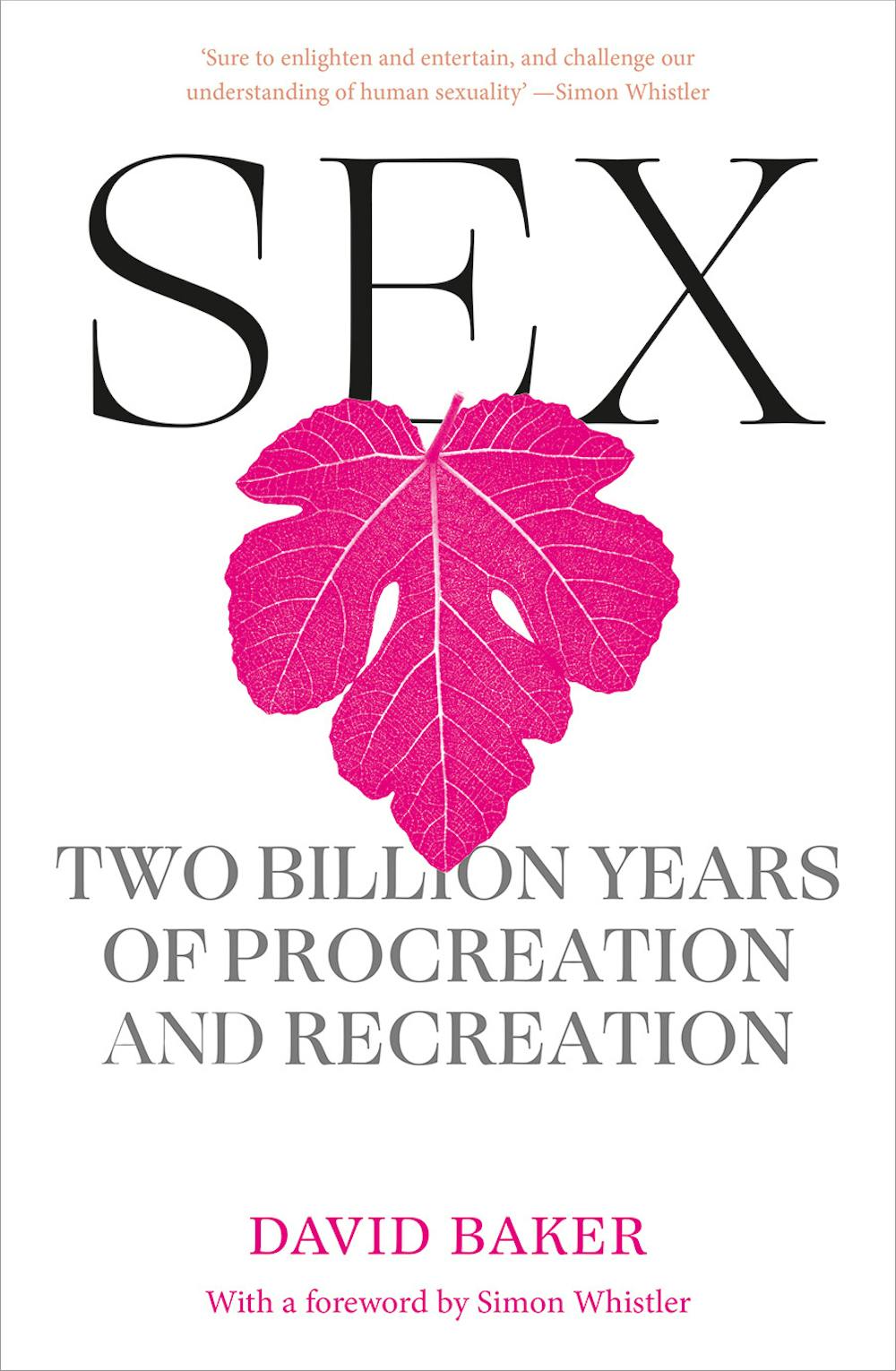
David Baker’s Sex: Two Billion Years of Procreation and Recreation condenses the story of the evolution of (predominantly) reproductive sex into 300 pages. That is quite a feat.
The book is one of the latest additions to the popular “Big History” genre. First defined by Macquarie University historian David Christian in the early 1990s, the idea of Big History is that the temporal scale on which history should be studied is “the whole of time”. Its ambition is no less than to survey history from the Big Bang to the present, taking an interdisciplinary approach to its scholarship.
Baker is a science writer with a PhD in Big History and one of the writers behind the Big History Crash Course on YouTube. In his introduction to Sex, he declares “this is the first book that seeks to weave together the grand narrative of sex in its entirety”.
Sex: Two Billion Years of Procreation and Recreation – David Christian (Black Inc.)
The book is divided into three sections. The first – titled Evolutionary Foreplay – covers the period from 13.8 billion to 66 million years ago. Baker races through the 10 billion years following the Big Bang, when “the cosmos was devoid of life”.
He summarises the formation of Earth and its atmosphere, the origins of living organisms 3.8 billion years ago, the emergence of DNA, and the cloning (asexual reproduction) of “microscopic blobs living on the edge of underwater volcanoes”.
We are taken from the earliest forms of sexual reproduction between two single-celled organisms to the differentiation of cells, and on to the evolution of specialised reproductive cells, the gametes. This development was followed by the rapid appearance of diverse animal species, from fish and amphibians to reptiles, insects, dinosaurs, birds and mammals.
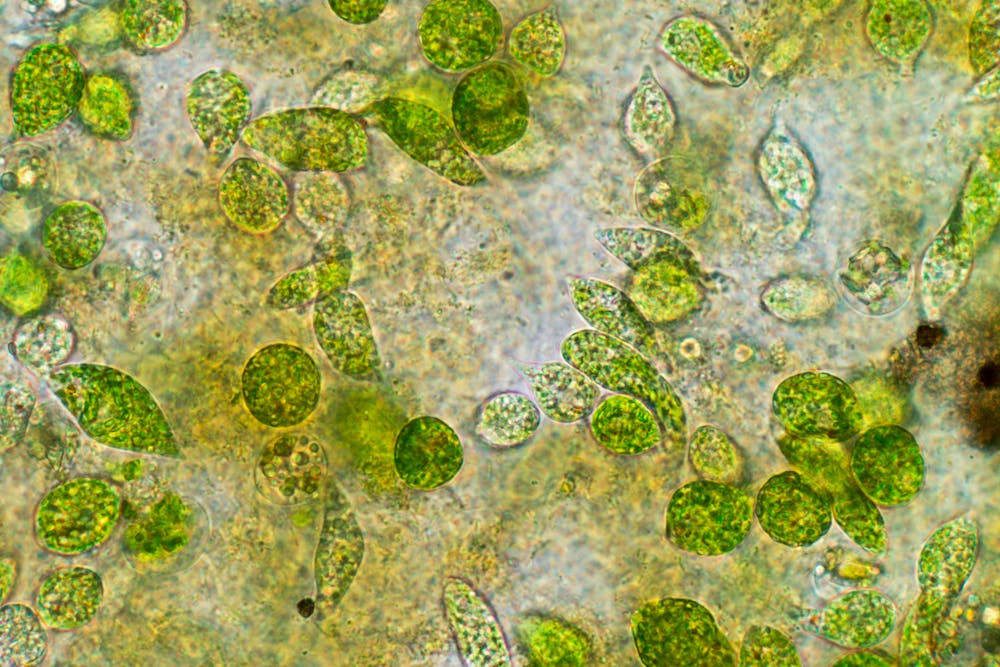 Hardy and horny? Euglena, a genus of single-celled flagellate Eukaryotes.
Rattiya Thongdumhyu/Shutterstock
Baker provides an interesting summary of the diversity among our primate ancestors. He notes differences in anatomy and genital size, and considers variations in practices such as masturbation and sexual partnering, including polygamy, monogamy, promiscuity, homosexual and bisexual behaviour.
He delves into the issues of pleasure, romantic love and parenting, and related forms of social organisation, such as patriarchy and matriarchy. And he considers variations, such as patrilocality (where males remain in their families and females move out to live with the male parent of their offspring) and its reverse, matrilocality.
Baker also points out that a pleasure response to copulation can be seen in fish and reptiles, similar to the sensations experienced after eating, but that the orgasm emerges with placental mammals.
It is, however, the evolution of human culture that radically changes everything. Baker condenses a few hundred thousand years of the history of human sexuality into 150 pages. He covers diversity (including intersex characteristics and gender and sexual diversity) and considers the ways in which societies have controlled sexuality and sexual behaviour through legal and other sanctions.
Central to these cultural practices is the control of female sexuality, which emerged with the development of agriculture and the need to retain land ownership and safeguard inheritance down patriarchal lines.
Read more:
Guide to the classics: Darwin's The Descent of Man 150 years on — sex, race and our 'lowly' ape ancestry
The future of sex
In the book’s final chapter, The Future of Sex, Baker shares his belief that “Nurture has ceased to impede the sexual impulses of Nature”, leading to a state where “loneliness is at an all-time high and personal happiness is at its lowest ebb”.
This is a sweeping statement. How did we measure loneliness and personal happiness in, say, Ancient Egypt? Do experiences of loneliness and personal happiness vary around the globe? Do they mean different things in different cultures?
Informing some of Baker’s thinking are statistics about the number of Millennials “projected to never get married in their lifetimes” and the decline in rates of casual sex. But it is not clear if they are only from studies in Western countries or how representative they are at a global level.
Baker concludes the book with four categories of future forecasts. His “projected future” is based on current observation. Here he predicts a rise in singledom and a state where promiscuity and sexlessness both exist and birth rates decline.
His “probable future” anticipates a “cultural rejection of relationships as the key to happiness”. It would involve more hook-ups and the growing replacement of human-to-human sex with sex dolls and bots. Alternatively, Baker suggests humanity might swing back towards traditional monogamous couplings, or a revival of polygyny, or a “promiscuity overdrive”.
In a “possible future”, he considers how internet technology might lead to virtual, AI-driven partnered sex. Finally, in a “preposterous future”, he suggests that sex could cease to be important to living organisms at all.
Hardy and horny? Euglena, a genus of single-celled flagellate Eukaryotes.
Rattiya Thongdumhyu/Shutterstock
Baker provides an interesting summary of the diversity among our primate ancestors. He notes differences in anatomy and genital size, and considers variations in practices such as masturbation and sexual partnering, including polygamy, monogamy, promiscuity, homosexual and bisexual behaviour.
He delves into the issues of pleasure, romantic love and parenting, and related forms of social organisation, such as patriarchy and matriarchy. And he considers variations, such as patrilocality (where males remain in their families and females move out to live with the male parent of their offspring) and its reverse, matrilocality.
Baker also points out that a pleasure response to copulation can be seen in fish and reptiles, similar to the sensations experienced after eating, but that the orgasm emerges with placental mammals.
It is, however, the evolution of human culture that radically changes everything. Baker condenses a few hundred thousand years of the history of human sexuality into 150 pages. He covers diversity (including intersex characteristics and gender and sexual diversity) and considers the ways in which societies have controlled sexuality and sexual behaviour through legal and other sanctions.
Central to these cultural practices is the control of female sexuality, which emerged with the development of agriculture and the need to retain land ownership and safeguard inheritance down patriarchal lines.
Read more:
Guide to the classics: Darwin's The Descent of Man 150 years on — sex, race and our 'lowly' ape ancestry
The future of sex
In the book’s final chapter, The Future of Sex, Baker shares his belief that “Nurture has ceased to impede the sexual impulses of Nature”, leading to a state where “loneliness is at an all-time high and personal happiness is at its lowest ebb”.
This is a sweeping statement. How did we measure loneliness and personal happiness in, say, Ancient Egypt? Do experiences of loneliness and personal happiness vary around the globe? Do they mean different things in different cultures?
Informing some of Baker’s thinking are statistics about the number of Millennials “projected to never get married in their lifetimes” and the decline in rates of casual sex. But it is not clear if they are only from studies in Western countries or how representative they are at a global level.
Baker concludes the book with four categories of future forecasts. His “projected future” is based on current observation. Here he predicts a rise in singledom and a state where promiscuity and sexlessness both exist and birth rates decline.
His “probable future” anticipates a “cultural rejection of relationships as the key to happiness”. It would involve more hook-ups and the growing replacement of human-to-human sex with sex dolls and bots. Alternatively, Baker suggests humanity might swing back towards traditional monogamous couplings, or a revival of polygyny, or a “promiscuity overdrive”.
In a “possible future”, he considers how internet technology might lead to virtual, AI-driven partnered sex. Finally, in a “preposterous future”, he suggests that sex could cease to be important to living organisms at all.
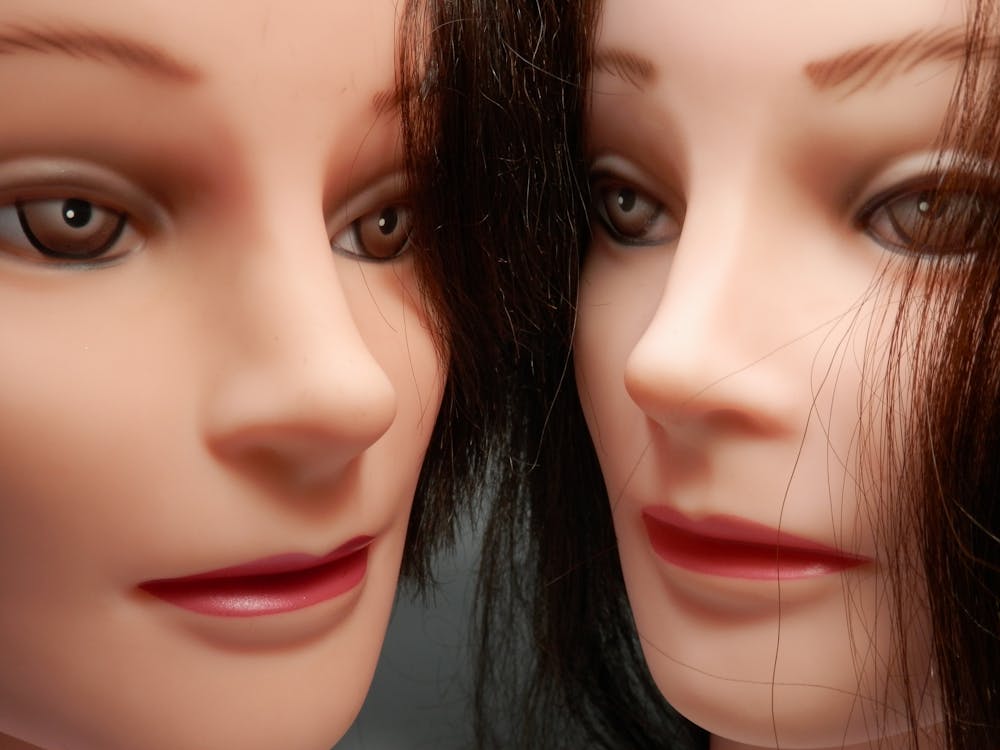 Could sex dolls and bots be the future of sex?
Fossiant/Shutterstock
While Baker’s deliberations are interesting and worth pondering, it is difficult to accept his claim that “the liberalisation of attitudes towards sex has released human sexuality from the grip of culture”. Indeed, the statement is something of an oxymoron, since “liberalising attitudes” are themselves a cultural phenomenon.
The “grip of culture” is still ever-present in the policing of female sexual behaviour, which continues to the present day the world over. So does the epidemic of sexual violence against women.
The other aspect of Baker’s book that I wonder about is its “knowability”. How many of the “facts” presented are really known? How much is be conjecture? While there is an impressive list of references at the end of the book, Baker admits that many of the beliefs he shares about the evolution of sex are not certain.
This speaks, in part, to the tensions that exist between “Big History” and “Deep History”. Big History presents itself as an answer to an existential question – why are we here? But, as some critics have argued, humans do not “easily fit into a Big History framework”.
Baker concludes with a statement about what he wanted to achieve in writing this book. He hopes that “some aspects of sex have become slightly less baffling for the reader” and wishes his readers the “sensation of feeling truly loved” – a kind sentiment, but slightly at odds with what has come before.
From my perspective, the world has a long way to go to achieve human rights for all in the areas of sexuality and gender. If Baker’s book helps this endeavour by getting us to think about human sexuality more deeply, then it will prove worthwhile.
Authors: Melissa Kang, Associate Professor in the Specialty of General Practice, University of Sydney
Could sex dolls and bots be the future of sex?
Fossiant/Shutterstock
While Baker’s deliberations are interesting and worth pondering, it is difficult to accept his claim that “the liberalisation of attitudes towards sex has released human sexuality from the grip of culture”. Indeed, the statement is something of an oxymoron, since “liberalising attitudes” are themselves a cultural phenomenon.
The “grip of culture” is still ever-present in the policing of female sexual behaviour, which continues to the present day the world over. So does the epidemic of sexual violence against women.
The other aspect of Baker’s book that I wonder about is its “knowability”. How many of the “facts” presented are really known? How much is be conjecture? While there is an impressive list of references at the end of the book, Baker admits that many of the beliefs he shares about the evolution of sex are not certain.
This speaks, in part, to the tensions that exist between “Big History” and “Deep History”. Big History presents itself as an answer to an existential question – why are we here? But, as some critics have argued, humans do not “easily fit into a Big History framework”.
Baker concludes with a statement about what he wanted to achieve in writing this book. He hopes that “some aspects of sex have become slightly less baffling for the reader” and wishes his readers the “sensation of feeling truly loved” – a kind sentiment, but slightly at odds with what has come before.
From my perspective, the world has a long way to go to achieve human rights for all in the areas of sexuality and gender. If Baker’s book helps this endeavour by getting us to think about human sexuality more deeply, then it will prove worthwhile.
Authors: Melissa Kang, Associate Professor in the Specialty of General Practice, University of Sydney