Forget bouncing back, balance is the healthiest way to manage weight post-pregnancy
- Written by: Clare Collins, Professor in Nutrition and Dietetics, University of Newcastle
When you have a newborn baby, your waistline may be the last thing on your mind. Yet women often feel pressured to lose their “baby weight” as quickly as they can after pregnancy.
It’s completely normal to have some weight left over at the end of pregnancy. This is due to the change in body composition to support the pregnancy.
Read more: Dieting after birth can make mum's self esteem worse
Bouncing back to your pre-pregnancy weight immediately after giving birth is neither realistic nor recommended. Instead, taking a balanced approach to weight loss over several months will optimise a woman’s future health outcomes. Achieving a healthy weight after having a baby is also important if you’re planning on another in the future.
How quickly should I lose my pregnancy weight?
There are no set recommendations for how quickly you should return to your pre-pregnancy weight after having a baby. But it is important to lose your pregnancy weight at some point post pregnancy, so it is not carried through to your next pregnancy, or into later life.
Each woman’s weight loss experience will be slightly different. Most studies show women retain about 1-5.5 kilograms at 6-12 months after pregnancy. In our study we found three out of every four women retained some of their pregnancy weight six months after the birth, and one in three retained more than 5 kgs.
Very low energy diets or fad diets are not recommended during pregnancy nor immediately following birth. Trying to lose weight too fast can mean your food choices are less likely to provide a good balance of nutrients, which are needed while your body gets back to a non-pregnant state and for breastfeeding.
Read more: What is a balanced diet anyway?
Sign up for the newsletter
 Sign up to Thrive, a weekly dose of evidence to help you live well.
Health benefits of losing the baby weight
Weight gained in pregnancy is due to the growth of the baby, placenta, amniotic fluid, the uterus and changes in body tissues including the breast and fat stores – especially in the hips, back and thighs.
A few weeks after having your baby, this will generally include some extra fat tissue and breast tissue. Having some stored fat tissue at the end of pregnancy is nature’s way of making sure mothers have enough stored energy to support breastfeeding.
Losing this extra store of body fat in the first year following childbirth will help improve a woman’s future health trajectory.
Sign up to Thrive, a weekly dose of evidence to help you live well.
Health benefits of losing the baby weight
Weight gained in pregnancy is due to the growth of the baby, placenta, amniotic fluid, the uterus and changes in body tissues including the breast and fat stores – especially in the hips, back and thighs.
A few weeks after having your baby, this will generally include some extra fat tissue and breast tissue. Having some stored fat tissue at the end of pregnancy is nature’s way of making sure mothers have enough stored energy to support breastfeeding.
Losing this extra store of body fat in the first year following childbirth will help improve a woman’s future health trajectory.
 It may be tricky with a newborn, but prioritising healthy eating is likely to help with weight loss.
From shutterstock.com
One review looked at change in body weight between pregnancies and the relationship with health outcomes in the second pregnancy. Across 11 studies of 925,000 women, a major increase in body weight between pregnancies (equivalent to three extra units of BMI or 9kg) was associated with an 85% increased risk of having a large-for-gestational-age baby and a 50% greater risk of having a baby weighing more than 4 kgs.
Mothers who had gained this level of weight were three times more likely to develop gestational diabetes and 70% more likely to have a caesarean section.
In the same review, reducing weight between pregnancies was associated with a reduced risk of developing gestational diabetes and having an large-for-gestational-age baby. But there was also an increased risk of having a baby born small for gestational age.
Reducing weight 3-12 months after birth is also associated with lower heart disease risk factors. Weight gain during that time is associated with increased risk of high blood pressure, type 2 diabetes and heart disease.
Top tips for returning to your pre-pregnancy weight
Try to gain pregnancy weight within your recommended weight-gain target. One of the biggest predictors of not returning to your pre-pregnancy weight is gaining too much weight during pregnancy. There are different ways you can check your recommended weight gain target for pregnancy.
Be active. Exercise can help improve both mental and physical health after pregnancy. It can improve sleep, help reduce fatigue, improve your fitness and help you return to your pre-pregnancy weight. Aim for 150 minutes of moderate intensity aerobic exercise per week. Begin by building up ten minute bursts of activity at a time. Start with slow, short and gentle exercise after childbirth, like walking, and gradually increase your duration, speed and intensity. It’s important to discuss returning to exercise after pregnancy with your doctor.
Focus on healthy eating. Women who improve both their eating and exercise habits are more likely to return to their pre-pregnancy weight. The Eat-for-Health Calculator can give you an idea of what you should be eating after pregnancy.
It may be tricky with a newborn, but prioritising healthy eating is likely to help with weight loss.
From shutterstock.com
One review looked at change in body weight between pregnancies and the relationship with health outcomes in the second pregnancy. Across 11 studies of 925,000 women, a major increase in body weight between pregnancies (equivalent to three extra units of BMI or 9kg) was associated with an 85% increased risk of having a large-for-gestational-age baby and a 50% greater risk of having a baby weighing more than 4 kgs.
Mothers who had gained this level of weight were three times more likely to develop gestational diabetes and 70% more likely to have a caesarean section.
In the same review, reducing weight between pregnancies was associated with a reduced risk of developing gestational diabetes and having an large-for-gestational-age baby. But there was also an increased risk of having a baby born small for gestational age.
Reducing weight 3-12 months after birth is also associated with lower heart disease risk factors. Weight gain during that time is associated with increased risk of high blood pressure, type 2 diabetes and heart disease.
Top tips for returning to your pre-pregnancy weight
Try to gain pregnancy weight within your recommended weight-gain target. One of the biggest predictors of not returning to your pre-pregnancy weight is gaining too much weight during pregnancy. There are different ways you can check your recommended weight gain target for pregnancy.
Be active. Exercise can help improve both mental and physical health after pregnancy. It can improve sleep, help reduce fatigue, improve your fitness and help you return to your pre-pregnancy weight. Aim for 150 minutes of moderate intensity aerobic exercise per week. Begin by building up ten minute bursts of activity at a time. Start with slow, short and gentle exercise after childbirth, like walking, and gradually increase your duration, speed and intensity. It’s important to discuss returning to exercise after pregnancy with your doctor.
Focus on healthy eating. Women who improve both their eating and exercise habits are more likely to return to their pre-pregnancy weight. The Eat-for-Health Calculator can give you an idea of what you should be eating after pregnancy.
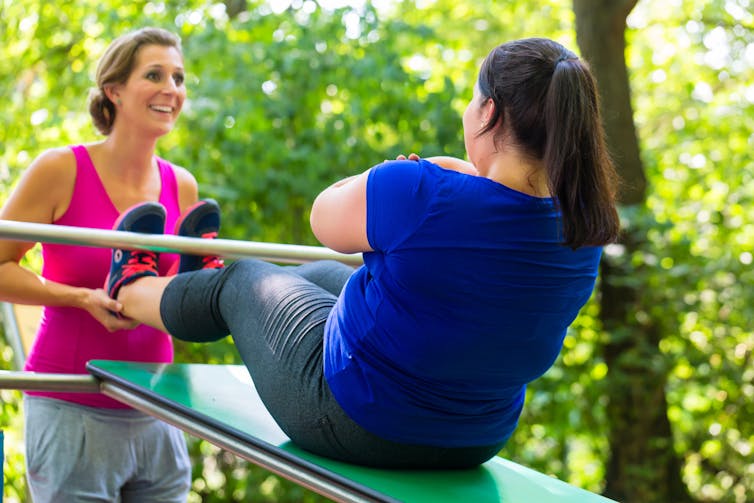 Keeping active is important for both physical and mental health after having a baby.
From shutterstock.com
Track your progress. After pregnancy, women who self-monitor their eating and exercise habits lose up to three times more weight. You can record your daily food and exercise levels in a diary, wear a pedometer to track your daily steps or use a heart rate monitor to track exercise intensity. You could also try mobile phone apps or other physical activity trackers.
Breastfeeding may help. When your body produces breast milk, it uses energy (around 2,620 kJ per day), which can come from the fat tissue stored during pregnancy, as well as the energy from food and drink you consume. Breastfeeding may help with weight loss, although it’s normal to feel more hungry when you’re breastfeeding. The key is to mostly eat healthy foods so your body then has to draw on its energy stores. Breastfeeding has lots of other benefits for you and your baby, so getting the support you need is important.
Read more:
Breastmilk alone is best for the first six months – here's what to do next
Start a conversation with your doctor. They can provide you with advice and support around weight loss, mental health and overall well-being in the period following your baby’s birth. They can also refer you to a dietitian or exercise specialist for individual nutrition and exercise support.
Keeping active is important for both physical and mental health after having a baby.
From shutterstock.com
Track your progress. After pregnancy, women who self-monitor their eating and exercise habits lose up to three times more weight. You can record your daily food and exercise levels in a diary, wear a pedometer to track your daily steps or use a heart rate monitor to track exercise intensity. You could also try mobile phone apps or other physical activity trackers.
Breastfeeding may help. When your body produces breast milk, it uses energy (around 2,620 kJ per day), which can come from the fat tissue stored during pregnancy, as well as the energy from food and drink you consume. Breastfeeding may help with weight loss, although it’s normal to feel more hungry when you’re breastfeeding. The key is to mostly eat healthy foods so your body then has to draw on its energy stores. Breastfeeding has lots of other benefits for you and your baby, so getting the support you need is important.
Read more:
Breastmilk alone is best for the first six months – here's what to do next
Start a conversation with your doctor. They can provide you with advice and support around weight loss, mental health and overall well-being in the period following your baby’s birth. They can also refer you to a dietitian or exercise specialist for individual nutrition and exercise support.
Authors: Clare Collins, Professor in Nutrition and Dietetics, University of Newcastle