'Caring as much as you do was killing you'. We need to talk about burnout in the arts
- Written by Katherine (Kate) Power, Lecturer in Management, School of Business, The University of Queensland
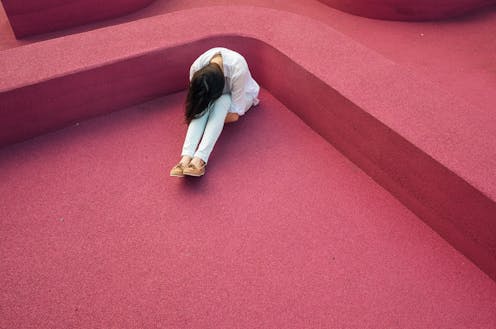
Burnout is an occupational hazard in many people-focused jobs. People in these roles routinely go “above and beyond” for the benefit of others – often in the face of funding cuts and policies that make their work harder than it needs to be.
Since COVID-19, concern has grown about burnout in the arts and culture sector. However, burnout isn’t a new problem for artists. As one arts worker told me in a 2019 interview:
the level of burnout in this industry is pretty shocking […] the idea that [burnout] even exists is a running joke […] we’re all overworked and constantly tired.
Burnout rates are higher in not-for-profit than in for-profit organisations, due to insufficient resources, job insecurity, low pay and disillusionment involved in meeting funders’ rising demands.
Yet it is ironic that cultural organisations whose success is based around people should treat those same people poorly.
What is burnout?
According to both the World Health Organization and the Maslach Burnout Inventory (widely regarded as the “gold standard” measure), burnout has three dimensions:
- feelings of exhaustion or energy depletion
- negativity, cynicism or mental distancing towards work, colleagues, and/or those benefiting from our work (known as “depersonalisation”)
- inefficacy or a reduced sense of personal accomplishment.
Recent research identifies three further burnout symptoms:
- sleep disruption
- memory and concentration problems
- withdrawal from social relationships.

Burnout is also associated with negative outcomes, such as alcohol abuse, declining health and job withdrawal, which could be presenteeism, absenteeism or quitting.
In a nutshell, burnout is a state of physical and/or emotional exhaustion caused by chronic stress on the job.
Read more: If companies want to stop quiet quitting they need to take burnout seriously
What causes burnout in the arts?
Prolonged work-related stress is the main cause of burnout. This type of stress can stem from a lack of role clarity, unmanageable workloads or time pressures, unfair treatment at work and a lack of support or communication from managers.
Additional risk factors include incongruities in workload and control (where expectations aren’t matched by experience), a lack of fairness and appropriate rewards, the loss of positive relationships at work, and conflict between personal and organisational values.
Artists and arts workers often experience these stressors due to the boom-bust careers necessitated by the project-based work that characterises this sector.
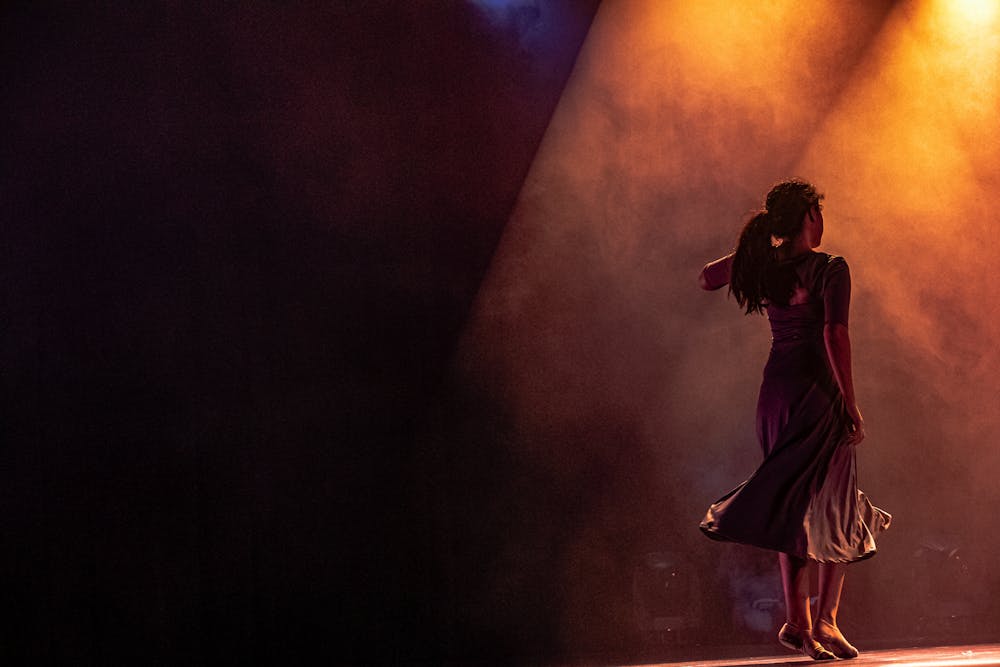 The boom-bust cycle of art work can exacerbate stressors.
Hulki Okan Tabak/Unsplash, CC BY
The boom-bust cycle of art work can exacerbate stressors.
Hulki Okan Tabak/Unsplash, CC BY
Working across multiple projects and companies, often with competing deadlines, arts workers can quickly become overstretched. And the small-to-medium companies that form the “small vertebrae in the institutional spine of the nation’s cultural sector” often have limited understanding of their contingent workers’ work and emotional situations. Organisations also typically lack the human resource management expertise that might help to address those situations.
Other unique factors also contribute to burnout in Australia’s arts and culture sector. Burnout can arise from a longstanding public policy context in which artists have continually had to justify the value of their work, coupled with a chronic lack of resources and widespread precarious employment.
Interestingly, hope can buffer burnout so more recent policy developments may bring some relief.
The 24/7 nature of the industry and widespread commitments that “the show must go on” can also contribute to burn out.
As one submission to the 2014–15 Senate Inquiry into arts funding explained:
When you are working the equivalent of two full time jobs on below average pay, burnout, fatigue, acute anxiety, and severe depression are not simply likely, but common. It is even more difficult for women, particularly parents, and particularly those who live alone, whether by choice or circumstance.
Performance anxiety and “obsessive passion” can also cause burnout for some artists – particularly in the event of failure.
Individual-centred solutions are not enough
Between 2020 and 2022, I facilitated more than 80 peer coaching circles with arts workers around Australia, many who were seeking help to cope with burnout.
Reflecting on the wisdom shared in their circle, one participant said that discussions about the stress of arts work:
kept coming back to the idea of caring less. Not that you don’t care, but that you need to be able to care less, because caring as much as you do was killing you.
 Applying for grants – and justifying your value – can lead to burnout.
Nick Morrison/Unsplash, CC BY
Applying for grants – and justifying your value – can lead to burnout.
Nick Morrison/Unsplash, CC BY
Prioritising self-care is often touted as the solution to burnout, both by and for artists. Indeed, “fixing the person” approaches dominate both academic and industry responses.
But as workplace expert Jennifer Moss wrote for the Harvard Business Review, “burnout is about workplaces, not workers”.
What can arts organisations do?
The key to preventing burnout is supporting engagement and wellbeing at work by creating six “positive ‘fits’” between arts workers and their workplaces:
- a sustainable workload
- choice and control
- recognition and reward
- a supportive work community
- fairness, respect and social justice
- clear values and meaningful work.
This involves more than just individual job-tweaking. A holistic approach is needed to build workplace cultures that prioritise wellbeing from recruitment to leaving the organisation.
Specific steps arts organisations should take straight away are:
- managers and staff (including contractors) jointly identifying burnout factors in their organisations
- giving staff as much control as possible over what, where, when and how work gets done
- recognising and rewarding staff strengths
- encouraging and enabling arts workers to support one another (such as through peer coaching networks).
Preventing burnout among arts workers will require long-term, organisation- and sector-wide commitments. And, to maximise success, arts leaders – including those in politics and government – should ask themselves how can the arts and culture sector (and individual arts organisations) become a great place to work, and a workplace of choice?
Read more: The 'great resignation' didn't happen in Australia, but the 'great burnout' did
Authors: Katherine (Kate) Power, Lecturer in Management, School of Business, The University of Queensland