As Australia's net zero transition threatens to stall, rooftop solar could help provide the power we need
- Written by Anna Bruce, Associate Professor in the Collaboration on Energy and Environmental Markets and the School of Photovoltaic and Renewable Energy Engineering, UNSW Sydney
Australia is not rolling out clean energy projects nearly fast enough to reach the Australian government’s target of 82% renewable electricity by 2030. A huge build of solar and wind farms, transmission lines and big batteries is needed. But progress is challenged by the scale required, community resistance to new infrastructure and connecting all that new renewable electricity to the grid.
In the latest obstacle to expanding renewable energy capacity in the longer term, federal Environment Minister Tanya Plibersek knocked back a plan by the Victorian government to build a sea terminal to service offshore wind farms, saying it posed “clearly unacceptable” environmental risks.
The roadblocks facing large projects present an opportunity to ramp up the contribution of small-scale technologies in the energy transition. Recently, federal and state energy ministers agreed on the need for a national roadmap and a co-ordinated approach to integrating into the grid what they call “consumer energy resources” (CER), which include batteries, electric vehicles and rooftop solar.
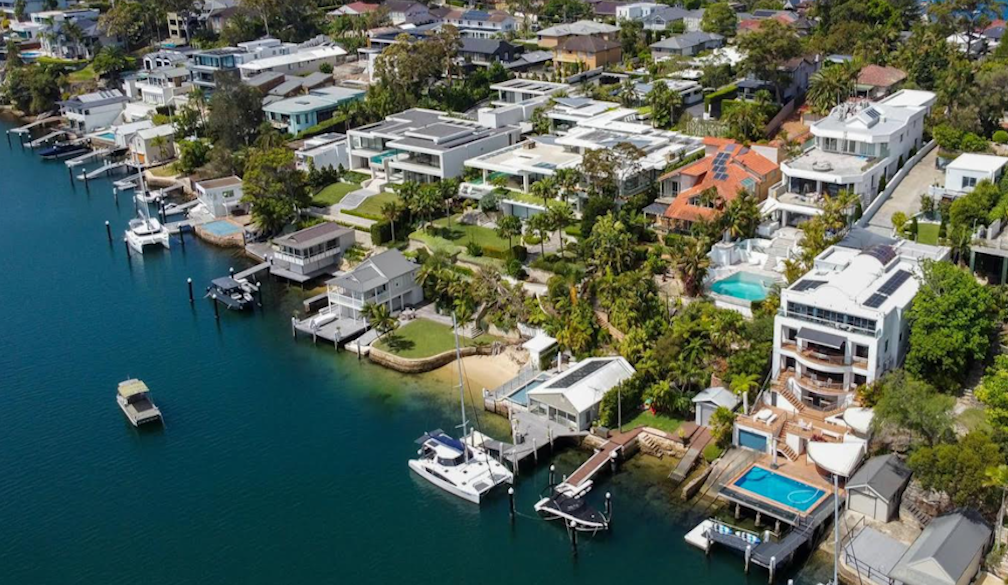
More than one in three Australian houses have solar panels on their roofs. Australia leads the world in rooftop solar per head. During the past year these systems generated close to 10% of our electricity. Several times over the past few months, they even provided enough electricity to briefly meet all South Australia’s electricity demand.
And the technology still has great potential to grow: although installed capacity has doubled in the last four years, these systems cover only about 10% of Australia’s estimated usable roof area. So, how large a share of our electricity needs might rooftop solar provide? The answers are not simple.
Why rooftop solar presents a challenge for the grid
In electricity systems, demand and supply must be balanced at all times. The Australian Energy Market Operator (AEMO) runs the grid and keeps it secure to avoid blackouts in case of unexpected events such as the sudden disconnection of a transmission line.
Read more: Australian homes can be made climate-ready, reducing bills and emissions – a new report shows how
To meet demand, every five minutes AEMO dispatches electricity from large-scale generators such as coal-fired power stations or large solar farms. As the grid operator, AEMO must also procure reserve capacity to balance any differences in demand and maintain security.
But AEMO does not dispatch power from rooftop solar, which is either used on site, or flows into the grid independently of AEMO’s control. This isn’t usually a problem, since AEMO keeps the grid balanced by forecasting how much rooftop solar is being generated.
However, if rooftop solar generates the majority of power in a particular region, there may not be enough dispatchable generation and reserves online to keep the grid balanced and secure. Grid security can also be challenged when unexpected events trigger the safety settings of rooftop solar systems and cause them to disconnect.
The other big issue for grid balance is that the network businesses that manage the poles, wires and other infrastructure connecting generators to homes and businesses need to ensure that voltages remain within defined technical limits to avoid damaging equipment or appliances. When solar generates a lot of power at a time of low electricity demand, voltage can exceed the upper operational limit. Voltage can also go below the lower operational limit when too many people connect big appliances like air-conditioners.
So how are we managing the three challenges of rooftop solar: lack of controllability by the market operator, uncertain behaviour during unexpected grid events and impact on network voltage?
Read more: Green growth or degrowth: what is the right way to tackle climate change?
Ways to manage and expand rooftop solar
Current Australian standards require solar to automatically disconnect when voltage gets too high. Network businesses also pre-emptively manage this problem by preventing customers in areas where voltage is an issue from connecting solar to the grid, or by limiting the size of solar systems they can connect or the amount of electricity they can export to the grid at any time. But this approach is potentially unfair to those customers who can’t connect or export.
The good news is that standards introduced in 2020 provide more sophisticated ways of managing solar through more gradual voltage response, and by requiring systems to ride through major disturbances rather than disconnecting. Some networks have also developed solar-friendly ways to cut off surplus output “dynamically”, meaning only at times when they have to.
Thanks to these measures, solar customers face less constraint on exporting power to the grid. However, since solar sometimes now supplies most of the generation in South Australia, AEMO has also tested disconnection of solar to increase its control of the grid in case of threats to system security.
Read more: Is nuclear the answer to Australia's climate crisis?
Some of these solar management tools are still quite blunt and some commentators worry they will be overused. While necessary in the short-term, if unchecked they will reduce our ability to realise our rooftop solar potential.
Getting smarter about when we use power
There is another way to use our solar systems more effectively: we can shift energy use to times when the sun is shining, and store energy – in batteries, electric vehicles and hot water tanks – to use when it is not.
To make such a change, consumer electricity prices are a potential lever. Solar customers already have an incentive to use electricity from their own rooftop systems, because they pay more for grid electricity than they are paid to sell solar back to the grid.
South Australia and some other network areas are introducing low “solar soak” rates to encourage all customers to use electricity in high solar times, such as the middle of the day. Times of plentiful solar also tend to be the cheapest times to buy wholesale electricity from the grid, and innovative retailers like Amber Electric are passing through these price signals to customers.
However, typical retail plans offered to customers don’t provide much incentive to change patterns of electricity use, especially since many customers are understandably not focused on their electricity bills or cannot easily shift their power use.
In these cases orchestration schemes, often called “virtual power plants,” are an option. Under the schemes, a business will reward household customers that allow it to operate their rooftop solar, batteries, appliances, electric vehicles and hot water systems in ways that reduce costs or grid impacts.
Read more: Australia's new dawn: becoming a green superpower with a big role in cutting global emissions
Better management of electricity use through these schemes can make room for the grid to take on more solar.
Recent trials in Western Australia (Project Symphony) and Victoria (Project EDGE) prove orchestration can work. Nevertheless, people will need good reasons to hand over control of their solar, batteries and appliances, particularly if they bought expensive equipment such as batteries for back-up power or to increase their energy independence.
It would be a major setback to the net zero transition if AEMO and network businesses, lacking better options for managing the grid, continue to cut back and switch off solar systems until people find it unattractive to purchase them.
The new CER roadmap needs to provide clear guidance on how AEMO and network businesses can manage rooftop solar, and other technologies such as batteries and EVs. Good governance arrangements and meaningful stakeholder consultation are essential if Australia is to maintain the momentum of its people-powered energy transition.
Authors: Anna Bruce, Associate Professor in the Collaboration on Energy and Environmental Markets and the School of Photovoltaic and Renewable Energy Engineering, UNSW Sydney