Giant 'kings of apes' once roamed southern China. We solved the mystery of their extinction
- Written by Kira Westaway, Associate Professor, School of Natural Sciences, Macquarie University
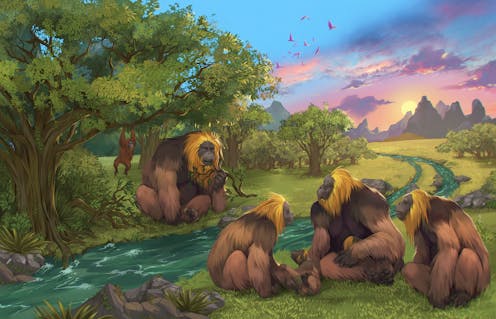
Giant creatures are usually associated with dinosaurs, woolly mammoths or mystical beasts. But if you go back though the human lineage you’ll find a very distant relative that stood three metres tall and weighed around 250 kilograms. This was Gigantopithecus blacki, the mightiest of all the primates and one of the biggest unresolved mysteries in palaeontology.
Despite surviving for nearly two million years in what is now the Guangxi Zhuang Autonomous Region of southern China, the entire species is represented in the fossil record only by a few thousand teeth and four jawbones. Nothing from the neck down.
Added to that is its mysterious disappearance from the fossil record at a time when other primates were flourishing. Where did the giants go and what brought them down?
Since 2015, a team of Chinese, Australian and US scientists has been chasing this mighty beast in the distinctive terrains of southern China. Our findings are published in Nature today and reveal a story of seasonality, stress and vulnerability.

Finding the window of extinction
Extensive exploration and excavations in hundreds of caves over a five-year period has been narrowed down into evidence from 22 caves in two regions of Guangxi: Chongzuo, near the Vietnamese border, and Bubing Basin, close to Nanning. Eleven of these caves contain evidence of G. blacki and the other eleven – of a similar age range – do not.
Our team applied several dating techniques to sediments from the caves: luminescence dating of feldspars (a common rock-forming mineral), electron spin resonance dating of quartz, and uranium series dating of stalagmites and similar deposits, as well as fossils. Altogether we ended up with a staggering 157 radiometric ages.
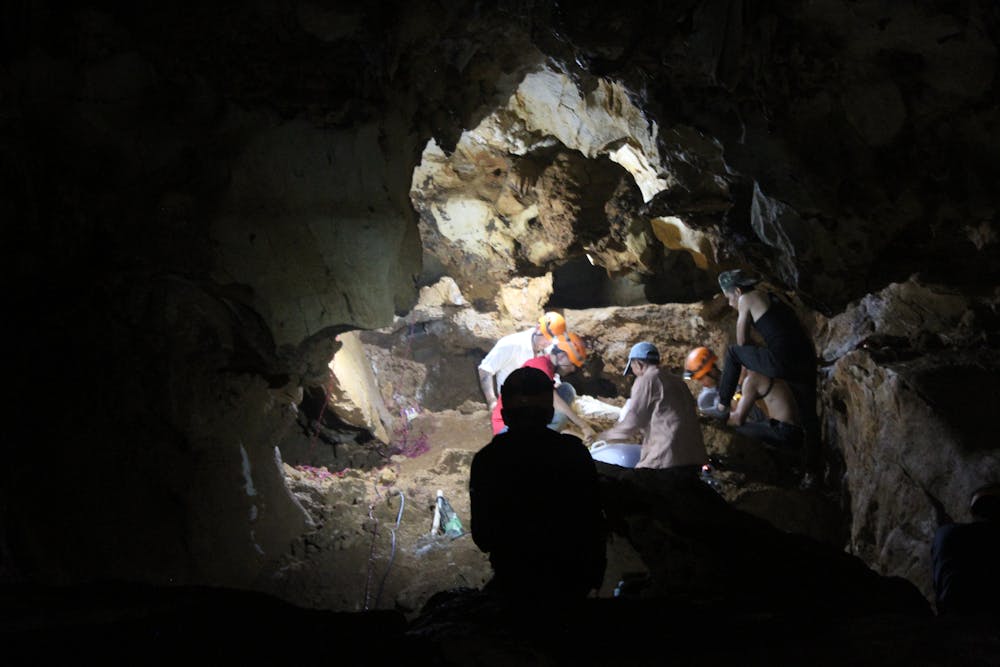 Excavations in Ma Feng Cave in Guangxi Zhuang Autonomous Region of southern China.
Kira Westaway
Excavations in Ma Feng Cave in Guangxi Zhuang Autonomous Region of southern China.
Kira Westaway
We used these data sets to establish exactly when G. blacki dropped out of the fossil record, to define a “window of extinction”. This window allowed us to target a period of time to look closely at the environmental changes.
Next, we looked at eight sources of environmental and behavioural evidence, including ancient pollen grains, other animal bones and micro details in the sediments.
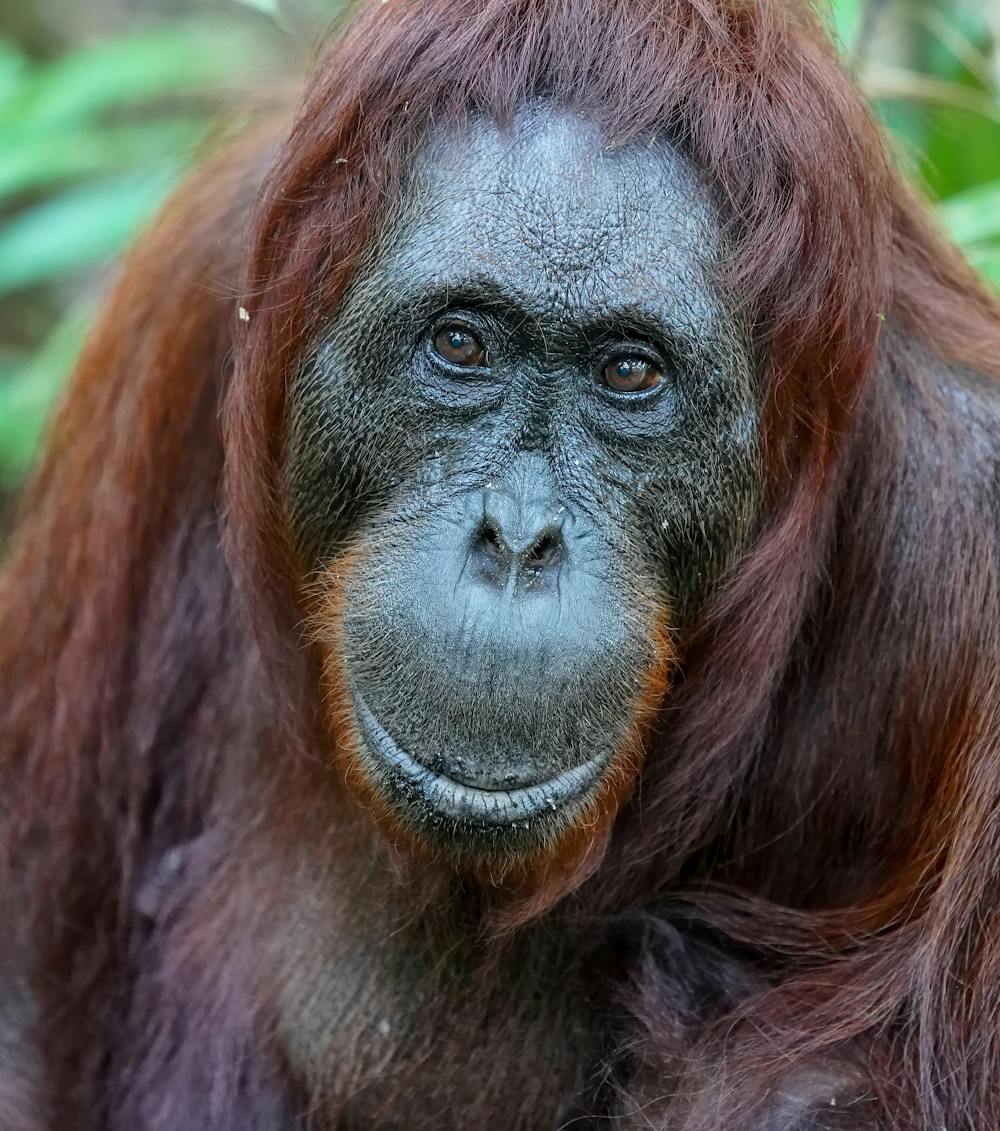 The closest primate relative of G. blacki is the critically endangered orangutan.
Bob Brewer/Unsplash
The closest primate relative of G. blacki is the critically endangered orangutan.
Bob Brewer/Unsplash
Furthermore, we gained a wealth of information from G. blacki teeth themselves – from isotopic signatures, trace elements and the wear patterns on the surface of the teeth. This evidence can indicate diet, migration patterns, habitat preferences, diversity of food sources and stress.
This data represents the largest collection of well-dated evidence for the giant ape and for the first time is supported by well-documented environmental and behavioural changes. It reveals the rise and fall of G. blacki in comparison to its closest primate relative – the orangutans.
Stronger seasons
Surprisingly, G. blacki went extinct between 295,000 and 215,000 years ago, much more recently than previously assumed. Before this time, G. blacki flourished in a rich and diverse forest.
But between 600,000 and 300,000 years ago the environment became more variable. An increase in the strength of the seasons caused a change in the structure of the forest plant communities. By 200,000 years ago, the forests started to deteriorate.
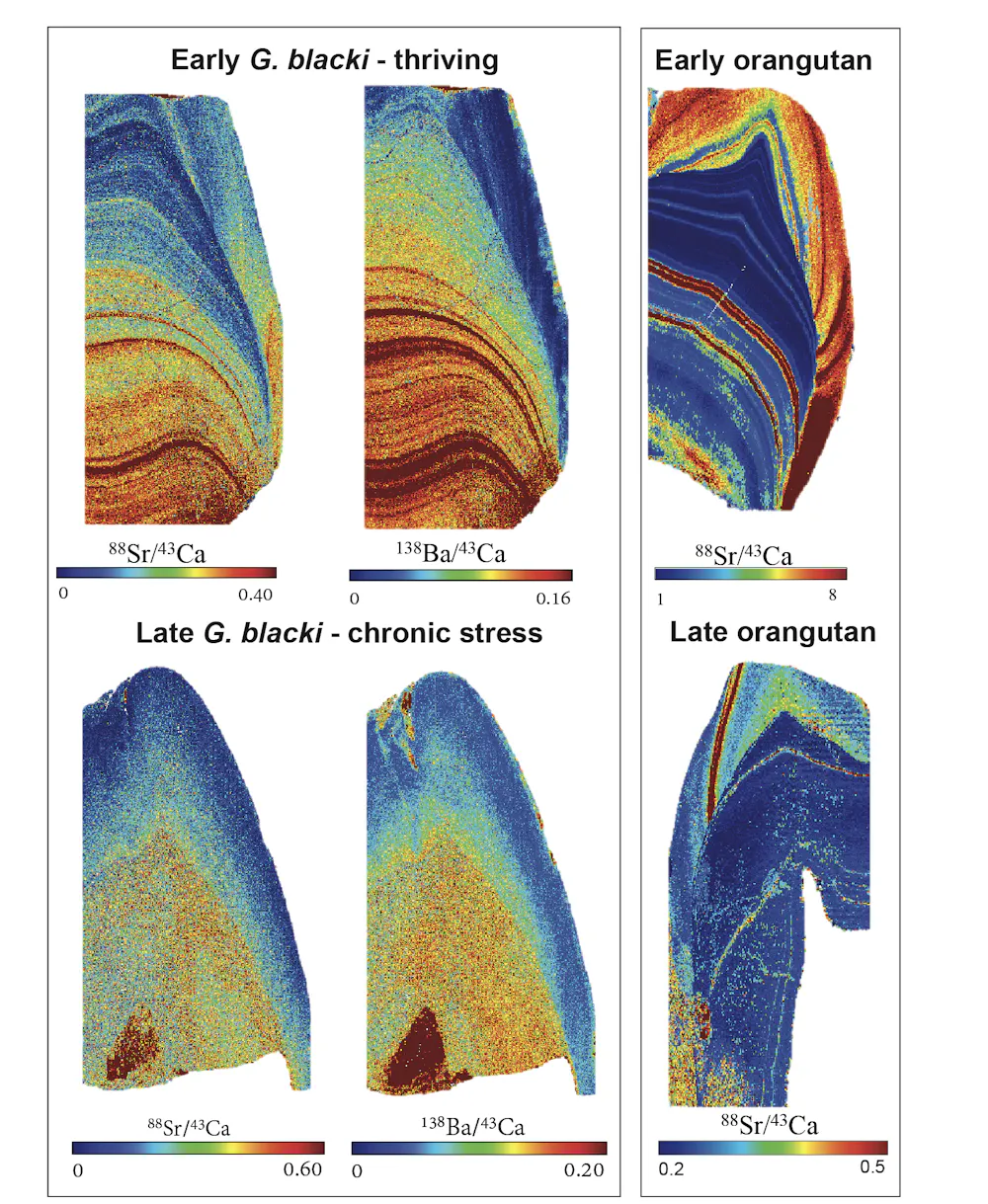 Differences in trace elements such as barium, strontium and calcium mapped across the inside of G. blacki and orangutan teeth. At earlier sites, clear banding in both species’ teeth suggests diverse food sources and a flourishing population. Diffuse or no banding in later G. blacki suggests less diverse food sources and chronic stress. The orangutan tooth suggests a less stressed population than G. blacki at this time.
Nature
Differences in trace elements such as barium, strontium and calcium mapped across the inside of G. blacki and orangutan teeth. At earlier sites, clear banding in both species’ teeth suggests diverse food sources and a flourishing population. Diffuse or no banding in later G. blacki suggests less diverse food sources and chronic stress. The orangutan tooth suggests a less stressed population than G. blacki at this time.
Nature
Despite being a close relative of G. blacki, orangutans were able to adapt their size, behaviour and habitat preferences to accommodate to these forest changes. Their fossils display a flexible and balanced diet with very little stress during this period.
But G. blacki made the fatal mistake of relying on a less nutritious back-up food like twigs and bark when their favourite food sources such as fruit-bearing plants were unavailable. This meant the diversity of the giant apes’ food decreased and their less mobile body size compared to the more agile orangutans restricted their geographic range for foraging.
Surprisingly, G. blacki also increased in body size over this period, which further contributed to food source problems and caused immense chronic stress to the species. This stress can be seen in the trace element mapping of their teeth, providing an insight into a species on the brink of extinction.
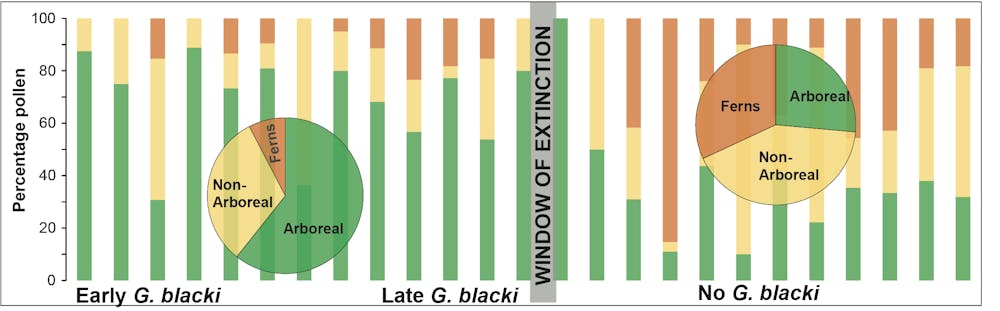 Pollen records from caves in the region showing the change in plant communities over time.
Nature
Pollen records from caves in the region showing the change in plant communities over time.
Nature
Failure to adapt
As a direct consequence, G. blacki numbers dwindled as the species was placed under increasing environmental stress.
It would seem that by having such specific food and habitat preferences, G. blacki was vulnerable to environmental and habitat changes. Its size and choice of food hampered its adaptation compared to more agile and mobile species like orangutans.
The story of G. blacki is a lesson in extinction – how some species are more equipped to survive change and others are more vulnerable. This is a lesson we must take on board with the looming threat of a sixth mass extinction event.
Trying to understand past extinctions is a good starting point to understand primate resilience. It may offer clues to the fate of other large animals, both in the past and in the future.
Read more: What is a 'mass extinction' and are we in one now?
Authors: Kira Westaway, Associate Professor, School of Natural Sciences, Macquarie University