

Thousands of visitors flock to Australia's national parks each year – and many take silly risks. How do we keep people safe?
- Written by: Samuel Cornell, PhD Candidate, School of Population Health, UNSW Sydney
A man was airlifted to hospital last weekend after falling ten metres from a waterfall in Queensland’s Tamborine National Park, which was closed to due to storms. And last month, a major safety operation was launched to rescue nine bushwalkers in Wollemi National Park near Sydney after one walker fell from a cliff and suffered a head injury.
These are just the latest in a string of recent incidents that underscore the potential dangers of visiting Australia’s national parks. Visitor numbers to national parks are increasing. This is partly due to the provision of roads, boardwalks and other infrastructure which have greatly improved accessibility. People can now reach locations that, in many cases, would previously have required more competence, care, and skill to get to.
It means masses of people are being funnelled into potentially dangerous locations for which they may be unprepared. This poses risks to human life and safety, and places a heavy burden on already stretched emergency services called to conduct rescues and retrieve bodies.
An urgent rethink is needed into how we invite and prepare visitors to interact responsibly with these natural environments.
Visit, but be prepared
National parks need people. Visitors to national parks are vital to maintaining community, political and financial support for their existence. And increasing visitor numbers in national parks means more people can experience the physical and mental health benefits of spending time in nature.
Australia’s national parks are generally very accessible. In some popular locations, visitors can drive right up to a site and explore it via a highly engineered boardwalk. At lookouts, visitors are often protected by barriers and warning signs.
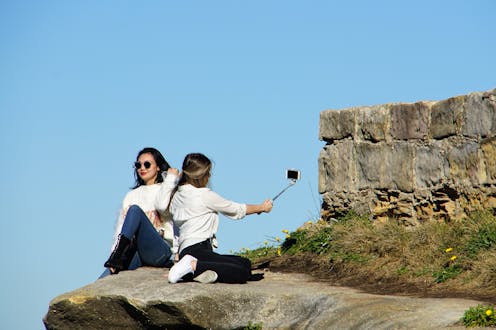
Social media platforms such as Instagram and TikTok play a role in promoting national parks as accessible destinations. In Victoria, national parks authorities have suggested unprepared visitors are taking unnecessary risks in a bid to capture social media images, forcing emergency services to undertake dangerous rescues.
Parks authorities themselves use social media to promote access to picturesque places, but increasingly do so with safety in mind.
Read more: Using social media for your holiday 'inspo' can be risky and even dangerous – here's why
Safety first? Not always
As visitor numbers to national parks increases, so too do the numbers of safety incidents.
In Western Australia, an average of 77 incidents per year occurred between 2011 and 2017. Most were falls or water-related, such as drowning.
And in Victoria in the five years to 2020, the State Emergency Service reportedly conducted 365 “high-angle rescues” – complex operations in high, steep locations.
Many incidents in national parks happen repeatedly at the same place. The latest incident at Cedar Creek Falls comes after a teenager drowned there in 2021. At the Babinda Boulders in Far North Queensland, 21 drownings have reportedly been recorded. This suggests current mechanisms for enhancing safety or communicating risk at known hazardous locations aren’t working.
It also stands to reason that the infrastructure we build to attract people to national parks, and to guide them and keep them safe, may be propelling them into risky situations.
Read more: Stick to the path, and stay alive in national parks this summer
Rethinking access to the wild
So how best do we prevent deaths and injuries in national parks, while still encouraging people to venture into the outdoors?
Many people do not believe national parks are inherently dangerous places to visit. But erecting warning signs to alert them to the risks is not necessarily the answer.
One study focused on beaches in Victoria showed less than half of visitors even saw the signs. The answer is not to plaster an area with signs, either: an overabundance of safety messages can create “information overload” and means people are likely to ignore them.
However, there is research to suggest signs warning people of legal consequences or fines, rather than risks to their personal safety, may be more effective at ensuring safe behaviour.
Well-designed infrastructure in national parks can enhance the visitor experience, and protect the environment by directing people away from sensitive areas. But parks authorities should consider whether some infrastructure is encouraging people into dangerous situations, and whether certain areas should be closed off to the the public entirely.
Authorities could devise online training programs that teach people key outdoors skills, such as basic first aid and what to do if they get lost.
Finally, all this raises important questions around personal responsibility. Research conducted at four national parks in Western Australia showed many people viewed safety as a shared responsibility between visitors and parks management – but when things go wrong, place the blame on parks management. The same research showed parks visitors can be reluctant to accept the shift of responsibility back onto themselves.
Studies are needed to determine if encouraging visitors to take more responsibility for their actions would lead to fewer safety incidents – and if so, how best to get people to adopt this attitude shift.
Recent tragedies in our national parks highlight the crucial need to reevaluate visitor management strategies. National parks are a public good – and we need to make sure they stay that way.
Read more: Trampling plants, damaging rock art, risking your life: taking selfies in nature has a cost
Authors: Samuel Cornell, PhD Candidate, School of Population Health, UNSW Sydney


















