We can't rely on the 'dogs breakfast' of disaster warnings to do the hard work of building community resilience
- Written by Brian Robert Cook, Associate Professor of Geography, The University of Melbourne
In the wake of cyclone Jasper, the new Australian Warning System has been roundly criticised. The system has been characterised as a “dog’s breakfast” and a “cock-up of massive proportions”.
For both emergency warnings, as well as for general awareness-raising around disaster preparedness, one-way communications are the default in risk management.
This reliance on communications is wishful thinking.
Whether as text messages and alerts when disasters strike, or as pamphlets and expert advice to encourage preparedness, we need to rethink how we use communications if we want more resilient communities.
Warnings reflect unreasonable expectations
As noted by Australians in the aftermath of cyclone Jasper and the Maribyrnong floods, the advice in warnings is often perceived to be incorrect, late, vague, and confusing.
Rather than an error that can be fixed with better content, this reflects unreasonable expectations.
We expect a warning to be sufficiently abstract to be useful across large regions and for many people with varying levels of exposure and capacity.
At the same time, we also expect information specific enough for stressed and possibly traumatised individuals to implement in life-threatening situations.
In response to recommendations from numerous inquiries, authorities have applied standards and terminology to ensure consistency. While this sounds reasonable, it means that future warnings will continue to be ineffective.
It is worth repeating that risks are dynamic and personal. Communications useful to a young, well-connected longtime resident will be received very differently by a middle aged, isolated, “tree change” individual who has grown up in urban areas.
That a generic warning is unable to satisfy the needs of diverse individuals, experiencing varying levels of hazard, spread over large areas, and over time is unsurprising. What is surprising is the belief that “better warnings” will.
Repeating the same mistakes
Warnings and awareness raising for disaster preparedness reflect how the risk sector relies on communications to “engage” the public. This is based on a discredited approach that assumes communications can prompt targeted, lasting behaviour change.
The development of the Australian Warning System reflects this reliance. It is a position reaffirmed in the reports, commissions, and inquiries that have followed recent Australian disasters.
For example, in the 2020 Royal Commission into National Natural Disaster Arrangements, a whole chapter is dedicated to “Emergency Information and Warnings”.
Read more: Disastrous floods in WA – why were we not prepared?
Similarly, one focus of the ongoing inquiry into the 2022 Victorian floods is on the “adequacy and effectiveness of early warning systems”. As it was for the 2011 Comrie Review, communications go unquestioned as the primary way to engage the public.
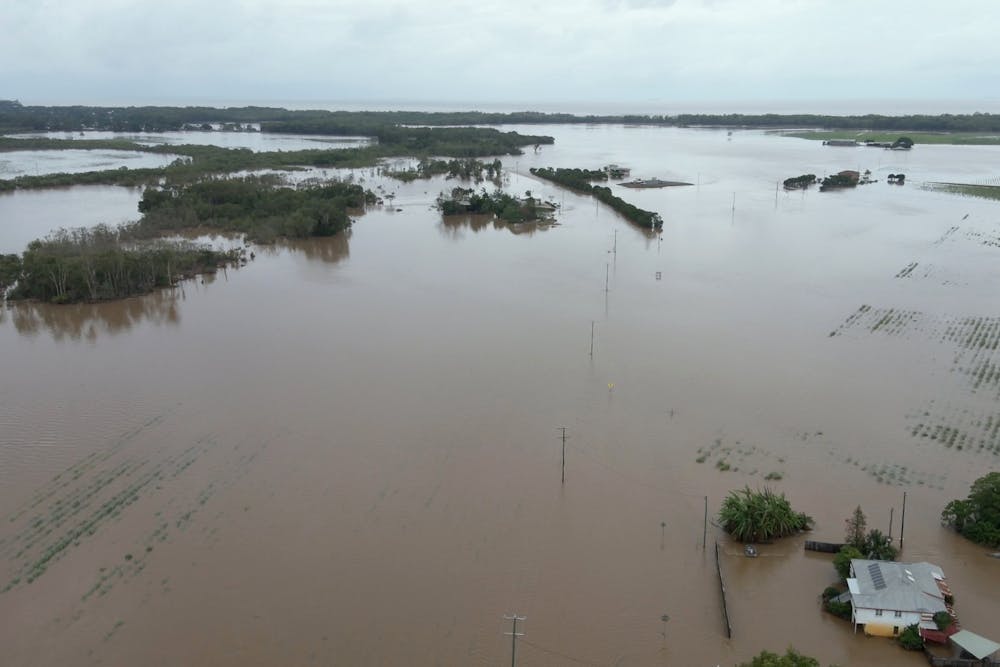
Frustration with repeated failure is becoming evident as successive commissions and inquiries hear the echoes of past efforts. The NSW 2022 flood inquiry stands out for its blunt recognition that Australians appear to be locked in a cycle. Disasters expose systemic failings that result in recommendations that go unimplemented. The report read:
The Inquiry heard a deep sense of frustration from many flood-affected residents and community members over a lack of implementation and change over time, despite multiple previous reviews. Many were sceptical that this Inquiry would succeed in effecting significant change. Similar findings on implementation (or lack thereof) were made in the 2020 NSW Independent Bushfire Inquiry, which recommended that a central accountability mechanism be established to track implementation of the report.
But what is missed in all of these reviews is a critical examination of our tendency to default to communications.
The cost of being reactive
Part of the problem with our reliance on communications is that, in the case of warnings, by the time they arrive we are reacting to an unfolding crisis, rather than preparing for one. This raises the costs significantly.
The resulting costs of disasters, currently $38 billion annually, are expected to rise to between $73 and $94 billion annually by 2060, according to a Deloitte report. The report argued:
The Australian economy is facing $1.2 trillion in cumulative costs of natural disasters over the next 40 years even under a low emissions scenario. This shows there is the potential for large economic gains from investments to improve Australia’s resilience to natural disasters. Targeted investments in both physical (such as infrastructure) and community (such as preparedness programs) resilience measures are predicted to significantly reduce the increasing costs of natural disasters
Disaster costs are an unavoidably shared burden. Whether in the form of disaster response, relief, and recovery or in the form of investment in preparedness, public funds will inevitably be required in ever-larger amounts.
This situation results in astronomical expenditures during events and, later, “pinching pennies” for preparedness. This bias towards response and recovery over preparedness is known, made all the more frustrating because preparedness is shown to be cost-effective.
So what should happen instead?
Communications do not create community resilience, they activate it.
Our recent research shows that, rather than communications, we need to engage meaningfully with communities. This means respecting their positions and values and appreciating that resilience is a long, slow, collaborative process that requires humility, active listening, experience, reflection, and support.
Our research shows that by conducting one-on-one engagement with members of the community, we can better understand their circumstances and support their agency. This has helped people as they learn about risk. They’ve shared lessons with their neighbours and helped family members to better protect themselves. This means we’re seeing knowledge and risk mitigation circulate through communities.
This way of partnering takes time and takes work, but it opens pathways for the learning and behaviour changes that help our communities expand their resilience. While it is expensive, the predicted costs of disasters more than justify such efforts.
As parts of Queensland and Victoria continue to be battered by disasters, it is time to admit that communications alone do not build resilience. They play an important role, but they are only one element of what needs to be a long-term partnership.
Rather than scooping the “dog’s breakfast” back into the bowl, we need to consider the underlying causes of the mess. With resilience, Australians will be ready and able to share in the growing burden of risk management.
Authors: Brian Robert Cook, Associate Professor of Geography, The University of Melbourne