

streaming giants are failing to educate the young about waste recycling. Here's why it matters
- Written by: Salman Shooshtarian, Senior Lecturer, School of Property, Construction and Project Management, RMIT University
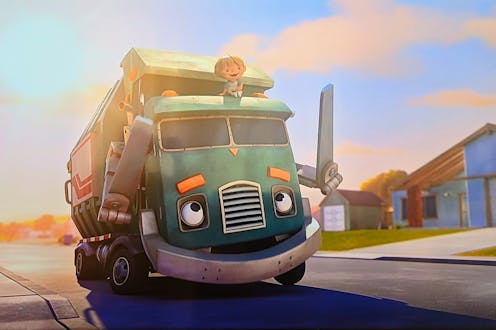
As a new parent, I’ve had the joy of watching animated cartoons with my two-year-old son. His favourite show is Trash Truck, on Netflix, featuring a tight-knit ensemble of five characters: a trash truck, a young boy, a raccoon, a bear and a mouse. The show offers valuable life lessons, emphasising the importance of friendship, sharing, love for animals and respect for parents.
But there’s a problem. The way it portrays the collection of waste grabbed my attention. It’s simply a matter of gathering mixed waste from bins and depositing it in a landfill. There’s no sign of any process for sorting or recycling waste.
This left me pondering why a charming cartoon series with a global audience, capable of educating the future generation about waste recovery, lacks such relevant educational content.
I’m a researcher who has studied waste management for the past six years. I decided to analyse similar series such as The Stinky and Dirty Show (Amazon Prime), BabyBus (YouTube) and Frank the Garbage Truck (YouTube). A clear pattern emerged – all show waste simply being dumped.
To make it clear, in one episode of BabyBus, a song goes:
[Garbage truck sings] Garbage truck yeah yeah, looking for garbage here and there […] I have a long arm yeah yeah, look what I can do. […] [Two paper coke cups sing] Big tummy, no no no, it is going to eat me, the trash can is shaking shaking, I don’t want to go […] [Garbage truck sings] Now off to the dump […] [Discarded apple sings] No I don’t want to go to the dump […] [Garbage truck sings] Dirty trash bye bye, smelly trash bye bye.
This episode dropped four years ago on YouTube. It has hit a whopping 109 million views. That shows how powerful these platforms are for reaching people.
In BabyBus it’s all about “dumping trash” with no mention of sorting or recycling.Read more: Households find low-waste living challenging. Here's what needs to change
Why does waste education matter?
Many nations have hastily adopted various strategies and developed policies to tackle the ever-growing issue of waste. In particular, scientific literature informing these strategies and policies highlights education as an effective and sustainable solution.
The findings from our multiple research projects reinforce this fact. For instance, we found “poor culture and education” is one of the top three barriers to sustainably managing construction and demolition waste and treating it as a resource. In a later study, we identified education as a priority to enable development of markets for recycled construction waste materials. Most recently, we found “education, investigation and demonstration activities” are the main strategy for optimising use of recycled materials in the building and construction sector.
Screen time can be learning time
The United Nations Sustainable Development Goals emphasise the crucial role of children in achieving these global objectives. Its 2030 Agenda for Sustainable Development describes children as:
critical agents of change […] [who] will find in the new goals a platform to channel their infinite capacities for activism into the creation of a better world.
We have seen a big increase in waste education for children such as recycling programs at schools in recent years. But according to Bronfenbrenner’s ecological systems theory of human development, the primary environmental influence on children occurs within their homes. A large part of a child’s time is spent at home where they often have uninterrupted access to multimedia content.
Recent research indicates screen time for children has surged particularly during and after COVID-19. While this trend may not be ideal, we can harness it for shaping the mindset of the next generation. In particular, it’s an opportunity to promote environmental sustainability.
The United States’ National Association for the Education of Young Children suggests multimedia learning, when used appropriately, helps children understand complicated topics while also providing positive engagement and enjoyment.
Read more: Forget old screen 'time' rules during coronavirus. Here's what you should focus on instead
The power and responsibilities of streaming media
Online video streaming has transformed the media landscape and viewing habits worldwide. The swift expansion of internet usage, the ubiquity of mobile devices and the surging demand for online video content have driven this change.
The global video streaming market has grown remarkably over the past ten years. By 2022, estimated annual revenue from streaming TV and video hit US$154 billion.
Waste is everyone’s responsibility, as outlined in many waste management initiatives and activities around the world.
Read more: We can't keep putting apartment residents' waste in the too hard basket
With a global total of 1.2 billion viewers, giant streaming media companies such as Netflix (247.2 million paid subscribers, Amazon Prime Video (200 million paid subscribers) and Disney+ (150 million paid subscribers have a key role to play in educating the next generation. In particular, their animated cartoon series can influence the next generation’s attitude and behaviour.
Given its impact on the young, the global entertainment industry needs to be held accountable to ensure it portrays current knowledge about how we manage pressing issues such as waste.
Authors: Salman Shooshtarian, Senior Lecturer, School of Property, Construction and Project Management, RMIT University


















