

There are 4 economic scenarios for the rest of the decade: I’ve reluctantly picked one
- Written by: Percy Allan, Professor, Institute for Public Policy and Governance, University of Technology Sydney
In January a year ago, two-thirds of the leading economists surveyed by the World Economic Forum forecast a global recession for 2023.
We didn’t get one. This year at the forum they are talking about a soft landing in 2024, notwithstanding financial conditions the US Federal Reserve says have been the tightest since the 2008 global financial crisis.
There are reasons to think that this time, for this year, they are right.
Global inflation has been falling (especially for goods, but soon for services as labour markets weaken). This means interest rates are likely to have peaked. While short-term cash rates will remain high until inflation is clearly heading back to target bands, longer-term bond rates should turn down as economies slow.
4 scenarios for the rest of the 2020s
But what about the rest of the decade?
Few economists are prepared to venture forecasts beyond 2024. Having gotten 2023 very wrong a mere year ago, that’s understandable.
But it is still worth considering each of the likely scenarios for the rest of this decade, because our prosperity and equity will depend on how the exit from the COVID pandemic plays out.
As I see it, there are four competing storylines: reflation, stagnation, stagflation and rejuvenation. I’ll outline the case for each, and then the one I’ve reluctantly come to believe is the most likely.
Scenario 1: reflation
Portfolio managers Alex Stiles and Steve Becker of Goldman Sachs developed the concept of “secular reflation” back in 2017.
It is characterised by high investment and low savings, and as a result, high growth and inflation.
Strategist Gerard Minack sees a surge of investment in Australia and elsewhere driven by a new focus on resilience in place of efficiency.
This would mean onshoring (making goods at home), friendshoring (obtaining goods from politically aligned nations) and higher inventories to insure against shortages.
As well, governments would spend more on defence, climate mitigation and public infrastructure at the same time as the private sector spends more on capital equipment to cope with tight labour markets.
Minack says it should all work to reverse what’s been a long-term trend from the 1970s right through to the 2008 global financial crisis – declining investment as a share of gross domestic product in developed economies.
Scenario 2: stagnation
The contrary view is that we will get a return of the “secular stagnation” we had before COVID – it’s a mix of high savings, low investment, low growth and low inflation.
Olivier Blanchard, a former International Monetary Fund chief economist, and Lance Roberts, chief strategist for US investment adviser Real Investment Advice, are among those expecting this sluggish outcome, for several reasons.
One reason is a set of ageing populations, which are likely to become more risk-averse, and so more likely to save.
Another is that private investment is likely to be crowded out by bigger government investment and increased government regulation and higher taxes and industry protection as part of a de-risking of supply lines.
As well, governments themselves are likely to be less keen on GDP growth, being weighed down by debt and preferring to focus on national security at the expense of dynamism.
Central banks might try to help by resuming quantitative easing (“printing money” by buying government bonds) in order to suppress interest rates and make government borrowing affordable.
But the conservatism of ageing populations means low rates are more likely to encourage asset speculation than productive investment.
Technological progress is unlikely to turbo-charge growth any more than the internet and the smartphone did.
Inflation will be restrained because wages will continue to grow slowly.
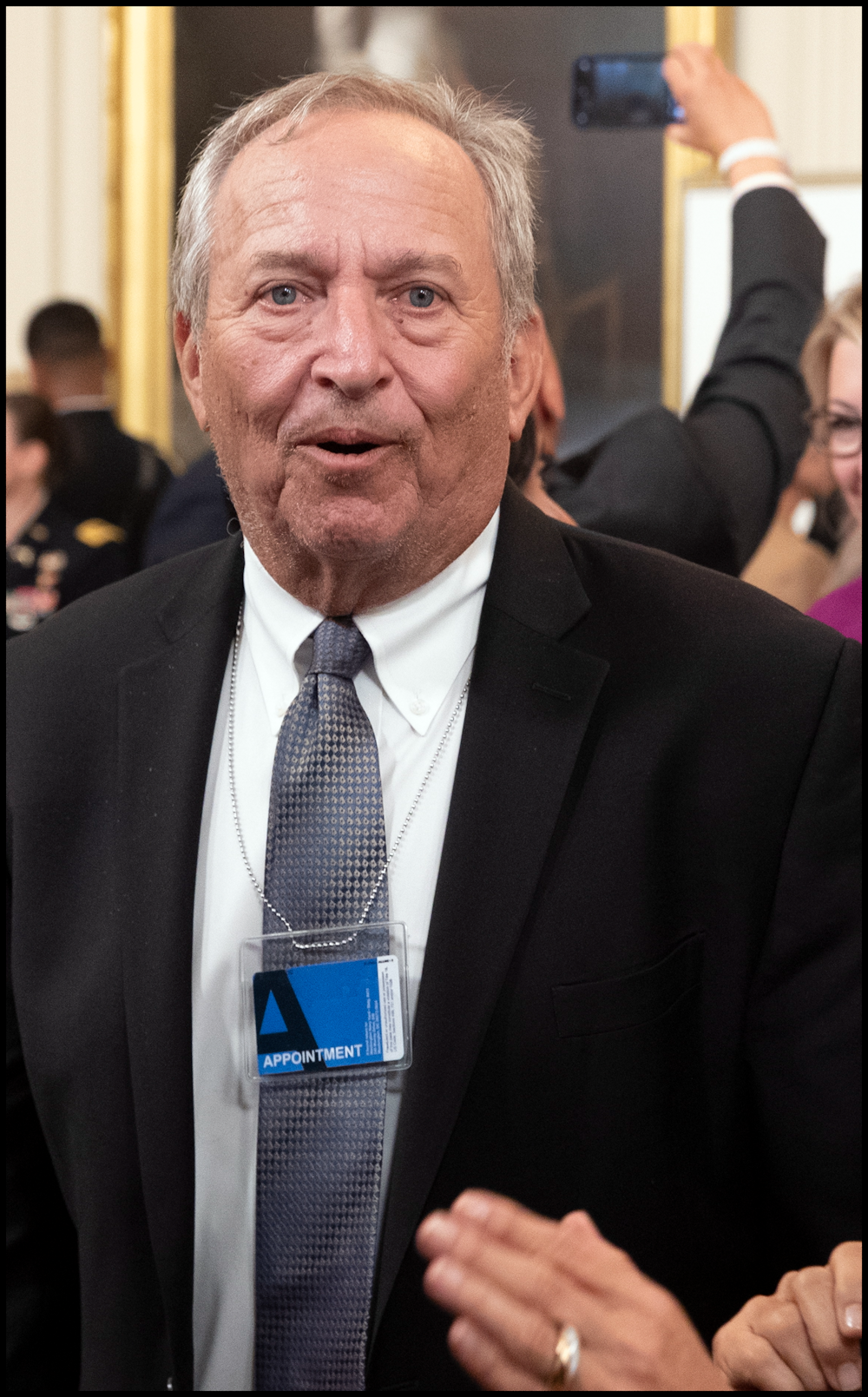
Former US treasury secretary Larry Summers was the first to describe the period before COVID as one of “secular stagnation” marked by a glut of savings and a dearth of investment. But in late 2022 he told the American Economic Association he did not expect a return to secular stagnation.
Summers now sees inflation rather than deflation.
Scenario 3: stagflation
The Summers view is that after an economic slowdown in 2024, which will temporarily tame inflation, stagflation will emerge with low savings, low investment, low growth and high inflation.
The World Bank puts forward this thesis in its June 2023 Global Economic Prospects Report, as does Colin Twiggs, editor of the Patient Investor.
Economic growth would be subdued for the same reasons as in the stagnation scenario, but it would be coupled with high inflation as the world deglobalises and decouples from “cheap China” and finds it needs to spend increasing amounts shifting from polluting fossil fuels to renewable energy.
Inflation is also likely to be driven by increasing worker shortages as baby boomers retire, voters turn against high immigration and employment regulations are tightened to give workers a better work-life balance.
As in the stagnation scenario, central banks will turn to quantitative easing to help governments fund bigger deficits and debt, but it will be inflationary.
Scenario 4: rejuvenation
The best of all worlds – the Goldilocks outcome – is rejuvenation, in which high savings and high investment produce robust growth and low inflation.
Micro-economic reforms in the fields of taxation, labour markets and regulations would boost productivity and enable both real wages and profits to climb while also generating enough tax revenue to meet social goals.
The renewables transition would cut the cost of energy, and artificial intelligence would supercharge knowledge work in the same way as automation overhauled manual work. Higher interest rates would keep inflation in check.
Politically, Washington and Beijing would reach a détente whereby they focused on economic co-operation rather than military conflict.
The focus of leaders would return to striving for economic efficiency through the use of global markets rather than aiming for self-sufficiency.
Reluctantly, the one I am picking is….
Which scenario is most likely to emerge in advanced economies post-2024?
I am afraid I think it is the second scenario, stagnation. It seems likely to me that the supply disruptions and economic stimulus of the pandemic interrupted rather than ended the low-inflation stagnant growth we had before COVID.
Continued low investment and low productivity growth will retard economic growth while re-globalisation (resuming cheap imports from China as well as alternative locations) and high immigration will contain inflation.
Official interest rates might be in the 2% to 4% range rather than the 0% to 2% we became used to before COVID because central banks will be less inclined to fund government deficits by buying bonds.
This would be a gloomy outcome because it would favour speculation over productive investment and set the scene for stagnant wages, which would in turn help build inequality and polarised politics. I hope I’m proved wrong.
Authors: Percy Allan, Professor, Institute for Public Policy and Governance, University of Technology Sydney


















