Extreme heat can be risky during pregnancy. How to you look after yourself and your baby
- Written by Adrienne Gordon, Neonatal Staff Specialist, NHMRC Early Career Research Fellow, University of Sydney
As we face the continued effects of climate change, the frequency and intensity of heatwaves is increasing. We’ve recently learnt 2023 was the hottest year on record.
Extreme heat presents a major public health threat. It can be especially dangerous for people who are socioeconomically disadvantaged, and people who have reduced physiological ability to adapt, such as older adults and those with certain medical conditions.
Pregnant people are also more vulnerable, with evidence showing exposure to extreme heat is associated with increased risks for the baby.
Read more: Health Check: can stress during pregnancy harm my baby?
What are the risks?
Globally one stillbirth occurs every 16 seconds and 15 million babies are born preterm (before 37 complete weeks of pregnancy) every year. Complications of preterm birth are the leading cause of death and disability for children aged under five years old.
A systematic review which included studies from 27 countries showed that for every 1˚C increase in ambient (environmental) temperature, the risk for preterm birth and stillbirth increased by 5%.
The risk of stillbirth and preterm birth attributed to heat is greater in lower- and middle-income countries where women are often employed in agriculture or other manual labour positions, and their work continues until the end of their pregnancy.
Within high-income countries the risk is greater in disadvantaged populations.
Recent Australian research has also suggested a mother’s exposure to extreme temperatures may influence a baby’s birth weight.
Read more: 5 expert tips on how to look after your baby in a heatwave
Pregnant people are thought to be at increased risk of heat stress due to changes in their body’s capacity to regulate temperature. These changes include:
increased body mass and body fat which reduces a pregnant woman’s ability to dissipate heat to the environment
decreased ratio of surface area to body mass can make sweating less effective
additional energy produced from the baby increases the mother’s core body temperature.
The effects on the body and baby
When the ambient environment is hotter than the pregnant woman’s core body temperature (that is when the air temperature reaches around 38 degrees or above) blood flow is diverted to the skin to allow sweating. This can decrease blood flow to the placenta, meaning less nutrition and oxygen to the baby.
If dehydration occurs, hormonal changes can include the release of prostaglandin and oxytocin, potentially triggering labour prematurely.
Heat exposure can also release heat-shock protein (a family of proteins produced by cells secondary to stressful conditions) which can damage placental cells and placental function. This can contribute to poor fetal nutrition, leading to low birth weight.
However, actual thermo-physiological data from pregnant women during heat exposure is sparse. Our recent review showed no study has assessed thermoregulatory function in pregnant women at temperatures higher than 25˚C.
Our subsequent climate chamber study with pregnant women showed their bodies regulate temperature up to 32˚C as well as non-pregnant women.
 Dipping your feet into a cool pool can help you and your baby cool off.
Tanya Yatsenko/Shutterstock
Dipping your feet into a cool pool can help you and your baby cool off.
Tanya Yatsenko/Shutterstock
Read more: Don’t like drinking plain water? 10 healthy ideas for staying hydrated this summer
5 ways to beat the heat while pregnant
Evidence of the effectiveness of interventions that address acute heat exposure during pregnancy specifically are limited. Air-conditioning is exceptionally protective, however it is unaffordable for many in Australia and globally.
More evidence of the effect of extreme heat on pregnancy outcomes at a population level in both low and high income countries will help us develop ways to protect pregnant people and the community.
In the meantime, with the threat of more very hot summer days, simple strategies to beat the heat when pregnant include:
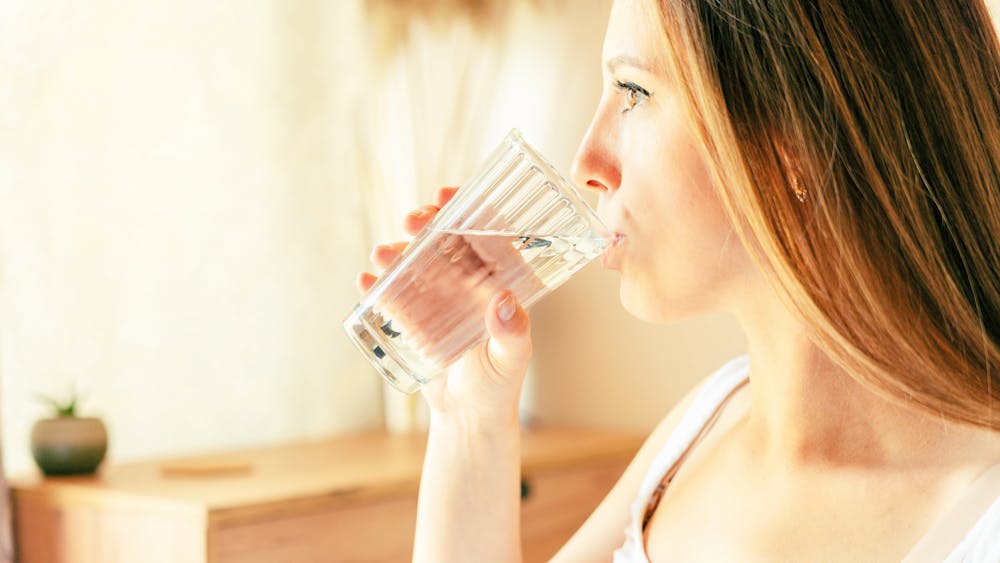
1) Drink enough water – take a water bottle with you when out and about
2) Plan your day – avoid the hottest part of the day if you can. Take a hat or umbrella with you for shade
3) Stay cool – use fans or air-conditioning if possible, close blinds and curtains, visit a cooled public environment
4) Dress down – wear lightweight, long-sleeved, light-coloured, loose-fitting clothes made from natural fibres, such as cotton or linen
5) Go to sleep on your side – at night and for daytime naps to allow the best blood flow to the baby.
These strategies need to be adapted to personal circumstances, and of course seek medical advice if you feel unwell. Signs of heat exhaustion that can lead to heat stroke if not treated early include:
- sweating and pale, cool, damp skin
- dizziness and weakness
- a headache
- nausea or vomiting
- a rapid pulse and fast, shallow breathing
- muscle cramps
- fainting
- feeling restless and anxious
- heat rash.
Read more: It's extremely hot and I'm feeling weak and dizzy. Could I have heat stroke?
If you have these symptoms, find a cool place to rest, drink cool water or a rehydration drink, remove excess clothing, have a cool shower or bath, or sit for a while with your feet in cool water.
More severe symptoms indicating heatstroke include intense thirst, slurred speech, lack of coordination or confusion, and aggressive or strange behaviour. Heatstroke is a medical emergency, so call triple 0.
Read more: Five ways to reduce the risk of stillbirth
Authors: Adrienne Gordon, Neonatal Staff Specialist, NHMRC Early Career Research Fellow, University of Sydney