5 questions your child’s school should be able to answer about bullying
- Written by Nina Van Dyke, Principal Research Fellow and Associate Director, Mitchell Institute, Victoria University
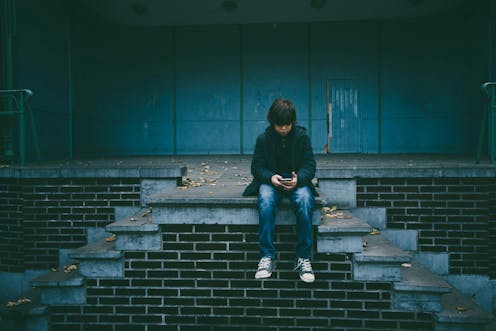
As children return to classrooms for 2024, school communities will be confronting bullying in person and via technology.
In-person bullying and cyberbullying affect significant numbers of children and young people in Australia and around the world.
The eSafety Commission recently revealed a 40% jump in cyberbullying reports. In 2023, it received 2,383 reports of cyberbullying compared with 1,700 in 2022. Two-thirds (67%) of reports concerned children aged 12–15 years.
A 2019 headspace survey found 53% of young Australians aged 12–25 have experienced cyberbullying.
A 2016 survey of 12- and 13-year-olds found seven in ten children had experienced at least one bullying-like behaviour within the past year.
Schools have a responsibility to provide a safe learning environment. As part of our work on bullying, we have identified five key ways schools can prevent and respond to bullying.
What is bullying?
In-person bullying is unwanted, negative and aggressive behaviour. It is done on purpose and done repeatedly, and can cause physical, emotional or social harm.
As the eSafety Commission explains, cyberbullying occurs
when someone uses the internet to be mean to a child or young person so they feel bad or upset.
It can happen on a social media site, game or app. It can include comments, messages, images, videos and emails.
There is a lot of overlap between the two types of bullying. Those who bully or are bullied in person also tend to bully or be bullied online, and vice versa.
In any kind of bullying, the person doing the bullying has – or is perceived to have – more power than the person being bullied.
Read more: Our new study provides a potential breakthrough on school bullying
What do schools need to do?
As the Australian Human Rights Commission notes, bullying is an abuse of individuals’ human rights. It says schools have a responsibility to provide a safe learning environment free from violence, harassment and bullying. This protects the right to education.
Approaches vary between jurisdictions and school systems. In Victoria, for example, government schools need to have bullying prevention policies. In New South Wales, government schools need to have an “anti-bullying plan”.
But while schools often have bullying policies, they need comprehensive systems to be adequately prepared.
Read more: Why do kids bully? And what can parents do about it?
Our research
Our work has examined what schools should do to be prepared to prevent and respond to bullying. As part of this, we spoke to five principals and teachers at five Victorian schools in 2022.
This highlighted the ongoing and complex nature of the challenges schools face. For example, they told us how COVID set back responses to cyberbullying. As one high school principal told us:
We had a lot of online bullying going on […] a lot of nasty stuff happening online, a lot of sexting and a lot of horrible comments […] We nearly got it wiped out and then COVID hit and we then went back to having kids on computers all day, every day, so I think that’s back in a big way.
Technological change also means new challenges keep emerging. As a primary school teacher said:
[students are now] getting Apple Watches and so we’re having to rewrite policy to deal with that.
What should schools do to be prepared?
We have also reviewed Australian and international evidence on bullying. Here we distil this work into five key questions to ask your child’s school.
1. Do they have good data? The school should regularly collect, review and act on data about social relationships in the school community. These should include levels of trust, support, empathy and kindness between students and between students and teachers/staff. This tells the school whether students feel safe and supported to raise social problems if they arise.
2. Do they seek students’ ideas? The school should ask students how the school can better prevent and respond to bullying. It should also consider and act on these suggestions. Actively involving children and young people in issues that concern them is a basic human right. It also results in policies and practices that are more likely to be appropriate for them.
3. Do people know about “gateway behaviours”? All school staff and students should be trained to identify and immediately report “gateway behaviours”. Examples include posting embarrassing photos online, ignoring particular students, name-calling, whispering about people in front of them, and eye-rolling. Gateway behaviours are not in and of themselves considered bullying, but when left unchecked, can escalate into bullying.
4. Do students think bullying is being reported? The school should also ask students whether they believe students and staff report all or almost all bullying they observe. It is also important to know whether students think reporting will remain anonymous and be acted on and positively resolved. This indicates whether students believe the school takes bullying seriously and feel empowered to come forward if they need to.
5. Does the school have “safety and comfort plans”? These are created for specific students immediately after they are identified as having been a victim of bullying. They should be designed by the student and a staff member together. This is to ensure they feel comforted and safe at school.
We know bullying can have devastating physical and psychological impacts on children. It can lead to issues including school refusal, poor self-esteem and poor mental health. This is why it is so important schools are properly equipped to not just handle incidents of bullying when they arise, but try and prevent them in the first place.
If this article has raised issues for you, or if you’re concerned about someone you know, call Lifeline on 13 11 14, Kids Helpline on 1800 55 1800 or contact headspace.
Authors: Nina Van Dyke, Principal Research Fellow and Associate Director, Mitchell Institute, Victoria University