

Digital technologies have the made the wonders of ancient manuscripts more accessible than ever, but there are risks and losses too
- Written by Jonathan L. Zecher, Research fellow, Australian Catholic University

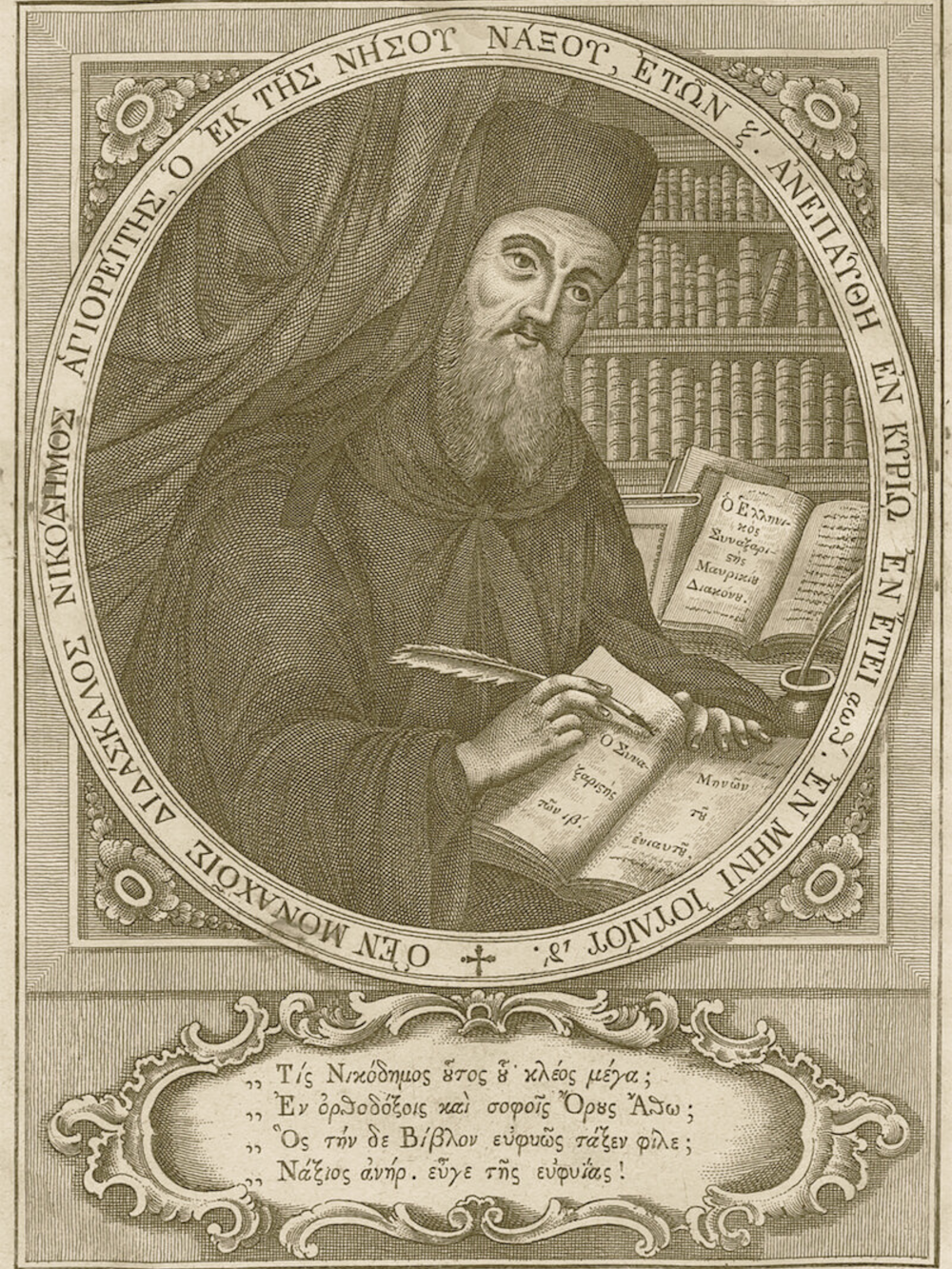
Near the end of the 18th century, a Greek monk named Nikodemos was putting together a massive anthology of Byzantine texts on prayer and spirituality, which he would call The Philokalia.
He lamented the state of learning among his fellow monks, because they did not have access to the texts of their tradition:
Because of their great antiquity and their scarcity – not to mention the fact that they have never yet been printed – they have all but vanished. And even if some few have somehow survived, they are moth-eaten and in a state of decay, and remembered about as well as if they had never existed.
Nikodemos hoped to correct this by collecting and printing texts that would otherwise fall to dust. By making the manuscripts into a book, he would preserve the knowledge they contained – but not the manuscript, not the artefact itself.
He does not mention how difficult his Byzantine manuscripts were to read and transcribe, even for someone familiar with the language. Copying by hand takes dozens, even hundreds of hours of intensive labour. Reading them means learning to decode scribes’ handwriting, abbreviations and shorthand.
Every manuscript, with its errors, notes and doodles – not to mention its artistry, images, and ornamentation – remains a unique artefact. The evanescent beauty of manuscripts is lost in their printed analogue. Every manuscript is its own text, its own space of knowledge, and an irreplaceable part of our shared cultural histories.
Preserving the Past
Nikodemos was struggling with the perennial dilemma faced by historians and archivists. Our knowledge of the past, and the wisdom we can gain from it, is bound in material objects – whether manuscripts, paintings, ruined buildings or clay pots – that are decaying.
Decay presents three challenges. What will we preserve of the past? How should we preserve it? And how do we ensure its accessibility?
The scarcity and obscurity of ancient and medieval manuscripts are among the biggest obstacles to understanding both the texts they contain and the lives of those who wrote them.
Few copies might ever have been made of a given text. We are lucky if we can now read a text in 50 manuscripts. Some survive in only one.
But the biggest problems are time and the elements. Medieval manuscripts are usually made of parchment and bound in leather-covered boards. The ink is usually iron gall. These are amazingly durable materials, but they have their limits.
Ink fades with exposure to light. Pages are torn or damaged by water, smoke and skin oils. The same activities that give us access to the manuscript will also slowly destroy it.
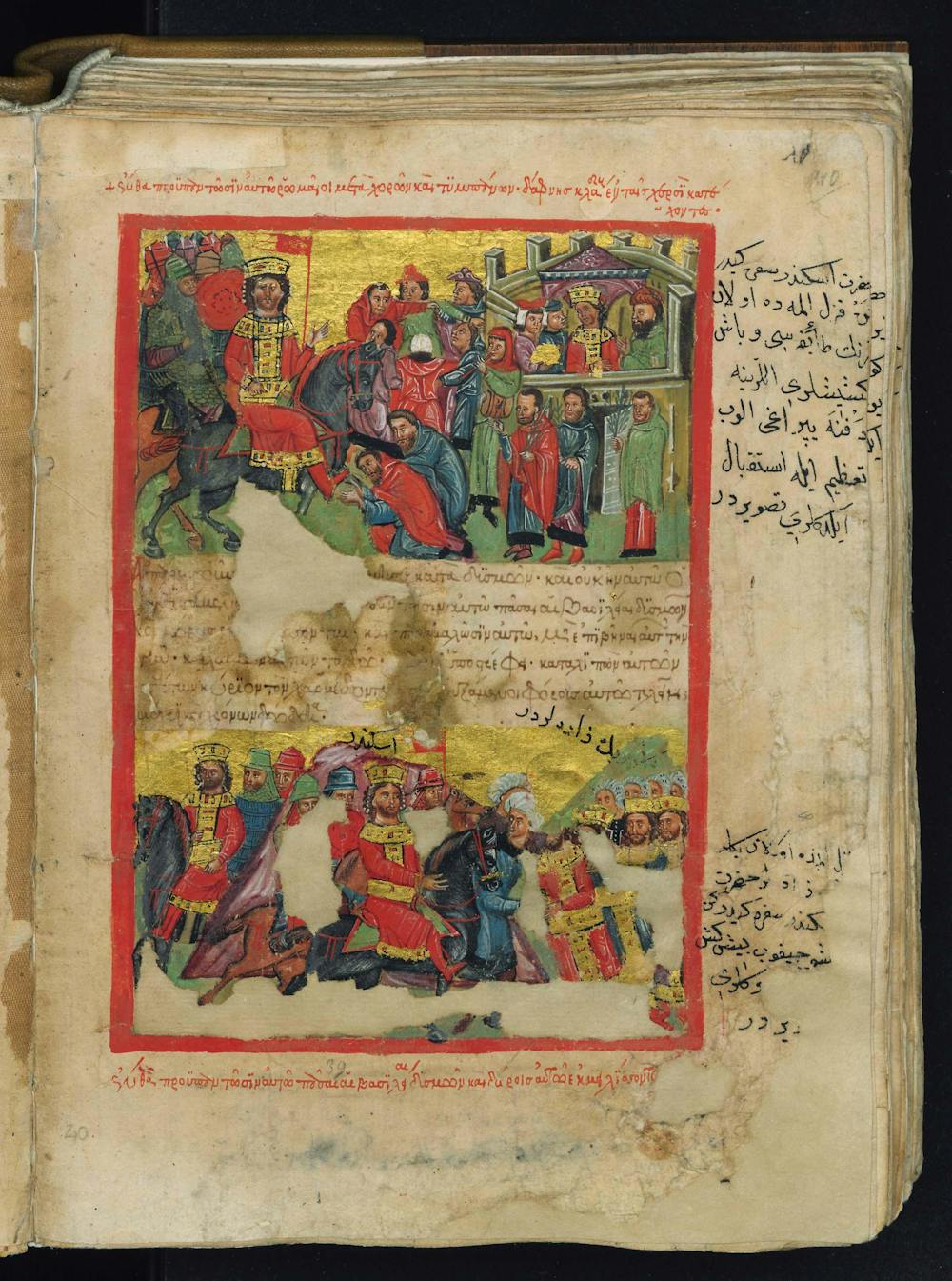 Manuscript depicting scenes from the life of Alexander the Great, late Byzantine period (1204-1453).
Public domain, via Wikimedia Commons
Manuscript depicting scenes from the life of Alexander the Great, late Byzantine period (1204-1453).
Public domain, via Wikimedia Commons
In the early modern period, antiquarians and collectors began acquiring manuscripts from monasteries and churches and putting them into libraries. Manuscript tourism became a popular activity for wealthy scholars like Sir Robert Cotton (1571-1631), whose collection became the core of the British Museum’s collection.
Of course, many of these collectors simply stole or smuggled what they wanted from struggling monasteries in what are now Greece, Sinai and Israel. Their achievements must be balanced against their participation in colonial piracy.
But their work made possible the rise of printed editions of classical and medieval works. The printing revolution promised a solution to preservation and accessibility. It accelerated distribution and made the task of reading easier by standardising printing conventions. Books could proliferate where manuscripts could not, and anyone who could read them could access that knowledge.
But the printed version rarely resembles its parchment parent. Hand-copying always introduces errors, whether accidental or intentional, and so each manuscript copy differs from the next. Printed editions must choose one form. Usually, this means choosing between readings, combining them, or correcting as the editor deems best.
Our modern editions of the Bible and the Iliad, for example, do not exactly match their underlying manuscripts. The texts represent editors’ best judgement of the originals.
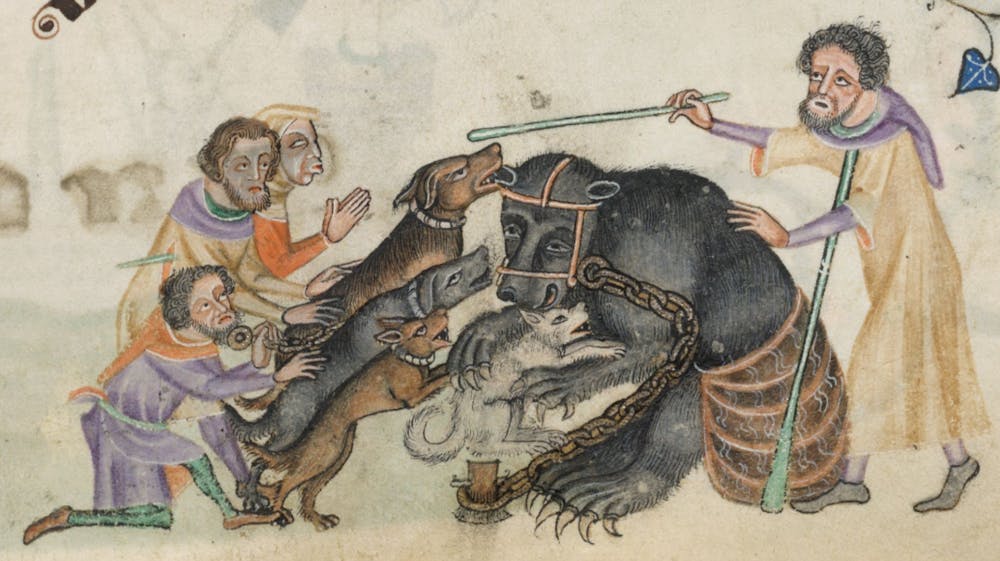 Bear baiting, marginal illustration from a 14th century manuscript.
British Library, via Wikimedia Commons, CC BY
Bear baiting, marginal illustration from a 14th century manuscript.
British Library, via Wikimedia Commons, CC BY
Read more: Dogs in the middle ages: what medieval writing tells us about our ancestors’ pets
Digital decay
Even if we prefer the edited versions, printed books decay faster than manuscripts, and take up just as much space. Print does not solve the problem of preservation; it only postpones it.
In the 20th century, digital scanning tools and computer-based storage seemed to offer a new kind of solution. Manuscripts could be scanned into high-resolution images and stored digitally. Computers promised no more deterioration and no more shelf space.
European and American libraries have invested millions in digitising their manuscript holdings. The Library of Congress, the British Library, and the Bibliothèque Nationale de France, among others, offer access to thousands of manuscripts free of charge on their websites.
The move online seems so perfect to some that the UK Ministry of Justice plans to digitise 100 million wills, and then destroy the paper originals.
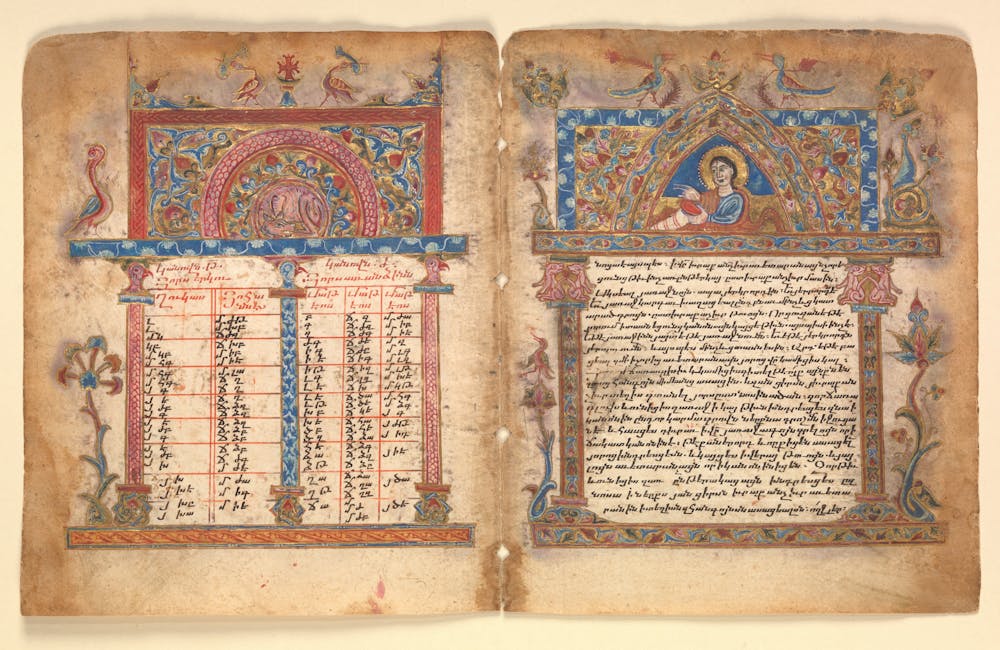 Armenian manuscript, 15th century.
Metropolitan Museum of Art, via Wikimedia Commons, CC BY
Armenian manuscript, 15th century.
Metropolitan Museum of Art, via Wikimedia Commons, CC BY
This proposed move ignores the inherent problems and vulnerabilities of digital solutions, which amount to “digital decay”.
First, the digital image is not the same as the material original. Even the finest colour images do not let a reader change the lighting to bring out different colours, or look from different angles to see faded letters more clearly. You just can’t see as much in the scan as you can on the page.
Second, digital images are often in proprietary formats, meaning that without the library’s viewing software you cannot actually examine the manuscript. Sometimes lower quality scans are available in formats like PDF and JPEG, but these are generally blurry, and even unreadable.
In some cases, images cease to be accessible because they are contained in obsolete file formats. The digital format is still chained to its digital shelves in a private space.
Third, as a recent cyber-attack on the British Library demonstrates, the digital space seems not to be safer than the physical one. On October 28, 2023, a criminal group called Rhysida unleashed ransomware in the British Library’s computer systems, stealing nearly 500,000 files.
The most worrisome thefts were of personal information that could be used for identity theft and other frauds. But the British Library website has been down since that day. Its incident report page says that it may take up to a year to restore all online operations.
That includes all of the library’s carefully digitised manuscripts, which are now unavailable. There is no sense of when we will see them again. The digital library space, with its proprietary viewing software and its specialised file formats, is now shuttered.
Conservation and accessibility
Digitising manuscripts may promise preservation and accessibility, but it does not future-proof our access to the past. Scans and websites cannot make up for losing the real thing. Yet physical conservation comes at the expense of accessibility.
We can, however, use advances in AI and computer technology to improve approaches to digital conservation and enable wider access to the uniqueness of individual manuscripts.
To avoid digital decay, we need to devote the same attention to digital conservation as to material conservation. Long term investment is needed to regularly migrate file formats to keep up with changing technologies. Ideally, these formats should be “inter-operable” – which is to say, usable across a wide range of platforms.
This would uncouple the digital objects from the proprietary viewers used by libraries now, so they can be stored and viewed anywhere, rather than only on library websites. Until that happens, each digital library space remains vulnerable to decay and even loss since, if the website is down, the viewer is down.
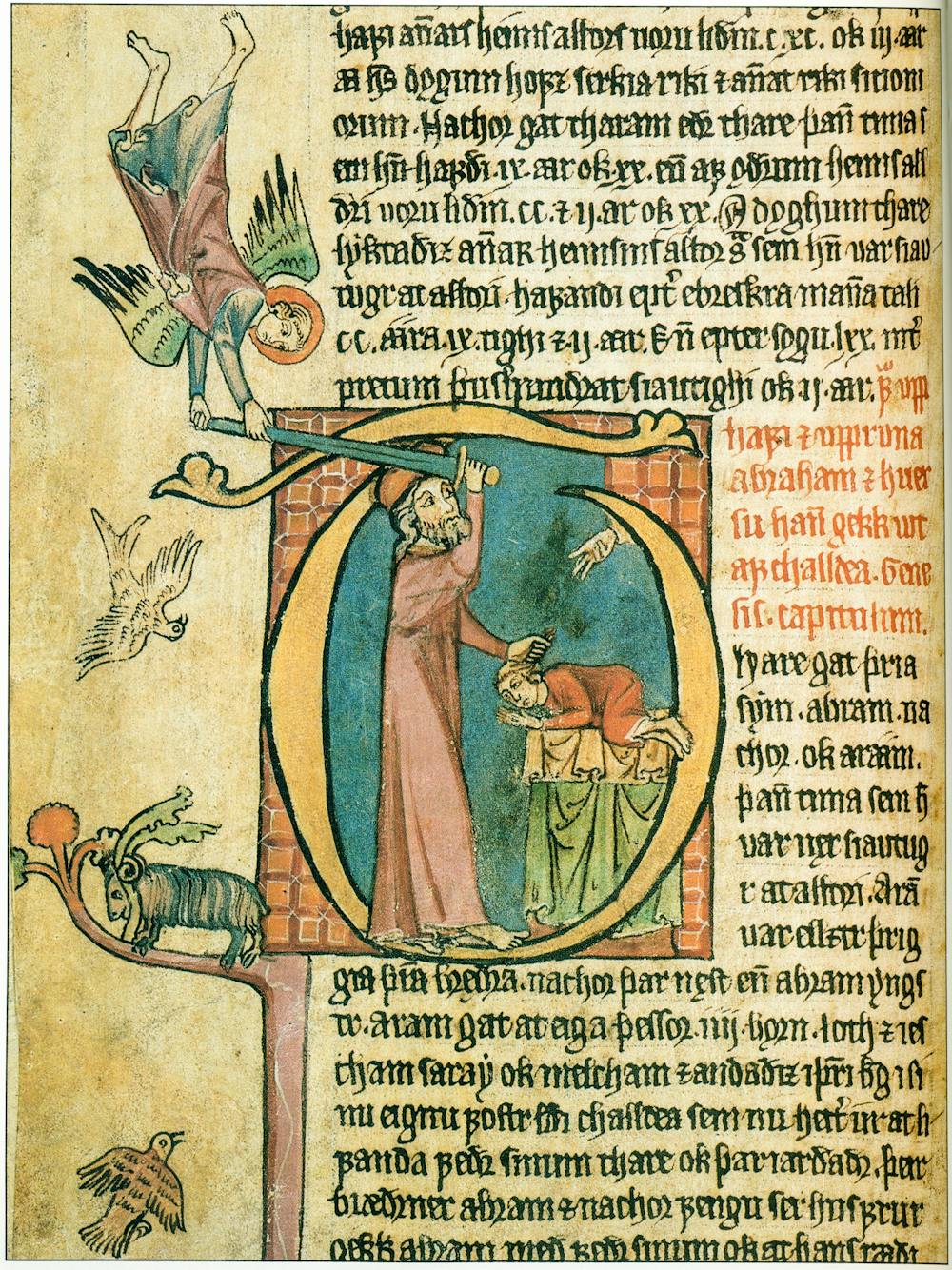 Abraham’s sacrifice, 14th century manuscript.
Árni Magnússon Institute. Szilas, Public domain, via Wikimedia Commons
Abraham’s sacrifice, 14th century manuscript.
Árni Magnússon Institute. Szilas, Public domain, via Wikimedia Commons
It has become possible to train AI to “read” manuscripts, transcribe them, and assist in translating them into English, Chinese, Spanish, and so on. Images of manuscripts would then have a readable text and all the unique elements of the material original – its decorations and artistry, its errors and doodles.
The underlying combination of inter-operable file formats and relatively simple software would mean museum visitors could use tablets and touch screens to read and interact with manuscripts, not just as artistic objects, but as readable texts. In this enhanced digital form, manuscripts could come to local museums, libraries and galleries, where they would be accessible to everyday visitors as well as specialists.
This approach would require careful care for the material originals, as well as continuing investment in digital formats and technologies to ensure access for future readers.
At the end of his introduction to the Philokalia, Nikodemos congratulates himself on what he offers readers:
For behold, writings never ever published in earlier times! Behold, works which lay about in corners and holes and darkness, unknown and moth-eaten, and here and there cast aside and in a state of decay!
The challenges of preserving and accessing our past, contained in objects like manuscripts, are not really that different from those Nikodemos faced in his day. But unlike him, we can now offer the experience of the manuscript as well as the text, and to a much wider audience.
Authors: Jonathan L. Zecher, Research fellow, Australian Catholic University
















.jpg)

