

some children get periods at 8, years before menstruation is taught at school
- Written by: Olivia Marie Bellas, PhD Candidate, University of Adelaide
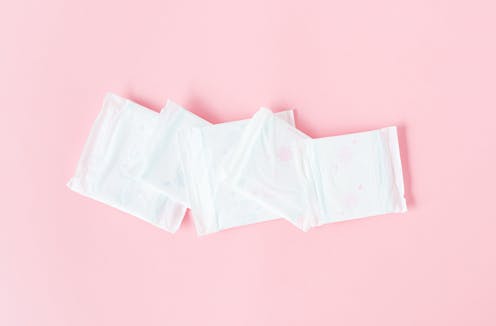
Managing menstruation in public can be challenging at the best of times, but imagine being eight years old and having to deal with your period at school. You might need to change your pad during class and explain to your friends why you are not going to the swimming carnival. You might be scared you will bleed through your uniform because there aren’t any sanitary bins in the junior years’ bathroom.
In Australia, the average age of the first period is about 13. But about 12% of children get their period between the ages of eight and 11. Researchers call this “early menarche” or “early onset menstruation”.
But even though a significant proportion of students are getting their first period as early as Year 3 or even Year 2, primary school students are not officially taught about puberty until Years 5 and 6 (when they are aged between 10 and 12).
Our research explores current period education and what support is available for early menstruators. It shows how schools can act as gatekeepers of knowledge about this essential and very normal part of human development.
Period shame exists but is not inevitable
Shame about periods has existed in many parts of the world for centuries. Researchers have noted how children are taught not to talk about menstruation and if they do, it is often negatively (with a focus on pain and discomfort).
A 2021 survey found 29% of 659 menstruating Australian students aged ten to 18 were concerned they would be teased at school for having their period.
Similar issues occur as students grow older. A 2022 Australian survey of 410 university students who menstruate found only 16.2% felt completely confident in managing their periods at university. Just over half believed society thought periods were taboo (and so, not something you talk about).
But the stigma is not inevitable. There are examples of education programs in other countries that celebrate periods and are accessible across ages.
There is a Swedish program that provides information for young people, stories about first periods and advice on how adults can talk to children about menstruation. In the United Kingdom, there are moves to introduce a “period positive” curriculum for school students.
Read more: 'Dirty red': how periods have been stigmatised through history to the modern day
What is taught in Australian schools?
The Australian curriculum does not not explicitly mention “period” or “menstruation” in any of its online health and physical education curriculum resources, for any year levels up to Year 10.
We can assume schools would cover it under topics such as “understand the physical […] changes that are occurring for them”. But without explicit mention to menstruation or periods, it is likely what is being taught across classrooms in Australia is variable and insufficient.
It was last updated in 2022, under the former Morrison government.
Our research
We interviewed 15 staff across government, Catholic and private primary schools in Australia. We asked staff about their awareness of students who have experienced early onset menstruation, how their students are educated about periods, and what support is available to them.
Staff spoke about how students who menstruated early “felt isolated” and voiced the need for earlier “matter-of-fact” menstruation education. As one teacher told us:
I think we’ve got to take it down to Years 3 and 4 and be a lot more specific than we have been, because you are going to get more and more being younger.
However, several participants shared apprehension around having discussions about periods with young students. As one teacher explained:
You don’t want to scare young girls, like seven-and eight-year-olds […] if it is happening earlier, it needs to be talked about earlier. But that’s a hard one because a lot of girls […] aren’t really mature enough to understand […]
Another teacher said that talking about periods in Year 3 was “probably a bit too much […] you don’t want to traumatise the child”.
Gatekeeping knowledge and awareness about periods from younger children is a problem on multiple levels. For one, it can deprive children of vital information about their bodies. For another, it frames menstruation as something inherently inappropriate, scary or crude. This in turn can reinforce stigma and taboo.
Can we tell boys about this?
Staff also spoke about how boys were not necessarily included in lessons about periods, and how male teachers may not have experience talking about these issues. As one teacher told us:
It is a discussion that’s been done where they don’t really include the boys in it […].
School staff also raised concerns that teaching boys about menstruation might present an opportunity for bullying or teasing. One school support officer suggested only girls should be taught about periods, noting:
they [boys] might be like ‘oh, I found your pad!‘
However, separating classrooms by gender for these lessons does not encourage the normalisation of periods. A 2016 study explored the attitudes of 48 Australian men towards menstruation. Participants reported being told little or nothing about periods while growing up, and so they grew up believing it was taboo.
Other teachers in our study noted how important it was for male students to be taught about periods.
I found it really frustrating that we’re giving young men who are eventually going to be in workplaces and potentially in positions of leadership, who are being deprived of these matter-of-fact moments of teaching [about menstruation] where they’re going to sort of pick up these things through like hearsay, through sort of uneducated conversation […]
Read more: First periods can come as a shock. 5 ways to support your kid when they get theirs
What needs to happen instead?
Our study emphasises how a lack of timely and comprehensive education and support for early menstruators in Australian schools is underpinned by menstrual stigma and taboo.
But it also showed how the issue is driven by perceptions of children’s capacity to learn about periods, based on their age and gender.
This research highlights the need for the Australian curriculum to introduce specific menstruation education by at least Year 3 or earlier. The curriculum needs to explain what menstruation is, why it happens, the ways it can be managed and how it will begin happening to their peers and that this is normal.
In the meantime, we encourage all school staff to work towards building menstrual wellbeing by becoming comfortable discussing periods with all students, make period products accessible to all year levels in all bathrooms, and advertise free period product locations to students from Year 3.
This will enable all children who menstruate to manage their periods in school easily and without shame.
Authors: Olivia Marie Bellas, PhD Candidate, University of Adelaide


















