

COVID hasn’t gone away – here’s where Australia needs to do better
- Written by: Stephane Bouchoucha, Associate Professor in Nursing and Associate Head of School (International), Deakin University
In May 2023 the World Health Organization (WHO) declared COVID was no longer a public health emergency of international concern. For many, this signalled the pandemic was over.
But the virus continues to infect millions of people globally and the WHO recognises COVID as an ongoing pandemic.
In Australia, more than 50,000 infections have been reported so far in 2024. And this is likely to be a significant underestimate, as we are testing much less than we used to. As of February 1 there were 287 outbreaks in residential aged care homes, and people are still dying from the virus.
Although we’ve come a long way since earlier in the pandemic, as we enter its fifth year, COVID continues to have negative effects on individuals, health services and society at large.
To reduce the impact on health services and the community, the Australasian College for Infection Prevention and Control, of which we are on the board of directors, is calling for ongoing infection prevention and control strategies in Australia. These include supporting people to access vaccination and testing, and cleaner air in shared indoor spaces.
Vaccination
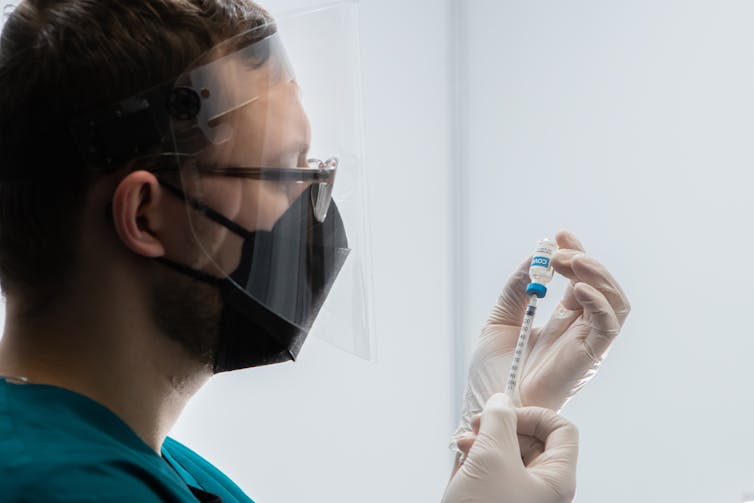
COVID vaccination reduces severe illness and can in turn reduce pressure on the health system. But, to reap the greatest benefits, a high proportion of the population must be vaccinated and receive regular booster doses.
Boosters are important as we know immunity wanes over time, both after infection and vaccination. Also, because COVID continues to evolve, vaccines are updated to keep up with circulating strains.
Current advice from the Australian Technical Advisory Group on Immunisation (ATAGI) indicates adults over 75 should receive a routine booster, and adults 65 to 74 should consider doing so. Younger people are only eligible if they have an increased risk of severe COVID, for example due to a particular medical condition.
There’s also no recommendation that people at greater occupational risk of catching COVID, such as health-care workers, childcare workers or emergency and essential services workers receive another vaccination at this stage.
Yet broadening eligibility could help in several ways. For example, having a high proportion of the population unvaccinated or undervaccinated may increase opportunities for the virus to mutate and for new variants to develop.
Also, although older people are generally at greatest risk from a COVID infection, COVID in younger age groups can still in some cases cause severe and potentially long-term illness (and we know vaccination reduces the risk of long COVID).
We believe the current advice provided by the Australian government is out of date. There needs to be a review of ATAGI advice to allow booster access for more people, as is offered in other countries, such as the United States.
Even among those who are eligible, uptake is poor. Recent figures show only 16.6% of people aged between 65 and 74 have received a booster dose in the past six months.
As such, in tandem with updated guidelines, there should be focused promotion of COVID boosters to all vulnerable people, as well as nation-wide promotion of free access to vaccinations for the wider population.
The Australian government has recognised the need for a strong vaccination program as a means to minimise levels of severe COVID and death. So securing and delivering an ongoing supply of up-to-date vaccinations is paramount.
Testing
While testing is encouraged if you have COVID symptoms, there’s no requirement or incentive to test or report positive results. This poses two problems: under-reporting of COVID cases, and people not knowing they have COVID (and therefore not knowing they might transmit it).
In New South Wales for example, laboratory confirmed cases are trending downwards while wastewater testing suggests COVID prevalence remains high.
Reinstating easy access to rapid antigen and PCR testing would enable people to better manage their illness, and provide a clearer picture for health authorities.
Read more: Should we still be using RATs to test for COVID? 4 key questions answered
Ventilation
COVID is airborne and evidence shows clean air is key to minimising its spread.
In September 2023 the Australasian Health Infrastructure Alliance released guidance on pandemic preparedness. This document calls for the design of any new health-care building to take minimising the risk of infection transmission into account.
There are examples where investment in building design to minimise infectious disease transmission has had positive results. But guidance documents lack the legal clout needed to drive true change, and these examples are the exception. COVID still spreads in our hospitals and aged care facilities.
Infection prevention and control specialists should play a key role in designing health-care facilities and residential aged care homes. Strategies to optimise ventilation in buildings must involve early consultation with qualified ventilation specialists who can address requirements such as the air exchange rate relative to the size of the building and number of expected occupants.
Mandating this would ensure we build facilities which minimise the transmission of most respiratory infections – not just COVID.
Other things
Support for communities to engage in key prevention strategies such as promoting the use of surgical masks or preferably P2/N95 respirators and staying home when unwell is important. Employers have a responsibility to enable access to paid sick leave, especially for those working with vulnerable communities and in health care.
Hand hygiene, although a foundation of infection prevention and control, appears to have less of a role in controlling COVID transmission. So we need to spend less time thinking washing our hands will protect us from COVID, and more time on what the evidence actually shows will help us ride this stage of the pandemic.
We also need new research initiatives such as large-scale clinical trials to prevent and treat long COVID, and more funding for the development of new vaccines and antiviral drugs as new variants arise.
Authors: Stephane Bouchoucha, Associate Professor in Nursing and Associate Head of School (International), Deakin University


















