

29 are gone and 4 more might be
- Written by: John Woinarski, Professor of Conservation Biology, Charles Darwin University
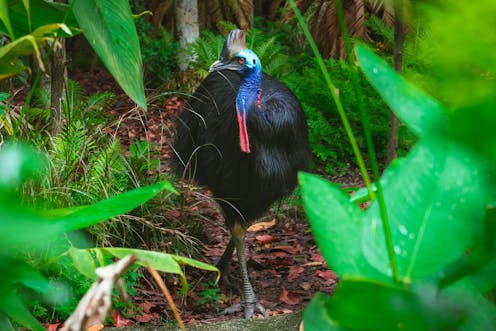
What does it mean to save threatened species? How often do we achieve it? And how often do we fail? Our new research answers these questions for Australian birds.
One of the goals of conservation is to reduce the risk of a species becoming extinct. While this might be seen as a low bar for conservation managers, it is seldom achieved. A new set of research papers on the conservation of Australian birds looks at cases of success over the past 30 years and where we have failed over the past 200.
We found extinction risks had reduced for 25 bird species and subspecies in at least one of the decades between 1990 and 2020. Nine of these would have gone extinct if not for hard work and expertise to prevent it happening.
The most effective action has been eradicating invasive species from islands. This work benefited 13 birds.
Most Australians approve of killing invasive species to save threatened species. They have good reason: it works.
What were the successes?
Nine of these successes are seabirds nesting on Macquarie Island. The program there was so successful it had a significant positive impact on Australia’s Red List Index for birds, a way of measuring overall progress on threatened species status.
This success also changed the average characteristics of Australian threatened birds. Before the pest eradications on Macquarie Island, large seabirds dominated the profile of the threatened Australian birds. Now the average threatened bird is smaller and lives on land.
Further programs have the potential to have a similar impact. The likely huge benefits from eradicating rodents from Lord Howe Island, for example, are yet to show up in these figures.
Another four birds benefited simply from having their habitat protected. Protection of rainforest reduced extinction risk for the southern cassowary (Casuarius casuarius) and Albert’s lyrebird (Menura alberti). One of the largest national parks in New South Wales was acquired for the Bulloo grey grasswren (Amytornis barbatus barbatus). The Tasmanian wedge-tailed eagle (Aquila audax fleayi) also had more of its nesting habitat protected.
For another species, simply enforcing the law reduced the threat. In south-western Australia, culling of Muir’s corella (Cacatua pastinator pastinator) for agriculture threatened it with extinction. Now, with better protection, there are thousands.
Some threatened birds have benefited from intensive interventions by dedicated conservation agencies, non-government organisations and individuals.
Translocations of Gould’s petrels to new breeding islands and of eastern bristlebirds (Dasyornis brachypterus) to heathlands were exemplary.
Very few glossy black-cockatoos (Calyptorhynchus lathami halmaturinus) on Kangaroo Island were nesting successfully before their nests were protected from predatory possums.
Rats twice almost wiped out Norfolk Island green parrots Cyanoramphus novaezelandiae cookii. Their population has increased ten-fold since nests have been better protected.
These examples show our society can make changes that help to prevent extinctions.
Read more: We identified the 63 animals most likely to go extinct by 2041. We can't give up on them yet
There have also been setbacks
Our stories contain salutary lessons too. The pathway to recovery can have reversals.
In the past decade, Gould’s petrel and the bristlebird have suffered setbacks due to new or escalating threats. A new report suggests Tasmanian wind farms are killing and injuring significant numbers of eagles – and many more windfarms are planned.
Our analysis of improvements in the conservation outlook for Australian birds was complemented with an assessment of Australian bird extinctions. Sadly, we found extinctions are continuing.
Even with the conservation effort of the past 30 years since Australia’s first endangered species legislation, three birds are gone forever. The Mount Lofty Ranges spotted quail-thrush (Cinclosoma punctatum anachoreta), white-chested white-eye (Zosterops albogularis) and southern star finch (Neochmia ruficauda ruficauda) were still surviving in the 1990s, but were extinct by 2010.
The number of extinct birds has risen steadily since Australia was colonised in 1788. There was an initial burst of extinctions on islands, particularly big birds that were good to eat and probably had small populations. More recent losses have tended to be small birds whose mainland habitat has been cleared or modified.
Read more: Scientists re-counted Australia's extinct species, and the result is devastating

29 birds are gone, but we can halt the losses
At present, 29 Australian birds are known to have become extinct. It’s a lower percentage than for mammals but still far too high.
Grave fears are held for another four – the Tiwi hooded robin (Melanodryas cucullata melvillensis), buff-breasted button-quail (Turnix olivii), Coxen’s fig-parrot (Cyclopsitta diophthalma coxeni) and Cape Range rufous grasswren (Amytornis striatus parvus). We don’t know whether they persist or not.
For the 29 extinct birds, we can do nothing. The important lesson is that this number of losses need grow no more. We have the resources and skills to prevent extinction.
A recent court order halting forestry activity in swift parrot (Lathamus discolor) habitat suggests at least some environmental laws are making a difference.
Other judgments expose legal shortcomings and show how much more needs to be done. The revisions of national environmental laws now being negotiated provide an opportunity to fill loopholes through which threatened species might fall.
Extinctions are neither accidental nor deliberate. They are a failure of policy and people.
However, the examples of birds whose risk of extinction has declined show what can be achieved. While some of these improvements were mostly a matter of good luck, many were the result of hard work, advocacy, investment and well-judged interventions. And they give the world hope.
Authors: John Woinarski, Professor of Conservation Biology, Charles Darwin University



















